

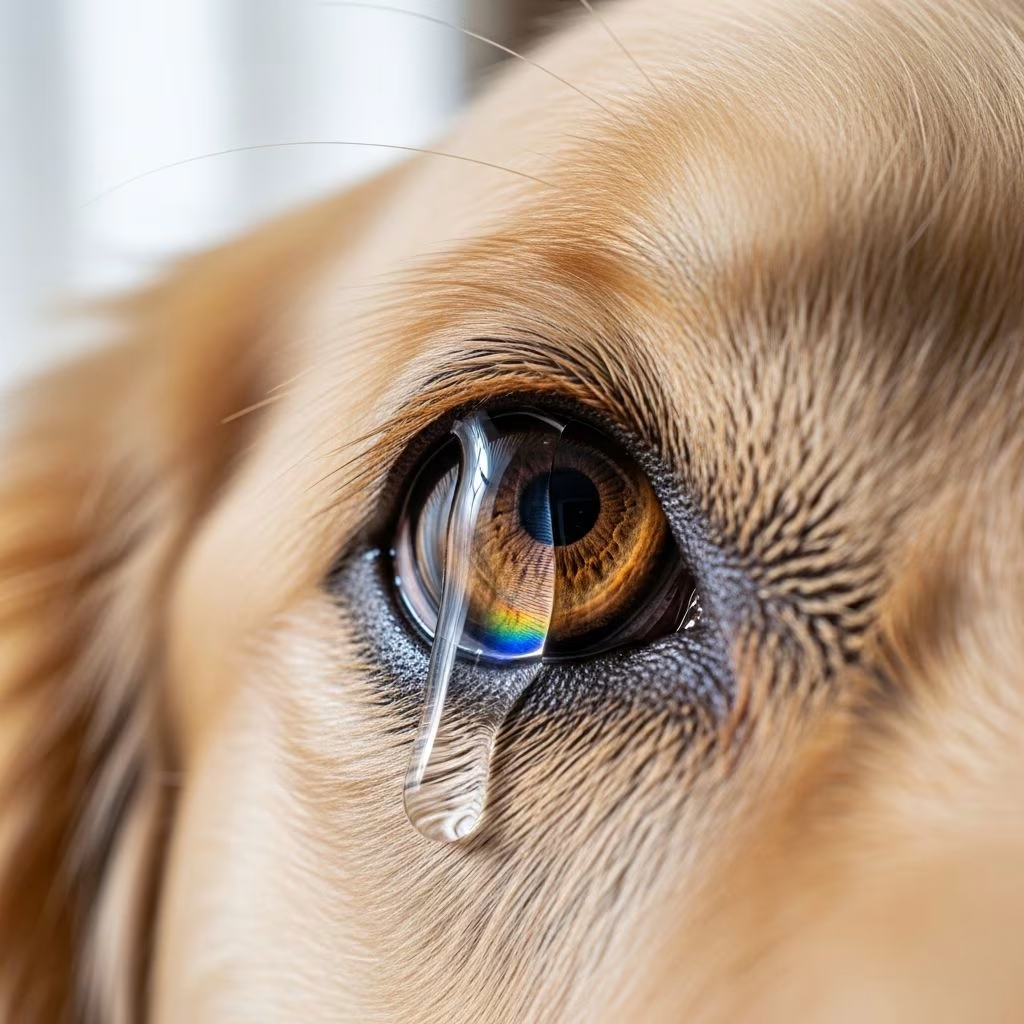
Dry eye syndrome, clinically termed keratoconjunctivitis sicca (KCS), affects numerous companion animals, particularly dogs and cats, by reducing tear production and leading to ocular discomfort, corneal damage, and vision impairment. Artificial tears serve as vital supportive therapy by mimicking natural tear film, providing lubrication, flushing debris, and safeguarding the cornea until underlying tear production improves.
Understanding Dry Eye in Companion Animals
KCS arises from insufficient aqueous tear production, often due to immune-mediated lacrimal gland destruction in dogs or neurogenic issues in cats. Symptoms include persistent squinting, reddish conjunctiva, thick mucous discharge, and corneal opacity or ulceration. Diagnosis relies on the Schirmer Tear Test (STT), where values below 15 mm/min indicate deficiency; severe cases show <5 mm/min.
In dogs, breeds like West Highland White Terriers, Shih Tzus, and Bulldogs are predisposed, while cats may develop it secondary to herpesvirus or idiopathic causes. Without intervention, chronic inflammation fosters secondary bacterial infections, exacerbating damage.
Core Principles of Tear Replacement Therapy
Tear substitutes replicate the tear film’s three layers: lipid (oil), aqueous (water), and mucin (mucus). They hydrate the ocular surface, dilute inflammatory mediators, and mechanically remove pathogens. Unlike stimulants, they do not boost endogenous production but are indispensable adjuncts, especially early in treatment.
- Hydration Maintenance: Prevents corneal desiccation and ulceration.
- Debris Clearance: Mimics blinking’s washing action.
- Barrier Protection: Shields against environmental irritants.
Optimal formulations exhibit non-Newtonian rheology, thinning under shear (like blinking) for even spread while retaining viscosity at rest, as seen in crosslinked hyaluronic acid products.
Types of Artificial Tear Products
A diverse array exists, categorized by viscosity, preservatives, and base composition. Selection depends on KCS severity, frequency needs, and owner compliance.
| Type | Examples | Advantages | Frequency | Best For |
|---|---|---|---|---|
| Drops (Low Viscosity) | Preservative-free saline, hyaluronate | Quick absorption, minimal blur | 6-12x/day | Mild cases |
| Gels (Medium Viscosity) | Carbomer-based | Prolonged retention | 4-8x/day | Moderate KCS |
| Ointments (High Viscosity) | Petrolatum, lanolin | Overnight protection | 2-4x/day | Severe/nighttime |
Preservative-free options suit high-frequency use (>6x/day) to avoid epithelial toxicity. Oil-emulsion drops enhance lipid layer restoration in evaporative dry eye components.
Integration with Tear Stimulants
Artificial tears complement cyclosporine (0.02% ointment, e.g., Optimmune®) or tacrolimus (0.02-0.03% solutions), applied every 8-12 hours. These immunosuppressants restore lacrimal function in 50-80% of severe canine cases after 30-45 days, allowing STT >20 mm/min and taper to maintenance dosing.
Protocol: Stimulants once/twice daily + tears 4-6x/day initially. Antibiotics (e.g., erythromycin, fluoroquinolones) address secondary infections 3-4x/day until resolution. Anti-inflammatories like topical steroids aid acute phases but risk corneal melting.
Application Techniques and Owner Tips
Success hinges on compliance. Steps include:
- Wash hands thoroughly.
- Gently restrain pet, tilting head back.
- Hold lower lid, instill drops without touching eye.
- Release lid, massage gently for distribution.
- Wipe excess, reward pet.
For ointments, nighttime use minimizes vision blur. Track STT every 2-4 weeks; adjust based on clinical signs like reduced blepharospasm.
Advanced Formulations and Innovations
Crosslinked hyaluronic acid drops demonstrate superior shear-thinning, closely matching natural tears, beneficial for both canine KCS and human analogs. Autologous serum tears, derived from pet’s blood, offer growth factors but require processing. Ongoing research explores sustained-release inserts.
Species-Specific Considerations
Dogs
Primary immune-mediated KCS responds best to combined therapy. Brachycephalics benefit from adjunct surgeries like lateral canthoplasty for better corneal coverage.
Cats
Often neurogenic or viral; pilocarpine stimulates via muscarinic receptors. Tears every 2-6 hours critical, as feline compliance challenges frequent dosing.
Monitoring Progress and Adjustments
Serial exams assess corneal clarity, vascularization, and discharge. Improvement markers: STT rise, comfort gain. Non-responders (<50% after 1-2 months) switch tacrolimus or pursue cultures for resistant infections.
Long-term: Lifelong therapy common; well-controlled dogs taper to minimal dosing.
Surgical Interventions as Last Resort
For refractory cases with pain despite maximal medical therapy, parotid duct transposition (PDT) reroutes saliva to conjunctiva. Saliva approximates tear pH/osmolarity but risks mineral deposition, ulceration, or dermatitis (common in 30-50%). Not curative; tears/antibiotics persist post-op.
Alternatives: Tarsorrhaphy for exposure issues, entropion correction.
Potential Complications and Precautions
Overuse of preserved products causes toxicity; ointments risk megabacteria. Untreated KCS leads to blindness. Pilocarpine may induce salivation.
- Monitor for hypersensitivity.
- Avoid human products with toxins (e.g., xylitol).
- Vet rechecks mandatory.
Frequently Asked Questions (FAQs)
Can artificial tears alone cure dry eye?
No, they lubricate but do not stimulate production; combine with cyclosporine/tacrolimus.
How often should I apply tears?
2-12 times daily based on severity; consult vet for personalization.
Is surgery always needed for severe KCS?
Only if medical therapy fails and pain persists; 75% respond medically.
Are over-the-counter tears safe for pets?
Some yes, but vet-formulated preferred for sterility and osmolarity.
What if my pet worsens on treatment?
Recheck STT, culture discharge, adjust meds promptly.
Prognosis and Long-Term Management
With diligent care, most pets achieve comfort and vision preservation. Early intervention prevents scarring. Owner education ensures adherence, transforming prognosis from poor to excellent.
References
- Treatment of KCS in Dogs | VETgirl Veterinary Continuing Education — VetGirl. Accessed 2026. https://vetgirlontherun.com/treatment-of-kcs-in-dogs-vetgirl-veterinary-continuing-education-blog/
- Optimising tear replacement rheology in canine keratoconjunctivitis sicca — PubMed (PMID: 29303147). 2018-01-01. https://pubmed.ncbi.nlm.nih.gov/29303147/
- Keratoconjunctivitis Sicca (KCS) or Dry Eye in Dogs — VCA Animal Hospitals. Accessed 2026. https://vcahospitals.com/know-your-pet/keratoconjunctivitis-sicca-kcs-or-dry-eye-in-dogs
- Dry Eye Syndrome FAQs — University of Tennessee College of Veterinary Medicine. Accessed 2026. https://vetmed.tennessee.edu/wp-content/uploads/sites/4/UTCVM_Ophthalmology-DryEyeSyndrome_FAQs.pdf
- Dry Eye Syndrome in Cats — PetMD. Accessed 2026. https://www.petmd.com/cat/conditions/eyes/c_ct_keratoconjunctivitis_sicca
- Dry Eye Factsheet — Eye Vet Clinic. 2023-04-01. https://www.eyevetclinic.co.uk/app/uploads/2023/04/Dry-Eye-Factsheet.pdf
- KCS/Dry Eye — Animal Eye Center. Accessed 2026. https://www.animaleyecenter.com/kcsdry-eye



