

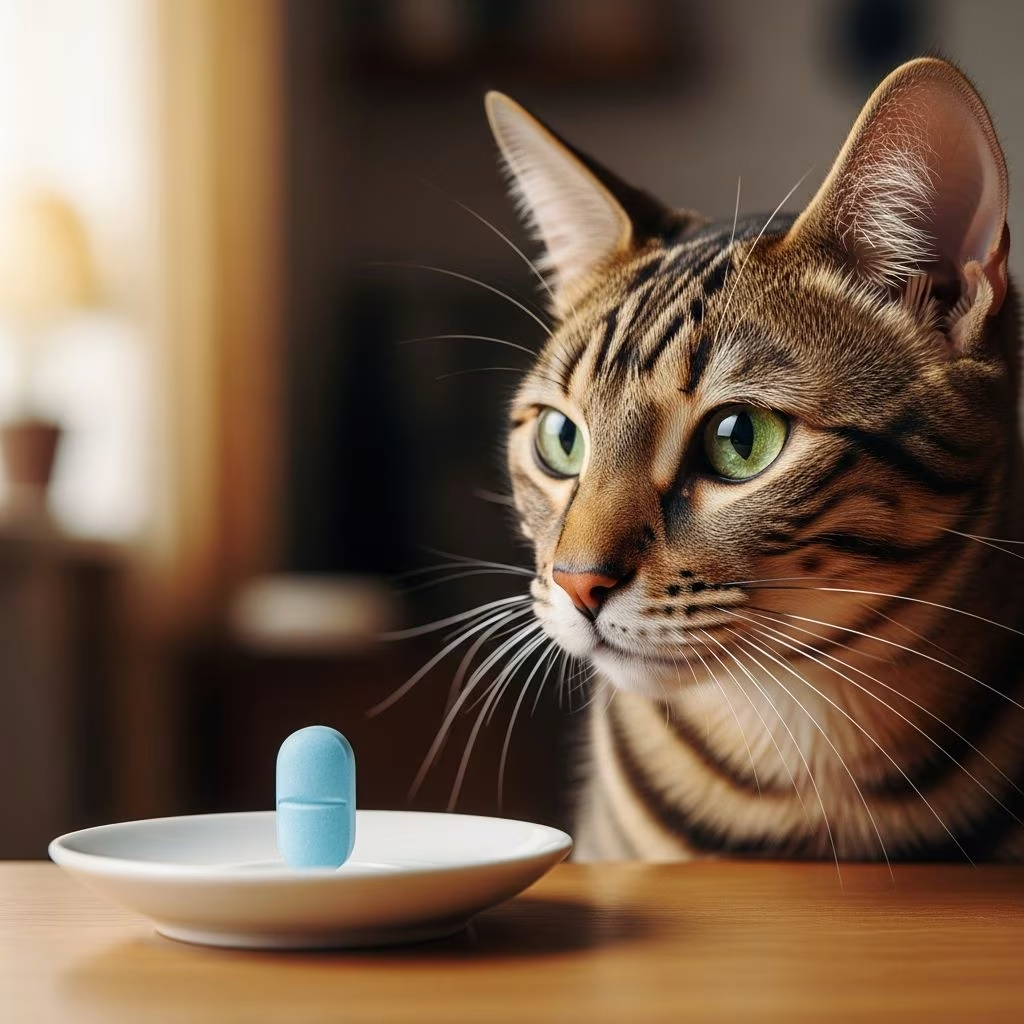
Yes, birth control tablets for cats exist, primarily progestin-based medications like megestrol acetate (MA) or medroxyprogesterone acetate (MPA), but they carry significant health risks and are not recommended for routine use. These oral contraceptives suppress estrus (heat cycles) and prevent pregnancy, yet veterinary experts strongly favor surgical sterilization due to the pills’ potential for severe side effects such as diabetes, uterine tumors, and mammary cancer.
Cat overpopulation remains a global issue, with millions of feral and stray cats contributing to unwanted litters. While birth control pills offer a non-surgical option, emerging research into gene therapies shows promise for safer, long-term contraception without cutting. This article examines available tablets, their efficacy, risks, alternatives, and veterinary guidance to help cat owners make informed decisions.
What Are Birth Control Tablets for Cats?
Birth control tablets for cats are hormonal contraceptives containing synthetic progestins, mimicking progesterone to halt ovarian follicle development and ovulation. Common formulations include Ovaban (MA) and generic equivalents, prescribed to interrupt or prevent heat cycles in female cats (queens).
These pills work by maintaining elevated progestin levels, which signal the body to skip estrus. Administered orally, they require precise dosing based on the cat’s weight and cycle stage. For instance, low-dose MA at 0.01-0.03 mg/kg daily has suppressed estrus in studies for up to 12 months with minimal issues, though higher doses increase risks.
- Key ingredients: Megestrol acetate (MA), medroxyprogesterone acetate (MPA).
- Forms: Tablets (e.g., Ovaban 5 mg) or diluted liquid suspensions from human Megace.
- Dosage example: 0.5-1 mg per cat weekly for feral colony management, or 5 mg daily for 3 days to halt active heat.
Originally developed for dogs, these have been adapted for cats, but ANSES (French Agency for Food Safety) mandates veterinary prescription due to side effect severity. In the U.S., they’re used short-term when spay surgery is delayed.
Do Birth Control Pills Work for Cats?
Yes, when dosed correctly and timed with the estrous cycle, these pills effectively prevent pregnancy. Early studies showed 0.01 mg/kg MA daily suppressed estrus in queens for 12 months, with only one breakthrough heat in low-dose groups. Short-term use (e.g., 5 mg/cat for 3 days) prevents conception quickly, buying time for spaying.
In feral colonies, low weekly doses (0.5-1 mg/cat) have reportedly prevented hundreds of pregnancies over years, reducing population growth. However, efficacy drops post-treatment; queens resume cycles and fertility soon after stopping. Progestins do not provide permanent sterilization.
| Dosage | Efficacy | Duration | Source |
|---|---|---|---|
| 0.01 mg/kg MA daily | ~100% estrus suppression | 12 months | |
| 5 mg/cat daily x3 days | Prevents immediate pregnancy | Short-term | |
| 0.5-1 mg/week | Colony litter reduction | Ongoing low-dose |
Breakthrough heats can occur, especially at very low doses, and overdosing risks side effects.
Risks and Side Effects of Cat Birth Control Pills
While effective, progestin pills pose serious risks, particularly with prolonged or high-dose use. ANSES reports genital issues (infections, uterine hypertrophy/tumors, mammary changes) and hormonal disorders like diabetes mellitus, some fatal. Cornell vets note pyometra, mammary cancers, enlargement (in both sexes), adrenal dysfunction, and uterine disease.
- Common side effects: Mammary hyperplasia, weight gain, lethargy.
- Serious risks: Diabetes (potentially reversible), pyometra, adrenal suppression (Addison’s), mammary tumors.
- Rare: Liver toxicity, viral disease recurrence in infected cats.
Low doses mitigate risks; studies advocate 0.01-0.03 mg/kg MA for safer profiles. Human handlers (especially pregnant women) must use gloves to avoid absorption risks. Side effects rise with dose/duration: high MPA (0.5 mg/kg daily) caused multiple issues.
Alternatives to Birth Control Pills for Cats
Surgical spaying (ovariohysterectomy) is the safest, permanent solution, eliminating heat, pregnancy, and most reproductive cancers. For ferals, trap-neuter-vaccinate-return (TNVR) programs are ideal.
Emerging non-surgical options include gene therapy: A 2023 Harvard/MGH study used a single anti-Müllerian hormone (AMH) injection via viral vector, preventing ovulation in treated queens for over 2 years with no side effects or hormone disruptions. Treated cats produced no kittens in mating trials, unlike controls; AMH levels stayed elevated safely.
- Injections: Veterinary-administered progestins (safer than pills for compliance).
- GnRH implants: Temporary suppression, under study.
- Gene therapy: One-time dose raises AMH 100x, blocking follicles long-term.
Gene therapy is “ahead of its time” but promising for feral control without surgery.
When Might a Vet Prescribe Birth Control Pills?
Vets prescribe short-term for spay delays due to shortages, targeting intact queens >4 lbs in monitored settings. Not for pregnant cats (risks fetal defects) or routine use. Always lowest effective dose, with health monitoring.
For ferals, controversial bait systems raise environmental/human safety concerns. Cornell advises against routine use absent scientific backing for extra-low doses.
Frequently Asked Questions (FAQs)
What are the safest birth control options for cats?
Spaying is safest and permanent. Short-term low-dose MA if surgery delayed; gene therapy shows promise.
Can I give my cat human birth control pills?
No, never. Human formulations differ; consult a vet for pet-specific meds.
How long do cat birth control effects last?
Pills: Until stopped, then cycles resume. Gene therapy: 2+ years from one dose.
Are there birth control shots for cats?
Yes, progestin injections by vets, preferred over pills for accuracy.
Is Ovaban safe for feral cats?
Low weekly doses reduced litters in programs, but risks remain; TNVR better.
Conclusion: Prioritize Spaying and Emerging Safeties
Birth control tablets work but risks outweigh benefits for most pet cats—opt for spaying. Monitor research on AMH gene therapy for humane feral management. Always consult your veterinarian.
References
- Birth control for cats is effective, but ‘ahead of its time’ — Harvard Gazette. 2023-06-21. https://news.harvard.edu/gazette/story/2023/06/birth-control-for-cats-is-effective-but-ahead-of-its-time/
- Birth control pills for female cats and dogs must be prescribed by a veterinarian — ANSES. N/A. http://www.anses.fr/en/content/birth-control-pills-female-cats-and-dogs-must-be-prescribed-veterinarian
- Progestins to control feline reproduction — PMC/NIH. 2024. https://pmc.ncbi.nlm.nih.gov/articles/PMC11148977/
- Short-term use of megestrol acetate for estrus prevention in cats — ACC&D. 2022-12-03. https://www.acc-d.org/resources/position-statement-ma
- Ovaban Birth Control For Cats — Fairchild Feral Friends Foundation. N/A. https://fairchildcat.org/tnvr/ovaban-information/
- Should we be using birth control for cats now that we can’t spay? — Cornell University Vet College. N/A. https://www.vet.cornell.edu/sites/default/files/CUMSMP%20FAQ%20FAQ-%20Should%20we%20be%20using%20birth%20control%20for%20cats%20now.pdf
- Megestrol Acetate — VCA Animal Hospitals. N/A. https://vcahospitals.com/know-your-pet/megestrol-acetate



