

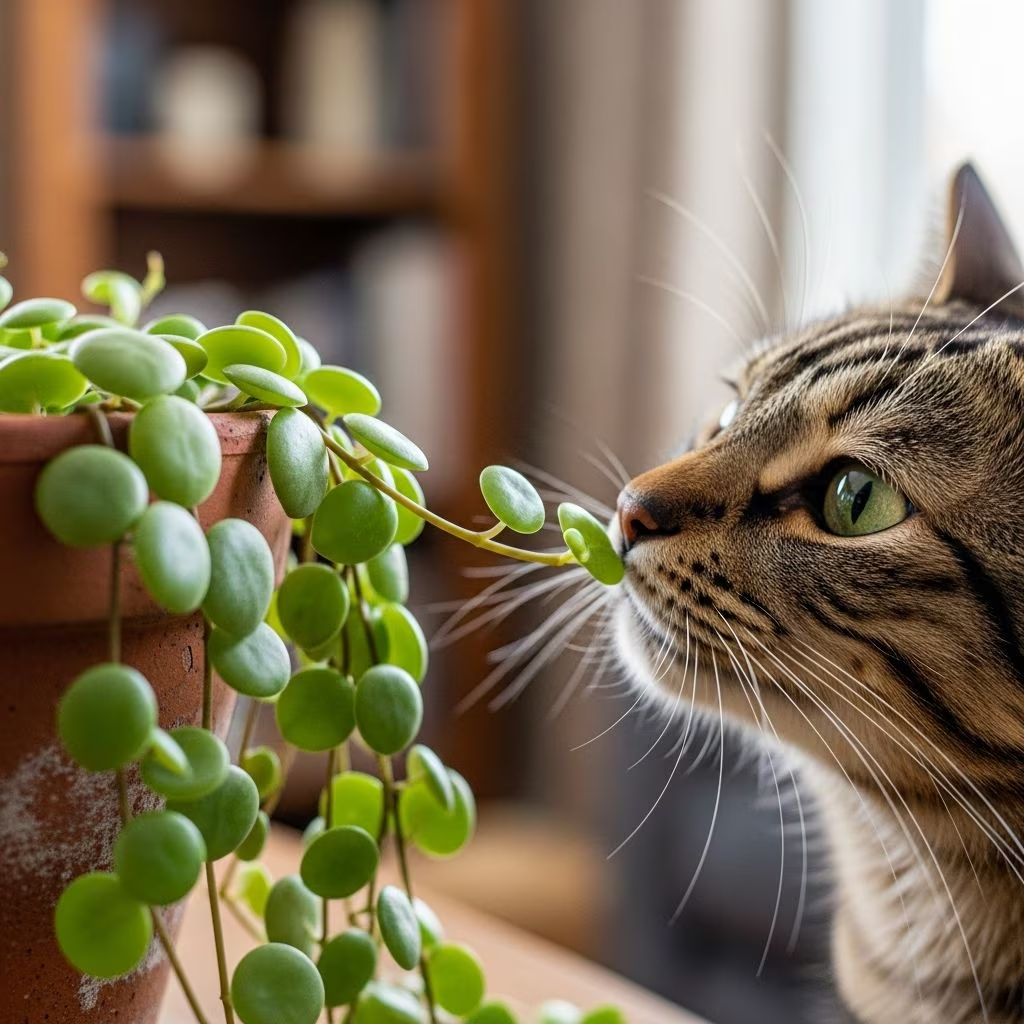
String of Turtles (Peperomia prostrata) is **not toxic to cats**, according to reliable sources like the ASPCA, but ingestion can cause gastrointestinal upset due to calcium oxalate crystals and saponins.
This semi-succulent trailing plant appeals to cat owners who love houseplants, but its textured leaves may attract curious felines, leading to potential health issues like vomiting or mouth irritation.
In this comprehensive guide, we cover the plant’s characteristics, risks for cats, what to do if your pet chews it, safer alternatives, and prevention strategies to keep your home both green and feline-friendly.
String of Turtles (Peperomia prostrata) General Info
The String of Turtles, scientifically known as Peperomia prostrata, is a charming, low-maintenance houseplant from the Piperaceae family, native to Brazilian rainforests.
Its name comes from the turtle shell-like patterns on its small, rounded leaves, which trail beautifully from hanging baskets or shelves, making it popular for indoor decor.
| Characteristic | Details |
|---|---|
| Scientific Name | Peperomia prostrata |
| Common Name | String of Turtles |
| Size | 12–24 inches trailing |
| Bloom Time | Year-round (insignificant flowers) |
| USDA Hardiness Zone | 10–12 |
| Light Requirements | Bright, indirect light |
| Soil Requirements | Rich, loamy, well-draining, slightly acidic |
| Toxicity | Non-toxic to cats, dogs, humans (ASPCA-listed) |
This semi-succulent thrives in moderate humidity and temperatures between 65–80°F, requiring watering only when the top soil dries out to avoid root rot.
Propagation is easy via stem cuttings in water or soil, allowing plant enthusiasts to expand their collection safely around pets.
Are Peperomia Plants Toxic to Cats?
Peperomia species, including String of Turtles, belong to the Piperaceae family and are widely regarded as **non-toxic to cats** by the ASPCA.
Common household varieties include:
- American Rubber Plant (Peperomia obtusifolia)
- Silver Hearth (Peperomia griseoargentea)
- Red Edge Peperomia (Peperomia capitata)
- Platinum Peperomia
- Metallic Peperomia
- Leather Peperomia
All Peperomia plants share similar care needs and safety profiles, making them excellent choices for pet-friendly homes.
NC State University and other veterinary resources confirm their safety, though no plant should be considered chew-proof for cats.
Is String of Turtles Toxic to Cats?
No, String of Turtles is **not toxic to cats**. Both the ASPCA and NC State University list Peperomia prostrata (also called Trailing Peperomia) as non-toxic to cats, dogs, and other pets.
Veterinary sources like Dial A Vet echo this, noting it’s a safer option for households with curious felines.
However, “non-toxic” doesn’t mean risk-free. Cats that ingest parts of the plant may experience mild symptoms due to natural compounds, not poisoning.
What Are the Dangers of String of Turtles for Cats?
While non-toxic, String of Turtles contains **calcium oxalate crystals** and **saponins**, which can irritate a cat’s mouth, throat, and digestive system upon ingestion.
These semi-succulent properties make the plant chewy and appealing, but biting into leaves releases needle-like oxalates that cause physical irritation rather than systemic toxicity.
Potential symptoms include:
- Vomiting
- Diarrhea
- Abdominal pain
- Lethargy
- Excessive drooling
- Lack of appetite
- Mouth irritation or pawing at mouth
- Difficulty breathing (rare, from swelling)
Large quantities could lead to more pronounced GI upset, so monitor nibbling cats closely. Cats with pre-existing conditions may be more sensitive.
What Should I Do If I Suspect That My Cat Ate String of Turtles?
If your cat chews String of Turtles, **monitor for symptoms** like vomiting or lethargy for 24–48 hours.
Contact your veterinarian immediately if signs appear, providing details on the amount ingested and any observed behaviors. They may recommend observation, fluids, or anti-nausea medication.
Do not induce vomiting unless instructed by a vet. For emergencies, call the ASPCA Animal Poison Control Hotline (888-426-4435).
Preventive placement in high shelves or hanging baskets reduces risks.
Are There Safer Plants for Cats Than String of Turtles?
Yes, several ASPCA-approved non-toxic plants are even less likely to cause irritation:
- Spider Plant (Chlorophytum comosum)
- Boston Fern
- Parlor Palm
- Calathea varieties
- Hoya species
- Areca Palm
These lack oxalates and saponins, offering safer trailing or textured options for plant-loving cat parents.
What Plants Are Toxic to Cats? (Keep Away!)
Avoid these common **toxic houseplants** that can cause severe GI issues, organ damage, or fatality:
- Tulip
- Yew
- Lily (highly toxic)
- Azalea
- Peace Lily
- Oleander
- Amaryllis
- Rhododendron
- Kalanchoe
- Dieffenbachia
- Daffodils
- Narcissus
- Hyacinth
These often contain cardiac glycosides, insoluble oxalates, or alkaloids leading to vomiting, seizures, or heart issues. Always check ASPCA lists before adding plants.
8 Tips for Cat-Safe Houseplants
Keep your greenery and cat healthy with these strategies:
- Hang plants in macrame holders or high shelves out of jump range.
- Offer **cat grass** or catnip toys as chew alternatives.
- Use **bitter sprays** (pet-safe) on leaves to deter nibbling.
- Place in **cat-free rooms** or use baby gates.
- Choose **solid pots** to prevent knocking over.
- **Supervise** young or plant-curious cats.
- Select **trailing varieties** like Hoyas over accessible ones.
- **Train with positives**: Reward ignoring plants.
Combining deterrence and safe plants minimizes risks.
Frequently Asked Questions (FAQs)
Is String of Turtles safe for cats to be around?
Yes, it’s non-toxic per ASPCA, but prevent ingestion to avoid mild GI upset.
Can cats die from eating String of Turtles?
No, it’s not lethal, but large amounts may cause discomfort requiring vet care.
Why do cats chew on String of Turtles?
Its trailing vines and texture mimic prey; boredom or nutritional needs may contribute.
Are all Peperomia plants cat-safe?
Yes, the family is ASPCA-listed as non-toxic, including popular varieties.
What if my cat vomits after eating the plant?
Monitor and call your vet; provide fresh water and watch for worsening symptoms.
Final Thoughts
String of Turtles adds tropical charm without toxicity risks for cats, but its oxalate content warrants caution—keep it elevated and provide distractions.
Opt for pet-safe plants, use preventive measures, and consult vets for peace of mind. A cat-friendly home balances beauty and safety seamlessly.
References
- Are String of Turtles Toxic to Cats? Vet-Reviewed Safety Tips & Facts — Catster. 2023. https://www.catster.com/cat-health-care/are-string-of-turtles-toxic-to-cats/
- String of Turtles Plant Care — Delineate Your Dwelling. 2023. https://www.delineateyourdwelling.com/string-of-turtles-plant-care/
- Are String of Turtles Plants Toxic to Cats? — Dial A Vet. 2024. https://www.dialavet.com/vet-answers/string-of-turtles-toxic-to-cats-48840
- Toxic and Non-Toxic Houseplants for Pets – A Full Guide — BWH Plant Co. 2023. https://bwhplantco.com/blogs/beyond-the-basics/toxic-and-non-toxic-houseplants-for-pets-a-full-guide
- String of Turtles — Living House. 2023. https://www.livinghouse.ca/collections+care/view/string-of-turtles/
- Trailing Peperomia – Toxic and Non-Toxic Plants — ASPCA. 2024. https://www.aspca.org/pet-care/aspca-poison-control/toxic-and-non-toxic-plants/trailing-peperomia



