

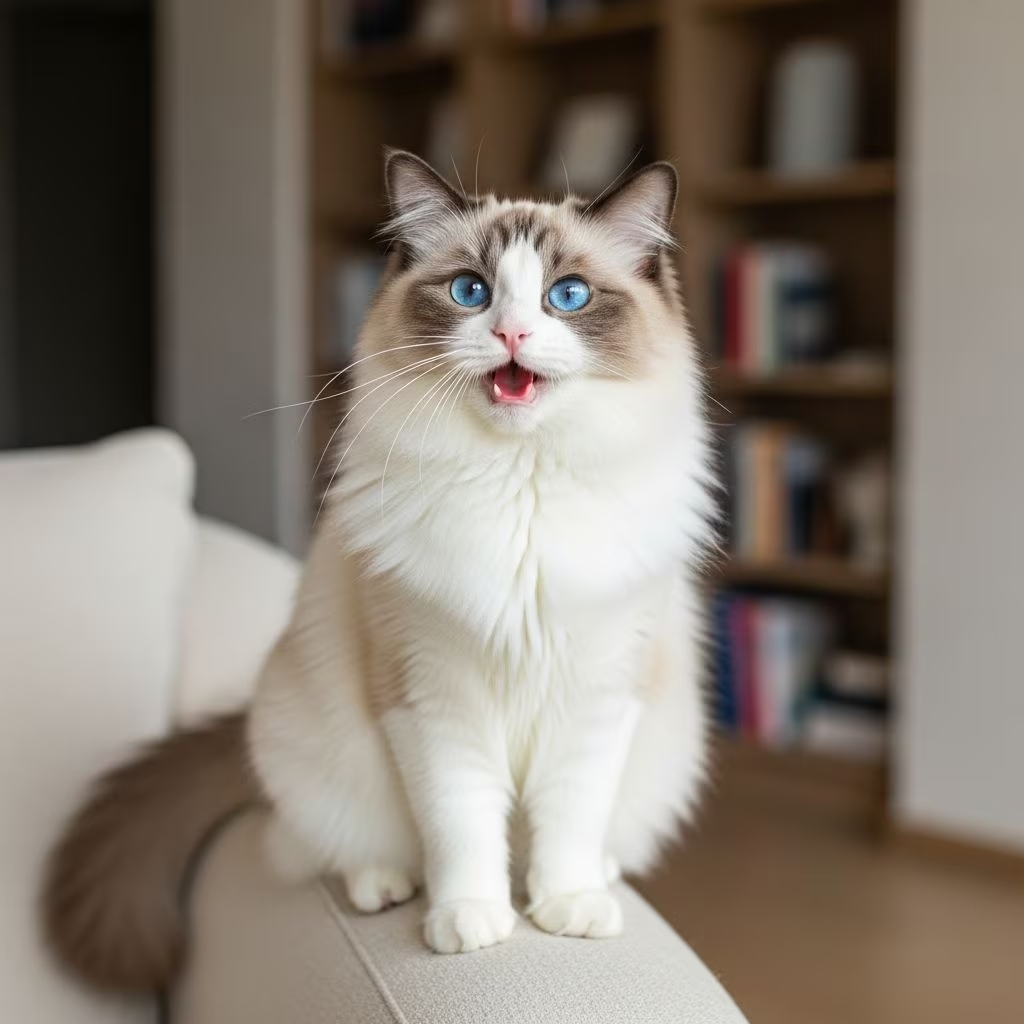
Ragdoll cats are renowned for their docile, floppy nature and striking blue eyes, but one question many prospective owners ask is whether these gentle giants are vocal. Generally, **Ragdoll cats are not considered highly vocal** compared to breeds like Siamese or Bengals. They tend to communicate more through body language, such as their signature limp \”ragdoll\” pose when picked up, rather than loud meows. However, they do produce a variety of soft sounds to express needs, emotions, or alerts. This article dives into their vocalizations, what they mean, reasons for excessive meowing, and tips for Ragdoll owners.
Cat Vocalizations: The Basics
Even quiet breeds like Ragdolls vocalize in distinct ways. Understanding these helps owners interpret their cat’s needs. Cats produce sounds like meows, purrs, chirps, chatters, growls, and yowls, each serving specific purposes. Ragdolls favor softer versions, often described as \”chirps\” or \”trills\” rather than piercing cries. Their vocalizations are typically gentle, reflecting their laid-back personalities.
Meowing
The **meow** is the most common cat vocalization directed at humans. For Ragdolls, meows are usually soft and infrequent, used for greetings, hunger alerts, or attention-seeking. Unlike chatty breeds, Ragdolls rarely meow excessively unless something is amiss. Owners report their cats might chirp softly at mealtime or trill upon greeting, but loud, persistent meowing signals a change. For instance, a quiet \”hello\” meow when you return home is normal, but constant vocalizing warrants investigation.
Chirping and Trilling
Ragdolls excel at **chirping** and **trilling**, high-pitched, bird-like sounds expressing excitement or affection. These are their go-to for casual communication, like when spotting a toy or greeting family. Many owners note Ragdolls \”chirp\” rather than meow, making them seem quieter overall. This sweet sound underscores their playful yet mellow demeanor.
Purring
**Purring** in Ragdolls often signals contentment during lap time or petting sessions, a hallmark of their loving nature. However, they may also purr when stressed, hungry, or in pain as a self-soothing mechanism or to signal non-threat. Listen for context: deep, rhythmic purrs during cuddles are positive, while irregular ones with other symptoms may indicate discomfort.
Chattering
When a Ragdoll fixates on birds or insects through a window, you’ll hear **chattering**—rapid teeth clicking paired with excited chirps. This instinctual sound reflects hunting frustration and excitement. It’s harmless and common in window-perching Ragdolls, adding charm to their quiet profile.
Growling and Hissing
Rare in docile Ragdolls, **growling** or **hissing** indicates fear, pain, or territorial warnings. These defensive sounds emerge during vet visits, new pets’ introductions, or threats. Give space if heard, as approaching can escalate stress.
Yowling
**Yowling** is a loud, drawn-out call often linked to unspayed/unneutered cats in heat or sensing mates nearby. Intact Ragdolls become notably vocal, with females yowling for days. Neutering typically reduces this. Other causes include cognitive issues in seniors or distress.
Are Ragdolls Known for Being Vocal?
No, **Ragdolls are among the quieter cat breeds**. Surveys and owner polls show most are \”somewhat vocal,\” meowing mainly for food or interaction, unlike vocal breeds like Siamese (known for loud, raspy meows) or Bengals. Ragdoll voices are soft—often a \”raspy whisper\” or chirp—making them less disruptive. A YouTube poll revealed: 49% \”very vocal,\” 562 votes for \”vocal (chats daily),\” but many emphasize quiet volume over frequency. Their preference for physical cues like headbutts over noise suits apartment dwellers.
Why Do Ragdoll Cats Meow So Much? 8 Common Reasons
While baseline quiet, increased meowing in Ragdolls flags issues. Here’s a breakdown:
- Hunger or Thirst: Basic needs prompt soft reminders. Ensure scheduled feedings.
- Litter Box Issues: Dirty boxes or UTIs cause vocal complaints. Scoop daily and vet-check changes.
- Pain or Illness: Arthritis (common in large Ragdolls), dental woes, or injuries lead to more meows. Seniors may vocalize from cognitive dysfunction.
- Attention-Seeking: Boredom or loneliness amps up calls. Provide playtime and companions.
- Hormonal (Intact Cats): Heat cycles trigger yowling in females; males respond to scents.
- Age-Related Changes: Seniors meow more from confusion, vision/hearing loss, or sleep disruption.
- Stress or Fear: New pets, noises, or household changes unsettle sensitive Ragdolls. Offer hiding spots.
- Learned Behavior: Rewarded meowing reinforces it. Ignore attention bids, reward quiet.
| Reason | Signs | Solution |
|---|---|---|
| Hunger | Meows at mealtimes | Regular feeding schedule |
| Pain | Sudden increase + limping | Vet exam |
| Stress | Nighttime yowling | Calm environment, pheromones |
| Hormones | Loud yowls, spraying | Spay/neuter |
When Is Ragdoll Meowing a Concern?
Sudden or excessive vocalization differs from normal chirps. Watch for paired symptoms: appetite loss, litter avoidance, lethargy, or nighttime waking. These signal health issues; consult a vet promptly. Routine check-ups catch arthritis or dental problems early in this large breed.
How to Reduce Excessive Vocalization in Ragdolls
Address root causes:
- Enrich environment with toys, scratching posts, and perches for mental stimulation.
- Maintain routine for feeding, play, and litter.
- Spay/neuter to curb hormonal calls.
- Use puzzle feeders to combat boredom.
- For seniors, add night lights and consistent bedtime routines.
- Ignore non-emergency meows; reward silence.
Interactive toys and daily 15-20 minute play sessions keep social Ragdolls content and quieter.
Frequently Asked Questions (FAQs)
Are Ragdolls known for being vocal cats?
No, Ragdolls are generally quiet, using soft chirps over loud meows, unlike Siamese.
How can I tell if my Ragdoll’s meowing is normal or concerning?
Normal: Soft, occasional chirps for food/greeting. Concerning: Sudden increase with behavior changes—see a vet.
Do Ragdolls meow more than other cat breeds?
Generally no; they’re quieter than Siamese, Bengals, or Maine Coons.
Why is my senior Ragdoll meowing at night?
Cognitive dysfunction, pain, or disrupted sleep patterns. Vet evaluation recommended.
Can spaying/neutering make my Ragdoll quieter?
Yes, it eliminates heat-related yowling and territorial calls.
Conclusion
Ragdoll cats embody quiet elegance, favoring subtle chirps and purrs over boisterous meows. While not vocal by nature, changes in their soft communications often highlight needs or health shifts. By tuning into these sounds—meows for hunger, chatters for excitement, growls for fear—owners foster stronger bonds. Monitor for anomalies, enrich their world, and consult vets as needed to keep your floppy friend happy and hushed.
References
- Why Is My Ragdoll Cat Meowing So Much? 8 Reasons & Solutions — Posh Raggies. 2023. https://poshraggies.com/blog/why-is-my-ragdoll-cat-meowing-so-much/
- Are Ragdoll Cats Vocal? 5 Vet-Verified Sounds (With Audio) — Catster. 2023. https://www.catster.com/lifestyle/are-ragdoll-cats-vocal/
- How VOCAL are Ragdoll cats? Do they meow? — YouTube (Ragdoll Kittens). 2022-10-15. https://www.youtube.com/watch?v=FBX8HiscGkg



