

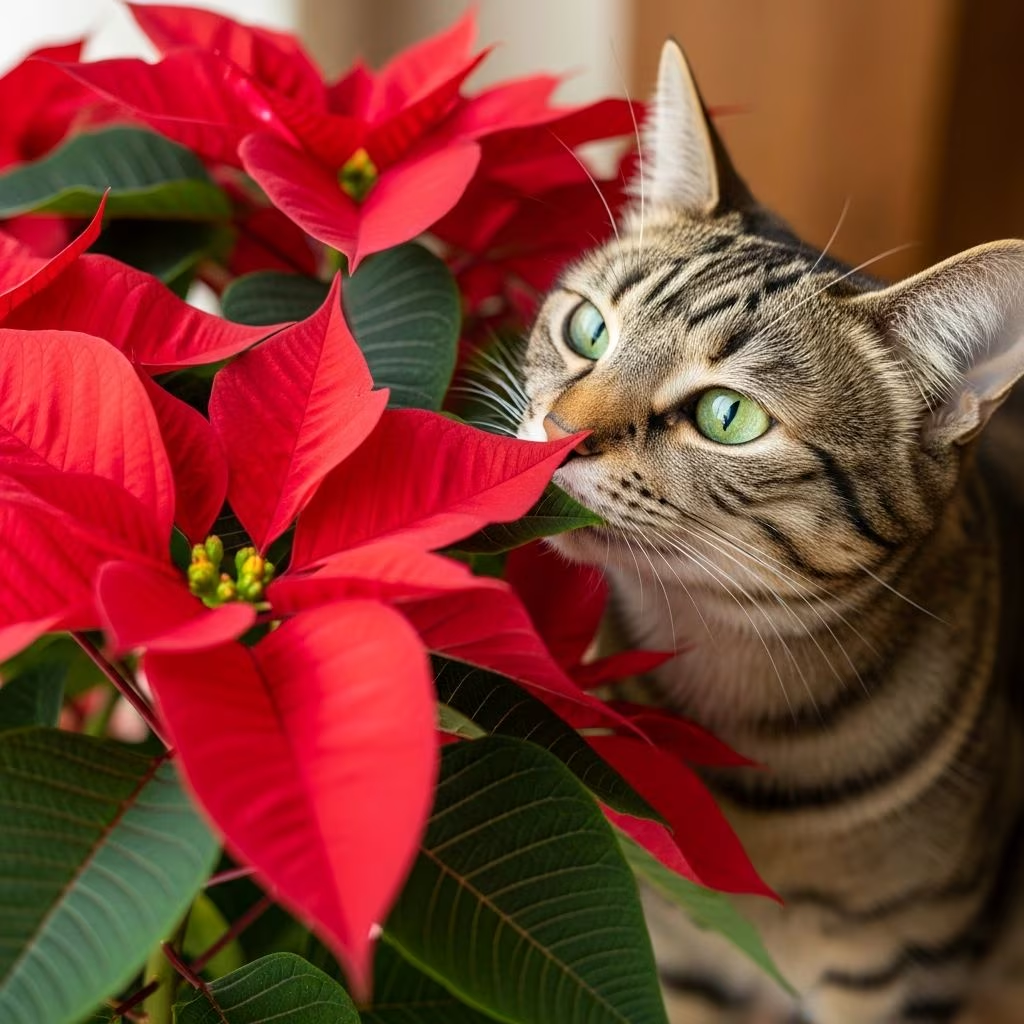
The holiday season brings vibrant poinsettias into homes, but cat owners often wonder: are poinsettias poisonous to cats? While the plant’s striking red bracts and festive appeal are undeniable, its reputation for toxicity has sparked debate among pet owners and veterinarians. The short answer is that poinsettias are mildly toxic to cats, primarily due to a milky sap containing irritants that can cause gastrointestinal upset and oral irritation. However, severe poisoning is rare and typically requires substantial ingestion.
This comprehensive guide draws from authoritative veterinary sources to debunk myths, detail symptoms, outline treatment protocols, and provide prevention strategies. Understanding the science behind poinsettia toxicity empowers cat owners to enjoy holidays safely without undue alarm. We’ll cover everything from the plant’s chemical composition to real-world case studies and safer alternatives, ensuring your feline friend stays healthy amid seasonal decorations.
What Are the Dangers of Poinsettias for Cats?
Poinsettias, scientifically known as Euphorbia pulcherrima, belong to the Euphorbiaceae family and are native to Mexico. Their popularity stems from colorful bracts (modified leaves) that mimic flowers, especially around Christmas. The primary concern for cats is the plant’s milky white sap, which exudes from stems, leaves, and bracts when damaged.
This sap contains diterpenoid euphorbol esters and saponin-like detergents, compounds similar to those in some household cleaners. These irritants can inflame mucous membranes upon contact or ingestion, leading to mild symptoms. Cats, being curious nibblers, may chew leaves out of boredom or during holiday explorations.
Despite the alarm, toxicity is overstated. A landmark 1971 Ohio State University study fed rats massive poinsettia extracts—equivalent to hundreds of leaves for a cat—and observed no mortality, toxicity symptoms, or behavioral changes. Published in Toxicon, the research disproved lethal myths originating from a 1919 unsubstantiated child death report. Modern veterinary consensus, including ASPCA and Pet Poison Helpline, classifies poinsettias as low-toxicity, with symptoms self-limiting in most cases.
European data reinforces this: Italy’s Centro Antiveleni Veterinario (CAV) reports frequent inquiries on poinsettia ingestions in cats, but only mild effects like hypersalivation and vomiting, even in a severe case of esophageal irritation from a large leaf. In France, Euphorbiaceae plants account for about 5% of plant poisoning calls, rarely escalating. Cats need to consume a large quantity—far more than typical nibbling—for serious issues, making poinsettias less risky than lilies or mistletoe.
Symptoms of Poinsettia Poisoning in Cats
Recognizing symptoms early is crucial for cat owners. Signs usually appear within 2-6 hours of ingestion and are primarily gastrointestinal or oral. Monitor your cat closely if you suspect exposure:
- Oral irritation: Excessive drooling, pawing at the mouth, or lip smacking due to sap’s burning effect.
- Vomiting: Common and often the first sign; persists up to 24 hours but usually resolves.
- Diarrhea: Rare, loose stools if significant ingestion occurs.
- Lethargy or weakness: Mild depression or unsteadiness in severe cases.
- Other signs: Hypersalivation, anorexia, or dermal irritation if sap contacts skin.
Symptoms are self-limiting for most cats, recovering without intervention. However, persistent vomiting beyond 24 hours, blood in vomit, severe lethargy, or uncoordination warrants immediate vet attention. Kittens, elderly cats, or those with pre-existing conditions face higher risks.
Treatment for Cats That Eat Poinsettias
If your cat ingests poinsettia, stay calm—most cases resolve at home. First, remove plant remnants from the mouth gently with a damp cloth and offer water or milk to dilute irritants. Do not induce vomiting unless directed by a vet, as it can worsen esophageal irritation.
Monitor for 24-48 hours. Contact a vet or poison hotline (e.g., ASPCA at 888-426-4435) if symptoms intensify. Veterinary interventions may include:
| Treatment | Purpose | When Used |
|---|---|---|
| Activated charcoal | Binds toxins in gut | Recent ingestion |
| IV fluids | Prevents dehydration | Prolonged vomiting |
| Anti-emetics | Controls nausea | Severe symptoms |
| Supportive care | Rinses mouth, pain relief | Oral irritation |
Vets rarely prescribe specific antidotes, focusing on comfort as the body eliminates toxins naturally. Prognosis is excellent; no deaths from poinsettias in pets are documented in credible literature.
How to Prevent Poinsettia Poisoning in Cats
Prevention beats cure. Cats climb and knock over plants, so high shelves aren’t foolproof. Effective strategies include:
- Opt for artificial poinsettias or pet-safe plants like orchids or parlor palms.
- Place real plants in cat-free zones, like closed rooms or outdoors.
- Use deterrents: bitter sprays (e.g., Grannick’s Bitter Apple) or aluminum foil around pots.
- Supervise during holidays and provide cat grass as a safe chew alternative.
- Educate household members on risks, especially with multi-pet homes.
For holiday displays, prioritize non-toxic decor. Lilies top the danger list, causing kidney failure in cats even from pollen. Holly, mistletoe, and ivy pose greater threats.
Are There Safer Holiday Plants for Cat Owners?
Yes! Choose these ASPCA-approved low-toxicity options:
- Christmas cactus (Schlumbergera): Mild GI upset at worst.
- Norfolk Island pine: Non-toxic, festive shape.
- Cyclamen: Tubers toxic, but leaves safe in small amounts.
- Amaryllis: Bulbs risky, but monitor closely.
Always verify with ASPCA’s toxic plant list. Creating a pet-safe home involves vigilance, especially during tempting holidays.
Frequently Asked Questions (FAQs)
Are poinsettias lethal to cats?
No, poinsettias are not lethal. They cause mild, self-resolving symptoms; fatal cases are unproven myths.
What if my cat ate one poinsettia leaf?
Watch for drooling or vomiting. Most recover alone; call vet if symptoms last over 24 hours.
Is poinsettia sap dangerous on cat skin?
It may irritate sensitive skin, especially in latex-allergic cats. Rinse immediately with water.
Can kittens handle poinsettias better than adults?
No, kittens are more vulnerable due to size and curiosity.
What plants should I avoid entirely around cats?
Lilies, azaleas, sago palms—highly toxic. Consult ASPCA lists.
This guide equips you to navigate poinsettia risks confidently. Prioritize prevention for stress-free holidays with your cat.
References
- Are Poinsettias Poisonous to Cats? Signs to Look Out For — Purina US. 2023. https://www.purina.com/articles/cat/health/routine-care/are-poinsettias-toxic-to-cats
- Poinsettia’s Poisonous Reputation Persists, Despite Proof — CFAES, Ohio State University. 2022-10-15. https://cfaes.osu.edu/node/876
- Indoor Companion Animal Poisoning by Plants in Europe — PMC/NCBI (Peer-reviewed). 2020-08-28. https://pmc.ncbi.nlm.nih.gov/articles/PMC7427442/
- Toxic and Non-toxic Plants: Poinsettia — ASPCA. Accessed 2026. https://www.aspca.org/pet-care/aspca-poison-control/toxic-and-non-toxic-plants/poinsettia
- 4 Holiday Plants That Cause More Worry Than Warranted — ASPCA Pro. 2023. https://www.aspcapro.org/resource/4-holiday-plants-cause-more-worry-warranted



