

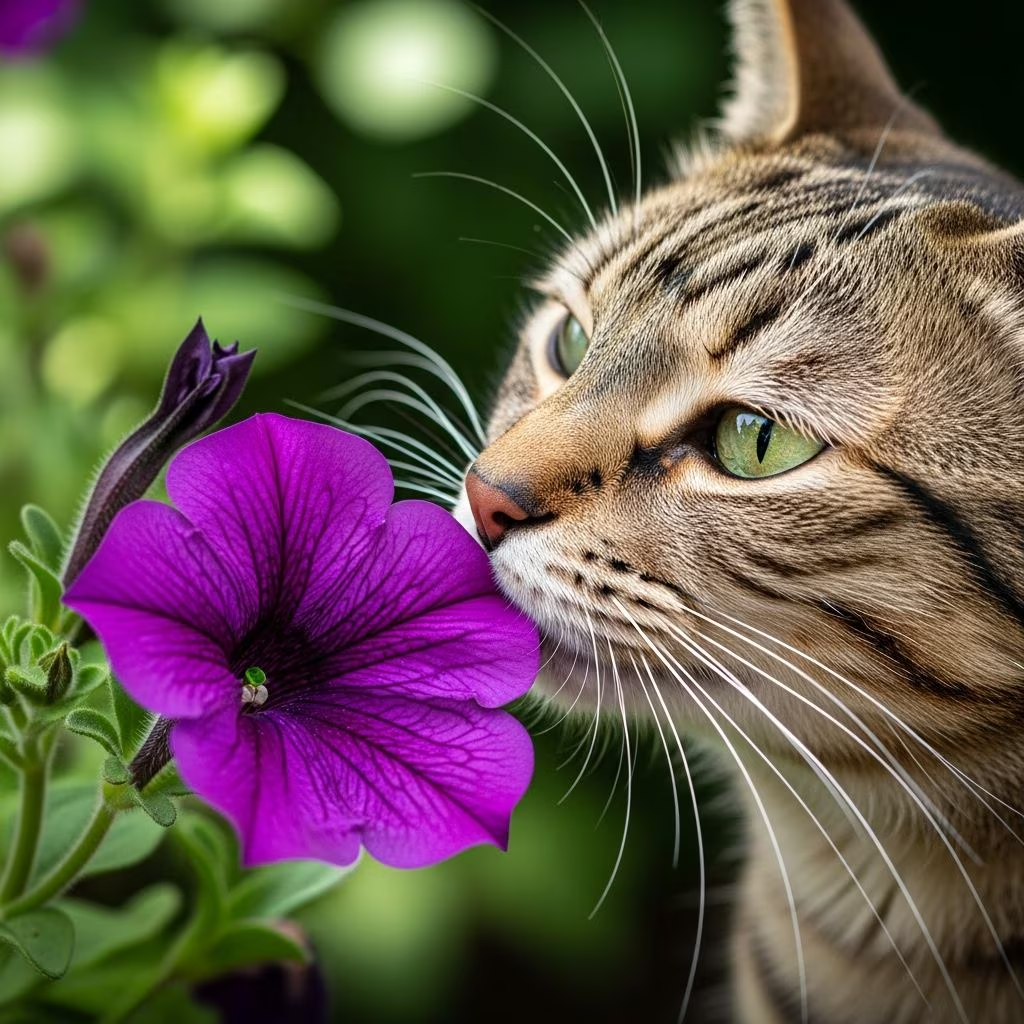
Petunias (Petunia species) are vibrant, trumpet-shaped flowers popular in gardens and hanging baskets, but cat owners often wonder if they pose a risk to their pets. The answer is clear: petunias are non-toxic to cats, as confirmed by authoritative sources like the ASPCA. This means accidental nibbling on leaves, stems, or flowers won’t cause poisoning or severe harm. However, like many plants, excessive consumption could lead to mild gastrointestinal upset due to the plant’s indigestible fiber, not toxicity.
Cats are natural explorers, often chewing on greenery for curiosity, fiber, or to induce vomiting for hairball relief. Understanding petunia safety allows cat owners to enjoy these beautiful blooms without panic, while knowing how to handle rare mild reactions and select truly hazardous plants to avoid. This article covers everything from scientific backing to practical tips, ensuring your feline friend’s safety amid colorful landscaping.
Are Petunias Toxic to Cats?
No, petunias are not toxic to cats. Belonging to the Solanaceae family, these annual or perennial plants lack harmful compounds like cardiac glycosides, saponins, or alkaloids that plague many ornamentals. The ASPCA explicitly lists petunias as non-toxic to cats, dogs, and horses, with no toxic principles identified. Veterinary toxicology resources, including the Merck Veterinary Manual, do not flag petunias among common houseplant poisons, unlike lilies or autumn crocus.
Peer-reviewed studies on plant ingestion in cats note that non-toxic plants like petunias rarely cause issues beyond mechanical irritation from rough foliage. A survey in veterinary literature found plant-eating common in young cats (up to 70% incidence), often benign and not linked to learned behavior, dispelling myths. Petunias’ appeal—bright colors in pink, purple, white, and red—makes them tempting, but their safety profile reassures owners.
Why the confusion? Petunias are nightshades, related to mildly toxic edibles like tomatoes (unripe parts), but evolved without feline-harmful solenine levels. UC Davis Veterinary Medicine’s toxic plant database omits petunias, prioritizing true threats. In short, your cat can safely bat at or taste petunias without veterinary emergency.
Why Do Cats Eat Plants?
Cats chew plants for instinctual reasons, not nutritional need as obligate carnivores. Primary drivers include:
- Hairball expulsion: Grass-like fibers induce vomiting to clear ingested fur.
- Curiosity and teething: Kittens explore orally; adults seek texture stimulation.
- Digestive aid: Fiber promotes gut motility, expelling parasites or aiding constipation.
- Boredom or stress: Indoor cats target accessible greenery.
- Nutrient seeking: Rare folate deficiency prompts pica, though commercial diets suffice.
Studies show 20-40% of cats eat plants weekly, with no toxicity in non-poisonous species. Petunias fit this pattern: appealing but harmless. Discourage excess by offering cat grass, but don’t fear occasional nibbles.
Symptoms If Your Cat Eats Petunias
Since petunias are non-toxic, expect no poisoning symptoms. However, large quantities (e.g., a full flower or leaves) may cause mild, self-limiting upset from plant fiber and moisture:
- Vomiting (once or twice)
- Diarrhea (soft stools)
- Drooling or mild lip smacking
- Lethargy for a few hours
- Decreased appetite briefly
These resolve in 12-24 hours without treatment. Differentiate from true toxicity: no seizures, blood in vomit, collapse, or organ failure. Monitor 24 hours; contact a vet if symptoms persist >48 hours, worsen, or include blood, dehydration (dry gums, sunken eyes), or weakness. Vets like those at PangoVet recommend observation first for confirmed non-toxics.
| Symptom | Likely Cause (Petunias) | True Toxicity Signs (e.g., Lilies) |
|---|---|---|
| Vomiting | Mild, single episode | Repeated, bloody, with lethargy |
| Diarrhea | Soft, resolves quickly | Watery, persistent, with pain |
| Behavior | Normal after rest | Depressed, seizures, coma |
What To Do If Your Cat Eats Petunias
Step-by-step response:
- Assess amount: Small nibble? No action needed.
- Monitor: Watch for listed symptoms 4-12 hours.
- Hydrate: Offer fresh water; withhold food 4-6 hours if vomiting.
- Call vet if: Symptoms severe/persistent, or uncertainty (e.g., mixed plants).
- Prevent repeat: Elevate pots, use deterrents like citrus spray.
No need for induced vomiting or charcoal with non-toxics. ASPCA Poison Control (888-426-4435) confirms petunias warrant no intervention.
Cats and Poisonous Plants To Avoid
Unlike safe petunias, many lookalikes threaten cats:
- Lilies (Lilium spp.): Nephrotoxic; 2 leaves fatal. Causes kidney failure.
- Daffodils: Lycorine in bulbs triggers vomiting, arrhythmias.
- Autumn Crocus: Severe GI/renal damage.
- Daylilies (Hemerocallis): Kidney toxic to cats.
- Azaleas: Cardiac glycosides cause depression, seizures.
Cats Protection and Merck warn: even pollen is deadly for lilies. Scan ASPCA lists before planting.
Safe Plants and Alternatives for Cats
Embrace these vet-approved, non-toxic options:
- Cat Grass (wheat/oat): Ideal for fiber/hairballs.
- Catnip (Nepeta cataria): Euphoric, safe; repels insects.
- Spider Plant (Chlorophytum): Hardy, air-purifying.
- Boston Fern: Lush, nibble-safe.
- Parlor Palm: Elegant, non-toxic.
UC Davis confirms these lack irritants. Grow in cat-proof zones.
Petunias vs. Other Common Garden Plants
| Plant | Toxicity to Cats | Symptoms if Ingested |
|---|---|---|
| Petunias | Non-toxic | Mild GI upset |
| Lilies | Highly toxic | Kidney failure, death |
| Daffodils | Toxic | Vomiting, heart issues |
| Catnip | Non-toxic | Behavioral stimulation |
| Spider Plant | Non-toxic | None/mild |
Prevention Tips for Cat-Safe Gardening
Proactive strategies:
- Elevate pots or use hanging baskets.
- Apply pet-safe bitter sprays (e.g., Grannick’s Bitter Apple).
- Provide distractions: cat trees, toys, dedicated greens.
- Fence gardens; supervise outdoors.
- Train with “no” and redirect.
Cats Protection PDF emphasizes education over removal.
Frequently Asked Questions (FAQs)
Are petunias safe for all cats?
Yes, non-toxic universally per ASPCA, but sensitive stomachs may react mildly.
What if my cat eats a lot of petunias?
Monitor for GI upset; vet if persistent. Usually self-resolves.
Can petunias cause allergies in cats?
Not typically; pollen allergies rare, unlike true allergens.
Are petunias toxic to dogs or other pets?
Non-toxic to dogs, horses too.
What plants should I never have around cats?
Lilies, daffodils, tulips, azaleas—consult ASPCA.
Why does my cat keep eating plants?
Instinct for fiber/hairballs; offer cat grass.
Petunias enhance homes safely. Vigilance and alternatives ensure harmony for you and your cat.
References
- Are Petunias Toxic to Cats? — Zoorithm. 2023. https://www.zoorithm.com/cats/are-petunias-toxic-to-cats
- Are Petunias Poisonous to Cats? Vet Approved — Catster. 2024-01-15. https://www.catster.com/cat-health-care/are-petunias-poisonous-to-cats/
- Toxicity of House Plants to Pet Animals — PMC/NCBI (Peer-reviewed). 2023-05-20. https://pmc.ncbi.nlm.nih.gov/articles/PMC10220692/
- Are Petunias Poisonous for Cats? Vet-Reviewed — Hepper. 2024. https://articles.hepper.com/are-petunias-poisonous-for-cats/
- Houseplants and Ornamentals Toxic to Animals — Merck Veterinary Manual (Official). 2025-06-01. https://www.merckvetmanual.com/toxicology/poisonous-plants/houseplants-and-ornamentals-toxic-to-animals
- Toxic Plant Garden — UC Davis School of Veterinary Medicine (.edu). 2024. https://www.vetmed.ucdavis.edu/toxic-plant-garden
- Petunia – Toxic and Non-toxic Plants — ASPCA (Official). 2025. https://www.aspca.org/pet-care/aspca-poison-control/toxic-and-non-toxic-plants/petunia
- Cat-safe plants guide — Cats Protection (.org). 2023. https://www.cats.org.uk/media/gb1jkhcr/cats_protection-safe-plants-guide.pdf



