

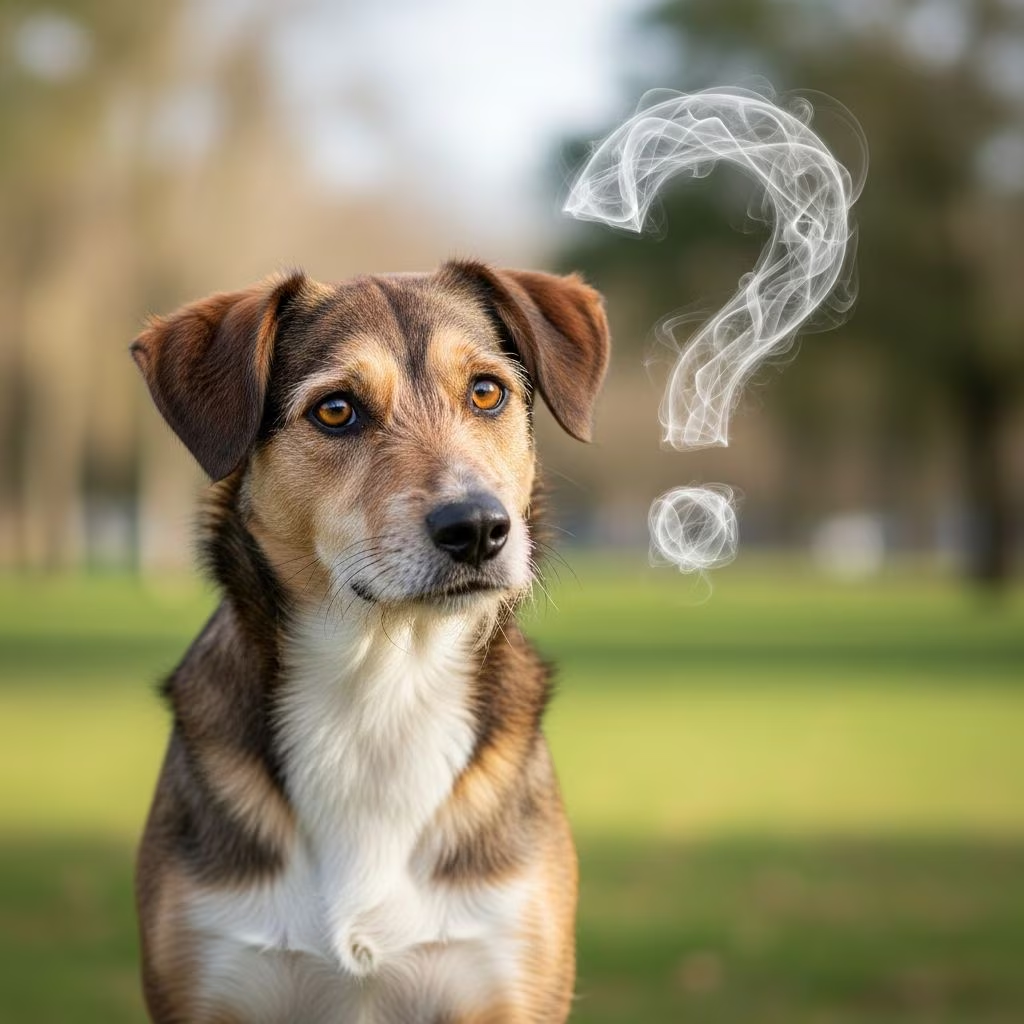
Pet parents often shower their dogs with an endless array of affectionate nicknames, from “Bubba” to “Pizza” and everything in between. But does this creative naming habit confuse our canine companions? Animal behavior experts agree that while dogs are remarkably adaptable, context, tone, and consistency play crucial roles in whether nicknames enhance communication or create minor hurdles. Far from causing lasting confusion, nicknames can even reinforce the special bond between you and your dog, provided they’re introduced thoughtfully.
Why Do We Give Our Dogs Silly Nicknames?
Nicknames emerge naturally from the joy of pet ownership. As Dr. Valerie Fridland, professor of linguistics at the University of Nevada, explains, these playful monikers mimic baby talk, signaling intimacy and affection. “We’re showing them through our altered forms of language that we have an intimacy that doesn’t exist compared to the way we talk to other people,” she notes. This sing-songy, rhyme-filled speech—think “Rosebud” for Rosey or “Barney Rubble Trouble” for Bonnie—embraces dogs as family members, much like we do with infants.
Humans thrive on sound symbolism, where names evoke personality traits: short, punchy ones for energetic pups, softer sounds for gentle giants. Dogs, however, tolerate far more variety, even unflattering ones like “Stinky,” that we’d never use with friends. Linguist Stanley Coren observes, “The vast majority of dogs will pick up whatever term you use around them as being the equivalent of a name.” Some dogs might even believe “No” is their name due to frequent use.
Beyond fun, nicknames deepen emotional connections. In multi-person households, a unique nickname from you can evoke positive associations, identifying the speaker and triggering a joyful response. This human-serving practice benefits dogs indirectly through our heightened engagement.
Do Multiple Nicknames Confuse Dogs?
Concerns arise when a dog’s official name evolves into a nickname parade, as with Bonnie becoming Barney, Barneth, and Bonatron. Early worries about similarity to “Bobbie” led to name trials, but the pup adapted seamlessly. Experts like Alana Stevenson, a dog behaviorist, caution against similar-sounding names in multi-dog homes or classes, as dogs’ superior hearing picks up nuances, but strangers may not.
However, confusion is minimal for attentive owners. Dogs learn through context: tone, body language, and situation. High-pitched calls with claps signal “come,” regardless of whether it’s “Bonnie” or “Pizza.” In group settings, trainers like Casellini use eye contact and precise timing: “We will ask the dogs to wait, open the door, and then call the designated dog by name.”
Research on “genius dogs” supports this adaptability. A study on vocabulary acquisition showed some dogs learn toy names via tests, suggesting capacity for multiple identifiers. Still, excessive nicknames might dilute responsiveness if dogs can’t discern when attention is required.
How Dogs Learn and Respond to Names and Nicknames
Dogs associate names with outcomes, not semantics. Positive reinforcement—treats, play—builds response. Dr. Jacobson advises against food-related names like “Chicken,” as incidental mentions distract food-motivated dogs.
Context is king. Steven Silver explains dogs analyze holistic cues: intonation, pre- and post-name actions. A nickname in the same joyful tone as the original prompts the same reaction. Pairing methods work too: repeat “Bonnie-Pizza” until synonymous.
In training, consistency matters. Rehearse names routinely, not just in emergencies. Attentive dogs connect meanings faster, making nickname training viable.
Teaching Your Dog a New Name or Nickname
Introduce nicknames systematically:
- Pairing Technique: Say original name + nickname repeatedly with rewards. E.g., “Frasier, good Bubba!” until “Bubba” alone suffices.
- Context Association: Use new name in familiar scenarios with matching tone/body language.
- Positive Reinforcement: Reward responses immediately to build association.
For name changes, act within 72 hours of adoption for easiest adjustment. Practice daily; multi-dog homes benefit from distinct syllables and group commands like “dogs” for all.
Naming Tips for Multi-Dog Households
Similar names pose challenges, but solutions exist:
| Challenge | Solution |
|---|---|
| Sound-alike names (Bonnie/Bobbie) | Choose distinct sounds; use eye contact/body language |
| Group recall chaos | Train ‘wait’ then individual calls; group name for all |
| Stranger confusion | Nuanced voice training; avoid near-identical names |
Stevenson recommends unrelated names across households. Casellini handles multiple “Lunas” via cues.
Benefits of Nicknames in Dog Training and Bonding
Nicknames foster fun, essential for engagement. Dogs sense mood via name choice—playful for games, serious for commands. Exclusive nicknames evoke one-on-one bonds, per Coren.
Non-emergency cuddles allow freewheeling names; pups often ignore them anyway, registering only salient calls. This flexibility keeps interactions lively without psychological harm.
Frequently Asked Questions (FAQs)
Do dogs get confused by multiple nicknames?
Dogs rarely get truly confused if context (tone, body language) remains consistent. They adapt via associations, though excessive variety may slightly reduce responsiveness.
Should you change a dog’s name if it’s similar to another pet’s?
Yes, opt for distinct names to minimize issues, especially with strangers. Dogs learn nuances, but prevention is easier.
Can dogs learn nicknames like toy names?
Yes, studies show some dogs learn 100+ words, including nicknames, through repetition and context.
Is baby talk with nicknames helpful?
It signals intimacy, boosting bonds. Dogs respond to altered speech marking affection.
What’s the best way to teach a new nickname?
Pair with original name, use consistent context/tone, and reward heavily.
Conclusion: Embrace the Nicknames Responsibly
Your dog’s nickname repertoire reflects love and creativity. With mindful use—context clues, distinction in multi-pet homes, consistent training—nicknames delight without confusing. Celebrate your pup’s adaptability; after all, as Casellini says, “It’s a human thing to make nicknames. It’s fun.”
References
- How Your Dog Actually Feels About All Those Silly Nicknames You… — Kinship. 2023. https://www.kinship.com/dog-behavior/do-dogs-like-their-nicknames
- Are All Your Silly Nicknames for Your Dog Confusing Them? — Kinship. 2023. https://www.kinship.com/dog-behavior/are-nicknames-for-dog-confusing
- Why You Should Let Your Dog Choose Their Own Name — Kinship. 2023. https://www.kinship.com/dog-behavior/let-dogs-choose-their-name



