

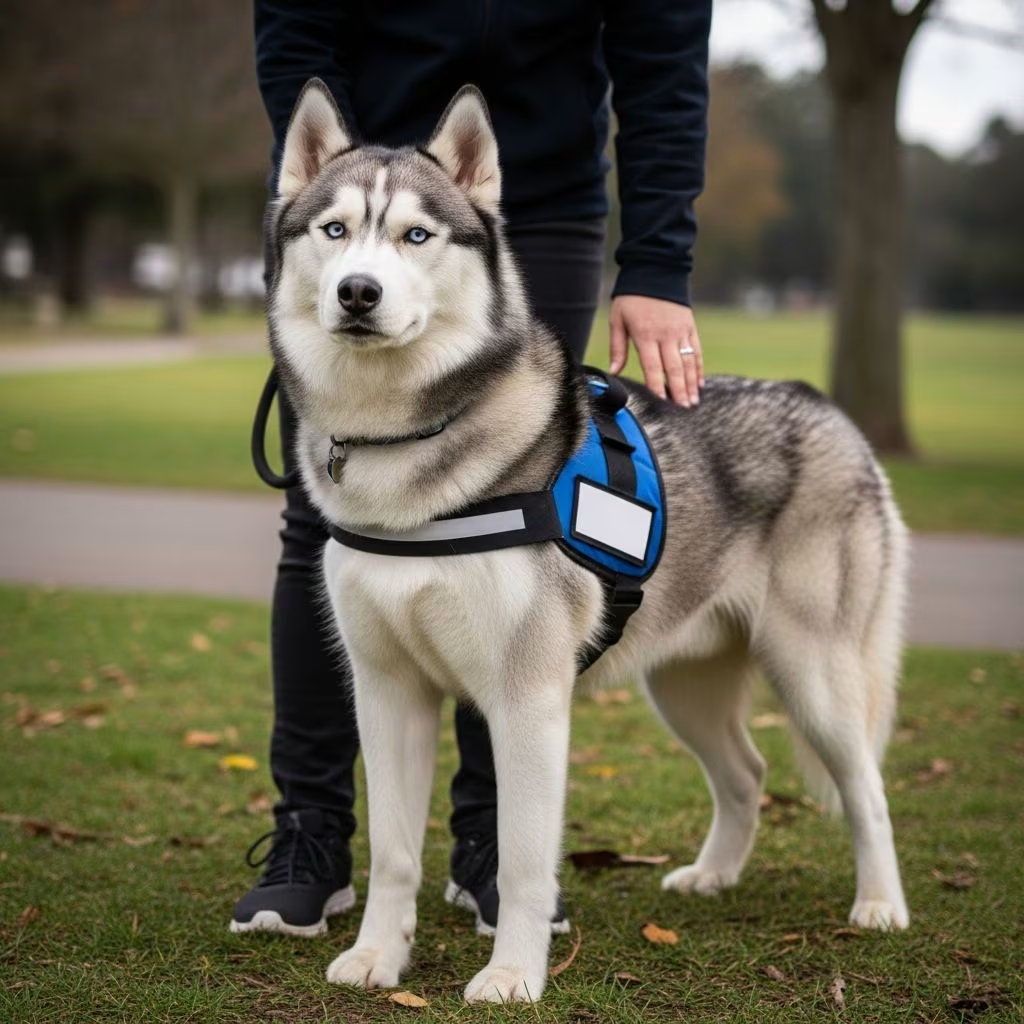
Siberian Huskies possess remarkable athleticism and intelligence, but their independent nature and high energy levels often make them less than ideal for service dog roles under standards like those from the Americans with Disabilities Act (ADA). While dedicated training can yield successes in specific cases, their breed traits frequently clash with the consistent focus and low-maintenance demeanor required for public access and task performance.
Understanding Service Dog Requirements
Service dogs must perform tasks directly mitigating a handler’s disability, such as alerting to seizures or providing balance support, while maintaining impeccable public behavior. Federal law mandates at least 120 hours of training over six months, including 30 hours in public, covering commands like sit, stay, heel, and distraction resistance. Breeds succeeding in these roles typically exhibit calm focus, eagerness to please, and adaptability to prolonged stillness—qualities evaluated from puppyhood through advanced certification.
Training unfolds in phases: early socialization (0-6 months) builds confidence via exposure to stimuli; basic obedience and public access (6-12 months) demand 200-300 hours for reliability in crowds; task-specific skills (12-18 months) require 120-150 hours; and final certification (18-24 months) tests endurance in high-distraction environments. Total timelines span 1-2.5 years, emphasizing reliability over speed.
Siberian Husky Breed Profile
Huskies, bred for Arctic sled-pulling, boast endurance, speed, and a thick double coat suited to cold climates. Their striking blue eyes, wolf-like appearance, and playful demeanor endear them to many, but these traits stem from working heritage demanding constant motion and pack-oriented independence. Adults weigh 35-60 pounds, stand 20-24 inches tall, and live 12-14 years with proper care.
- Physical Strengths: Exceptional stamina for mobility tasks; resilient in varied weather.
- Mental Attributes: High intelligence for complex learning; problem-solving aptitude.
- Social Traits: Friendly with humans and dogs, reducing aggression risks.
However, their vocal howls, escape-artist tendencies, and prey drive complicate confinement and focus.
Key Temperament Challenges for Service Work
Huskies’ **high energy** rivals working breeds like Labradors but lacks the latter’s off-switch for downtime, essential during long waits in stores or vehicles. Their **independence**—prioritizing self-directed action over handler cues—undermines obedience in unpredictable public settings. Easily bored, they may disengage or invent games, like pulling leashes playfully amid distractions.
Prey Drive and Distraction Sensitivity: Strong chasing instincts trigger reactions to small animals or movement, disqualifying them from calm public access. Social butterflies by nature, Huskies solicit attention, violating no-soliciting rules.
| Breed Trait | Service Dog Fit | Examples |
|---|---|---|
| High Energy | Poor | Needs 2+ hours daily exercise; fidgets in stillness. |
| Independence | Poor | Pulls sleds alone; ignores commands if uninterested. |
| Friendliness | Neutral | Low aggression but overly social. |
| Intelligence | Good | Learns tasks quickly with motivation. |
Training a Husky: Possibilities and Pitfalls
Start with puppy selection: Choose lines bred for focus, not racing, passing temperament tests for stability. Foundation builds on crate training, housetraining, and basics like down-stay amid noises. Positive reinforcement—treats, toys—harnesses their food motivation, but consistency counters stubbornness.
Public access proofing demands gradual exposure: quiet parks to bustling malls, logging 30+ public hours. Task training tailors to needs—diabetic alerts (90% accuracy potential) or item retrieval—but Huskies excel more in motion-based aids like balance support than sedentary alerts.
- Socialization Phase (0-6 Months): Expose to wheelchairs, crowds; teach ignore distractions.
- Obedience Build (6-12 Months): Master heel, recall; 200+ hours total.
- Task Mastery (12-18 Months): Customize drills, e.g., deep pressure therapy for anxiety.
- Certification Polish (18+ Months): Simulate exams; AKC Canine Good Citizen benchmarks.
Owners report 1-2 years minimum, often longer for high-drive breeds. Home training is legal under ADA, but professionals aid complex tasks.
Success Stories and Notable Exceptions
Rare Huskies thrive with expert handling: One mobility-aid Husky mastered door-opening and balance after 600+ training hours, per program reports. Medical alert cases highlight scent prowess, detecting changes pre-device alarms. These outliers share early intervention, rigorous exercise routines, and handler-dog bonds overriding breed defaults.
Hybrid vigor from Husky-Lab mixes sometimes balances energy with docility, though purebreds face steeper odds.
Legal and Practical Considerations
ADA grants public access rights sans certification, vests, or breed restrictions—but failure risks removal for disruption. No age minimum exists, but maturity (18+ months) ensures reliability. Costs range $2,000-$5,000 for basics, escalating with tasks.
Assessors disqualify for aggression, poor control, or non-mitigating behaviors. Handlers must prove task proficiency during challenges.
Alternatives to Huskies for Service Roles
Opt for proven breeds:
- Labrador Retrievers: Top choice for versatility, calm, trainability.
- Golden Retrievers: Gentle, intuitive for psychiatric tasks.
- Standard Poodles: Intelligent, hypoallergenic option.
- German Shepherds: Strong for mobility/physical aids.
Mixes offer hybrid benefits, screened for temperament.
Getting Started: Evaluation Checklist
Before committing:
- Does the puppy ignore distractions at 8 weeks?
- Can it settle 30 minutes post-exercise?
- Responds to commands 90%+ in new settings?
- Handler has 20+ hours/week for training?
Consult accredited programs for assessments.
Frequently Asked Questions
Can any Husky become a service dog?
No, only those passing rigorous temperament and training benchmarks; most lack the necessary focus.
How long to train a Husky service dog?
1.5-2.5 years, with 500+ hours total, due to energy management needs.
Are Huskies legal as service dogs everywhere?
Yes under ADA federally, but housing/local laws may impose breed restrictions; behavior trumps breed.
What tasks can Huskies perform well?
Mobility pulls, retrievals leveraging strength; less ideal for sedentary alerts.
Is professional training required for Huskies?
No, but recommended given breed challenges; ADA allows owner-training.
Conclusion: Weighing the Odds
Huskies shine in endurance sports but rarely match service dog ideals without extraordinary effort. For most, established breeds ensure smoother paths to independence. Prioritize evaluation and realistic goals for life-changing partnerships.
References
- Service Dog Training Breakdown: How Long and What’s Involved? — Dogbase.co. 2023. https://www.dogbase.co/blog/service-dog-training-breakdown-how-long-and-whats-involved
- How to Train Your Dog to Become a Service Dog — Mobility Works. 2024. https://www.mobilityworks.com/blog/how-to-train-your-dog-to-become-a-service-dog/
- What Kind of Training do Service Dogs Get? — Medical Service Dogs Org. 2023. https://www.medicalservicedogs.org/what-kind-of-training-do-service-dogs-get/
- FAQ: Training Basics — Psychiatric Service Dog Partners. 2024. https://www.psychdogpartners.org/resources/frequently-asked-questions/faq-training-basics
- How To Train A Service Dog | A Step-By-Step Guide — The Dog Kennel Collection. 2023. https://www.thedogkennelcollection.com/blog/how-to-train-a-service-dog-guide/
- Service Dog 101: Everything You Need to Know — American Kennel Club (AKC). 2024. https://www.akc.org/expert-advice/training/service-dog-training-101/
- Dog Training Programs — Tennessee Department of Correction (TN.gov). 2025. https://www.tn.gov/correction/state-prisons/dog-training-program.html
- Service Animals — ADA.gov (U.S. Department of Justice). 2024. https://www.ada.gov/topics/service-animals/



