

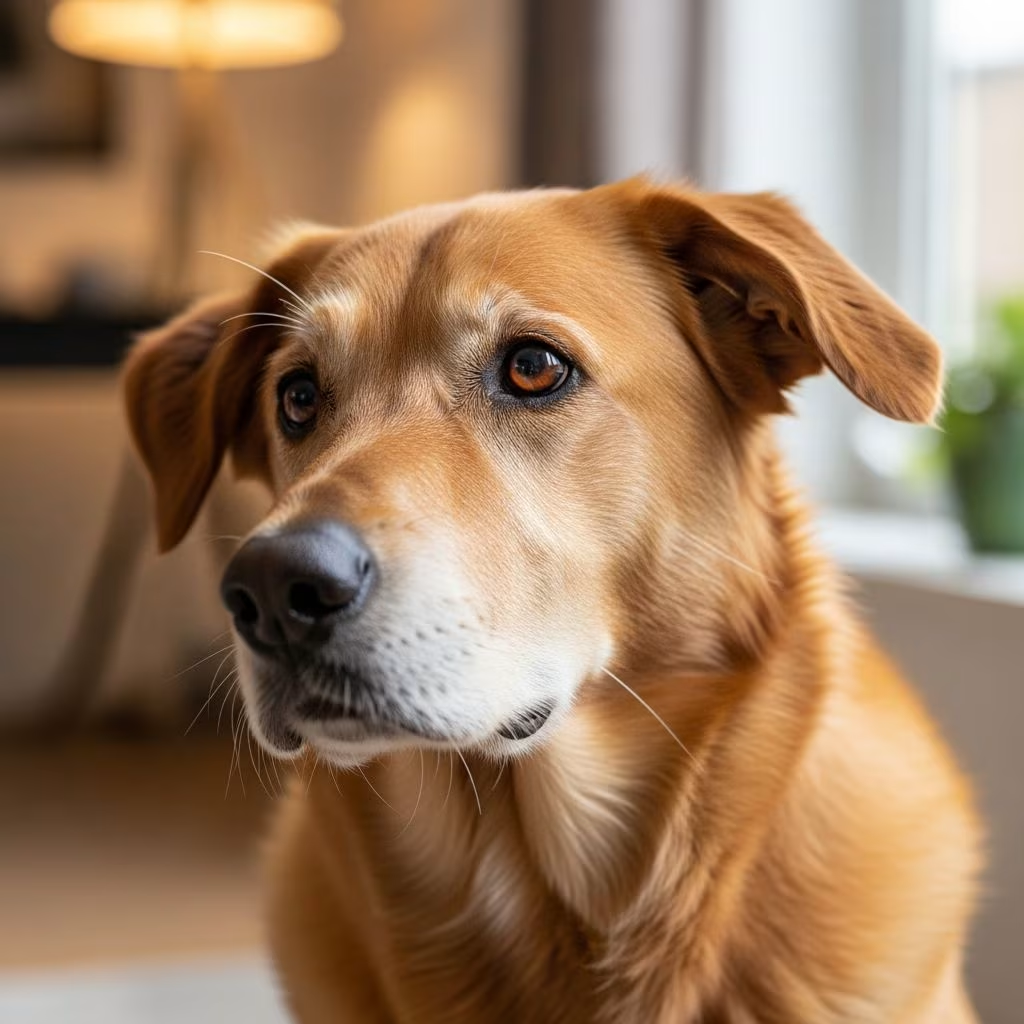
Dogs are often hailed as man’s best friend with an uncanny ability to read people. Many dog owners swear by their pet’s instincts, claiming their furry companions can spot a good or bad character from a mile away. But does science support this popular notion? Recent research paints a more nuanced picture, suggesting dogs may not be the moral arbiters we imagine.
The Popular Belief: Dogs as Character Detectives
For generations, anecdotes abound of dogs growling at villains or cuddling up to saints. This belief stems from dogs’ remarkable social intelligence, honed through thousands of years of domestication alongside humans. Owners frequently report their dogs reacting negatively to certain people, interpreting it as a judgment of character. But is this intuition or something else entirely?
- Dogs’ heightened senses allow them to detect subtle cues like pheromones, body language, and tone of voice.
- Pack mentality may lead dogs to mirror their owner’s feelings toward strangers.
- Cultural stories reinforce the idea, from faithful hounds in folklore to modern media portrayals.
While compelling, these observations are largely anecdotal. Controlled experiments are needed to separate fact from folklore.
Scientific Experiments: Testing Dogs’ Judgment
Researchers have designed clever studies to test if dogs form opinions based on observed human behavior. A landmark 2025 study from Kyoto University in Japan, published in Animal Cognition, involved 40 pet dogs across various ages. The experiments simulated real-world scenarios to assess preference for ‘generous’ versus ‘selfish’ humans.
Indirect Observation Experiment
In the first phase, dogs watched two strangers interact with another dog (or an imaginary one in controls). One stranger offered food generously, while the other withheld it selfishly. Afterward, the observing dogs interacted freely with both strangers.
- Behaviors measured: Which person the dog approached first, proximity maintained, jumping up.
- Expected outcome: Preference for the generous stranger.
- Result: No significant preference; choices hovered around 50% regardless of age or experience.
Direct Interaction Experiment
The second phase brought dogs and owners together. Strangers again acted generous or selfish toward the dog by offering or withholding food. Then, both held treats, and dogs chose whom to approach.
| Experiment Type | Generous Action | Selfish Action | Dog Preference |
|---|---|---|---|
| Indirect Observation | Fed demo dog | Withheld food | ~50% (no preference) |
| Direct Experience | Offered food to subject dog | Withheld food | ~50% (no preference) |
Older dogs, presumed wiser from more human exposure, showed no edge over puppies. This challenges assumptions about experiential learning in character judgment.
Contrasting Studies: Mixed Evidence
Not all research aligns. An earlier study in Neuroscience & Biobehavioral Reviews suggested dogs prefer those helpful to their owners. Owners feigned struggling with a container; researchers helped, refused, or stayed passive. Dogs rejected treats from ‘rude’ refusers.
- Dogs processed social cues like humans, influencing responses.
- Experts like Kim Stoll from Pima Animal Care Center affirm dogs read intentions acutely.
Yet, the 2025 Kyoto study counters this, noting methodological differences. Pack-living dogs and wolves in prior Austrian research also showed no preferences, attributing pet dog results to insufficient human exposure diversity.
Why Dogs Might Not Judge Like Humans
Dogs excel at reading emotions and intentions but may prioritize immediate cues over abstract morality. Food motivation often overrides social grudges—dogs are opportunists, not ethicists.
- Pragmatism over principles: A withheld treat today doesn’t blacklist someone forever if food appears later.
- Individual variation: Free-ranging vs. pet dogs experience humans differently, affecting socialization.
- Sensory bias: Scent, past trauma, or owner bias influences reactions more than ‘character.’
Lead researcher Hoi-Lam Jim notes reputation formation in dogs is more complex than thought, even for cooperative species.
Owner Bias and Pack Dynamics
Dogs often reflect their owner’s attitudes—a ‘pack’ loyalty. If you distrust someone, your tense posture cues your dog to growl. True judgment requires independence from owner influence, rare in experiments.
Behaviorists caution against over-relying on dogs for vetting people. A shy dog’s fear might signal past abuse, not bad character. Enthusiastic greetings could stem from food scent, not virtue.
Practical Implications for Dog Owners
Understanding this tempers expectations:
- Socialization is key: Expose puppies to diverse people to reduce fear-based misjudgments.
- Read context: A growl might mean unfamiliarity, not danger.
- Adoption tips: Stay authentic during meet-and-greets; dogs sense energy.
- Training focus: Build positive associations, not character-based prejudices.
While not flawless judges, dogs offer valuable emotional barometers when interpreted wisely.
Frequently Asked Questions (FAQs)
Q: Can dogs sense if someone is bad?
A: Dogs detect fear, aggression, or stress via cues like pheromones and body language, but recent studies show no consistent preference for ‘good’ over ‘bad’ people after observed actions.
Q: Why does my dog growl at some people?
A: Often due to past experiences, unfamiliar scents, owner tension, or protective instincts—not moral judgment.
Q: Do older dogs judge character better?
A: No, 2025 research found no age-related improvement in preferring generous humans.
Q: Should I trust my dog’s reaction to strangers?
A: Use as one data point alongside your judgment; dogs prioritize safety and food over ethics.
Q: How can I help my dog be a better ‘judge’?
A: Through balanced socialization, positive reinforcement training, and exposure to varied people in controlled settings.
Conclusion: Trust but Verify
Dogs enrich our lives with loyalty and perceptiveness, but science urges caution in crowning them character experts. Future studies on diverse dog populations—street dogs, working breeds—may refine our understanding. For now, cherish your dog’s instincts as companions, not oracles.
References
- Do dogs form reputations of humans? No effect of age after indirect and direct experience in a food-giving situation — Hoi-Lam Jim et al., Animal Cognition (Kyoto University). 2025-06-28. https://earthsky.org/human-world/are-dogs-a-good-judge-of-character/
- Are dogs good judges of character? — Civil War Talk Forum Discussion. Accessed 2026. https://civilwartalk.com/threads/are-dogs-good-judges-of-character.155652/
- Is It OK to Judge Someone Else’s Dog-Parenting Style? — Kinship. Accessed 2026. https://www.kinship.com/dog-lifestyle/heavy-petting-judge-dog-parenting-style
- New study proves dogs can judge character — KGUN 9 (Pima Animal Care Center insights). Accessed 2026. https://www.kgun9.com/lifestyle/totally-tucson/new-study-proves-dogs-can-judge-character
- New Study Challenges Idea That Dogs Judge Human Character — NBC Palm Springs. 2025-07-26. https://www.nbcpalmsprings.com/therogginreport/2025/07/26/new-study-challenges-idea-that-dogs-judge-human-character



