

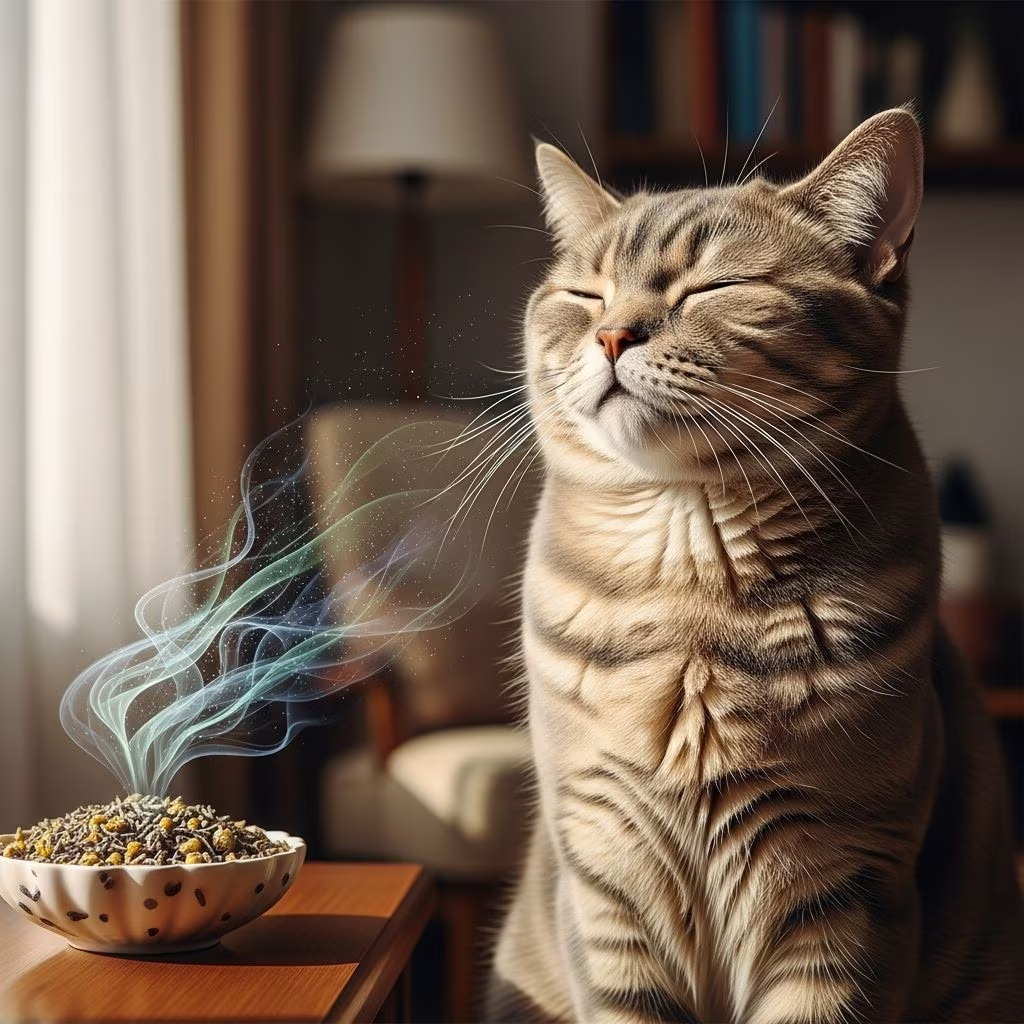
Cats possess an extraordinary sense of smell, far superior to humans, which plays a crucial role in their emotional well-being and behavior. Research demonstrates that certain scents, including synthetic pheromones and plant-based olfactory stimulants, can significantly reduce stress and induce calming responses in domestic cats.
How Cats Use Scent in Their Daily Lives
Cats rely heavily on their olfactory system to navigate their environment, communicate, and regulate emotions. With over 200 million scent receptors compared to humans’ 5 million, cats detect pheromones and subtle odorants that influence social bonds and security.
Feline pheromones, chemical signals produced by glands on the face, paws, and tail, mark territory and signal safety. When cats rub their cheeks against objects or people, they deposit **F3 facial pheromones**, creating a familiar, reassuring environment.
- Cheek rubbing: Deposits calming F3 pheromones to mark safe spaces.
- Scratching: Releases pheromones from paw pads to communicate territory.
- Allorubbing: Transfers scents between cats or owners for social bonding.
These behaviors highlight how scent provides cats with a sense of **security and control**, reducing anxiety in novel situations like vet visits or new homes.
The Science of Synthetic Pheromones for Cats
Synthetic analogs of feline pheromones, such as F3 fraction products (e.g., Feliway), mimic natural signals to promote calmness. Studies show mixed but generally positive results in reducing stress-related behaviors.
A randomized controlled trial found F3 diffusers reduced stress vocalizations and handling aggression in shelter cats, though some studies report no significant effect on multi-cat room stress scores. Another study demonstrated that pheromone-sprayed towels in carriers lowered meowing, freezing, and trembling during transport.
| Study Context | Pheromone Effect | Key Behaviors Reduced |
|---|---|---|
| Veterinary waiting room | Reduced vocalizations | Meowing, stress signs |
| Transport in carriers | Lowered stress indicators | Freezing, hiding, trembling |
| Shelter multi-cat rooms | Mixed results | No significant stress score change |
| Handling with catnip | Enhanced calming | Aggression, escape attempts |
Combining pheromones with **Nepeta cataria** (catnip) amplifies effects, as catnip encourages investigatory behaviors like sniffing and rubbing, helping cats deposit their own scents.
Catnip and Other Natural Olfactory Stimulants
Catnip elicits a characteristic response in about two-thirds of cats, including sniffing, licking, chin rubbing, and rolling—behaviors linked to relaxation and pleasure. A preference study showed cats favored catnip-scented cloths over conspecific or prey scents.
Unlike euphoric valerian root, catnip promotes calming through increased scent-marking activity, fostering environmental familiarity. Other plants producing semiochemicals, like silver vine, offer similar enriching effects.
- **Positive responses (60-70% of cats):** Sniffing, rubbing, rolling—indicative of enjoyment and reduced tension.
- **Neutral (30-40%):** Genetic insensitivity prevents response.
- **Duration:** Effects last 5-15 minutes per exposure, safe for repeated use.
Pet Remedy and Plant-Based Calming Sprays
Pet Remedy, a blend of valerian, sage, and other botanicals, showed promising results in a study of 44 domestic cats. Cats interacted more with Pet Remedy (mean 18.09 interactions) than controls, displaying calming behaviors like sniffing, rolling, and nuzzling.
Statistical analysis (Friedman’s test, Wilcoxon Signed-Rank) confirmed significant differences, with 23 cats showing no response to controls but positive engagement with the spray. These behaviors suggest olfactory enrichment effectively reduces stress and promotes natural expression.
Unlike pheromones, plant-based sprays provide broad appeal without relying on synthetic analogs, making them suitable for multi-pet homes.
Does Your Scent Comfort Your Cat?
While cats bond with owners, human scent alone provides limited reassurance. A study on the “secure base effect” found cats more comforted by physical owner presence than scented items in novel environments.
Cats vocalized more with scented objects, rubbed less on them, and showed stronger stress resilience with humans present. Scented items may even increase stress if associated with unfamiliar handlers.
“Cats were more likely to interact with the owner when present… but did not appear to get much reassurance from something that smells like their owner.”
Practical Ways to Use Calming Scents for Cats
Incorporate scents strategically to ease transitions and daily stress:
- Spray carriers and beds with pheromone analogs or Pet Remedy before travel.
- Diffuse in multi-cat homes to reduce inter-cat tension.
- Offer catnip toys for play and marking sessions.
- Combine therapies: Pheromones + catnip for handling prep.
- Monitor responses: Track behaviors like reduced hiding or vocalizing.
Veterinary protocols using low-stress handling with pheromones have shown reduced sedation needs during procedures.
Limitations and Considerations in Scent Therapy
Not all cats respond uniformly—genetics affect catnip sensitivity, and pheromone efficacy varies by context. Plant stimulants like valerian may cause hyperactivity in some, requiring observation.
Future research should incorporate thermo-imaging and ethograms for precise behavioral analysis. Always pair scent therapy with environmental enrichment, routine, and veterinary advice for holistic stress management.
Frequently Asked Questions (FAQs)
Do synthetic pheromones really work for all cats?
Results are mixed; about 70-80% show reduced stress signs in studies, but efficacy depends on context like shelters vs. homes.
Is catnip safe for daily use?
Yes, non-addictive and safe; effects wane after 15 minutes, preventing tolerance buildup.
Why doesn’t my scent calm my cat when I’m away?
Cats prefer physical presence over scent alone; items may remind them of absence rather than provide security.
How quickly does Pet Remedy work?
Calming responses appear within 1-3 minutes, with increased interactions observed in trials.
Can scents help aggressive cats?
They reduce underlying stress contributing to aggression, especially when combined with behavior modification.
References
- Calming effect of Pet Remedy in domestic cats (Felis catus) — PetVet Biomed. 2020. https://www.petvetbiomed.com/html5/web/10200/38790ImageFile3.pdf
- Tools for managing feline problem behaviors: Pheromone therapy — PMC / NCBI. 2024-08-26. https://pmc.ncbi.nlm.nih.gov/articles/PMC11343345/
- The effect of owner presence and scent on stress resilience in cats — AVSAB / Applied Animal Behaviour Science (Behnke et al.). 2021. https://avsab.org/does-your-cat-find-your-scent-comforting/
- A long-lasting gel-based diffuser of feline pheromone can help… — Frontiers in Veterinary Science. 2024. https://www.frontiersin.org/journals/veterinary-science/articles/10.3389/fvets.2024.1445108/full
- Behavioral responses of domestic cats to human odor — PLOS One. 2016. https://journals.plos.org/plosone/article?id=10.1371/journal.pone.0324016



