

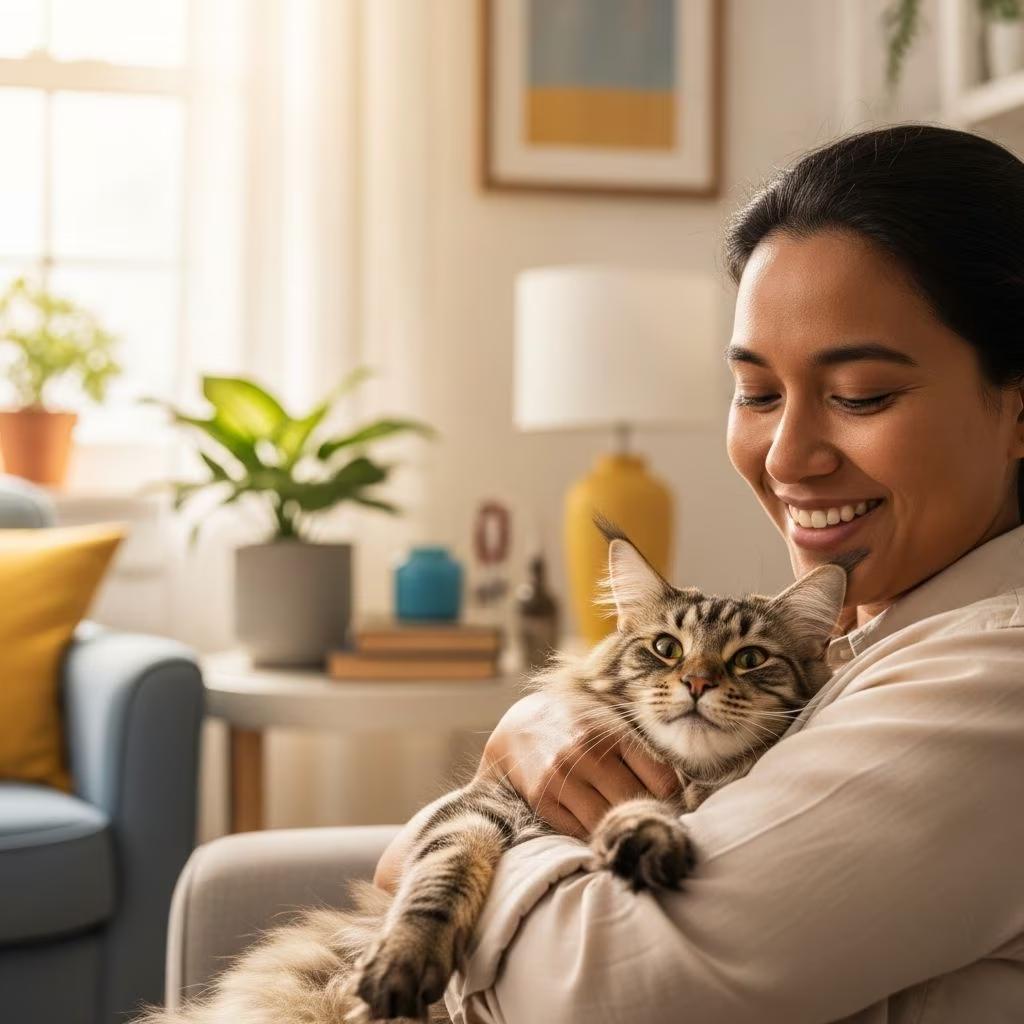
Cat ownership has long been associated with joy, companionship, and a unique bond that many describe as life-enhancing. But does science support the idea that cat owners are genuinely happier than those without feline friends? Studies reveal compelling evidence that interacting with cats can improve psychological health, reduce stress, and even rival the life satisfaction from human relationships.
The Science Behind Cat Ownership and Happiness
Research consistently shows cat owners report higher levels of happiness and emotional well-being. An Australian study found cat owners score better on psychological health questionnaires, feeling happier, more confident, and less nervous than non-pet owners. They also sleep better, focus more effectively, and handle life’s challenges with greater ease.
Cats’ playful antics and calming presence help lift moods. People with cats experience fewer negative emotions and less isolation. Notably, single cat owners reported bad moods less often than those with both a cat and a partner, highlighting cats’ reliable companionship.
Even passive interactions like watching cat videos online reduce anxiety, annoyance, and sadness while boosting hope and contentment. This effect restores energy, though it turns counterproductive if used for procrastination.
How Cats Reduce Stress and Improve Physiological Responses
Cats excel at stress reduction. In stress tests, cat owners exhibited lower resting heart rates and blood pressure before tasks. During challenges, they felt more challenged than threatened, maintained lower vitals, and made fewer errors—especially with their cat present. They also recovered faster post-stress.
Why? Cats provide non-judgmental comfort without overreacting to our distress, outperforming even partners in calming effects. A scientific scale measures emotional support from cats based on seeking them during stress.
Recent physiological studies confirm interactions with cats decrease emotional arousal and parasympathetic activity while increasing heart rates, correlating with cortisol and oxytocin levels. This arousing effect contrasts traditional stress-reduction views but promotes health through positive excitation.
- Petting cats lowers cortisol (stress hormone) and raises oxytocin (trust and bonding hormone).
- Cat owners show lower heart rates and blood pressure during stress, recovering quicker.
- Positive correlations: heart rate with cortisol, cortisol with oxytocin, suggesting balanced hormonal responses.
Mental Health Benefits of Owning a Cat
Cat ownership boosts mental health profoundly. Owners are more socially sensitive, trusting, and likable toward others. ‘Cat people’ perceive higher social support, even from cat video viewers.
Pets like cats increase life satisfaction equivalent to family or friends, valued at up to £70,000 yearly in well-being terms. Cat owners score higher in openness; general pet owners are more open, conscientious, and extraverted than non-owners.
Cats reduce loneliness, enhance self-esteem, and provide unconditional support. In a poll, 86% of pet owners noted positive mental health impacts: 69% cited stress/anxiety reduction, unconditional love, companionship; 66% a calming presence.
| Benefit | Percentage of Pet Owners Reporting | Source |
|---|---|---|
| Reduce stress/anxiety | 69% | |
| Unconditional love/support | 69% | |
| Companionship | 69% | |
| Calming presence | 66% | |
| True friends | 63% |
Physical Health Advantages for Cat Owners
Beyond mental perks, cats support physical health. The Human-Animal Bond Research Institute (HABRI) states cat ownership reduces cardiovascular risk, improves heart health, alleviates isolation, and lowers stress.
In children, cats strengthen early immunity and aid autism families. Additional benefits include environmental friendliness vs. dogs, coping with loss, attracting partners, higher intelligence correlations, better sleep, fewer allergies, and even life-saving alerts.
Cat owners exercise more, spend time outdoors, and feel more loved, linking pets to overall happiness.
Personality Traits of Cat Owners
Cat lovers differ personality-wise. Compared to dog owners, they are more open to experiences but less extraverted, warm, friendly, and more neurotic, experiencing and suppressing negative emotions more.
However, this doesn’t negate benefits; cat ownership enhances traits like openness and social sensitivity regardless. Cat carers are more open; dog carers more extraverted, agreeable, less neurotic.
Comparing Cat Owners to Non-Owners and Dog Owners
Are cat owners happier than others? Correlations suggest yes, but causation needs caution—happy people might choose cats. Yet, cat owners outperform non-owners in well-being metrics, with unique calming effects.
Vs. dog owners: Cats suit introverted, open personalities; dogs extraverted ones. Both boost satisfaction equally to human bonds.
Pets foster social connections, emotional well-being, and quality of life.
Potential Downsides and Considerations
Not all effects are purely positive. One study noted excitatory responses (higher heart rates) from cat interactions, challenging pure relaxation narratives but indicating arousal for health.
Neurotic tendencies in cat owners exist, but ownership mitigates negatives via support.
Frequently Asked Questions (FAQs)
Do cat owners really experience more happiness?
Yes, studies show cat owners report higher happiness, confidence, and fewer negative emotions than non-owners.
Can cats lower stress levels?
Absolutely—petting reduces cortisol, boosts oxytocin; owners have better stress responses.
Are there physical health benefits to owning a cat?
Yes, including lower heart disease risk, better recovery from stress, and immunity boosts in kids.
How do cat owners’ personalities differ?
More open, less extraverted/neurotic than dog owners or non-owners.
Is cat ownership as good as human relationships for well-being?
Research equates pets’ life satisfaction boost to family/friends, worth £70,000 yearly.
Conclusion: The Feline Path to Happiness
Evidence overwhelmingly supports cat ownership enhancing happiness through mental, physiological, and social benefits. From mood lifts to heart health, cats offer profound, science-backed joy. Whether independent or cuddly, they enrich lives uniquely.
References
- The Science-Backed Benefits of Being a Cat Lover — Greater Good Science Center, UC Berkeley. 2019-10-28. https://greatergood.berkeley.edu/article/item/the_science_backed_benefits_of_being_a_cat_lover
- Effects of Interactions with Cats in Domestic Environment on … — National Institutes of Health (PMC). 2023-07-01. https://pmc.ncbi.nlm.nih.gov/articles/PMC10340037/
- New study proves pets increase human life satisfaction and wellbeing — University of Kent. 2024-10-15. https://www.kent.ac.uk/news/health-social-care-and-wellbeing/36435/new-study-proves-pets-increase-human-life-satisfaction-and-wellbeing
- How Cats Boost Our Health and Happiness in Winter and Beyond — Cat Care Society. 2024-01-10. https://www.catcaresociety.org/how-cats-boost-our-health-and-happiness-in-winter-and-beyond/
- Is Owning a Cat Good for Your Health? — Brownsburg Animal Clinic (citing HABRI). 2023-11-20. https://brownsburganimalclinic.com/is-owning-a-cat-good-for-your-health/



