

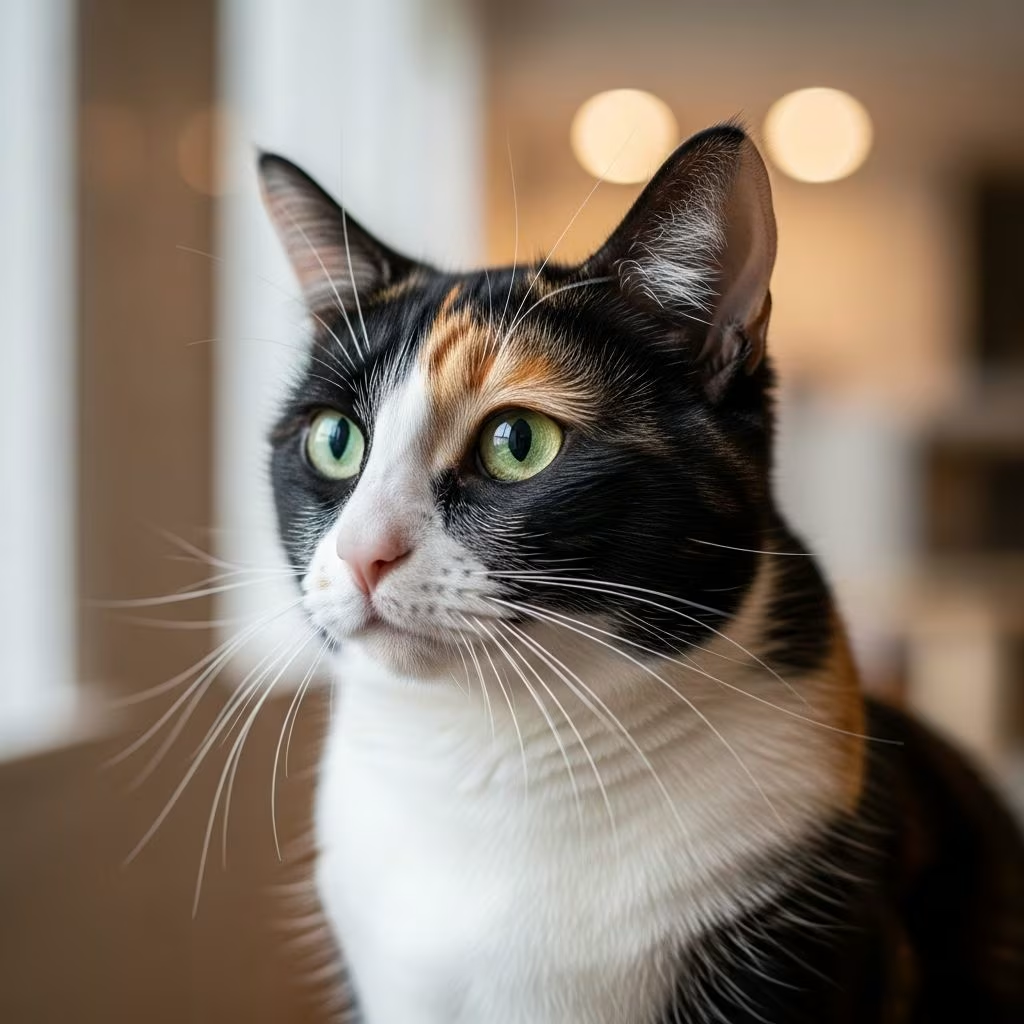
Calico cats, with their striking tri-color coats of orange, black, and white, have long captivated cat lovers. But a persistent myth suggests these felines are “autistic” due to their independent, sassy personalities. Because autism describes human neurology, it simply doesn’t apply to cats. So no, calico cats are not autistic.
This article dives into the genetics behind calico coats, debunks the autism myth, explores observed behaviors, and examines the beneficial role cats play for children with autism spectrum disorder (ASD). Drawing from veterinary insights and scientific studies, we’ll clarify why calicos seem “special” without anthropomorphizing their traits.
What Is a Calico Cat?
Calico cats feature a distinctive patchwork of **orange (or red), black, and white fur**. This pattern isn’t a breed but a coat coloration found across breeds like American Shorthair, Maine Coon, or Persian. True calicos have large white patches separating vivid orange and black areas, distinguishing them from similar tortoiseshell cats, which lack significant white.
Calicos are almost exclusively female due to genetics. Nearly all are female (99.95%), with rare male exceptions being sterile XXY mosaics.
Genetics of Calico Cats: Why the Tri-Color Coat?
The magic behind calico coats lies in **X-chromosome inactivation** (also called Lyonization), a process where female mammals randomly silence one X chromosome in each cell to balance gene dosage with males (who have one X and one Y).
- The orange fur gene (O) and black fur gene (o) are on the X chromosome.
- In females (XX), some cells express O (orange), others o (black).
- White spotting is controlled by a separate gene (S) on an autosome, creating patches.
- Random inactivation early in embryonic development leads to the mosaic pattern—no two calicos are alike.
Males (XY) can’t be calico unless they have an extra X (Klinefelter syndrome, XXY), making them sterile. This genetic quirk explains their rarity and ties directly to behavior myths.

Are Calico Cats Really Autistic?
No. **Autism spectrum disorder (ASD)** is a human neurodevelopmental condition involving social communication challenges, repetitive behaviors, and sensory sensitivities. Cats don’t have ASD; their brains differ fundamentally from humans.
The myth stems from **anthropomorphism**—attributing human traits to animals. Calicos’ spirited, aloof demeanor is misread as “autistic-like.” In reality:
- Calicos aren’t more autistic; they exhibit typical cat behaviors amplified by personality.
- Studies show no link between coat color and neurology in cats.
- Behavioral variations arise from genetics, environment, and individual temperament, not human disorders.
Veterinarians emphasize: Labeling cats as “autistic” hinders understanding true feline needs. Instead, focus on breed-agnostic enrichment.
Why Do Calico Cats Seem So Sassy?
Calicos often earn reputations as feisty “divas.” Owners report:
- High energy and playfulness: They love chasing toys, climbing, and batting at anything moving.
- Vocality: Loud meowing to demand attention or food.
- Independence: Selective affection—cuddles on their terms.
- Attitude: Swatting, nipping, or “talking back” when annoyed.
Is this genetic? Limited studies suggest sex-linked traits influence personality. Female calicos (XX) may show bolder behaviors due to hormonal or genetic factors. Anecdotes abound: “My calico rules the house!” But experts note selection bias—memorable personalities stick out.
| Common Calico Traits | Reality Check |
|---|---|
| Sassy/Attitude-prone | Confident, not disordered |
| Independent | Typical feline self-reliance |
| Vocal | Communicative, breed-independent |
| Affectionate on terms | Selectively social |
Environment matters most: Early socialization reduces “sass.” Provide scratching posts, puzzle feeders, and interactive play to channel energy.
Health Issues in Calico Cats
Calicos face no autism-related issues but share female cat risks:
- **Urinary tract problems**: Monitor for straining or blood.
- **Obesity**: High-energy needs require measured feeding.
- **Dental disease**: Daily brushing prevents gingivitis.
- **Cancer risks**: Spaying early reduces mammary tumors.
Males (rare) need genetic screening. Annual vet checkups ensure longevity—calicos live 12-15 years on average.
Cats and Autism: The Real Connection
While calicos aren’t autistic, cats benefit children with ASD. Research shows:
- Children with ASD adopting shelter cats showed **increased empathy**, reduced **bullying, hyperactivity, and separation anxiety**.
- Cats provide low-pressure companionship; their quiet nature suits sensory sensitivities (unlike noisier dogs).
- Affectionate cats form strong bonds with ASD children, improving prosocial behaviors.
- Cats adopted as kittens are more affectionate and less aggressive toward ASD kids.
One study randomized families: Cat adopters saw social gains within weeks, with bonds persisting. Robot cats also boosted interaction, eye contact, and verbalization in autistic children.
“Children with ASD experienced significant increases in the social skill of empathy… after the introduction of a shelter cat.”
Tips for Adopting a Calico Cat
- Choose temperament: Test interaction; select calm, friendly cats.
- Socialize early: Expose to household sounds/people from 8 weeks.
- Enrich environment**>: Vertical spaces, toys, window perches.
- Health screen: Vet check for genetics, vaccines.
- Spay/neuter: Prevents behaviors/health issues.
Shelter calicos make wonderful pets—adopt don’t shop!
Frequently Asked Questions (FAQs)
Can male calico cats exist?
Yes, but rarely (1 in 3,000). They have XXY chromosomes, are usually sterile, and may need health monitoring.
Are all tortoiseshell cats calico?
No. Torties have orange/black mix without much white; calicos require prominent white.
Do calico cats have more attitude?
Perception bias. Many are loving; personality varies by individual.
Are calicos good with kids, especially those with autism?
Yes, if socialized. Studies show cats enhance empathy and reduce anxiety in ASD children.
Why are calico coats unique?
X-inactivation creates random patches in females.
Should I get a calico if I want a cuddly cat?
They can be affectionate but independent. Match lifestyle to cat.
References
- New Research Shows Cats Help Children with Autism — Human Animal Bond Research Institute (HABRI). 2020-12-09. https://habri.org/pressroom/20201209/
- Cats and autistic people: scoping out the purrfect pair? — National Elf Service. N/A. https://www.nationalelfservice.net/learning-disabilities/autistic-spectrum-disorder/cats-and-autistic-people/
- Affectionate Interactions of Cats with Children Having Autism Spectrum Disorder — National Institutes of Health (PMC). 2018. https://pmc.ncbi.nlm.nih.gov/articles/PMC5862067/
- Are Calico Cats Autistic? Vet-Reviewed Facts & FAQ — Catster. N/A. https://www.catster.com/lifestyle/are-calico-cats-autistic/



