

Are Bombay Cats Rare?
Bombay cats are **not considered extremely rare**, but they are certainly less common than many other domestic cat breeds. While they have gained popularity since their development in the 1950s, they remain a specialized breed that requires seeking out reputable breeders rather than finding them readily available in shelters or pet stores. Understanding the rarity of Bombay cats involves examining their history, current population, and availability in different regions.
The History Behind Bombay Cat Development
The Bombay breed has a relatively recent and fascinating history compared to many other cat breeds. **Nikki Horner**, a breeder from Louisville, Kentucky, developed the Bombay starting in the late 1950s with the goal of creating a small feline that resembled a miniature black panther. Her vision was to combine the sleek, short coat of the Burmese with the striking black color of the American Shorthair.
Horner’s initial attempts in 1953 were unsuccessful, as the resulting kittens developed thick coats and looked like poor-quality American Shorthairs. However, she remained determined and made another attempt in the mid-1960s. By breeding a female black American Shorthair named Shawnee Obsidian to a Brown Burmese male named Shawnee Cassius Clay, she finally achieved her vision. **The first successful Bombay kitten was born in 1965**, marking the beginning of a remarkable breed.
Official Recognition and Breed Standards
The journey to official recognition took several years after the breed’s successful development. The Cat Fanciers’ Association (CFA) officially recognized and registered the Bombay in 1970. This was followed by recognition from The International Cat Association (TICA) in 1979. Today, the breed is recognized by almost all major cat associations worldwide, though its recognition as a preliminary breed in FIFe (Fédération Internationale Féline) shows ongoing standardization efforts.
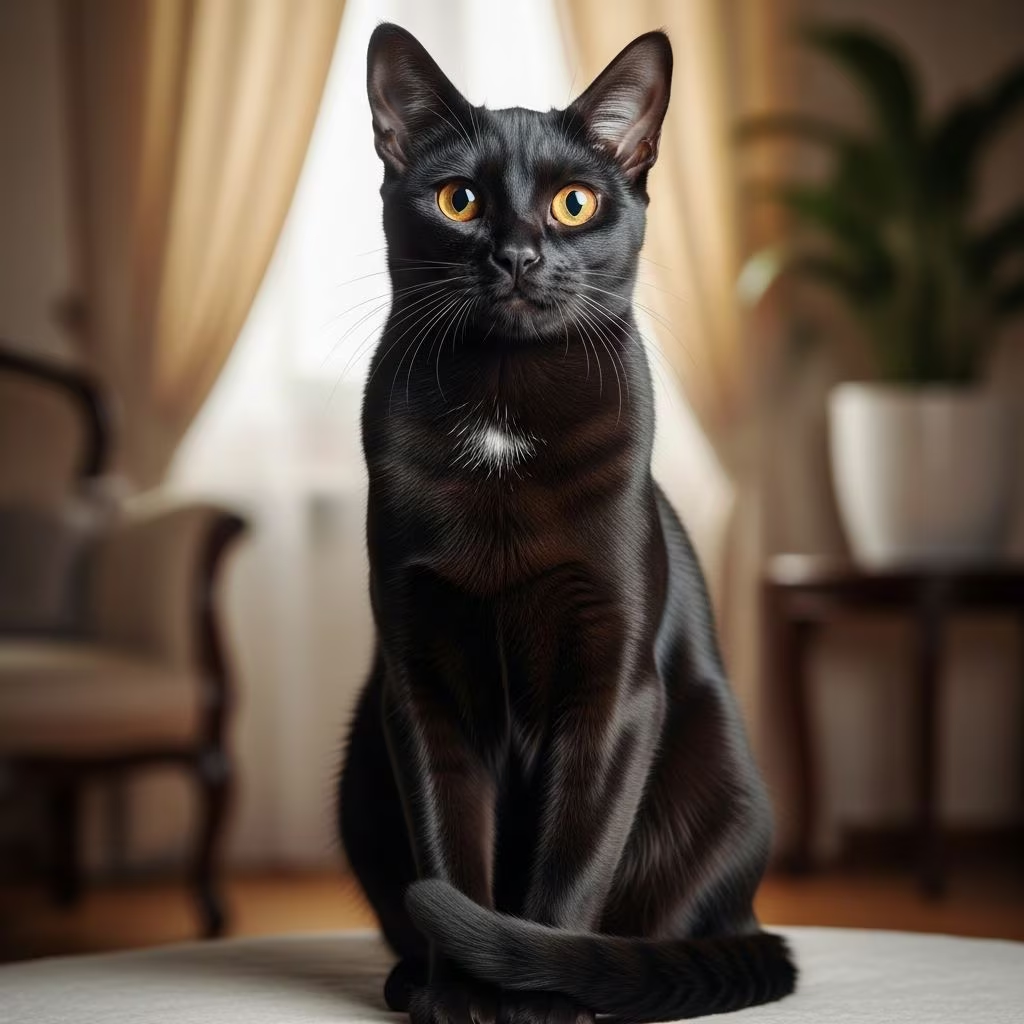
The breed standards define Bombay cats as medium-sized, muscular cats with distinctive features. Key characteristics include:
- All-black coats, including whiskers, with black skin on nose and paw pads
- Copper-golden colored eyes (often described as “new copper penny eyes”)
- Sleek, glossy coat resembling “black patent leather”
- Rounded head with no sharp angles
- Short, muscular body despite their deceptive weight
Why Bombay Cats Aren’t More Common
Several factors contribute to the Bombay cat breed’s limited availability compared to more mainstream breeds. First, as a **relatively modern and specialized breed**, Bombay cats require dedicated breeders who specifically focus on maintaining breed standards. Unlike naturally occurring color variations or breeds that developed over centuries, Bombays require intentional genetic combinations to maintain their distinctive appearance.
Second, there are **two distinct Bombay variants**—the American Bombay and the British Bombay—which further divides the breeding community. The American type comes from crosses between sable American Burmese and black American Shorthairs, while the British type originates from European Burmese and black domestic short-haired cats. This distinction means that breeders may specialize in one type or the other, reducing overall availability.
Additionally, Bombay cats are **rarely found in animal shelters**, which is where many people expect to find adoptable cats. Since they are a pedigreed breed developed by intentional breeding programs, they are less likely to end up in rescue situations. When Bombays do appear in shelters, they are typically snapped up quickly by enthusiasts of the breed.
Regional Availability and Breeder Networks
The availability of Bombay cats varies significantly by geographic region. In the United States, where the breed originated, there are established breeder networks and more readily available Bombay cats. However, in other countries, finding a reputable Bombay breeder may require extensive research and possibly traveling considerable distances or purchasing from breeders online.
The international recognition of the breed has helped expand availability globally. Breeders have successfully established Bombay breeding programs in the United Kingdom, Europe, and other regions. However, the concentration of breeders remains highest in areas with strong cat fancy traditions and established cat associations.
Bombay Cat Characteristics and Appeal
Understanding what makes Bombay cats unique helps explain their specialized status in the cat world. These cats are commonly described as **part-cat, part-dog, and part-clown**, balancing both easy-going and inquisitive attitudes.
Their temperament includes:
- Highly affectionate and people-oriented nature
- Intelligence inherited from both parent breeds
- Playful personality with a touch of mischief
- Excellent adaptability to various environments
- Strong bonds with family members and other pets
- Compatibility with dogs and most other animals
Their distinctive appearance—the jet-black coat combined with striking copper eyes and sleek muscular build—makes them instantly recognizable and highly desirable to cat enthusiasts who appreciate their panther-like aesthetic.
Caring for Bombay Cats: Grooming and Maintenance
One advantage of Bombay cats is their relatively low-maintenance coat care requirements. Their **short, glossy coats shed minimally** and require very little grooming compared to long-haired breeds. This makes them practical for owners who want a stunning-looking cat without extensive grooming demands.
Interestingly, some Bombay kittens are born with lighter coats, but this color doesn’t persist as they mature. Young kittens may display sable coloring or even white patches, but these quickly fade as they grow into their characteristic solid black coats. By adulthood, all properly bred Bombays should display the breed’s signature jet-black coloring.
Factors Affecting Bombay Cat Rarity
| Factor | Impact on Rarity |
|---|---|
| Modern breed development | Requires specialized breeders maintaining specific genetic lines |
| Two distinct variants | Divides breeding population between American and British types |
| Pedigree status | Rarely found in shelters or casual breeding situations |
| Geographic distribution | Limited to regions with established breeding networks |
| Breed standards | Strict requirements limit the gene pool available for breeding |
| Maintenance breeding | Outcrossing to Burmese and American Shorthairs required periodically |
Finding a Bombay Cat Breeder
If you’re interested in acquiring a Bombay cat, locating a reputable breeder is essential. **Legitimate breeders are typically affiliated with major cat associations** such as the CFA or TICA. These organizations maintain breeder registries and enforce ethical breeding standards.
When searching for a breeder, consider:
- Verifying association membership and credentials
- Requesting references from previous buyers
- Visiting the breeder’s facility to assess living conditions
- Reviewing health testing records and genetic screening
- Understanding breeding contracts and health guarantees
- Asking about the breeder’s breeding philosophy and goals
The Role of Influential Breeders
The Bombay breed’s development and continued popularity owe much to dedicated breeders beyond the original creator. **Herb and Suzanne Zwecker** were major influencers in the breed’s progression and popularity, developing new breeding lines and introducing fresh genetic combinations. Their work, along with other dedicated breeders, has kept the breed viable and prevented genetic bottlenecking.
The Shawnee and Road To Fame breeding lines remain foundational in many modern Bombay pedigrees, demonstrating how early breeding decisions continue to influence the breed generations later.
Interesting Bombay Cat Facts
- The breed is named after the port city of Bombay (now Mumbai), India, though the breed was developed entirely in the United States
- Bombay cats enjoy burrowing deep into blankets to find the warmest spots, displaying their love of comfort and coziness
- They are surprisingly easy to train, leading many to compare their personality and intelligence to that of dogs
- The phrase “patent leather kid with the new penny eyes” perfectly describes their stunning appearance
- Bombay cats are typically heavier than they appear due to their dense, muscular build
Bombay Cats as Pets: What to Expect
Bombay cats make excellent pets for the right owners. Their **affectionate, people-oriented nature** means they thrive in homes where they receive plenty of attention and interaction. These cats are not independent loners; they actively seek out human companionship and enjoy being close to their owners.
They integrate well into multi-pet households, getting along with children, other cats, and dogs. However, Bombays tend to be somewhat dominant in their interactions, so understanding their personality helps create harmonious multi-pet environments.
The Future of the Bombay Breed
As the Bombay breed continues to gain recognition and appreciation worldwide, their population may gradually increase. However, the breed will likely remain less common than mainstream breeds, maintaining its status as a specialized and sought-after feline. The continued work of dedicated breeders, combined with increasing awareness and appreciation for the breed’s unique characteristics, ensures that Bombay cats will remain an important and distinctive part of the domestic cat world.
Frequently Asked Questions
Q: How much do Bombay cats typically cost?
A: Bombay kittens from reputable breeders typically range from $500 to $2,000, depending on breeder reputation, pedigree, and location. Prices reflect the specialized breeding and care required.
Q: Are there any health concerns specific to Bombay cats?
A: Bombay cats can inherit conditions from their parent breeds, including hypertrophic cardiomyopathy (heart condition) from Burmese ancestry. Responsible breeders conduct health screening to minimize these risks.
Q: Can Bombay cats live in apartments?
A: Yes, Bombay cats adapt well to apartment living. Their medium size, low exercise requirements compared to some breeds, and adaptable nature make them suitable for indoor apartment environments.
Q: Do Bombay cats require special diet requirements?
A: Bombay cats don’t have unique dietary requirements beyond what all healthy cats need—high-quality protein, essential nutrients, and appropriate portion sizes to maintain their healthy muscular build.
Q: How long do Bombay cats typically live?
A: With proper care, Bombay cats typically live 13 to 20 years, with many living into their late teens. Their longevity depends on genetics, diet, healthcare, and living conditions.
Q: Are Bombay cats good for first-time cat owners?
A: Yes, Bombay cats can be excellent for first-time owners due to their affectionate, trainable nature and adaptability. However, their need for constant companionship means they require owners who can provide regular attention and interaction.
References
- Cat Breed Spotlight: Bombay — Dr. Bill’s Pet Nutrition. Accessed January 14, 2026. https://drbillspetnutrition.com/cat-breed-spotlight-bombay/
- About the Bombay – Bombay Cat Club Europe — Bombay Cat Club Europe. Accessed January 14, 2026. https://www.bombaycat.eu/history/
- Bombay cat — Wikipedia. Accessed January 14, 2026. https://en.wikipedia.org/wiki/Bombay_cat
- 25 Facts About the Bombay Cat — FELIWAY. Accessed January 14, 2026. https://www.feliway.co.uk/blogs/news/25-facts-about-the-bombay-cat
- Bombay – TICA – The International Cat Association — The International Cat Association (TICA). Accessed January 14, 2026. https://tica.org/breed/bombay/
- The Bombay Cat: Breed History, Fun Facts and Myths — PrettyLitter. Accessed January 14, 2026. https://www.prettylitter.com/blog/the-bombay-cat-breed-history-fun-facts-and-myths



