

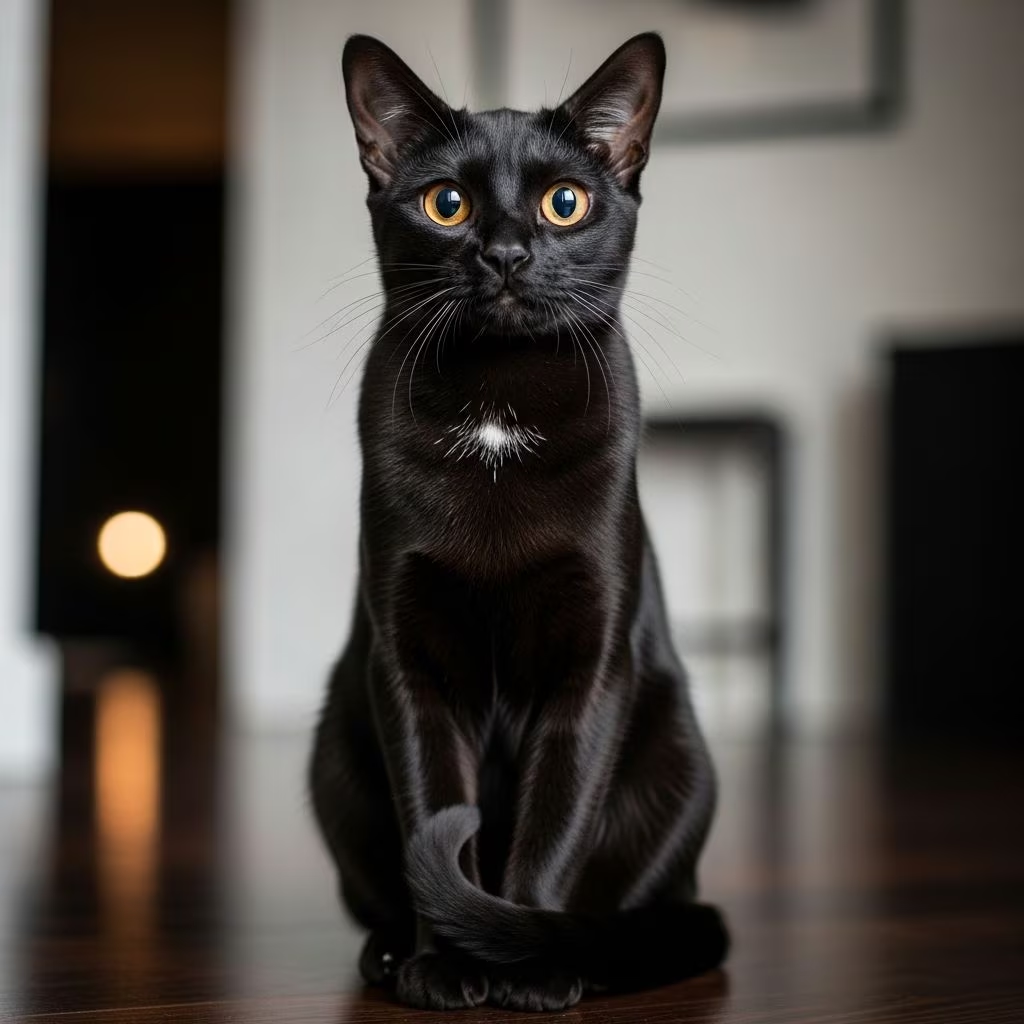
The Bombay cat, with its glossy jet-black coat and striking copper eyes, resembles a miniature panther, captivating cat enthusiasts worldwide. While not among the rarest breeds, Bombay cats maintain a niche status due to selective breeding and limited registrations, making them less common than popular shorthairs but accessible through reputable breeders.
What Is a Bombay Cat?
Bombay cats are a domestic shorthair breed deliberately created to mimic the elegance of a black leopard from India. Developed in the mid-20th century, they feature a muscular yet graceful build, short satin-like black fur from root to tip, and vivid golden or copper eyes that glow like new pennies. These cats exhibit a sweet facial expression with rounded heads, short muzzles, and medium-sized ears set wide apart.
Unlike random black cats, Bombays have a uniform, patent-leather sheen coat without any rusting or paling, even on whiskers, nose, and paw pads. Kittens may start lighter but darken to pure black by maturity. There are two variants: the American Bombay (copper eyes, Burmese-American Shorthair cross) and British Bombay (green eyes, Burmese-domestic shorthair cross).
Bombay Cat History and Origins
The Bombay breed originated in Louisville, Kentucky, in the 1950s, thanks to breeder Nikki Horner. Inspired by black panthers in Mumbai (formerly Bombay), India, Horner crossed sable Burmese cats with black American Shorthairs to craft a ‘parlor panther’—sleek, muscular, and affectionate. Initial attempts in 1953-1958 yielded unsatisfactory thick-coated kittens, but by 1965, the first true Bombay kitten arrived.
Horner’s persistence paid off; lines like Shawnee Cassius Clay and Shawnee Obsidian formed the foundation. The Cat Fanciers’ Association (CFA) recognized the breed in 1970, and The International Cat Association (TICA) followed in 1979. British breeders independently created their version using European Burmese and black domestics. Influential breeders like Herb and Suzanne Zwecker advanced the breed, embedding lines like Road To Fame in modern pedigrees.
- First litter resembling Bombays: 1958, but refined in 1965.
- Name origin: Evokes Indian leopards, despite U.S. creation.
- Goal: Muscular body, friendly temperament, glossy black coat.
Bombay Cat Characteristics and Appearance
Bombays boast a medium-sized, well-balanced body that’s deceptively heavy due to muscle. Their Oriental-type frame is elongated and graceful, with a rounded head lacking sharp angles, a moderate nose stop, and a short muzzle akin to Burmese cats. Eyes are large, rounded, and set wide, mandating copper-golden hues in American lines (green disqualified).
The coat is the star: short, fine, close-lying with a high-gloss, satin texture in deep black. No ghost markings or browning allowed in adults. Tail is medium-length and elegant. Males weigh 9-13 pounds, females 6-11 pounds, reaching full size by 2 years.
| Feature | American Bombay | British Bombay |
|---|---|---|
| Eyes | Copper/Golden | Green |
| Parent Breeds | Burmese x American Shorthair | Burmese x Domestic Shorthair |
| Build | Muscular, panther-like | Similar, slightly refined |
Bombay Cat Personality and Temperament
Bombays are dog-like in sociability: outgoing, affectionate, curious, and vocal without excess. Inherited Burmese playfulness blends with American Shorthair cuddliness, yielding confident explorers who greet strangers warmly. They thrive on human interaction, often following owners room-to-room, and adapt well to apartments if exercised.
Highly trainable, Bombays fetch toys, walk on leashes, and enjoy puzzle feeders. They’re gentle with children, dominant yet tolerant with other pets, and low-aggression. Calm yet active, they suit singles, families, or seniors—perfect first-time owners despite striking looks.
- Affectionate: Loves laps, pets, and attention.
- Playful: Energetic hunter, needs interactive toys.
- Social: Bonds deeply, dislikes solitude.
Are Bombay Cats Rare? Breed Popularity and Availability
Bombay cats are uncommon but not exceedingly rare. TICA and CFA register hundreds annually, far below Maine Coons or Persians but more than elite rarities like LaPerms. Rarity stems from strict standards (pure black disqualifies variants), small gene pools, and breeder focus on quality over quantity. Demand exceeds supply in some regions, inflating prices to $500-$1500 per kitten.
Popularity surged post-recognition; Zweckers boosted it in the 1970s-80s. Today, they’re niche favorites among black cat lovers, with waitlists common. American lines dominate U.S., British in Europe. Availability: Ethical breeders (TICA/CFA-listed), rescues occasional. Avoid pet stores/mills for health.
Factors Affecting Rarity:
- Limited breeders: 50-100 globally.
- Color purity: Challenging genetics.
- Regional variance: Scarcer outside U.S./UK.
Bombay Cat Size, Lifespan, and Care Needs
Adults measure 9-14 inches tall, 15-20 inches long (excluding tail), weighing up to 13 pounds. Lifespan: 12-16 years with care, some reaching 20.
Care mirrors shorthairs: Weekly brushing for gloss, nail trims biweekly, daily teeth brushing. Provide scratching posts, high perches, wand toys for 20-30 minutes play. Diet: High-protein wet/dry food; monitor weight. Litter: Clumping, scooped daily. Vet checkups annual, vaccines core.
Bombay Cat Health and Potential Issues
Generally robust from hybrid vigor, but Burmese lineage brings risks: hypertrophic cardiomyopathy (HCM, heart thickening), thick blood (polycythemia), patellar luxation, and early-onset gingivitis. Screen breeders for HCM via echoes; annual dental care vital. Obesity-prone if inactive. Average vet costs: $500-1000/year.
| Health Issue | Prevalence | Prevention |
|---|---|---|
| HCM | Moderate | Genetic screening, echoes |
| Gingivitis | High | Dental diets, brushing |
| Obesity | Common | Portion control, exercise |
Bombay Kittens: Development and Buying Tips
Bombay kittens are born white-ish, blackening by 2-3 months. Eyes open blue, shifting to copper by 8 weeks. Socialize early for dog-like traits. Buy from TICA/CFA breeders: Health guarantees, pedigrees, contracts. Expect $800-$2000; beware cheap ‘Bombay mixes’. Rescue Bombays exist via breed clubs.
Fun Bombay Cat Facts
- Named for Mumbai leopards, created in Kentucky.
- Coat: Black to roots, including skin/pads.
- ‘Patent leather kid with new penny eyes’—breed motto.
- Trainable: Learns tricks like dogs.
- Vocal but melodic, not yowly.
Frequently Asked Questions (FAQs)
Are Bombay cats rare?
Yes, somewhat rare due to limited breeders and strict standards, but obtainable from reputable sources unlike ultra-rare breeds.
What is the Bombay cat price range?
$500-$1500 for pedigreed kittens from ethical breeders; higher for show quality.
Do Bombay cats make good pets for families?
Excellent—affectionate, kid-friendly, adaptable to homes with other pets.
How long do Bombay cats live?
12-16 years typically, up to 20 with proper care.
Are Bombay cats hypoallergenic?
No, but short coat sheds minimally; not truly hypoallergenic.
What’s the difference between American and British Bombay cats?
American have copper eyes (Burmese x Am. Shorthair); British green eyes (Burmese x domestic).
References
- Bombay Cat | History, Traits, and Care — Feline Fancy. 2023. https://felinefancy.co.uk/blogs/cat-breeds-info/bombay-cat
- Bombay Facts – Cat Breeds — Wisdom Panel. 2024. https://www.wisdompanel.com/en-us/cat-breeds/bombay
- About the Bombay – History — Bombay Cat Club Europe. 2023. https://www.bombaycat.eu/history/
- Bombay cat — Wikipedia (citing CFA/TICA standards). 2025-01-10. https://en.wikipedia.org/wiki/Bombay_cat
- 25 Facts About the Bombay Cat — FELIWAY. 2023. https://www.feliway.co.uk/blogs/news/25-facts-about-the-bombay-cat
- The Bombay Cat: Breed History, Fun Facts and Myths — PrettyLitter. 2024. https://www.prettylitter.com/blog/the-bombay-cat-breed-history-fun-facts-and-myths
- Bombay – Breed Standard — The International Cat Association (TICA). 2025. https://tica.org/breed/bombay/



