

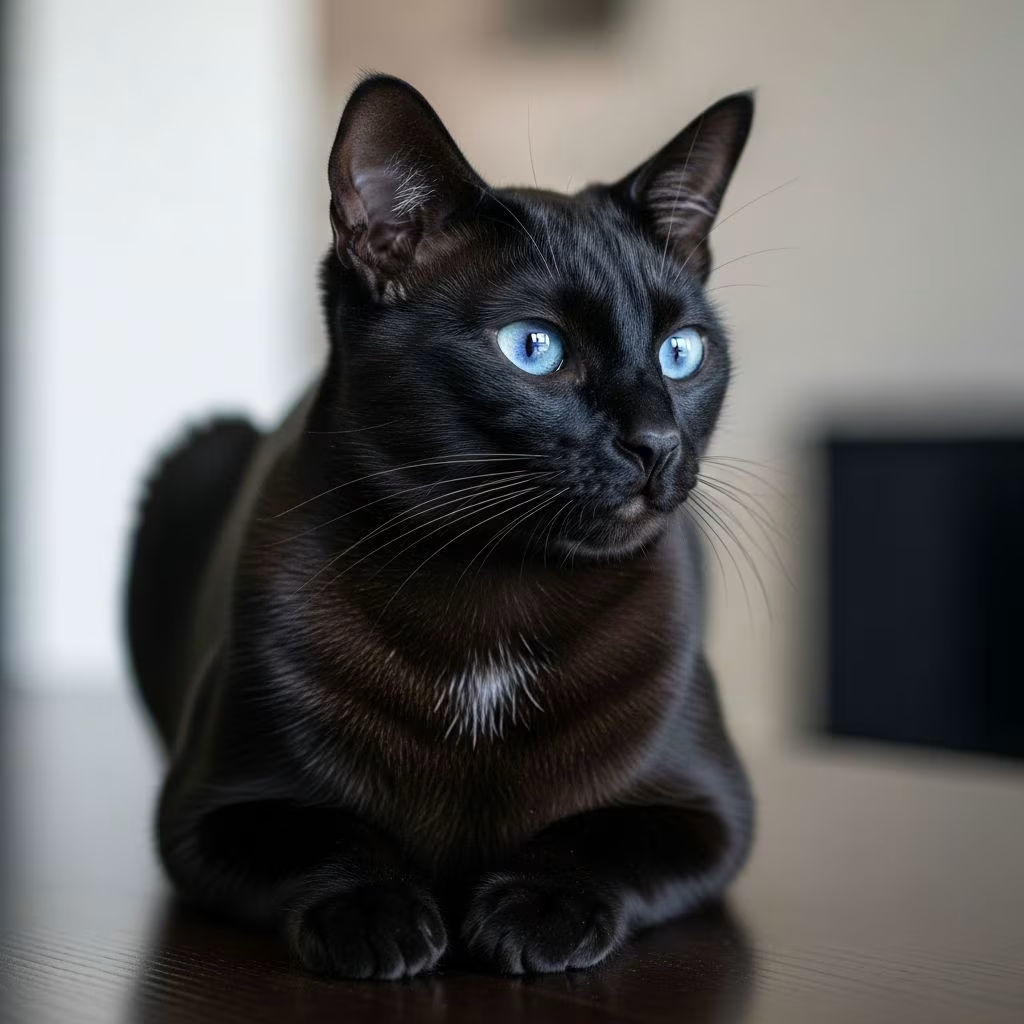
The striking Siamese cat, known for its sleek body, vivid blue eyes, and contrasting dark points on ears, face, paws, and tail, captivates cat enthusiasts worldwide. But a common question arises: can Siamese cats be entirely black? The short answer is no—pure black Siamese cats do not exist due to the breed’s unique genetic makeup that dictates a colorpoint pattern.
The Science of Siamese Coat Colors
Siamese cats owe their distinctive appearance to a temperature-sensitive form of partial albinism, which affects pigment production. A mutated enzyme called tyrosinase remains inactive at normal body temperatures (around 38°C or 100°F) but activates in cooler areas below 33°C (91°F), producing dark melanin only in extremities like ears, paws, tail, and muzzle. This results in the hallmark colorpoint coat, where the body stays pale cream or ivory while points darken.
Kittens are born cream or white because the womb’s warmth suppresses pigment everywhere. Points emerge gradually over weeks as cooler body parts trigger the enzyme, typically visible by four weeks. No genetic variation allows uniform black fur across the entire body; any attempt to breed for solid color fails due to this dominant Himalayan pattern gene.
Recognized Color Variations in Siamese Cats
While solid black is impossible, Siamese cats display several point colors determined by underlying genetics, intensified by the temperature mechanism. Here’s a breakdown:
| Point Color | Description | Body Shade |
|---|---|---|
| Seal Point | Deepest brown-black points, resembling seal fur | Cream to fawn |
| Chocolate Point | Warm milk-chocolate points | Ivory |
| Blue Point | Soft blue-gray points | Glacial white |
| Lilac Point | Frosty pinkish-gray points | White |
Seal points appear nearly black but contrast with the lighter body, distinguishing them from true solid black cats. Other variations like red, cream, or tabby points exist in modern lines but always follow the pointed pattern.
Historical Roots of the Siamese Breed
Originating in Thailand (formerly Siam), Siamese cats appear in ancient manuscripts like the Tamra Maew from the Ayutthaya Kingdom (1351–1767), describing them as Wichienmaat or “moon diamond” for their elegant, light-coated beauty. Revered in temples and homes, they symbolized good fortune but were not exclusively royal pets—a myth debunked by early 20th-century research.
Introduced to the West in the late 19th century, the first Siamese arrived in Britain around 1885. At the Crystal Palace Show, kittens from imported parents Pho and Mia stunned audiences with their novel pointed coats, sparking breeding programs despite initial criticism as “unnatural”. By 1906, they gained official recognition, influencing breeds like Balinese, Himalayan, and even Sphynx through crossbreeding. President Rutherford B. Hayes received one in 1878, marking U.S. interest.
Why Solid Black Siamese Are a Myth
Misconceptions arise from seal point Siamese, whose points can look black in low light, or mixed-breed cats with Siamese traits and darker fur. True Siamese registries like CFA and TICA enforce strict standards excluding solid colors; black cats with Siamese features are often domestic shorthairs or other breeds.
- Genetic Barrier: The cs allele for colorpointing is incompletely dominant, always producing points.
- Temperature Dependency: Warmer body core stays light; no override exists.
- Breed Standards: Solid black disqualifies a cat from Siamese classification.
In cooler climates, points darken more intensely, but the body never matches, preventing a uniform black appearance.
Health Implications of the Colorpoint Gene
The same mutation causing colorpoints links to quirks and potential issues. Siamese often have poorer night vision due to the tyrosinase effect on retinal pigments, though indoor lifestyles mitigate this. They boast longevity, averaging 15–20 years, outpacing many breeds.
Common concerns include:
- Hereditary amyloidosis affecting liver and kidneys.
- Dental issues from their wedge-shaped heads.
- Cancer predisposition, like mammary tumors if not spayed early.
Regular vet checkups, dental care, and high-quality diet support their vitality.
Caring for Your Siamese Cat
Siamese thrive as affectionate, vocal companions demanding interaction. Provide:
- Environment: Cool homes enhance point contrast; avoid direct heat sources.
- Diet: Protein-rich food for lean, muscular builds.
- Exercise: Toys and climbing structures match their playful energy.
- Socialization: They bond deeply, suffering loneliness in isolation.
Grooming is minimal for their short coats, but weekly brushing prevents hairballs. Monitor for crossed eyes or kinked tails, cosmetic traits from inbreeding.
Siamese Influence on Other Breeds
The colorpoint gene spread widely: Himalayans from Persian crosses, Balinese as longhaired Siamese, and Orientals with varied solids. Even Birman and Burmese traces link back. This legacy underscores Siamese’s genetic impact.
Fun Facts About Siamese Cats
- Born cream-white, points develop post-birth.
- Legendary talkers with raspy meows.
- Excelled as mousers in ancient temples.
- Blue eyes standard, crossed eyes acceptable.
- Live longest among pedigreed cats.
Frequently Asked Questions (FAQs)
Can Siamese cats be solid black?
No, their genetics prevent solid colors; always colorpointed.
What causes the points on Siamese cats?
Temperature-sensitive albinism activates pigment in cool areas.
Do Siamese kittens look like adults at birth?
No, born cream; points appear later.
Are all pointed cats Siamese?
No, many breeds carry the gene.
How long do Siamese cats live?
Typically 15–20 years with proper care.
Siamese cats blend exotic allure with scientific intrigue, their impossible black variant highlighting nature’s precise design. Whether seal or lilac, they remain timeless pets.
References
- Pure Black Siamese Cats: Do They Exist? — UKPets. 2023. https://www.ukpets.com/blog/black-siamese-cat/
- Black Siamese Cats and Other Colour FAQs — PD Insurance. 2024. https://www.pd.com.au/blogs/black-siamese-cats-colour-faq/
- Siamese cat — Wikipedia (citing primary breed sources). 2024-01-15. https://en.wikipedia.org/wiki/Siamese_cat
- 15 Fun Facts About Siamese Cats — Elite Veterinary Care. 2023. https://www.eliteveterinarycare.com/blog/15-fun-facts-about-siamese-cats
- The Siamese cat — Cat in the Box LLC. 2023. https://thecatisinthebox.com/blogs/kitty-contemplations/the-siamese-cat



