

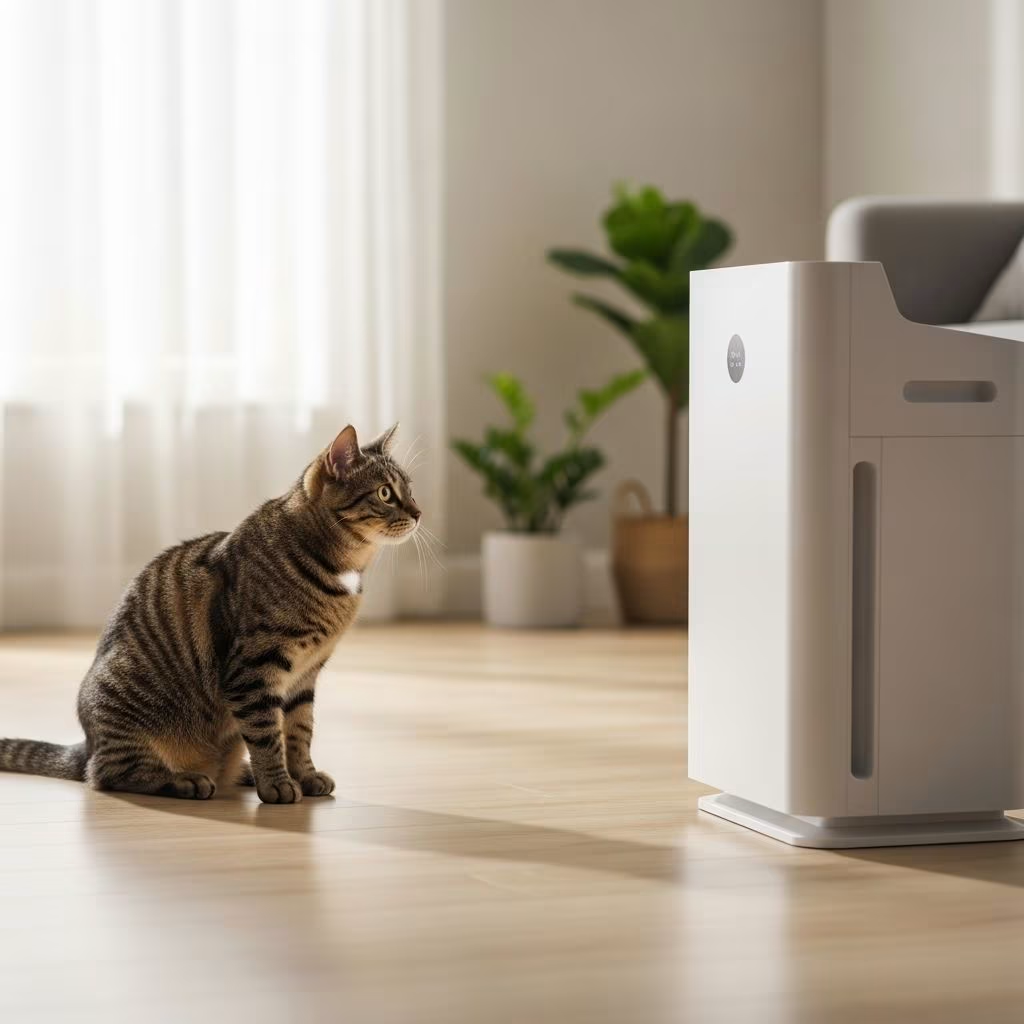
Air purifiers can be safe and beneficial for cats when selecting models without harmful emissions like ozone and equipped with proven filtration systems such as HEPA and activated carbon filters. These devices help reduce pet dander, allergens, and odors that affect both humans and felines, promoting a healthier indoor environment.
Quick Answer: Are Air Purifiers Safe for Cats?
Most modern air purifiers designed for home use are safe for cats, particularly those certified low-ozone and featuring mechanical filtration like **HEPA filters** that capture 99.97% of particles as small as 0.3 microns, including cat dander and dust. However, avoid units producing ozone or relying on ionization, as these can irritate sensitive cat respiratory systems.
Why Consider an Air Purifier for Your Cat?
Cats shed dander—tiny flakes of dead skin—that floats in the air, triggering allergies in humans and potentially irritating their own respiratory tracts. Litter box odors from urine and feces release volatile organic compounds (VOCs), contributing to poor indoor air quality. Air purifiers address these by circulating and cleaning air, reducing airborne irritants that cats inhale during grooming or play.
Cats have highly sensitive respiratory systems compared to humans, making them vulnerable to pollutants. Studies indicate pets can suffer from asthma-like conditions exacerbated by indoor allergens, much like humans. Using a pet-safe purifier minimizes these risks while eliminating musty smells from scratching posts or bedding.
How Air Purifiers Work
Air purifiers draw in room air through filters or purification technologies, trapping or neutralizing contaminants before releasing clean air. Key mechanisms include:
- Mechanical Filtration: Uses mesh filters to physically trap particles.
- Adsorption: Carbon filters bind odor molecules and gases.
- Other Methods: UV light or ionization, which may pose risks if not pet-safe.
For cats, prioritize purifiers combining **pre-filters** for hair, **HEPA** for fine particles, and **activated carbon** for odors, ensuring comprehensive coverage without chemical byproducts.
Are Air Purifiers Safe for Cats? Potential Risks
While many are safe, certain technologies pose dangers:
Ozone-Emitting Purifiers
Ozone generators or ionizers produce ozone (O3), a lung irritant harmful to cats’ delicate airways. The California Air Resources Board (CARB) limits ozone output to 0.05 ppm, but even low levels can stress respiratory systems. Birds are most affected, but cats may experience coughing or lethargy with prolonged exposure.
- Choose CARB-certified models.
- Disable ionizers if optional.
- Avoid units labeled for “shock treatment” or high-ozone output.
UV and Other Technologies
UV purifiers destroy microbes without ozone but ensure lamps are enclosed to prevent direct exposure. Combined HEPA-UV-carbon systems are ideal for safety.
Safe Air Purifiers for Cats: What to Look For
Opt for these features to ensure safety:
| Feature | Benefit for Cats | CADR Rating Recommendation |
|---|---|---|
| HEPA Filter (True H13 or Higher) | Captures 99.97% of dander, pollen, dust | 200+ CFM for 300 sq ft rooms |
| Activated Carbon Filter | Absorbs urine odors, VOCs | At least 1 lb of carbon |
| Pre-Filter (Washable) | Trapping long cat hair, extends HEPA life | N/A |
| Low Ozone (<0.05 ppm, CARB Certified) | Prevents respiratory irritation | Certified list on CARB site |
| Quiet Operation (<50 dB) | Won’t stress noise-sensitive cats | Sleep mode essential |
Models like those with 15 lbs of carbon excel for heavy odors from multiple cats.
Best Air Purifier Filters for Cats
- HEPA: Gold standard for allergens; traps dust mites (80% of pet allergies).
- Carbon Pellets: Superior to sheets for odor neutralization; look for 3+ lbs.
- Pet-Specific Filters: Customized with extra carbon/HEPA layers for dander and smells.
Run 24/7 on auto mode for optimal results, replacing filters per manufacturer guidelines (every 6-12 months).
Air Purifiers vs. Cats: Common Concerns Addressed
Will it remove cat hair? Pre-filters catch visible hair; HEPA handles microscopic dander. Tests show purifiers collecting substantial fur from litter areas.
Does noise bother cats? Select models under 30 dB on low; cats acclimate but start gradually.
Essential oils or aromatherapy? Avoid purifiers with built-in diffusers; cats’ livers can’t metabolize many oils safely.
FAQs: Air Purifiers and Cats
Are HEPA air purifiers safe for cats?
Yes, HEPA filters are completely safe and highly effective, trapping allergens without emissions.
Can air purifiers remove cat litter smell?
Yes, activated carbon excels at absorbing ammonia-based urine odors from litter boxes.
Is ozone from air purifiers dangerous for cats?
Yes, avoid ozone producers; stick to CARB-certified, zero-ozone models to protect lung health.
How often should I replace filters in a cat home?
Every 3-6 months for pre-filters, 6-12 for HEPA/carbon due to higher pet pollutant loads.
What’s the best room for an air purifier with cats?
Living rooms or near litter boxes; aim for 4-5 air changes per hour (ACH).
Placement Tips for Maximum Effectiveness
- 2-3 feet off floor, away from walls.
- Near high-traffic or litter areas.
- Avoid direct sunlight or drafts affecting airflow.
- Combine with vacuuming 2x/week and weekly bedding washes.
For multi-cat homes, use multiple units or high-CADR models covering 400+ sq ft.
Alternatives to Air Purifiers for Cat Owners
While purifiers are effective, complement with:
- Litter mat and low-dust litter.
- HEPA vacuum cleaners.
- Regular grooming to reduce shedding.
- Ventilation and houseplants like spider plants (cat-safe).
No single solution replaces good hygiene, but purifiers enhance it significantly.
In summary, air purifiers enhance cat health by clearing allergens and odors when chosen wisely. Consult vets for cats with pre-existing conditions like asthma. High-quality, pet-optimized models provide peace of mind and fresher air for your furry family members.
References
- Are Air Purifiers Safe for Pets? — Rabbit Air. 2023-05-15. https://www.rabbitair.com/blogs/air-purifier/47383941-are-air-purifiers-safe-for-pets
- Are Air Purifiers Safe For Pets? — Sanuvox. 2024-02-10. https://sanuvox.com/en/blog/are-air-purifiers-safe-for-pets/
- Air Purifiers — Chewy. 2025-11-20. https://www.chewy.com/b/pet-air-purifiers-15526
- 5 Best Pet Air Purifiers — Air Purifier First. 2025-09-01. https://www.airpurifierfirst.com/buying-guides/best-air-purifiers-for-pets/
- The best air purifiers for pet odor, hair and dander — HouseFresh. 2025-12-05. https://housefresh.com/air-purifiers-for-pets/
- The 4 Best Air Purifiers For Pets of 2026 — RTINGS.com. 2026-01-10. https://www.rtings.com/air-purifier/reviews/best/pets
- Are air purifiers safe for pets? — Live Science. 2024-08-22. https://www.livescience.com/are-air-purifiers-safe-for-pets



