

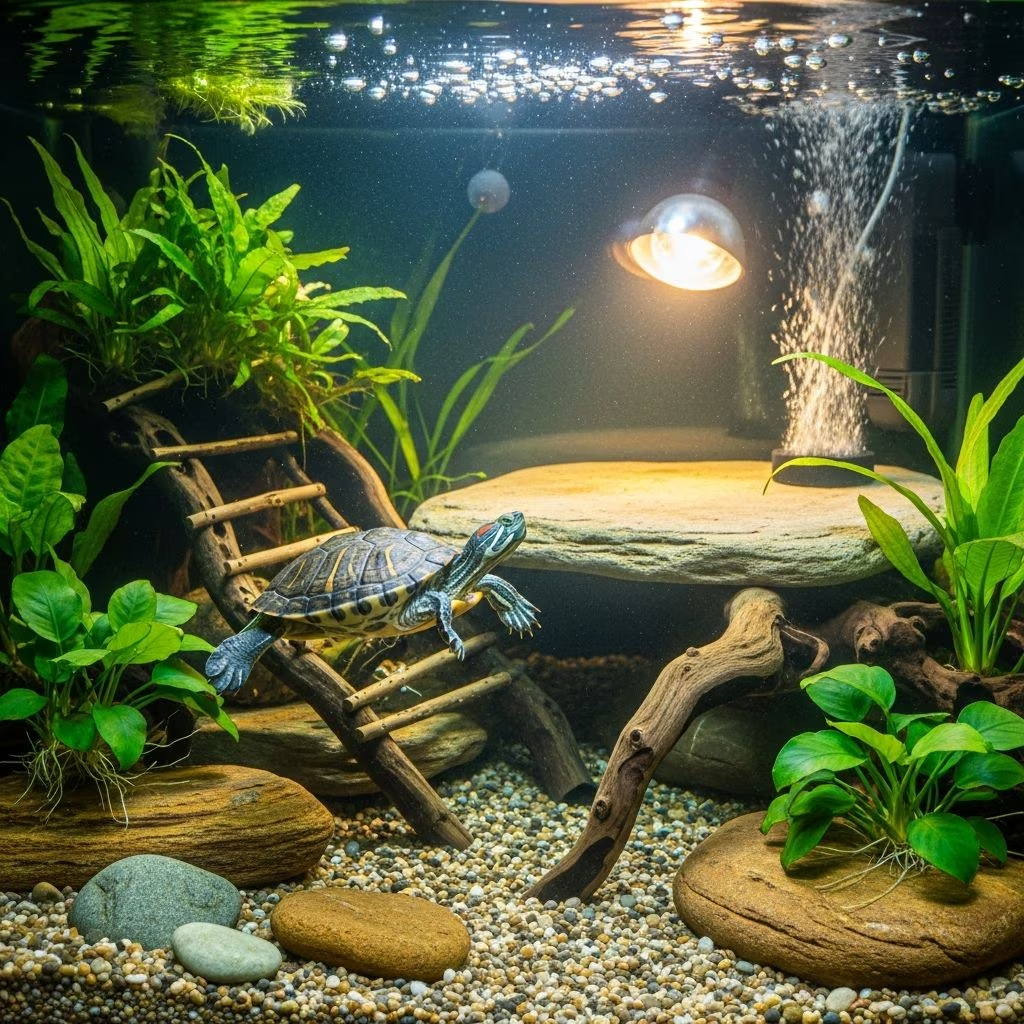
Aquatic Turtle Tank Setup 101: A Beginner’s Guide
Setting up a proper habitat for your aquatic turtle is one of the most important decisions you’ll make as a pet owner. A well-designed turtle tank provides the necessary environment for your turtle to thrive, grow, and maintain optimal health. This comprehensive guide covers everything you need to know about creating the perfect turtle tank, from choosing the right equipment to understanding the setup process and maintaining proper water conditions.
New Turtle Tank Checklist
Before you begin setting up your turtle’s new home, gather all the essential items you’ll need. Having everything prepared in advance makes the setup process smooth and efficient. Here’s a complete checklist of everything required for a new turtle tank:
- Tank or terrarium (appropriately sized for your turtle species)
- Tank cover or screen top
- Bedding and substrate for land areas
- Ultraviolet (UVA/UVB) lights
- Heat lamps for basking areas
- Aquarium heater for water temperature control
- Thermometer (or multiple thermometers for different zones)
- Water filter system
- Basking platforms or docks
- Turtle-appropriate food and supplements
Choosing the Right Tank Size and Type
The foundation of any successful turtle habitat starts with selecting the appropriate tank. Turtles require adequate space to swim, bask, and exercise. As a general rule, aquatic turtles need a minimum of 10 gallons of water for every 1 inch of shell length. This means a 4-inch turtle requires at least 40 gallons of water, while a 6-inch turtle needs 60 gallons or more. Beyond minimum requirements, larger tanks are always preferable as they provide better water stability and allow for more natural behaviors. When selecting a tank, it’s crucial to choose one specifically designed to hold water. Glass terrariums intended for land-dwelling reptiles are too thin and will crack under the pressure of water weight. Look for fish tanks or dedicated turtle tanks with glass thickness between 6-10mm, depending on the total water volume your setup will contain. Remember that you also need to account for a basking area in addition to swimming space, so your tank should have capacity exceeding the minimum water gallon requirement.
Tank Placement and Location
Where you place your turtle tank in your home is just as important as the tank itself. Your turtle’s habitat will be quite heavy due to the water volume, so position it on a sturdy surface that can safely support the weight, such as a reinforced table, cabinet, or ground-floor location. Avoid placing the tank near windows or in areas with direct sunlight exposure. Natural sunlight can cause temperature fluctuations that make it difficult for your turtle to regulate their body temperature properly. Additionally, sunlight promotes excessive algae growth, which is unsightly and negatively impacts water quality. Choose a location away from drafts, air conditioning vents, and heating sources that could cause temperature instability. A climate-controlled room provides the most stable environment for your turtle.
Creating the Land Area and Basking Platform
Semi-aquatic and aquatic turtles are not fully aquatic creatures—they require a dry land area where they can haul out, rest, and absorb essential UVA and UVB rays. The basking platform is one of the most critical components of your turtle tank setup.
Basking Platform Options
You have several options when choosing a basking platform for your turtle:
- Floating platforms: Ready-made floating docks are the most popular choice because they take up minimal tank space while allowing your turtle to swim underneath them. Ensure the platform is large enough for your turtle and that water depth prevents any chance of the turtle getting stuck.
- DIY platforms: You can create custom basking areas using rocks and logs arranged to form an accessible dry area. This allows for creativity and natural aesthetics.
- Above-tank platforms: These are gaining popularity because they maximize swimming space in the tank. However, ensure the platform is easy to disconnect for conducting water changes and tank maintenance.
Regardless of which type you choose, your basking platform should be approximately 1.5 times the length of your turtle’s shell in diameter to allow your turtle enough room to turn around comfortably. The platform must have a secure ramp that allows your turtle to easily climb in and out of the water without struggling or injuring itself.
Lighting Requirements
Proper lighting is essential for your turtle’s health and cannot be overlooked. Turtles require both UVA and UVB light to synthesize vitamin D3, absorb calcium, and maintain proper immune function.
Basking Light Setup
The basking bulb should be positioned directly above your turtle’s basking area and should provide the warmest temperature point in your tank. Use a reptile thermostat in conjunction with your basking bulb to maintain the correct temperature, as requirements vary between species. The typical warm side of a turtle tank should be heated to between 90-95 degrees Fahrenheit. Always follow manufacturer instructions regarding the distance between the bulb and your turtle’s shell—positioning the light too close can actually burn your turtle’s shell.
UVB Light Setup
UVB lighting should cover a larger area of the tank to ensure your turtle receives adequate UV exposure throughout their habitat. Tube-style UVB lights are a popular and effective choice for this purpose. Consult the manufacturer’s specifications for proper bulb-to-turtle distance, which is typically around 12-18 inches depending on the bulb type and manufacturer. Most turtle keepers recommend replacing UVB bulbs every 6-12 months, as their effectiveness diminishes over time even if they appear to still produce light.
Water Heater and Temperature Control
Maintaining proper water temperature is crucial for your turtle’s health and digestion. Most aquatic turtles thrive in water temperatures between 75-85 degrees Fahrenheit, with a cool zone and a warm basking zone to allow for thermoregulation. Install a submersible aquarium heater to maintain consistent water temperature, particularly important if your home experiences temperature fluctuations. At night, the entire tank can drop slightly, typically to around 75-78 degrees. Place at least one thermometer in the basking area and another on the cooler side of the tank or just outside the tank to monitor both zones. Some keepers use infrared thermometers to verify exact temperatures at the basking platform.
Water Filtration System
A quality water filter is essential for maintaining water quality and turtle health. Turtles are messy eaters and produce substantial waste, creating ammonia and nitrites that can quickly become toxic. Your filter must be appropriately sized for your tank volume—ideally, it should process the entire tank volume multiple times per day. Canister filters and hang-on-back filters are popular choices for turtle tanks. Regular filter maintenance, including cartridge cleaning and replacement, ensures optimal performance. Even with an excellent filter, you’ll still need to perform partial water changes regularly to remove waste and maintain water quality.
Substrate and Tank Decorations
Choose appropriate substrate for any land areas in your tank. Avoid small pebbles or gravel that your turtle could accidentally ingest, which can cause impaction. Larger rocks, tile, or specialized reptile substrates are safer options. Add turtle-friendly decorations and plants (both live and artificial) to create a more natural and enriching environment. Place thermometers strategically around your tank to monitor different temperature zones. Decorations should be arranged safely without sharp edges that could injure your turtle.
Step-by-Step Tank Setup Guide
Follow these steps to set up your turtle tank properly:
Step 1: Choose a Good Location
Select a sturdy surface away from windows and direct sunlight. Ensure the location can support the weight of a full tank with water.
Step 2: Create a Dry Land Area with a Ramp
Set up your basking platform and install a secure ramp connecting it to the water. Test the ramp to ensure your turtle can navigate it easily.
Step 3: Add Decor and Non-Electric Accessories
Place turtle-safe decorations, rocks, plants, and thermometers in your tank. Position thermometers in the basking area and the cool zone.
Step 4: Add Water
Fill your tank with the appropriate amount of turtle-safe water based on your turtle’s size. The water depth should be at least 1.5 times your turtle’s shell length to allow them to flip over without getting stuck. Use dechlorinated water and consider adding aquatic plants for natural filtration.
Step 5: Install Electric Accessories
Place UVB and basking lights within 12-18 inches of your turtle’s basking area (follow manufacturer specifications). Install the aquarium heater if needed and set it to the appropriate temperature. Use a timer to maintain consistent lighting schedules, typically 12 hours of light followed by 12 hours of darkness.
Step 6: Introduce Your Turtle
After everything is set up and water temperature has stabilized, slowly introduce your turtle to their new habitat. Allow them to explore at their own pace and observe their behavior to ensure they’re comfortable and using all areas of the tank appropriately.
Water Quality and Maintenance
Maintaining excellent water quality is fundamental to your turtle’s health. Test water parameters regularly, including ammonia, nitrite, and nitrate levels. Perform partial water changes of 25-50% every week or as needed to maintain water quality. Clean or replace filter media according to manufacturer recommendations. Never use soap or chlorine-based cleaners—use only water or reptile-safe tank cleaners when performing maintenance.
Common Turtle Tank Mistakes to Avoid
When setting up your turtle tank, be aware of these common mistakes:
- Choosing a tank that’s too small for your turtle species
- Placing the tank near windows or heat sources
- Using inadequate or improperly positioned lighting
- Neglecting water filter maintenance
- Using substrate that could cause impaction
- Failing to provide adequate temperature gradient between warm and cool zones
- Skipping regular water testing and changes
Frequently Asked Questions
Q: How often should I change my turtle’s water?
A: Perform partial water changes of 25-50% weekly, or as needed based on water quality tests. Even with excellent filtration, regular water changes are essential for maintaining healthy water parameters.
Q: What’s the ideal temperature for my turtle tank?
A: Most aquatic turtles thrive with a warm basking area of 90-95 degrees Fahrenheit and a cool zone of 75-85 degrees Fahrenheit. At night, the temperature can drop slightly to 75-78 degrees.
Q: How much space does my turtle really need?
A: A minimum of 10 gallons of water per 1 inch of shell length, plus additional space for a basking platform. Larger tanks are always better for water stability and allowing natural behaviors.
Q: Can I use a regular aquarium for my turtle?
A: Yes, but it must be a proper fish tank or turtle-specific tank designed to hold water safely. Don’t use glass terrariums designed for land reptiles, as they’re too thin and will crack.
Q: How close should the UVB light be to my turtle?
A: Typically 12-18 inches, depending on the bulb type and manufacturer specifications. Always consult your bulb’s instructions to avoid placing it too close and potentially burning your turtle.
Q: Do I need both UVA and UVB lighting?
A: Yes, both are essential. UVB helps your turtle synthesize vitamin D3 and absorb calcium, while UVA supports vision and behavior. Many quality reptile bulbs provide both.
References
- Aquatic Turtle Tank Setup 101: A Beginner’s Guide — Chewy Education. 2025. https://www.chewy.com/education/reptile-and-amphibian/turtle-and-tortoise/turtles-tank-setup
- Turtle Tank Setup: A How-To Guide — King British. 2025. https://www.kingbritish.co.uk/help-advice/turtle-tank-setup-how-to
- A Complete Guide to Setting Up a Turtle Tank Enclosure — Aquacadabra. 2025. https://aquacadabra.com/blogs/news/a-complete-guide-to-setting-up-a-turtle-tank-enclosure
- Red-Eared Slider Tank Size Requirements — ReptiFiles. 2025. https://reptifiles.com/red-eared-slider-care/red-eared-slider-tank-size/
- Setup for New Turtle or Tortoise — PetSmart Learning Center. 2025. https://www.petsmart.com/learning-center/reptile-care/your-turtle-or-tortoises-new-home/A0094.html
- How to Build a Turtle Tank — HowStuffWorks. 2025. https://home.howstuffworks.com/home-improvement/how-to-build/how-to-build-turtle-tank.htm



