

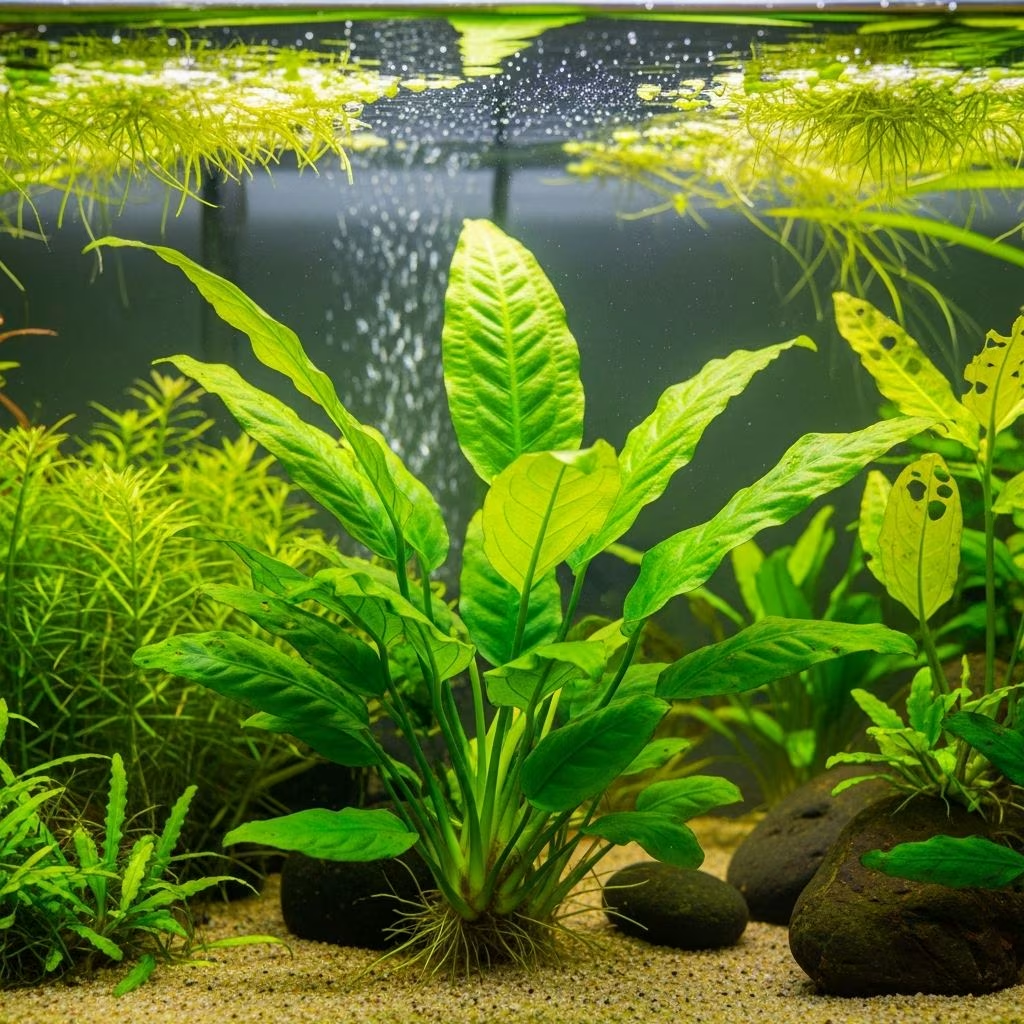
Aquatic plants are the living foundation of a healthy planted aquarium ecosystem. They provide oxygen, consume excess nutrients, and create a natural aesthetic that enhances any tank. However, when plants fail to thrive—showing yellowing leaves, stunted growth, or unusual discoloration—the cause often lies in nutrient deficiencies. Understanding what your plants need and recognizing the early warning signs of nutritional imbalances is essential for any aquarium enthusiast. This guide explores the various nutrients aquatic plants require, the visual symptoms of deficiencies, and practical solutions to restore vitality to your underwater garden.
Why Nutrient Balance Matters in Planted Aquariums
Aquatic plants rely on a delicate balance of nutrients to support photosynthesis, cellular growth, and metabolic functions. These nutrients fall into two main categories: macronutrients, which plants require in larger quantities, and micronutrients, which are needed in trace amounts but are equally critical for plant health.
In traditional aquariums, fish waste provides some nutrients naturally. However, in heavily planted tanks or systems with fewer fish, supplementation becomes necessary to prevent deficiencies. When plants lack essential nutrients, they cannot produce chlorophyll efficiently, develop new tissues, or transport water and minerals throughout their structure. This leads to visible stress symptoms that, if left unaddressed, can result in plant death and ecosystem imbalance.
Identifying Deficiency Symptoms: A Visual Assessment Guide
The first step in diagnosing nutrient problems is understanding where on the plant the symptoms appear. This location provides crucial clues about which nutrient is lacking.
Mobile vs. Immobile Nutrients: Understanding the Difference
Mobile nutrients—including nitrogen, phosphorus, and potassium—can move from older leaves to newer growth when supplies are limited. This means deficiency symptoms typically appear on lower, older leaves first. Conversely, immobile nutrients like iron, calcium, and boron cannot be relocated within the plant. When these are deficient, symptoms manifest on the newest leaves and growing tips first.
This distinction is invaluable for diagnosis. By observing whether yellowing or damage appears on old or new foliage, you can narrow down the potential culprit significantly.
Common Visual Symptoms and Their Meanings
Chlorosis (yellowing of leaves) is among the most frequent indicators of nutrient stress. The pattern and location of yellowing vary depending on the nutrient involved. Interveinal chlorosis, where leaf veins remain dark while tissue between them turns yellow, often signals magnesium or iron deficiency. General yellowing affecting the entire leaf commonly indicates nitrogen, phosphorus, or potassium issues.
Necrosis refers to the death of plant tissue, typically appearing as brown or black patches that may expand into visible holes. This symptom accompanies deficiencies in nitrogen, potassium, iron, boron, and molybdenum.
Stunted growth and increasingly smaller new leaves suggest multiple possible deficiencies, including nitrogen, phosphorus, iron, sulfur, and boron. When coupled with other symptoms, this sign helps create a clearer picture of the underlying problem.
Twisted or deformed foliage points toward calcium or boron deficiency. Calcium-deficient plants produce new leaves that are noticeably twisted and stunted, with tips that may wither. Boron deficiency similarly causes leaf distortion along with other manifestations.
Pinholes or perforations in leaves, typically beginning as small dark spots before enlarging into visible holes, are characteristic of potassium deficiency. These holes usually concentrate along leaf edges and tips, with margins that may appear yellow or black.
Major Macronutrients: Essential Elements for Plant Development
Nitrogen: The Foundation of Growth
Nitrogen is a fundamental building block for plant tissue. Plants use this nutrient to synthesize proteins, enzymes, and chlorophyll—the pigment responsible for green coloration and photosynthesis. It is highly mobile within plants, meaning it redistributes to new growth when supplies diminish.
Signs of nitrogen deficiency include overall yellowing of older leaves, reduced growth of new foliage, and in some plant species, a distinctly reddish hue in newer growth. The red coloration occurs because without adequate nitrogen, chlorophyll production slows, and other pigments become visible. An unexpected surge in filamentous or hair algae can also indicate nitrogen depletion, as the plants are too weak to compete with algae for available resources.
In most aquariums, fish waste and decomposing food provide some nitrogen naturally. However, heavily planted tanks or systems with few fish may require fertilizer supplementation to maintain optimal levels.
Phosphorus: Energy Transfer and Root Development
Phosphorus plays a crucial role in energy transfer within plant cells and supports root development and flowering in certain aquatic species. Like nitrogen, phosphorus is mobile and will relocate to new growth when deficient. This means older leaves show symptoms first.
Phosphorus-deficient plants develop dark or dull green foliage with possible reddish patches. Older leaves progressively yellow, sometimes with soggy brown patches, as the plant pulls phosphorus reserves toward the youngest tissues. Poor root development accompanies visual leaf symptoms, weakening the plant’s ability to absorb water and other nutrients.
While fish food often contains phosphates, some aquarists use phosphate-absorbing filter pads to prevent algae growth—unintentionally starving plants in the process. Balancing algae control with plant nutrition requires careful consideration of supplementation strategies.
Potassium: Nutrient Transport and Cellular Function
Potassium regulates water intake, cellular function, and the movement of nutrients, water, and sugars throughout the plant. It is also mobile, causing older leaves to exhibit symptoms when supplies run low.
The signature sign of potassium deficiency is the appearance of small pinholes concentrated along leaf edges and tips. Initially appearing as tiny brown dots, these progress into visible perforations outlined in yellow or black. Beyond perforation, leaf edges may appear pale and curl inward, and overall plant growth slows. Certain demanding plants, such as anubias and java fern, are particularly susceptible to potassium deficiency and require consistent supplementation.
Essential Micronutrients: Trace Elements with Major Impact
Iron: Chlorophyll Production and Plant Vigor
Despite being required only in trace amounts, iron is considered a crucial nutrient for aquatic plant health. Iron is involved in chlorophyll formation and is absorbed very quickly by plants. The recommended concentration is between 0.05 to 0.1 ppm. Because iron is immobile, deficiency symptoms appear exclusively on new leaves.
Iron-deficient plants display chlorosis and necrosis on new foliage, along with pale or white new growth. In prolonged deficiency, each successive new leaf becomes lighter in color than the previous one, creating a gradient effect that becomes increasingly obvious over time. Iron deficiency is common enough that many aquarists use separate iron fertilizers to ensure proper dosing.
Magnesium: The Heart of Chlorophyll
Magnesium is a core component of the chlorophyll molecule itself. Without adequate magnesium, plants cannot efficiently produce or maintain the pigment needed for photosynthesis.
The characteristic symptom of magnesium deficiency is interveinal chlorosis—yellowing between the leaf veins while the veins themselves remain dark green. This pattern is distinctive and easily recognizable once you know what to look for. Stunted growth accompanies the discoloration, reducing overall plant vitality.
Calcium: Structural Integrity and New Growth
Calcium is essential for cell wall production and structural stability. Although calcium deficiency is rare in freshwater aquariums due to calcium naturally present in tap water, it can occur in systems using soft water or reverse osmosis (RO) water. When deficient, new leaves grow twisted and stunted, with tips that may wither and die.
If you suspect calcium deficiency, gradually increase water hardness by adding crushed coral to your filter or sprinkling it on the substrate. This gentle approach prevents sudden pH swings while replenishing calcium supplies.
Boron: Nutrient Uptake and Growth Regulation
Boron plays a particularly vital role in plant physiology. Notably, boron is responsible for reducing iron to a form that plant roots can absorb. Without sufficient boron, plants cannot properly utilize iron, magnesium, calcium, potassium, or phosphate—creating a cascade of deficiency symptoms even when those nutrients are present.
Boron deficiency causes necrosis, chlorosis, stunted growth, and twisted leaves. The complexity of boron’s function means that correcting boron deficiency can sometimes resolve multiple apparent nutrient problems simultaneously.
Molybdenum: Nitrogen Metabolism
Molybdenum is a component of enzymes that convert nitrate to usable nitrogen forms (nitrite and ammonia) within the plant. It is also crucial for synthesizing phytohormones and detoxifying sulfite.
Deficiency symptoms include necrosis of new leaves, chlorosis, and twisted foliage. Because molybdenum-dependent processes are fundamental to plant metabolism, deficiency can have widespread effects on plant health.
Zinc: Chlorophyll Formation and Growth Hormones
Zinc contributes to chlorophyll synthesis and carbohydrate formation. Additionally, zinc is essential for converting starches to usable sugars and forming auxin, a hormone that regulates stem elongation. Zinc also helps plants withstand cold temperatures, making it particularly important in cooler aquarium setups.
Zinc-deficient plants display chlorosis, develop smaller leaves than normal, show shortened distances between leaf nodes, and may develop spotted leaves. The shortened internodes (spacing between nodes where leaves attach) create a stunted, compact appearance.
Sulfur: Growth and Nutrient Utilization
Sulfur is typically incorporated into fertilizers as part of sulfate compounds like magnesium sulfate (MgSO4) or potassium sulfate (KSO4), so separate supplementation is rarely necessary. Since sulfur is immobile, deficiency symptoms appear only on new leaves.
Sulfur-deficient plants show chlorosis, slow overall growth, and short, spindly, slender stalks. Darker leaves may also develop as phosphorus utilization suffers when sulfur is deficient.
Choosing and Applying Fertilizer Solutions
Once you have identified a specific nutrient deficiency, the next step is selecting an appropriate fertilizer. All-in-one fertilizers contain balanced macronutrient and micronutrient combinations, making them ideal for preventing multiple deficiencies simultaneously. These are particularly useful for general maintenance in planted tanks.
For targeted treatment of specific deficiencies, consider specialized fertilizers. Iron fertilizers are commonly used separately because iron requirements are easy to overdose, potentially creating toxicity. Similarly, separate boron or molybdenum supplementation may be necessary in systems with significant deficiency symptoms.
Always read fertilizer labels carefully to understand what nutrients are included and in what proportions. Different tank sizes and plant densities require different dosing amounts—follow manufacturer recommendations and adjust based on plant response over several weeks.
Prevention: Building a Nutrient-Rich Environment
Preventing deficiencies is far simpler than treating established ones. Establish a regular fertilization schedule appropriate for your tank’s plant load and fish population. Test water parameters periodically to understand your baseline nutrient levels and adjust supplementation accordingly.
Ensure adequate lighting, as plants photosynthesizing efficiently require more nutrients overall. Maintain consistent water parameters and perform regular partial water changes to provide fresh minerals while removing excess waste products.
Consider your substrate choice, as nutrient-rich substrates can supplement plant nutrition from the roots, while inert substrates rely entirely on column supplementation through the water column.
FAQ: Common Questions About Aquatic Plant Nutrient Deficiency
- Q: Can fish waste alone support plant nutrition?
- A: Fish waste provides some nitrogen and phosphorus, but in densely planted tanks or systems with few fish, supplementation is typically necessary for all essential macronutrients and micronutrients.
- Q: How long does it take to see improvement after fertilizing?
- A: Mobile nutrients typically show improvement in older leaves within 1-2 weeks. New growth should appear healthier within 2-4 weeks. Immobile nutrients show faster results on new leaves, typically within 1-3 weeks.
- Q: Is it possible to overdose fertilizer?
- A: Yes. Excessive iron can become toxic, and overfertilizing can promote algae growth or create chemical imbalances. Always follow recommended dosing and start conservatively, increasing gradually if needed.
- Q: Should I fertilize every day or weekly?
- A: Most all-in-one fertilizers are dosed weekly. Daily micro-dosing is an advanced technique for experienced aquarists. Consult product instructions for optimal frequency.
- Q: Can deficiency symptoms reverse?
- A: Yes, for mobile nutrients. Older leaves with mobile nutrient deficiencies may not recover, but new growth will be healthy once nutrient levels normalize. Immobile nutrient deficiencies show recovery in new leaves while older affected leaves remain unchanged.
References
- Aquarium Plant Nutrient Deficiencies — Boodleshire Aquatics. Accessed February 2026. https://www.boodleshireaquatics.com/post/aquarium-plant-nutrient-deficiencies
- Nutrient Deficiency Guide for Freshwater Planted Aquarium — Aquatrition. Accessed February 2026. https://www.aquatrition.in/deficiency-in-freshwater-planted-aquarium/
- Nutrient Deficiencies: Different Symptoms in Aquatic Plants — Buce Plant. Accessed February 2026. https://buceplant.com/blogs/aquascaping-guides-and-tips/nutrient-deficiencies-different-symptoms-in-aquatic-plants
- Deficiency symptoms in aquatic plants — Aquasabi. Accessed February 2026. https://www.aquasabi.com/aquascaping-wiki_nutrients_deficiency-symptoms-in-aquatic-plants
- Nutrient Deficiencies: Why Your Aquarium Plants Are Dying — Aquarium Coop. Accessed February 2026. https://www.aquariumcoop.com/blogs/aquarium/plant-nutrient-deficiencies
- These Nutrition Deficiencies Ruin Aquarium Plants — YouTube. Accessed February 2026. https://www.youtube.com/watch?v=S7hN1hopCVc



