
Essential Components of Aquatic Life Support Systems
Master the core elements that maintain healthy aquatic environments
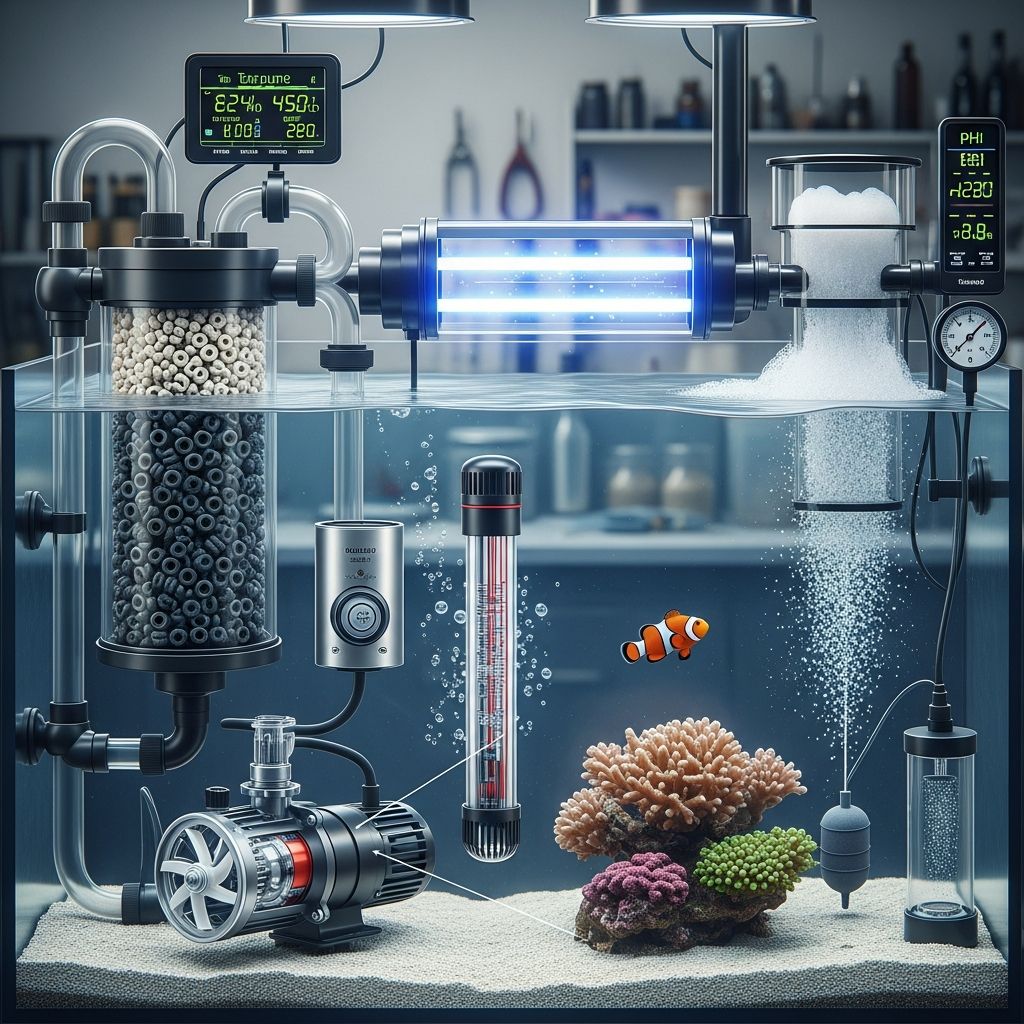
Maintaining a thriving aquatic environment requires a comprehensive understanding of how different system components work together to create conditions where aquatic animals can survive and flourish. An aquatic life support system (ALSS) functions as an integrated network of equipment and processes designed to sustain water quality, manage biological waste, regulate environmental parameters, and monitor ecosystem health. Whether managing a small home aquarium or operating a large commercial aquaculture facility, the fundamental principles of system design remain consistent, though the complexity and scale may vary significantly.
The cornerstone of any aquatic life support system rests on three primary elements: a vessel that houses the aquatic animals, filtration components that maintain water quality, and a sump or reservoir that collects and redistributes water through the system. Understanding how each component functions independently and collectively enables animal care professionals to optimize conditions for their specific aquatic populations and respond effectively to changing environmental challenges.
The Housing Vessel and Water Circulation Framework
The foundational element of any aquatic life support system is the vessel itself—the primary enclosure that contains the animals and establishes the basic environment in which they live. This vessel must be appropriately sized for the species and population density, constructed from durable, non-toxic materials, and designed to facilitate water circulation and maintenance access. The vessel serves as the starting point where animals interact with their environment and where initial waste products are introduced into the water column.
Water circulation throughout the system is equally critical to vessel design. Pumping systems move water from the animal housing vessel through filtration components and back into the tank, creating continuous movement that prevents stagnation and ensures uniform distribution of oxygen, nutrients, and treated water. The rate of water circulation—measured in gallons per minute (GPM)—must match the biological load of the system, meaning the total amount of waste produced by the animals housed within it. Systems serving high-density populations or animals with elevated metabolic rates require more robust pumping capacity than those housing fewer or less demanding species.
Three-Tiered Filtration: The Waste Management Strategy
Modern aquatic life support systems employ three distinct filtration approaches, often used in combination within a single installation. Each addresses different aspects of water quality and waste removal, and understanding their individual functions and interactions is essential for system design and troubleshooting.
Biological Filtration: Converting Toxic Compounds
Biological filtration represents the most critical component of any recirculating aquatic system. Fish and other aquatic animals continuously excrete ammonia—a highly toxic nitrogen compound—directly from their bloodstream through their gills via passive diffusion. Without biological filtration, ammonia accumulation would quickly poison the animals. Biological filters provide vast surface areas and stable environments where specialized nitrifying bacteria colonies establish themselves. These bacteria oxidize ammonia into nitrite (still toxic) and subsequently convert nitrite into nitrate (far less toxic and utilized by aquatic plants). The biofilter requires three essential conditions to function effectively: the presence of nitrogenous compounds that serve as bacterial food sources, adequate dissolved oxygen to support bacterial metabolism, and a carbonate source (alkalinity) that stabilizes pH and provides necessary minerals for bacterial growth.
Examples of biological filtration media include plastic structures placed in tank bottoms, fluidized bed filters commonly found in commercial systems where filter material remains suspended and in constant contact with water, and bead or sand filters used in ornamental pond and aquaculture applications. The selection of biofilter type depends on system size, flow rate requirements, and available space within the facility.
Mechanical Filtration: Removing Particulate Matter
Mechanical filters function as the first line of defense in most aquatic systems, positioned before biological filters to intercept larger particles before they reach the biofilter. These filters capture uneaten food, fecal material, debris, and other suspended solids that would otherwise clog the biofilter and create problematic anoxic (oxygen-depleted) zones within it. When a biofilter becomes clogged with particulates, water channels preferentially through open areas, leaving other sections of the filter bed completely bypassed—a condition called channeling that severely compromises biological filtration effectiveness.
Mechanical filtration can range from simple systems employing foam pads or floss materials that screen water as it passes through, to more complex installations using sand or bead filters that provide dual mechanical and biological functions. The selection and sizing of mechanical filtration must account for the feeding rate of the animals and the resulting waste production. Undersized mechanical filters require more frequent cleaning and maintenance, while appropriately sized systems operate more efficiently with less operator intervention.
Chemical Filtration: Specialized Water Treatment
Chemical filtration encompasses various technologies that remove or neutralize specific compounds not adequately addressed by biological and mechanical filtration alone. Protein skimmers and foam fractionators, commonly used in marine aquatic systems, remove proteinaceous waste from the water column before it decomposes and places additional burden on the biofilter. These devices create bubbles that attract organic compounds, concentrating them into a removable foam layer.
Ultraviolet light sterilization offers another chemical filtration approach, using UV radiation to destroy or inactivate potentially pathogenic organisms suspended in the water column. The effectiveness of UV sterilization depends on proper sizing—undersized units fail to adequately treat all water passing through, while oversized systems waste energy. Ozone represents a powerful water treatment tool that clarifies water, kills microorganisms, and oxidizes various dissolved compounds. However, ozone requires specialized equipment and must include a de-gassing chamber to remove residual ozone before treated water contacts animals, as ozone exposure poses hazards to both aquatic life and human operators.
Supporting System Components and Technologies
Temperature Regulation and Environmental Control
Aquatic animals are sensitive to temperature fluctuations, with different species requiring different optimal ranges. Aquatic life support systems incorporate heaters and cooling systems to maintain stable water temperatures within species-appropriate parameters. Heaters provide warmth for tropical species or during seasonal temperature changes, while coolers (chiller units) become essential in systems where ambient room temperature exceeds target aquarium temperature or where metabolic heat from dense animal populations elevates water temperature beyond acceptable levels. Automated temperature control systems monitor water temperature continuously and activate heating or cooling equipment as needed, preventing the stress and disease susceptibility that results from temperature instability.
Oxygenation and Gas Exchange
Dissolved oxygen availability directly impacts aquatic animal survival and system health. While biological processes in the filter generate some oxygen, most systems require supplemental aeration. Air stones and diffusers introduce bubbles into the water column, increasing surface area for oxygen absorption. In some installations, oxygen is injected directly into return water lines or into the sump. The level of aeration must match the oxygen demand of the animal population and the aerobic bacteria within the biofilter. Inadequate oxygenation compromises both animal health and biological filtration, while excessive aeration can strip carbon dioxide necessary for pH stability.
Water Chemistry Monitoring and Management
Successful aquatic systems require continuous monitoring of critical water quality parameters including ammonia, nitrite, nitrate, pH, alkalinity (carbonate hardness), and dissolved oxygen concentration. Modern systems incorporate automated sensors connected to monitoring and control equipment that tracks these parameters in real-time and alerts operators to deviations from target ranges. Some advanced systems can automatically adjust conditions—adding alkalinity if pH drops, increasing aeration if oxygen falls, or triggering water changes if nutrient levels rise excessively. Manual testing serves as a backup to automated systems, providing verification that sensors are functioning accurately.
Sump and Reservoir Functions
The sump or reservoir serves multiple critical functions within an aquatic life support system. It collects water exiting the animal housing vessel and biofilter before that water is returned to the tank, providing a location where water level can be maintained, where temperature can be regulated before water re-enters the main tank, and where additional treatment (such as ozone de-gassing or final mechanical polishing) can occur. The sump volume must be sufficient to accommodate water displaced during filter maintenance and to provide adequate residence time for chemical processes. Many commercial systems feature sumps with multiple compartments, each dedicated to specific treatment processes, creating a sequential treatment path that maximizes water quality improvement.
System Scalability and Design Considerations
| System Scale | Typical Applications | Complexity Level | Key Characteristics |
|---|---|---|---|
| Small/Hobbyist | Home aquariums, small research tanks | Low to Moderate | Basic filtration, manual monitoring, simple heating |
| Medium Commercial | Retail aquariums, moderate aquaculture | Moderate | Dual filtration stages, partial automation, temperature control |
| Large Institutional | Public aquariums, research facilities | High | Multi-stage treatment, full automation, redundant systems |
Aquatic life support systems must be designed with consideration for the specific needs of target species, the total animal biomass within the system, available space and resources, and long-term operational requirements. Hobbyist systems may require only basic filtration and heater components, while commercial and research installations benefit from sophisticated automation, redundant safety features, and advanced monitoring capabilities that prevent system failures that could result in mass animal mortality.
Integration and System Reliability
The most effective aquatic life support systems achieve reliability through thoughtful integration of all components into a cohesive whole. Pre-plumbed, fully integrated commercial systems arrive at facilities already assembled and water-tested, minimizing installation complexity and reducing the likelihood of configuration errors. Bypass valves protect other system components if mechanical filters become clogged, allowing water to continue flowing to critical areas like heat exchangers and animal housing even during maintenance. Quick-disconnect unions and ball valves throughout the system facilitate component removal and servicing without requiring complete system shutdown. Drain valves positioned at low points enable easy water removal and maintenance without labor-intensive manual draining.
Veterinarians, aquaculturists, and facility managers benefit from understanding these fundamental system components because this knowledge enables them to identify which system element may be causing problems when animal health declines or water quality parameters drift outside target ranges. A fish mortality event might result from inadequate biofilter capacity, mechanical filter clogging reducing water flow, failed temperature regulation, or insufficient oxygenation—each requiring different diagnostic approaches and solutions. Similarly, understanding system design principles allows professionals to specify appropriate equipment when establishing new facilities or upgrading existing installations to better serve their aquatic animal populations.
Frequently Asked Questions
What is the primary purpose of a biological filter in an aquatic system?
Biological filters remove toxic ammonia excreted by fish and convert it through bacterial action into less harmful nitrate, making the water safe for animals. Without biofilters, ammonia would accumulate to lethal levels.
Why must mechanical filtration always precede biological filtration?
Mechanical filters remove particulate matter that would otherwise clog the biofilter, creating anoxic zones that destroy beneficial bacteria and severely compromise system function. Properly sequenced filtration stages maximize treatment efficiency.
How do automated monitoring systems improve aquatic life support?
Automated sensors continuously track water quality parameters and can trigger alerts or automatic adjustments, preventing dangerous parameter swings that stress animals and enable disease development. They also reduce labor requirements for manual testing.
What advantages do commercial, integrated life support systems offer over component assembly?
Pre-integrated systems arrive fully assembled and water-tested, with optimized component sequencing, proper plumbing connections, and safety features like bypass valves already installed. This reduces installation errors and ensures reliable performance from startup.
References
- Aquatic Life Support System Components — Merck Veterinary Manual, Department of Large Animal Clinical Sciences, University of Florida. https://www.merckvetmanual.com/exotic-and-laboratory-animals/aquatic-systems/aquatic-life-support-system-components
- How to Choose the Right Aquatic Life Support System for Your Needs — Iwaki Aquatic. https://iwakiaquatic.com/blog/tips-to-choose-the-best-aquatic-life-support-system/
- Life Support System Solutions: How Life Support Systems Work in Aquariums — ICM Corp. https://icm-corp.com/life-support-system/
- Life Support Equipment — Aquatic Enterprises, Inc. https://aquaticenterprises.com/custom-aquatics/aquaculture/life-support-equipment/
- Quality Equipment with Proven Performance: IAS Equipment Solutions — Integrated-Aqua. https://integrated-aqua.com/products/
Similar Articles








Read full bio of Sneha Tete


