
Aquatic Excellence: A Complete Guide to Dock Diving
Master the fundamentals of dock diving and unleash your dog's aquatic potential.
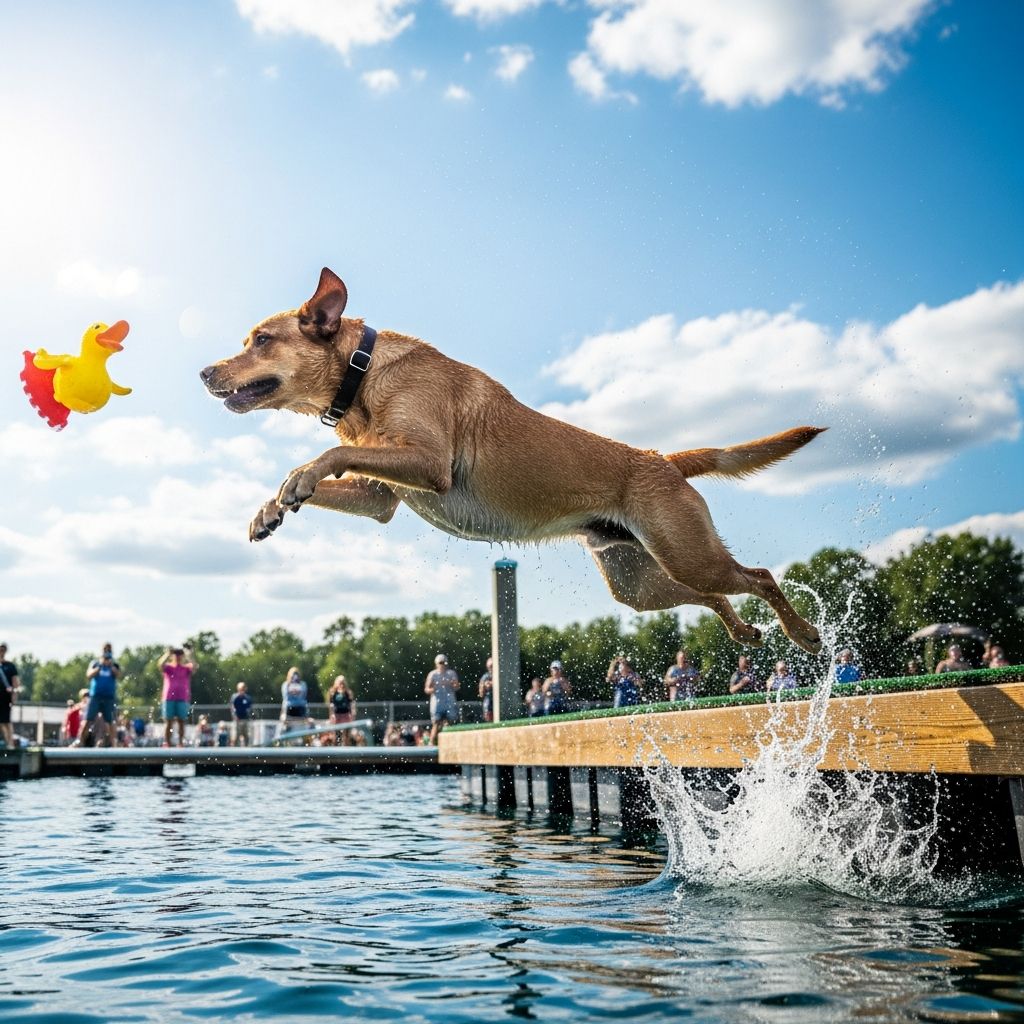
Understanding the Fundamentals of Dock Diving
Dock diving represents one of the most exhilarating canine athletic pursuits, combining a dog’s natural instinct to chase and retrieve with controlled aquatic environments. This water-based sport has grown substantially in popularity over recent years, attracting dog owners who seek engaging activities for their water-loving companions. Unlike many canine sports that require years of specialized training, dock diving remains relatively accessible to dogs of various sizes and breeds, making it an inclusive option for competitive and recreational participation.
The core principle of dock diving involves launching a dog from an elevated platform into water to retrieve a thrown toy. Dogs run along a designated dock and propel themselves into the water, with judges measuring the distance of their jump from the point where the dog enters the water. The measurement typically extends from the end of the dock to where the base of the dog’s tail enters the water, providing an objective scoring method across all competitions.
This sport originated from observing natural dog behavior and has evolved into a structured competitive discipline with standardized rules and regulations. The appeal lies in its simplicity—dogs do what comes naturally while owners and handlers learn to optimize their dog’s performance through proper training and conditioning.
Essential Prerequisites and Equipment Requirements
Before embarking on dock diving training, several fundamental prerequisites must be established. The most critical requirement involves ensuring your dog possesses strong swimming abilities and demonstrates genuine enthusiasm for water activities. Dogs who are uncertain or fearful around water require patience and gradual acclimation before any dock diving training begins.
The physical infrastructure for dock diving training includes specific equipment and environmental specifications:
- A dock measuring at least 40 feet in length and 7.5 feet in width, constructed with non-slip surfaces such as artificial turf or rubber to prevent slipping
- Water environment at least 3 feet 6 inches deep with no more than 2-3 feet clearance between the dock and water surface for safe landing
- A carpeted or nonslip 40-foot runway approach completely free from obstructions and trip hazards
- Potable water such as a swimming pool, pond, or lake with minimum dimensions of 41 feet in length and 21 feet in width for competitive purposes
- Floating toys or bumpers suitable for throwing and retrieving
The dock construction itself requires careful attention to safety standards. Docks are typically manufactured from non-slip materials to prevent injury, and their specifications remain tightly regulated to ensure consistent record-keeping across competitive events. Most training facilities utilize swimming pools rather than open water bodies, as pools eliminate unpredictable variables such as currents and water temperature fluctuations that could interfere with consistent performance.
Foundational Training Progression
Successful dock diving training follows a systematic progression that builds confidence and skill incrementally. The initial phase focuses entirely on establishing water comfort and swimming proficiency.
Phase One: Water Acclimation
This foundational stage requires patience and positive reinforcement. Begin by leading your dog to the edge of a dock or shoreline, then toss a favorite floating toy into the water while issuing an encouraging command such as “fetch”. The goal involves making water interaction enjoyable and rewarding rather than stressful. Some dogs immediately embrace water activities, while others require multiple sessions before demonstrating comfort. Consistency and praise prove essential during this phase, as dogs learn that water interaction produces positive outcomes.
Phase Two: Distance Extension
Once your dog confidently jumps into the water from the dock edge, gradually increase the distance from which they launch. Begin by positioning your dog approximately six feet back from the water’s edge while you remain at the dock’s terminus to throw the toy. As confidence builds, incrementally move your dog further back, allowing them to develop longer running approaches. This progression naturally encourages dogs to generate greater velocity and momentum before launching.
Phase Three: Repetition and Reinforcement
Extensive repetition with varied conditions remains crucial for developing competence and enthusiasm. Practice sessions should occur at different times and include environmental variations. If you have access to multiple training locations, use them to prevent your dog from becoming overly familiar with a single setting, which could lead to boredom or predictable patterns.
Phase Four: Aerial Development
The time a dog spends airborne directly influences jump distance, making this aspect critical for competitive success. During this phase, encourage progressively longer and more horizontal leaps until your dog masters sustained flight patterns. This requires practice with toys thrown at varying distances and angles, helping dogs develop body awareness and trajectory control.
Phase Five: Environmental Diversity
Dock diving training should encompass multiple environments and surface variations. Practice launching from different dock ends, varying the throw direction, and using different floor coverings to build adaptability. Dogs trained in diverse conditions demonstrate greater consistency across different competitive venues.
Competitive Formats and Disciplines
Organized dock diving competitions operate under standardized rules established by governing bodies such as the AKC (American Kennel Club) and NADD (North American Diving Dogs). Dogs must be at least six months old to compete, and most competitions accept any breed or mixed breed regardless of size.
Competitions employ several distinct formats, each emphasizing different skills:
| Competition Format | Description | Measurement Method |
|---|---|---|
| Distance Jumping | Dogs launch from the dock to achieve maximum horizontal distance into the water | Measured from dock end to where the dog’s tail base enters water |
| Air Retrieve | Dogs compete to knock a bumper suspended four feet above water | Distance at which the bumper is successfully dislodged |
| Catch It | Dogs must catch a bumper twice consecutively in midair | Combined distance of both catches and landing |
| Fetch It | Dogs must retrieve a submerged or thrown object | Successful retrieval at maximum distance |
| Speed Retrieve | Dogs race against the clock to retrieve toys as quickly as possible | Time required to complete retrieval |
Two primary launching methods govern competitive dock diving. The “Place and Send” method involves the handler walking the dog to the dock’s end, holding it momentarily while throwing the toy, then returning to a starting point before releasing the dog to retrieve. The alternative “Chase” method positions the dog on the dock while the handler throws the toy in the air ahead of the dog, creating an upward jumping motion followed by horizontal flight. Different handlers prefer different approaches based on their dog’s natural jumping style and individual strengths.
Competition events typically organize participating dogs into heats (called “waves”) similar to track meet formats. Each dog receives two attempts per wave, with the top 24 longest jumps advancing to finals rounds. This structure allows dogs of different skill levels to participate meaningfully while maintaining competitive integrity.
Physical Conditioning and Strength Development
Beyond technique training, successful dock diving requires dedicated physical conditioning. The explosive nature of launching from a stationary position demands well-developed fast-twitch muscle fibers that generate short bursts of power. These muscle fibers enable the rapid acceleration necessary for impressive jumps but fatigue quickly without proper conditioning programs.
Effective conditioning incorporates strength training and interval training protocols specifically designed for dock diving athletes. Off-dock training activities build the muscular foundation necessary for explosive performance. Progressive resistance exercises, controlled jumping practice on varied terrain, and interval-based cardiovascular work collectively prepare dogs for the demands of competitive dock diving.
A comprehensive training program balances high-intensity efforts with adequate recovery periods, preventing injury and avoiding overtraining that could compromise performance or diminish enthusiasm for the sport.
Frequently Asked Questions About Dock Diving
What breeds excel at dock diving?
While most breeds and mixed breeds can participate in dock diving competitions, certain breeds with strong swimming abilities and retrieving instincts tend to excel. However, breed is less important than individual temperament, water enthusiasm, and physical fitness. Many successful dock diving competitors represent diverse breed backgrounds.
Can puppies participate in dock diving training?
Formal competition requires dogs to be at least six months old. However, puppies can begin foundational water acclimation and swimming skills development earlier, provided training remains age-appropriate and doesn’t subject developing joints to excessive impact.
How do I find training facilities in my area?
The AKC and NADD maintain information about affiliated clubs and instructors throughout various regions. Many dock diving events offer practice runs and training advice during competitions, providing opportunities to connect with experienced handlers and trainers. Online communities and local dog sports organizations also facilitate connections with trainers specializing in dock diving.
What if my dog doesn’t naturally love water?
Water enthusiasm can be developed through patient, positive conditioning over time. Begin with shallow water and gradual exposure rather than forcing water interaction. Not all dogs will become enthusiastic swimmers, and dock diving may not suit dogs with genuine aquatic anxiety.
How deep does water need to be for safe training?
Training water should be at least 3 feet 6 inches deep, with dock clearance not exceeding 2-3 feet above the water surface to ensure safe landing conditions.
Advanced Training Considerations
Experienced handlers refine techniques based on individual dog characteristics. Some dogs achieve optimal height when encouraged to jump upward before launching forward, achieved through the Chase method where the toy moves upward before the dog launches. Others generate maximum distance through horizontal running approaches.
Location remains the most significant challenge for dock divers, as ideal training facilities aren’t universally accessible. However, many organized dock diving events welcome training participants, providing opportunities to practice on regulation equipment while learning from experienced competitors and officials.
Safety considerations must remain paramount throughout training and competition. Dogs cannot be thrown into water—participation must remain entirely voluntary and enjoyable. Forcing reluctant dogs into water or punishing underperformance undermines the sport’s fundamental purpose of celebrating canine athleticism and enhancing the human-dog bond.
Conclusion: Building Champions Through Water
Dock diving transforms the simple act of retrieving into an athletic pursuit that celebrates dogs’ natural abilities while providing meaningful exercise and mental enrichment. By following systematic training progressions, emphasizing water safety, and maintaining focus on enjoyment rather than performance pressure, handlers can develop confident, enthusiastic dock diving dogs. Whether pursuing competitive success or recreational participation, dock diving offers water-loving dogs an outlet perfectly suited to their instincts and abilities.
References
- How To Train A Dog for Dock Diving — Eukanuba. 2024. https://www.eukanuba.com/au/articles/how-to-train-a-dog-for-dock-diving
- Dog Dock Diving Training — Purina US. 2024. https://www.purina.com/articles/dog/incredible-dog-challenge/dock-diving-training
- Dock Jumping Training With Fitpaws Canine Conditioning Equipment — FitPaws. 2024. https://fitpaws.com/blogs/fitpaws-community/dock-jumping-training-with-fitpaws-canine-conditioning-equipment
- How to Train a Dog for Dock Diving — YouTube. 2024. https://www.youtube.com/watch?v=uBC2DE9__GA
- Diving Dogs 101: How to Compete in Dock Diving Step-By-Step — American Kennel Club. 2024. https://www.akc.org/expert-advice/sports/diving-dogs-101/
Similar Articles








Read full bio of Sneha Tete


