

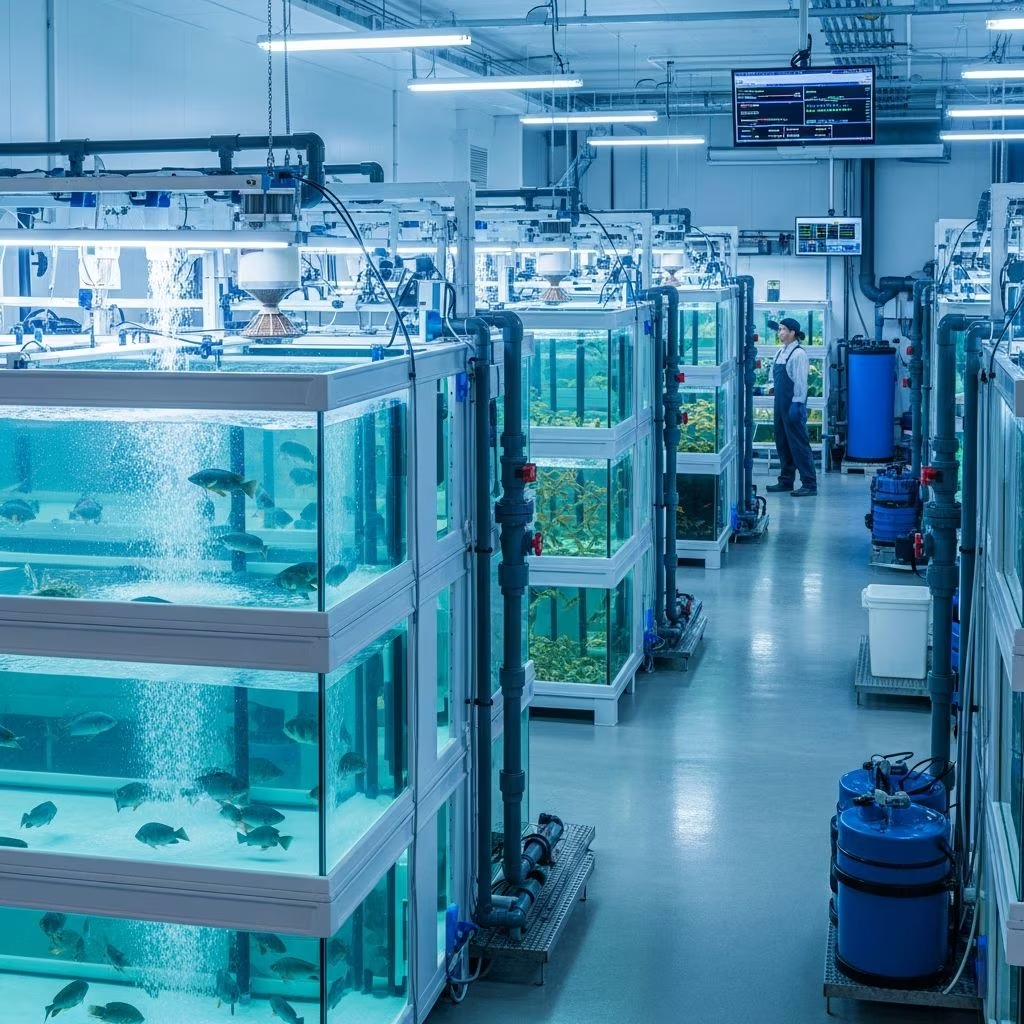
Aquaculture, the controlled cultivation of aquatic organisms, relies on varied production techniques to meet global seafood demands sustainably. These methods range from simple pond-based setups to high-tech closed systems, each suited to specific species, locations, and scales.
Core Principles of Aquaculture Systems
Successful aquaculture balances water quality, species biology, and environmental factors. Key considerations include oxygen levels, waste management, and feed efficiency. Systems are classified by water use: open (unrestricted exchange), semi-closed (partial exchange), and closed (minimal exchange).
Earthen Pond Systems
Earthen ponds represent the most common and accessible aquaculture method worldwide, particularly for species like tilapia, carp, and shrimp. These shallow, excavated basins mimic natural habitats while allowing controlled inputs.
- Advantages: Low startup costs; utilize natural productivity; suitable for extensive farming.
- Challenges: Vulnerability to weather; effluent pollution if unmanaged.
Production can reach 2,000 pounds per acre with aeration and intensive management. Existing farm ponds often require minimal retrofitting, making this ideal for beginners.
Open Water Cage and Net Pen Farming
Open net pens or cages, anchored in coastal waters, lakes, or rivers, allow free water exchange. Predominantly used for salmon, sea bass, and trout, these systems leverage natural currents for oxygenation.
| Method | Species | Risk Level | Key Features |
|---|---|---|---|
| Open-Net Pens | Salmon, Trout | High | Offshore cages; free waste/disease exchange |
| Sea Cages | Sea Bream, Bass | High | Floating nets; active feeding |
While productive, risks include escapes, predator interactions, and pathogen spread to wild stocks.
Flow-Through Raceways and Tanks
Flow-through systems pump fresh water continuously through raceways or tanks, flushing wastes naturally. High-yield springs support trout and other cold-water species, achieving up to 100 pounds per gallon of flow per minute.
- Essential for clean effluent treatment before discharge.
- Scalable for small operations with reliable water sources.
Recirculating Aquaculture Systems (RAS)
RAS represent cutting-edge technology, recycling 90-99% of water through biofilters, mechanical filters, and UV sterilizers. Ideal for year-round production of high-value fish like barramundi, sturgeon, and salmon smolts.
Mechanical aerators or pure oxygen ensure high stocking densities. These indoor facilities minimize disease and escapes while reducing water use dramatically.
Suspended and Passive Shellfish Culture
Shellfish like oysters, mussels, and clams thrive in low-input suspended systems. Ropes, trays, rafts, or longlines position them in currents, where they filter-feed naturally.
- Low Risk: Native species in clean waters; minimal waste.
- Scalable: From beach racks to offshore farms.
Passive methods (sticks, ropes) contrast active feeding in finfish cages, emphasizing sustainability.
Semi-Closed and Integrated Approaches
Semi-closed systems, common in prawn farming, exchange water with nearby rivers while treating inflows. Integrated multi-trophic aquaculture (IMTA) combines species for nutrient recycling: fish wastes fertilize seaweed or shellfish.
- Aquaponics: Fish effluent nourishes plants.
- Polyculture: Carp with shrimp and mussels.
These enhance efficiency and reduce environmental footprints.
Equipment and Management Essentials
Regardless of system, core tools include:
- Water quality monitors (pH, ammonia, DO, nitrites).
- Aerators, feeders, and nets.
- Chemicals like lime for buffering.
Larger operations demand automated sensors for precision control.
Environmental and Economic Considerations
Intensive systems boost yields but require energy for filtration. Extensive ponds offer affordability but risk pollution. Globally, inland pond aquaculture dominates, producing millions of tonnes annually.
| System Type | Water Use | Yield Potential | Environmental Impact |
|---|---|---|---|
| Ponds | High | Medium | Medium (effluent) |
| Open Cages | Open | High | High (disease spread) |
| RAS | Low | Very High | Low |
Species-Specific Adaptations
Finfish like tilapia suit ponds; salmon prefer cages or RAS. Shellfish excel in suspension. Carp polycultures maximize pond utility.
Future Trends in Aquaculture
Advancements focus on RAS expansion, offshore cages, and IMTA for sustainability. Automation and genetics improve resilience.
Frequently Asked Questions (FAQs)
What is the most common aquaculture method?
Earthen pond culture, due to its simplicity and versatility.
Are recirculating systems environmentally friendly?
Yes, they minimize water use and waste discharge.
What species are best for open net pens?
Salmon, sea bass, and trout in marine or freshwater.
How do integrated systems work?
They recycle nutrients across species, like fish feeding plants or shellfish.
What equipment is vital for all systems?
Water quality testers and aerators.
References
- Introduction to Aquaculture — Penn State Extension. 2023. https://extension.psu.edu/introduction-to-aquaculture/
- An Overview of Techniques Used in Aquaculture — Longdom Publishing. 2022. https://www.longdom.org/open-access/an-overview-of-techniques-used-in-aquaculture-91610.html
- 1.2 Methods of Production — Iowa State University Pressbooks. 2024. https://iastate.pressbooks.pub/aquaticanimalhealth/chapter/1-2-methods-of-production/
- Aquaculture Methods — SeaChoice. 2023. https://www.seachoice.org/info-centre/aquaculture/aquaculture-methods/
- What is Aquaculture? — ASC International. 2024. https://asc-aqua.org/learn-about-seafood-farming/what-is-aquaculture/
- Aquaculture Production — FAO. 2022. https://www.fao.org/3/cc0461en/online/sofia/2022/aquaculture-production.html



