

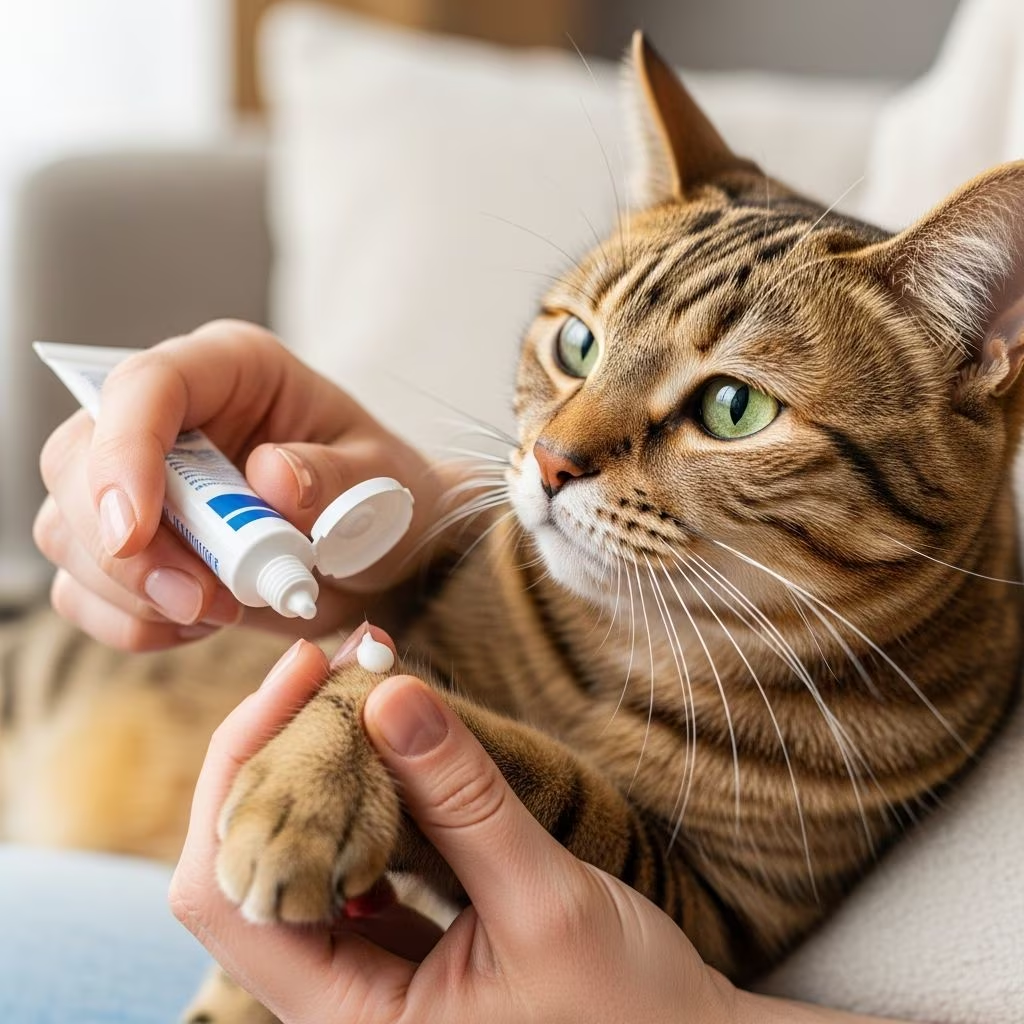
Topical medications are frequently prescribed for cats dealing with wounds, skin conditions, or other dermatological issues. However, applying these medications can present significant challenges for pet owners. Understanding the different types of topical preparations, learning proper application techniques, and knowing how to manage your cat’s behavior during treatment can make the entire process smoother and more effective. This comprehensive guide will help you navigate the complexities of administering topical medications to your feline companion.
Understanding Topical Medications: Types and Differences
Topical medications come in three main formulations, each with distinct characteristics and application methods. Recognizing these differences is essential for proper administration and understanding how your cat’s medication will behave on the skin.
Ointments
Ointments are formulated with an oily base, which provides a protective barrier and promotes deeper penetration into the skin. This oil-based consistency makes ointments ideal for dry, cracked, or severely irritated skin areas. The greasy nature of ointments means they tend to stay in place longer and may require more frequent cleaning or bathing to remove completely. When applying ointments, be prepared for some residue on your cat’s fur and furniture.
Creams
Creams represent a middle ground between ointments and lotions. They have a non-greasy formulation that absorbs more readily into the skin without leaving an oily residue. This makes creams particularly appealing for pet owners concerned about staining or excessive oiliness. Creams provide good therapeutic benefits while offering a cleaner application experience compared to traditional ointments.
Lotions
Lotions are liquid preparations that spread easily across the skin’s surface. They offer the most cosmetically pleasing option and are absorbed relatively quickly. However, their liquid nature means they may not stay in place as effectively as ointments or creams, particularly on areas your cat can easily lick or where hair movement might displace the medication.
Best Practices for Application
General Application Technique
Regardless of whether you’re applying an ointment, cream, or lotion, the basic application technique remains consistent. Most topical preparations work optimally when gently massaged into the affected area for several moments during application. This massage action helps distribute the medication evenly and enhances absorption into the skin layers where it can provide maximum therapeutic benefit.
Always begin by washing your hands thoroughly before handling any topical medication. This prevents contamination and reduces the risk of spreading bacteria or other pathogens to the affected area. After application, wash your hands again, particularly if the medication contains ingredients that could irritate your skin or eyes.
Safety Precautions
Critical safety considerations apply when handling topical medications for your cat. Many veterinary formulations are designed specifically for external use and may contain ingredients that could prove harmful if ingested. It is essential to prevent your cat from licking and swallowing any topical preparation, as this could result in internal complications or reduced effectiveness of the medication.
Some veterinary preparations may be irritating to human skin or eyes. Always follow your veterinarian’s specific directions regarding application methods, including whether gloves should be worn, which areas to avoid, and any other precautions necessary for safe handling. If you notice any skin irritation on your own hands or elsewhere after applying your cat’s medication, discontinue use and contact your veterinarian immediately.
Managing Your Cat’s Behavior During Application
When Your Cat Becomes Agitated
Many cats become agitated or resistant when medications are being applied, particularly during the early stages of treatment. This behavioral response often stems from discomfort in the affected area itself or from temporary mild discomfort caused by the medication, such as a stinging or burning sensation. Understanding these underlying causes can help you approach the situation with greater empathy and patience.
Having an assistant hold your cat during medication application is highly recommended, especially when treating sensitive or painful areas. A second person can provide gentle restraint while you focus on applying the medication correctly. Gently wrapping your cat in a warm towel, leaving only the treatment area exposed, can provide both comfort and effective restraint during the process.
Your veterinarian may recommend using pheromone sprays, such as Feliway®, to help calm your cat before and during medication application. These products mimic natural calming pheromones and can significantly reduce anxiety. Simultaneously, distracting your cat with particularly tasty treats during the application process can redirect their attention and make the experience more positive overall.
If your cat continues to display significant discomfort or distress after trying these techniques, contact your veterinarian promptly. Additional pain medication may be warranted, particularly if the underlying condition is causing substantial discomfort that makes it difficult to administer treatment effectively.
When Your Cat Licks Off the Medication
One of the most common challenges pet owners face is preventing their cat from immediately licking off topical medications. To address this issue, try applying the medication just before your cat’s regular feeding time. Providing treats during the application process can further divert their attention and create a positive association with medication administration.
If these strategies prove insufficient, consult your veterinarian about obtaining an Elizabethan collar, commonly known as a cone. These specialized collars prevent your cat from reaching the treated area with their tongue, ensuring the medication remains in place long enough for absorption. Many veterinarians stock different styles of Elizabethan collars, and finding the right fit can improve your cat’s comfort and acceptance.
Managing the Elizabethan Collar Challenge
Many cats initially show strong resistance to wearing an Elizabethan collar, as the unfamiliar device limits their field of vision and restricts normal movement. However, most cats can acclimate to the collar relatively quickly, often within a few hours, when provided with proper encouragement and rewards.
To help your cat adjust to the collar, offer special treats or favorite toys as positive reinforcement for accepting and wearing it. Praise your cat generously during periods when they’re tolerating the collar well. The combination of rewards and gradual acceptance typically results in successful acclimation.
If your cat continues to struggle with a standard Elizabethan collar, explore alternative options. Several styles of cones are available, and some cats respond better to specific designs. Additionally, specially designed recovery suits or “onesies” can be used depending on the location of the treatment area, providing an alternative means of protecting the affected region while being more comfortable for some cats. Contact your veterinarian to discuss which option might work best for your cat’s specific situation.
Creating an Effective Application Strategy
Preparation and Environment
Before beginning medication application, gather all necessary supplies within arm’s reach. This includes the prescribed medication, any applicators or gloves recommended by your veterinarian, treats for positive reinforcement, and towels for wrapping or cleanup. Having everything prepared reduces stress and minimizes the time your cat must endure the process.
Choose a calm, quiet environment for applying medication. Loud noises or chaotic settings will increase your cat’s anxiety. Speak in soft, reassuring tones and move deliberately and slowly. Cats are remarkably perceptive and can detect your own anxiety and nervousness. The calmer and more confident you remain, the more readily your cat will accept the procedure.
Timing Considerations
Schedule medication application during times when your cat is naturally calmer and more receptive. Many cats are quieter and more cooperative in the early morning or evening. Avoid applying medication when your cat is actively playing or in a stimulated state. If possible, allow a short settling period after feeding before attempting application, as cats are often more relaxed following meals.
Positive Reinforcement
Throughout the medication application process and afterward, provide abundant praise and positive reinforcement. Offer your cat’s favorite treats immediately after successfully applying the medication. This positive association helps your cat learn that medication time leads to rewards, gradually reducing resistance and anxiety during future applications.
Important Safety and Health Considerations
Monitoring for Adverse Reactions
After applying topical medication, observe your cat for any unusual reactions. It’s normal for cats to blink frequently or paw at the treated area immediately following application. However, if this behavior persists beyond the initial few minutes, or if the treated area appears increasingly inflamed, red, or shows signs of allergic reaction, contact your veterinarian immediately. These signs may indicate that the medication isn’t appropriate for your cat or that an allergic reaction is occurring.
Consistency with Treatment
Administer the prescribed medication exactly as directed by your veterinarian, completing the entire course of treatment even if the condition appears to improve before the prescription is finished. Premature discontinuation of treatment can result in incomplete healing or recurring issues. Your veterinarian has determined the optimal duration based on your cat’s specific condition and needs.
When to Seek Additional Help
If you encounter persistent challenges applying medication, if your cat’s condition worsens despite treatment, or if your cat experiences severe inflammation or pain, do not delay in contacting your veterinarian. They can recommend alternative solutions, adjust the treatment plan, or provide additional support to ensure your cat receives appropriate care.
Common Mistakes to Avoid
Many pet owners inadvertently make errors that compromise medication effectiveness or increase their cat’s stress. Applying medication too quickly without proper preparation can startle your cat and increase resistance during future applications. Failing to prevent licking immediately after application can result in significant medication loss before absorption occurs. Using excessive force or becoming frustrated during application increases your cat’s anxiety and makes future treatments more difficult.
Neglecting to follow your veterinarian’s specific instructions about application frequency, dosage, or precautions can reduce medication effectiveness or create safety concerns. Finally, discontinuing medication application prematurely because of perceived improvement can result in incomplete healing and recurrence of the condition.
Frequently Asked Questions
How long should I wait between applications?
Your veterinarian will provide specific instructions regarding application frequency. Follow these directions precisely, as spacing between applications is carefully calculated to provide optimal therapeutic benefit. Applying medication more frequently than directed won’t speed healing and may cause skin irritation.
Can I use human topical medications on my cat?
Generally, you should avoid using human topical medications on your cat unless explicitly directed by your veterinarian. Many human formulations contain ingredients that may be toxic to cats or cause adverse reactions. Antibiotic ointment designed for human use may be used on minor cuts or scrapes, but you should monitor your cat for 10-15 minutes afterward to allow absorption and prevent licking. Triple antibiotic ointment, while not likely toxic, contains oils that may cause vomiting or diarrhea if ingested.
What if my cat’s condition worsens during treatment?
Contact your veterinarian immediately if your cat’s condition deteriorates or doesn’t improve as expected. This may indicate an inadequate treatment approach, a secondary infection, or an underlying condition requiring different management strategies. Your veterinarian can reassess the situation and adjust the treatment plan accordingly.
How can I prevent my cat from licking the medication at night?
Using an Elizabethan collar is the most effective way to prevent licking, particularly during nighttime hours. Alternatively, consider applying medication just before your cat’s regular bedtime routine. Some cats are less inclined to lick after becoming drowsy. Your veterinarian can help you determine which approach will work best for your cat’s habits and temperament.
Are there alternative forms of medication if my cat won’t tolerate topical applications?
If topical medications prove impossible to administer despite all best efforts, discuss alternative treatment options with your veterinarian. These might include oral medications, injections, or transdermal patches in some cases. Your veterinarian can help determine which alternatives might be suitable for your cat’s specific condition.
References
- Applying Ointments, Creams, and Lotions on Cats — VCA Animal Hospitals. 2025. https://vcahospitals.com/know-your-pet/applying-ointments-creams-and-lotions-on-cats
- Applying Eye Ointments to Cats — VCA Animal Hospitals. 2025. https://vcahospitals.com/know-your-pet/applying-eye-ointments-to-cats
- Personal Care Products and Your Pet — VCA Animal Hospitals. 2025. https://vcahospitals.com/know-your-pet/personal-care-products-and-your-pet
- Transdermal Medications: How They Work and How to Apply Them — VCA Animal Hospitals. 2025. https://vcahospitals.com/know-your-pet/transdermal-medications-how-they-work-and-how-to-apply-them
- Erythromycin Ophthalmic — VCA Animal Hospitals. 2025. https://vcahospitals.com/know-your-pet/erythromycin-ophthalmic



