

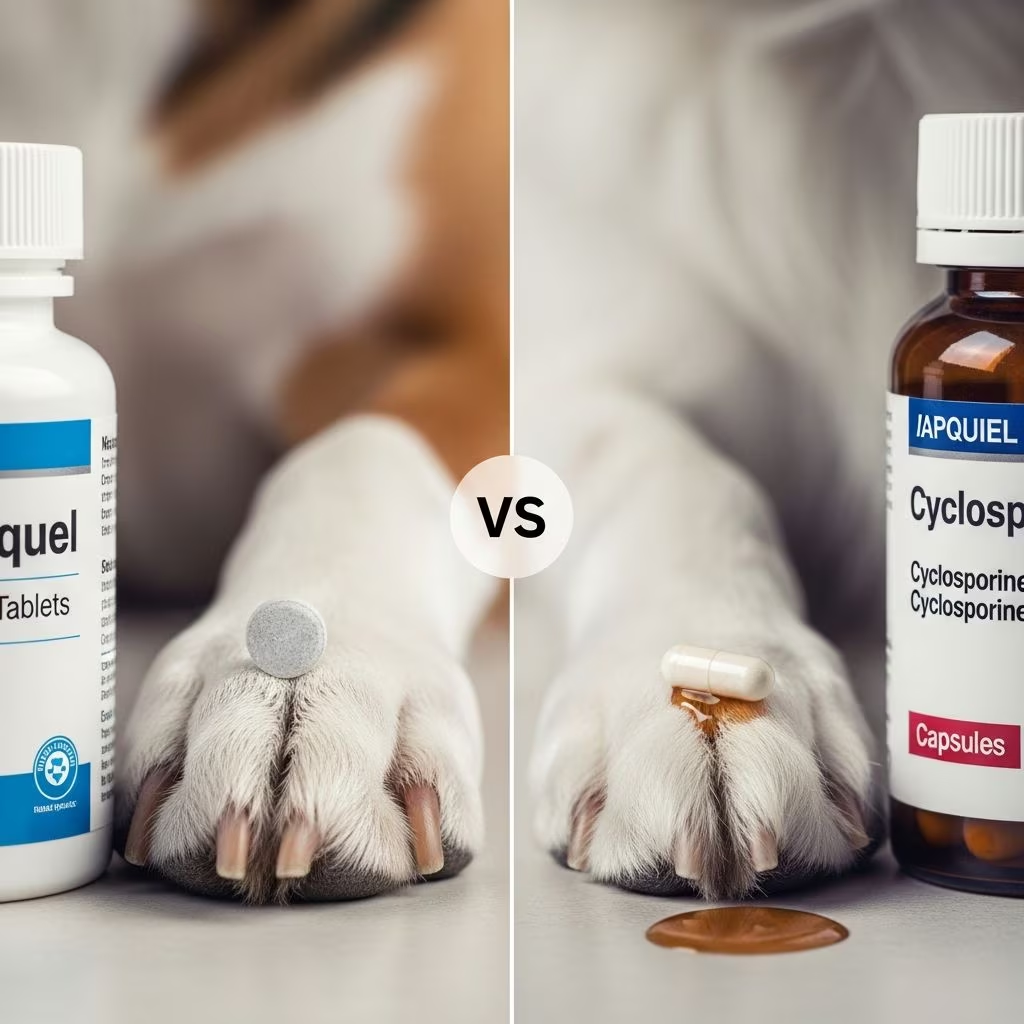
Canine atopic dermatitis affects millions of dogs, causing relentless itching, redness, and discomfort that disrupts daily life. Two leading treatments, Apoquel (oclacitinib) and Cyclosporine, offer targeted relief by addressing the underlying immune responses. Apoquel provides rapid itch control through Janus kinase enzyme inhibition, while Cyclosporine modulates T-cell activity for broader immunosuppression. This article explores their mechanisms, clinical performance, administration methods, safety considerations, and practical guidance for pet owners and veterinarians.
Understanding Canine Atopic Dermatitis and Its Impact
Atopic dermatitis in dogs is a chronic allergic condition triggered by environmental allergens like pollen, dust mites, or food sensitivities. It leads to intense pruritus (itching) and secondary skin lesions from scratching, biting, and licking. Without intervention, it progresses to infections, hair loss, and reduced quality of life. Effective management requires therapies that reduce itch signals and inflammation, preventing the itch-scratch cycle.
- Prevalence: Affects up to 15-20% of dogs, often starting in puppyhood.
- Symptoms: Persistent scratching, red inflamed skin, ear infections, and odor from secondary pyoderma.
- Diagnosis: Typically confirmed via veterinary exam, skin scrapings, allergy testing, or elimination diets.
Treatments like Apoquel and Cyclosporine have revolutionized care, offering alternatives to steroids with fewer long-term risks.
How Apoquel Targets Allergic Responses
Apoquel, or oclacitinib, is a synthetic drug that selectively inhibits Janus kinase (JAK) enzymes, particularly JAK1. These enzymes mediate cytokine signaling responsible for itch and inflammation in allergic conditions. By blocking IL-31, a key pruritogenic cytokine, Apoquel rapidly alleviates symptoms without broadly suppressing the immune system.
Clinical trials demonstrate Apoquel’s speed: owners report significant pruritus reduction within 24 hours, with peak effects by day 4. In a randomized study of 226 dogs with atopic dermatitis, Apoquel reduced owner-assessed pruritus visual analog scale (VAS) scores faster than Cyclosporine, achieving comparable results by day 56.
| Metric | Apoquel Effect | Timeline |
|---|---|---|
| Pruritus VAS Reduction | 50-70% from baseline | Day 1-14 |
| CADESI-02 Score (Dermatitis Severity) | 45-60% decrease | Day 28 |
| Duration per Dose | 12-24 hours | Daily maintenance |
Cyclosporine’s Role in Immune Modulation
Cyclosporine, an immunosuppressant derived from fungi, inhibits calcineurin in T-lymphocytes, preventing cytokine production like IL-2, IL-4, and IL-5. This dampens the allergic inflammatory cascade, reducing pruritus and dermatitis over time. It’s FDA-approved for canine atopic dermatitis under brand names like Atopica.
Effects emerge slower, often requiring 2-4 weeks for full benefit, but it provides sustained control with once-daily dosing. Studies show Cyclosporine yields about 40-50% pruritus reduction by week 4, with CADESI scores dropping similarly to newer therapies. It’s particularly useful for long-term management in dogs tolerant of oral capsules.
Direct Clinical Comparisons: Efficacy and Onset
Head-to-head trials highlight key differences. A blinded, randomized study compared Apoquel (0.4-0.6 mg/kg BID for 14 days, then SID) to Cyclosporine (3.2-6.6 mg/kg SID) in 226 dogs over 12 weeks. Apoquel demonstrated faster pruritus relief: 59% reduction by day 14 versus Cyclosporine’s 49%. By day 28, both met noninferiority criteria for CADESI-02 improvements, with ~50% reductions.
- Apoquel excelled in early response, ideal for acute flares.
- Cyclosporine matched long-term efficacy but with delayed onset.
- Gastrointestinal side effects were lower in Apoquel (11% vs. 25%).
Another analysis confirmed no significant dermatitis score differences, emphasizing both as viable options.
Administration and Dosing Protocols
Apoquel: Oral tablet, flavored for palatability. Initial: 0.4-0.6 mg/kg twice daily for up to 14 days; maintenance: once daily. Weight-based sizing ensures precision; effects wane quickly if discontinued, aiding trial periods.
Cyclosporine: Liquid or capsule, once daily on empty stomach. Dosing starts at 5 mg/kg, adjustable based on response and blood levels. Consistent absorption requires avoiding high-fat meals.
| Aspect | Apoquel | Cyclosporine |
|---|---|---|
| Form | Tablet | Capsule/Liquid |
| Frequency | 1-2x daily | 1x daily |
| Onset | 4-24 hours | 1-4 weeks |
| Convenience | Home dosing | Monitor trough levels |
Safety Profiles and Common Side Effects
Both drugs are well-tolerated, but profiles differ. Apoquel’s common issues include vomiting (5-10%) and diarrhea (short-lived). Rare concerns involve new neoplasias in trials, though causality is unproven; contraindicated in breeding/pregnant dogs or with certain drugs like corticosteroids.
Cyclosporine frequently causes GI upset (vomiting, anorexia, 20-30%), gingival hyperplasia, and hirsutism. Severe events like pyoderma often stem from underlying dermatitis. Long-term use warrants monitoring for infections and organ function.
- Apoquel Advantages: Lower GI risks, safe with antibiotics/vaccines.
- Cyclosporine Cautions: Avoid in puppies under 6 months, immunocompromised dogs.
Cost, Accessibility, and Long-Term Management
Apoquel tablets cost $2-4 per dose, totaling $50-100/month for average dogs. Cyclosporine runs $1-3/dose but requires vet monitoring, adding expense. Combination therapies (e.g., with topicals or immunotherapy) optimize outcomes and reduce reliance on one drug.
For seasonal allergies, Apoquel suits flares; Cyclosporine fits perennial cases. Transitioning involves tapering to avoid rebound itch.
When to Choose Each Treatment
- Select Apoquel for: Rapid relief, needle-averse dogs, trial phases.
- Opt for Cyclosporine if: Proven long-term tolerance, cost savings needed, JAK inhibitors unsuitable.
- Combo Approach: Apoquel for flares + Cyclosporine maintenance.
Veterinarians tailor based on breed (e.g., Bulldogs prone to AD), comorbidities, and response.
Alternatives and Complementary Therapies
Beyond these, Cytopoint (IL-31 antibody injection) offers monthly relief comparable to Cyclosporine. Steroids provide quick but risky short-term aid; immunotherapy builds tolerance over months.
| Treatment | Onset | Duration | Side Effects |
|---|---|---|---|
| Apoquel | Fast | Daily | Low GI |
| Cyclosporine | Slow | Daily | GI, Infections |
| Cytopoint | 1-3 days | 4 weeks | Minimal |
| Steroids | Hours | Variable | High systemic |
Frequently Asked Questions (FAQs)
Can dogs take Apoquel and Cyclosporine together?
Not recommended without vet supervision due to untested interactions; use sequentially.
How long until Apoquel works?
Most dogs show improvement within 4 hours, full effect by day 1.
Is Cyclosporine safe for puppies?
Approved for dogs over 6 months; younger pups need alternatives.
What if my dog has side effects?
Discontinue and consult vet; Apoquel clears quickly, minimizing risks.
Does diet help alongside these meds?
Hypoallergenic diets complement therapy, reducing flares.
Consulting Your Veterinarian for Personalized Care
Individual factors like age, breed, and health history dictate the best choice. Regular check-ups monitor progress and adjust plans, ensuring optimal skin health and comfort.
References
- Apoquel® (oclacitinib tablet) and Cytopoint’s® effects on Pruritus and Inflammation due to Allergic and Atopic Dermatitis — The Derm Vet. Accessed 2026. https://thedermvet.com/blog/apoquel-oclacitinib-tablet-and-cytopoints-effects-on-pruritus-and-inflammation-due-to-allergic-and-atopic-dermatitis
- A blinded, randomized clinical trial comparing the efficacy and safety of oclacitinib and ciclosporin for the control of atopic dermatitis in dogs — PubMed (Zoetis). 2014-12-22. https://pubmed.ncbi.nlm.nih.gov/25496303/
- A blinded, randomized clinical trial comparing the efficacy and safety… (PMC full text) — PMC/NCBI. 2015. https://pmc.ncbi.nlm.nih.gov/articles/PMC4365754/
- Apoquel vs. Cytopoint vs. Steroids: Choosing the Right Itch Therapy — Oliver Animal Hospital. Accessed 2026. https://oliveranimalhospital.com/apoquel-vs-cytopoint-vs-steroids-choosing-the-right-itch-therapy/
- Advances in Treatments for Canine Atopic Dermatitis — Today’s Veterinary Practice. Accessed 2026. https://todaysveterinarypractice.com/dermatology/advances-in-treatments-for-canine-atopic-dermatitis/



