

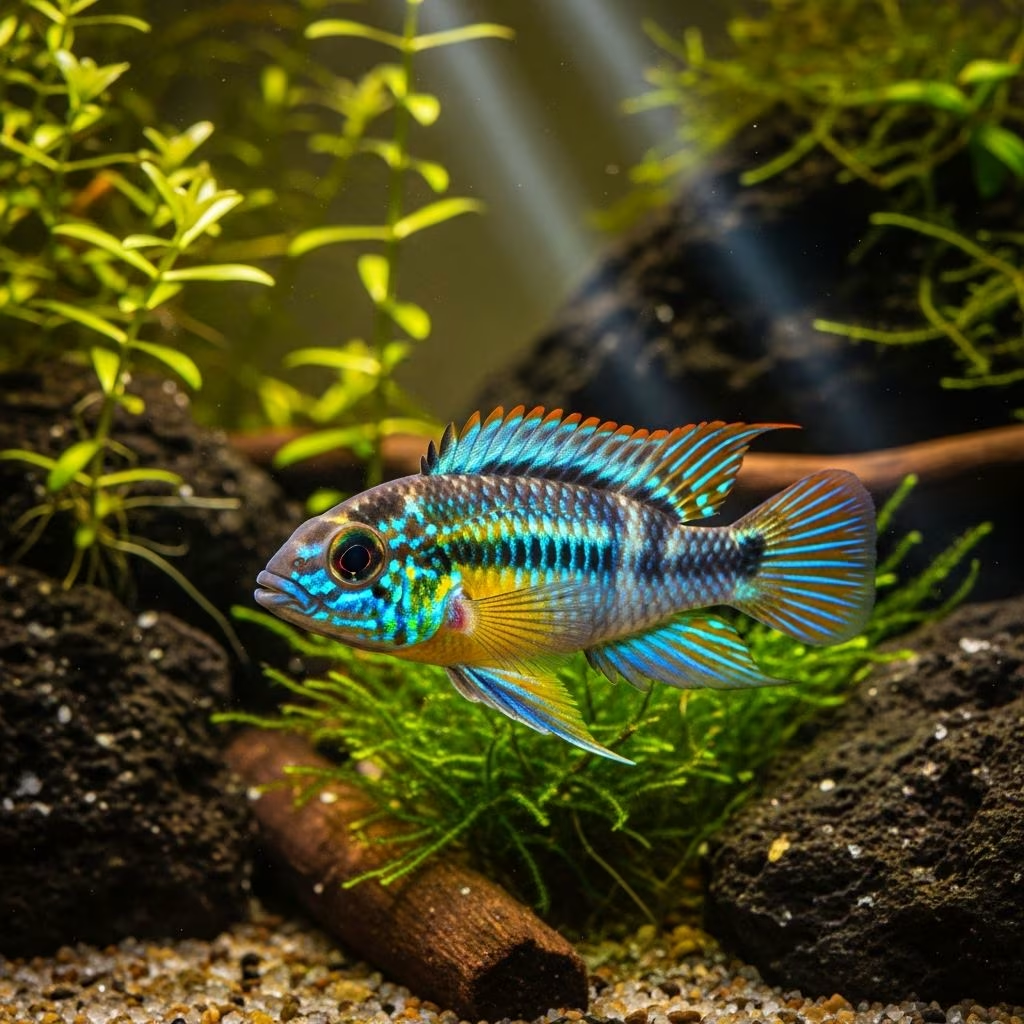
Apistos: Not for Lazy Aquarists
Apistogramma dwarf cichlids are among the most captivating and colorful freshwater fish available to aquarium hobbyists. With their vibrant patterns, elaborate courtship displays, and complex social behaviors, these small South American cichlids command attention in any aquarium. However, their beauty comes with a significant caveat: Apistos are decidedly not for lazy aquarists. These fish demand meticulous attention to water chemistry, tank conditions, and feeding protocols. Understanding why requires examining the specific requirements that make Apistos both rewarding and challenging.
Understanding Apistogramma Basics
Apistogramma species belong to the family Cichlidae and originate from the Amazon basin and its tributaries. Despite their diminutive size—typically ranging from 3 to 3.5 inches—these fish possess the territorial and behavioral complexity of larger cichlids. They exhibit strong pair bonding, elaborate spawning rituals, and devoted parental care. In their natural habitat, Apistos inhabit slow-moving waters with dense vegetation, leaf litter, and sandy substrates. This natural environment directly influences every aspect of their captive care requirements.
The Critical Water Chemistry Challenge
The most demanding aspect of keeping Apistos successfully is managing water chemistry. Unlike many beginner-friendly freshwater fish, Apistos are extremely sensitive to shifts in pH, hardness, and temperature. This sensitivity isn’t merely a preference—incorrect water conditions can stress the fish, suppress immune function, and prevent breeding.
pH Requirements and Manipulation
Apistogramma species require soft, slightly acidic water with a pH between 6.0 and 7.0, though specific species vary dramatically in their preferences. Some species thrive in nearly neutral conditions, while others require very low pH approaching 5.0 or below. This variation necessitates research into your specific species before purchase.
Adjusting pH for Apistos is not a task for impatient aquarists. Rapid pH changes stress fish and can trigger disease outbreaks. Instead, experienced keepers employ gradual methods. One effective approach involves creating peat water: placing a nylon stocking filled with peat moss in a large vessel of tap water and allowing it to age for one week while maintaining circulation. This peat-infused water can then be used for weekly 25-percent water changes. Over the course of a month, this gentle approach gradually softens water and lowers pH to target levels.
Another method uses distilled water mixed with tap water. For a 10-gallon tank, purchasing one gallon of distilled water per weekly change gradually reduces hardness without shocking the system. However, this approach requires vigilance: monitor pH daily, morning and night, to prevent the water from becoming too acidic and crashing the pH—a phenomenon that can rapidly kill fish.
Never attempt to adjust pH quickly using acid-based products. A single overdose can exhaust remaining buffering capacity and cause catastrophic pH crashes.
Water Hardness and Softness
Apistogramma species require soft water, typically between 2 and 15 dKH (degrees Karbonat Hardness), depending on the specific species. Hard tap water—common in many regions—must be softened before introducing these fish. Soft water isn’t merely a preference; it’s essential for spawning. Breeding Apistos rarely reproduce in hard water conditions, making water softening mandatory for breeders.
Temperature Requirements
Apistos thrive in warmer water ranging from 72°F to 86°F, with most species performing optimally between 80°F and 82°F. Consistent, stable temperatures are crucial. Temperature fluctuations stress fish and invite disease. Reliable aquarium heaters with thermostats are non-negotiable equipment for Apisto tanks.
Tank Setup and Substrate Selection
Creating an appropriate Apisto habitat requires more than simply filling a tank with water and gravel. The substrate, décor, and overall aquascaping directly influence fish behavior, stress levels, and breeding success.
Substrate Specifications
Apistos require fine sandy substrate that mimics their natural blackwater habitats. The Amazon basin where these fish originate features sandy bottoms littered with decomposing leaves, creating a dark, organic-rich environment. Fine sand allows Apistos to exhibit natural behaviors like sifting and burrowing. Coarse gravel can injure these delicate fish and doesn’t replicate their native conditions.
Tank Size and Territory
While individual Apistos can survive in smaller tanks, proper care demands adequate space. A minimum of 20 gallons suits a bonded pair, allowing sufficient territory without overwhelming the fish with excess space. Larger tanks accommodate multiple pairs or groups with less aggression. Territory is critical: overcrowding causes stress, aggression, and failed breeding attempts.
Vegetation and Hiding Spaces
Dense vegetation and abundant hiding spaces are essential. Plants serve multiple functions: they reduce stress by providing cover, help stabilize water chemistry, and create the blackwater aesthetic Apistos instinctively seek. Java moss, floating plants like watersprite, and various stem plants work well. However, excessive floating plant coverage can trap sinking food; maintain some open water at the surface. Adding catappa leaves darkens water, lowers pH slightly, and makes Apistos feel secure.
Filtration: Balancing Capability and Water Flow
Apistos produce disproportionate waste relative to their size, necessitating robust filtration. A strong filter like the Fluval FX4 handles bioload effectively. However, excessive water flow stresses these fish, which evolved in slow-moving streams. The solution involves using sponge filters that provide gentle, diffuse flow while maintaining biological filtration. For breeding tanks, sponge filters offer additional benefits: their gentle suction won’t harm fry, and covering the intake valve with an additional sponge further protects developing young.
Before introducing breeding Apistos to a new sponge filter, pre-cycle it by running it in an established aquarium for 2-3 weeks. This colonizes the sponge with beneficial bacteria, creating an immediately cycled filter for the breeding tank.
Feeding: Live Food Is Non-Negotiable
Nutrition represents another area where lazy aquarium keeping fails Apistos. These fish are obligate bottom feeders that rarely compete at the water surface. They prefer sinking pellets but achieve optimal health and condition on live foods.
Live Food Requirements
Live blackworms, glass worms, and newly hatched brine shrimp are preferred foods. Live food provides nutritional density and instinctively triggers feeding responses. Maintaining live food cultures requires dedication: breeding blackworms, culturing brine shrimp, and ensuring consistent supply demands time and space. Many casual aquarists find this commitment prohibitive.
Nutritionally Dense Commercial Foods
High-quality sinking pellets supplement live foods but shouldn’t constitute the complete diet. Choose pellets specifically formulated for small cichlids with high protein content. While Apistos nibble algae and plants, they require animal protein to thrive.
Feeding Frequency and Portion Control
Feed small amounts multiple times daily, providing only what fish consume in 2-3 minutes. Overfeeding fouls water chemistry and promotes disease. Underfeeding stresses fish and suppresses breeding behavior.
Breeding Apistos: An Advanced Challenge
Breeding Apistogramma represents the pinnacle of Apisto keeping difficulty. Success requires perfecting multiple variables simultaneously.
Prerequisites for Spawning
Successful breeding demands several critical factors working in concert:
- Soft water (below 6 dKH in most cases)
- Acidic pH below 7.0
- Live food to condition breeding pairs
- Strong pair bonding with compatible mates
- Suitable spawning surfaces (caves, clay pots, or driftwood crevices)
- Slow-moving water with dense vegetation
- Temperature between 80°F and 82°F
- Excellent water quality with zero ammonia and nitrite
Experienced breeders report that a single water change with peat water—performed on a well-conditioned pair in optimal conditions—often triggers spawning within days. This sensitivity to water chemistry underscores why casual maintenance fails.
Conditioning Breeding Pairs
Before spawning, Apistos must be in peak physical condition. Live food accomplishes this rapidly; feeding heavy quantities of blackworms and newly hatched brine shrimp for weeks before breeding increases spawn size, egg viability, and fry survival. Underfed fish rarely breed successfully.
Egg Development and Fry Care
Apistogramma females are devoted mothers, guarding eggs and later herding fry. Eggs hatch within 2-5 days at 80°F. The female leads fry to food sources; supplementing with newly hatched brine shrimp dramatically improves fry survival. Fry reach maturity at approximately four months.
Common Mistakes Lazy Aquarists Make
Several errors plague Apisto keepers who approach these fish casually:
- Ignoring species-specific requirements: Assuming all Apistos have identical needs leads to inappropriate conditions
- Neglecting water testing: Failing to monitor pH, ammonia, and nitrite regularly invites problems
- Using tap water without conditioning: Assuming tap water suffices without knowing hardness or pH
- Inconsistent maintenance: Missing weekly 25-33% water changes allows ammonia accumulation
- Inadequate filtration: Underestimating bioload and providing insufficient filtration
- Relying solely on commercial food: Never offering live food limits nutrition and breeding success
- Crowding multiple pairs: Exceeding territory limits without adequate tank size causes stress and aggression
Water Chemistry at a Glance
| Parameter | Target Range | Notes |
|---|---|---|
| pH | 6.0–7.0 | Species-dependent; some require lower |
| Water Hardness | 2–15 dKH | Species and breeding dependent |
| Temperature | 72–86°F (22–30°C) | Optimal: 80–82°F for breeding |
| Ammonia | 0 ppm | Non-negotiable |
| Nitrite | 0 ppm | Non-negotiable |
| Nitrate | <30 ppm | Weekly testing required |
Maintenance Schedule for Serious Keepers
Maintaining optimal Apisto conditions demands a regular maintenance schedule:
- Daily: Monitor temperature with reliable thermometer; observe fish for stress or disease signs; pH testing morning and night (especially during water chemistry adjustments)
- Weekly: Perform 25-33% water change; test pH, ammonia, and nitrite; inspect filter and ensure adequate flow without excessive current
- Bi-weekly: Full water parameter testing including hardness and nitrate
- Monthly: Deep substrate vacuuming; inspection of all tank equipment; plant pruning to maintain open water
- Seasonally: Filter media replacement or cleaning (never both simultaneously to preserve bacteria)
Why Apistos Separate Dedicated From Casual Aquarists
Apistogramma dwarf cichlids represent a dividing line in aquarium keeping. They’re achievable for dedicated hobbyists willing to invest time, resources, and attention to detail. Their water chemistry demands alone eliminate casual keepers from consideration. The requirement for live food, precise temperatures, careful pH management, and consistent maintenance creates a barrier to entry that separates serious aquarists from those approaching the hobby casually.
Yet this difficulty explains their appeal. Successful Apisto keeping—especially breeding—represents a genuine accomplishment. These fish reward dedicated keepers with vibrant colors, complex social interactions, and the profound satisfaction of raising fry to adulthood. For aquarists willing to embrace the challenge, Apistos offer incomparable rewards.
Frequently Asked Questions
Q: Can I keep Apistos in tap water?
A: Tap water rarely meets Apisto requirements without conditioning. Hard tap water prevents breeding and stresses fish. Test your tap water parameters before considering Apistos; if hardness exceeds 15 dKH or pH is above 7.5, conditioning is necessary.
Q: How many Apistos can I keep in a 20-gallon tank?
A: A 20-gallon tank safely houses one bonded pair. Larger tanks accommodate additional pairs if ample territory and hiding spaces exist, but crowding increases aggression and stress.
Q: Do Apistos require live plants?
A: While technically possible without plants, live vegetation is strongly recommended. Plants reduce stress, help stabilize water chemistry, provide fry shelter, and replicate natural habitat. Planted tanks consistently yield healthier, more colorful Apistos.
Q: How long do Apistos live?
A: With optimal care, Apistos typically live 5-10 years, with some individuals reaching beyond a decade. Lifespan directly correlates with care quality; poor conditions shorten lives dramatically.
Q: Why won’t my Apistos breed?
A: Multiple factors prevent breeding: inadequate water chemistry (hardness too high, pH not acidic enough), poor conditioning (insufficient live food), incompatible pairs, lack of spawning surface, excessive current, or stress from crowding or incompatible tank mates. Address each systematically to diagnose the problem.
Q: Can I keep Apistos with other fish?
A: Yes, but carefully. Avoid large, aggressive fish or those competing for bottom space. Small tetras, rasboras, and non-competitive peaceful fish coexist successfully. Never combine multiple Apisto males or place competing territorial cichlids together.
References
- The Apistogramma Aquarium — Tropical Fish Hobbyist Magazine. https://www.tfhmagazine.com/articles/freshwater/the-apistogramma-aquarium
- Apistogramma Care 101 (aka Dwarf Cichlid) — Aquarium Source. https://www.aquariumsource.com/apistogramma-dwarf-cichlid/
- Apistogramma: Dwarf Cichlids Care Guide — Ocean Floor. https://www.oceanfloorstore.com/apistogrammas-dwarf-cichlids-care-guide/
- Care Guide for Apistogramma Dwarf Cichlids — Aquarium Coop. https://www.aquariumcoop.com/blogs/aquarium/apistogramma-dwarf-cichlid
- Apistogramma and Dwarf Cichlid Aquarium Care — Dwarf Cichlid. https://dwarfcichlid.com/apistogramma-and-dwarf-cichlid-aquarium-care/
- Apistogramma cacatuoides: A Comprehensive Guide — Steenfott Aquatics. https://www.steenfottaquatics.com/blogs/news/apistogramma-cacatuoides-a-comprehensive-guide



