

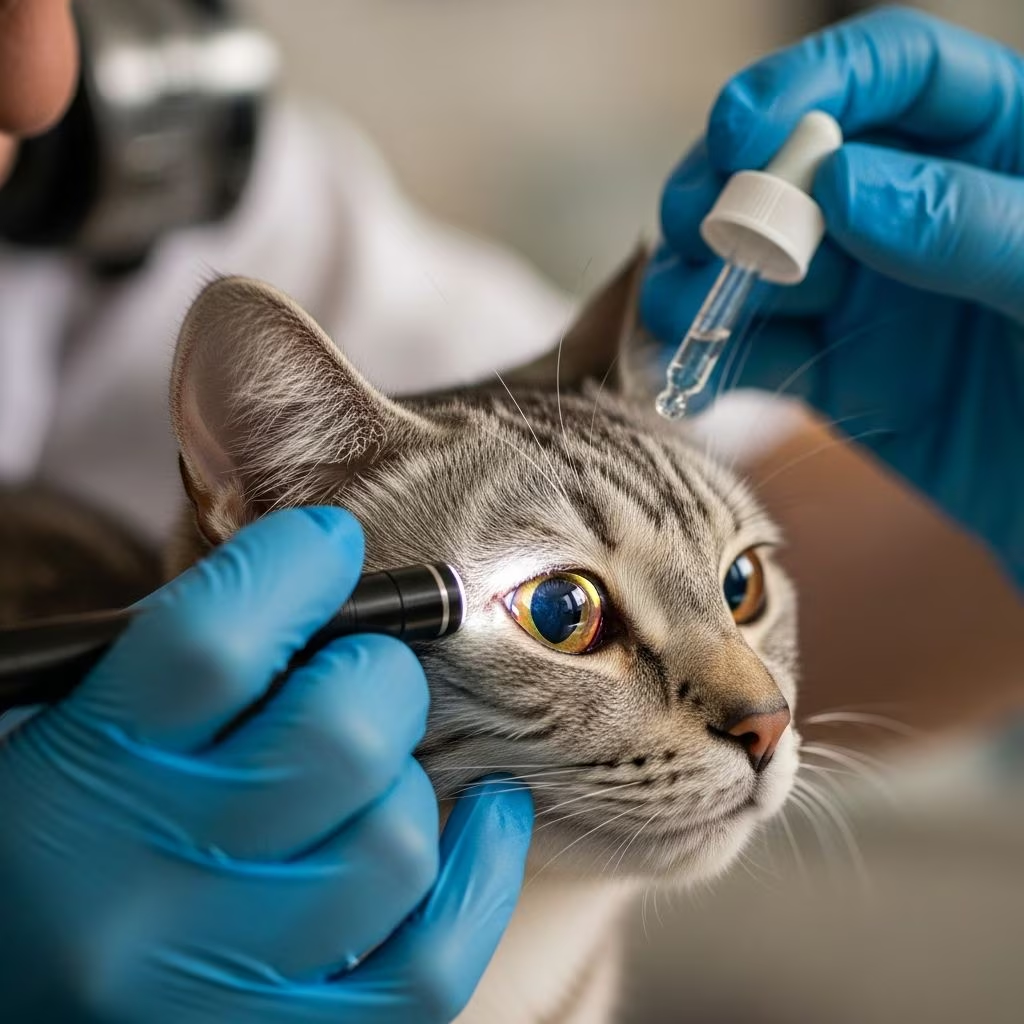
Ocular inflammation poses significant challenges in veterinary medicine, affecting vision and comfort in pets like dogs, cats, horses, and exotic species. Effective management relies on a range of pharmacological agents, primarily corticosteroids and nonsteroidal anti-inflammatory drugs (NSAIDs), delivered topically, systemically, or via injection to target inflammation at its source. These treatments address conditions such as uveitis, keratitis, conjunctivitis, and post-surgical swelling, promoting healing and preventing complications like glaucoma or corneal scarring.
Understanding Ocular Inflammation in Veterinary Patients
Inflammation in the eye manifests as redness, pain, swelling, and potential vision loss, often triggered by trauma, infection, surgery, or autoimmune responses. Proinflammatory mediators like prostaglandins drive these symptoms by disrupting vascular integrity and nerve sensitivity. In animals, anterior uveitis is common, involving the iris and ciliary body, while posterior involvement affects the retina and choroid. Early intervention is crucial, as unchecked inflammation can lead to synechiae (adhesions), cataracts, or blindness.
Veterinarians classify inflammation by location—anterior (cornea, iris), posterior (vitreous, retina)—and etiology (infectious vs. noninfectious). Diagnosis involves slit-lamp exams, tonometry for intraocular pressure (IOP), and fluorescein staining for ulcers. Treatment selection balances efficacy, side effects, and species-specific responses.
Topical Corticosteroids: Frontline Defense Against Swelling
Topical corticosteroids remain the gold standard for penetrating ocular tissues and suppressing immune-mediated inflammation. Prednisolone acetate (1%) and dexamethasone (0.1%) suspensions excel due to their ability to diffuse into the anterior chamber, outperforming solutions. Administered every 4-6 hours initially, they reduce vascular permeability and inhibit leukocyte migration.
- Dosing Protocol: Start with qid (four times daily) for acute cases, tapering to bid (twice daily) as symptoms resolve.
- Indications: Uveitis, scleritis, post-operative inflammation, allergic conjunctivitis.
- Species Suitability: Dogs, cats, horses; caution in rabbits due to IOP elevation risk.
Compounded formulations, such as 1.25% prednisolone acetate, allow customization for preservative-sensitive patients. Combination drops with antimicrobials prevent secondary infections in ulcerated corneas.
Nonsteroidal Anti-Inflammatory Drugs (NSAIDs) for Targeted Relief
NSAIDs inhibit cyclooxygenase (COX-1 and COX-2) enzymes, blocking prostaglandin synthesis without the immunosuppressive risks of steroids. Topical NSAIDs like flurbiprofen, diclofenac, ketorolac, bromfenac, and nepafenac are ideal for surface inflammation and surgical prophylaxis.
| NSAID | Primary Use | Species | Frequency |
|---|---|---|---|
| Flurbiprofen | Uveitis, post-cataract pain | Dogs, cats | qid |
| Diclofenac | Post-surgical swelling | Dogs, cats, rabbits | qid |
| Ketorolac | Conjunctivitis, keratitis | Dogs, horses | tid-qid |
Flurbiprofen effectively counters uveitis-induced miosis and corneal edema, often used off-label. Diclofenac minimizes post-op discomfort after lens extraction. Monitor for delayed healing in ulcers, as NSAIDs can impair epithelial repair.
Systemic Corticosteroids and NSAIDs: For Severe or Posterior Inflammation
When topical therapy fails, systemic agents provide broad coverage. Prednisone (1-2 mg/kg/day) or dexamethasone controls deep inflammation like optic neuritis or orbital disease. In horses with recurrent uveitis, oral NSAIDs like phenylbutazone complement topicals.
- Prednisolone: Preferred in cats due to hepatic conversion issues with prednisone.
- Dexamethasone: Potent for acute flares; 0.1-0.25 mg/kg IV/IM.
- NSAIDs: Carprofen or meloxicam for adjunctive pain control, avoiding COX-1 dominant drugs in dehydrated patients.
Combine with antimicrobials for infectious cases, delaying steroids 24-48 hours post-antibiotics.
Innovative Delivery Methods: Injections and Immunomodulators
Intravitreal triamcinolone (2-4 mg) targets posterior uveitis or equine recurrent uveitis, injected under ultrasound guidance. Preservative-free versions mitigate toxicity risks. Calcineurin inhibitors like cyclosporine (1-2%) and tacrolimus (0.02-0.03%) offer steroid-sparing options for keratoconjunctivitis sicca (KCS) and immune-mediated diseases.
Tacrolimus shows superior potency, stimulating tear production and mucin in dry eye syndromes. Bandage contact lenses aid corneal healing under anti-inflammatory cover, but require strict hygiene.
Species-Specific Considerations and Risk Management
Dogs and Cats
Dogs tolerate most topicals well but risk steroid-induced ulcers; NSAIDs suit post-surgical care. Cats metabolize prednisolone efficiently, preferring acetate suspensions.
Horses and Large Animals
Equine recurrent uveitis demands aggressive multimodal therapy: subconjunctival steroids, systemic flunixin, and mydriatics.
Exotics and Avians
Rabbits and birds use low-dose diclofenac cautiously due to renal sensitivity.
Adverse Effects Monitoring:
- Corticosteroids: IOP rise (glaucoma), cataracts, ulcers.
- NSAIDs: Corneal melt, delayed healing.
- Systemic: GI upset, immunosuppression.
Regular exams track progress; taper gradually to prevent rebound.
Combination Therapies and Supportive Care
Optimal outcomes blend anti-inflammatories with mydriatics (atropine), antimicrobials, and antioxidants. For chronic cases, azathioprine or mycophenolate augments steroids. Post-op protocols include NSAIDs qid for 2 weeks, transitioning to steroids if needed.
FAQs on Animal Eye Anti-Inflammatories
What is the first-line treatment for canine uveitis?
Topical 1% prednisolone acetate qid, combined with systemic prednisone if severe.
Can NSAIDs replace steroids entirely?
No; NSAIDs excel in prostaglandin-mediated issues but lack deep penetration for uveitis.
How long before seeing improvement?
24-72 hours for acute relief; full resolution in 1-2 weeks with compliance.
Are these drugs safe for kittens or puppies?
Use lowest effective dose under vet supervision; avoid prolonged steroids.
What if my pet worsens on treatment?
Recheck IOP and discontinue if ulcer progresses; switch agents.
Future Directions in Veterinary Ocular Anti-Inflammatories
Emerging biologics and selective COX-2 inhibitors promise fewer side effects. Gene therapies targeting inflammatory cytokines are in trials, potentially revolutionizing chronic management. Veterinarians should stay updated via peer-reviewed sources.
References
- Flurbiprofen Ophthalmic Eye Drops for Pets — PetCareRx. Accessed 2026. https://www.petcarerx.com/flurbiprofen/11751
- Diclofenac – NSAID Eye Drops for Dogs and Cats — VetRxDirect. Accessed 2026. https://www.vetrxdirect.com/product/view/diclofenac-eye-drops-dogs-and-cats-rx
- Anti-inflammatory Agents in Animals — Merck Veterinary Manual. Accessed 2026. https://www.merckvetmanual.com/pharmacology/systemic-pharmacotherapeutics-of-the-eye/anti-inflammatory-agents-in-animals
- Flurbiprofen Ophthalmic — VCA Animal Hospitals. Accessed 2026. https://vcahospitals.com/know-your-pet/flurbiprofen-ophthalmic
- Understanding Prednisolone Eye Drops: Inflammation in Pets — Skippack Pharmacy. Accessed 2026. https://www.skippackpharmacy.com/understanding-prednisolone-eye-drops-inflammation-in-pets/
- Diclofenac Ophthalmic — VCA Animal Hospitals. Accessed 2026. https://vcahospitals.com/know-your-pet/diclofenac-ophthalmic
- Advances in the Medical Treatment of Ocular Disease — Cornell University Veterinary Specialists. 2017-06-01. https://www.cuvs.org/sites/default/files/2017-06/OptimizingOphthalmics.pdf



