

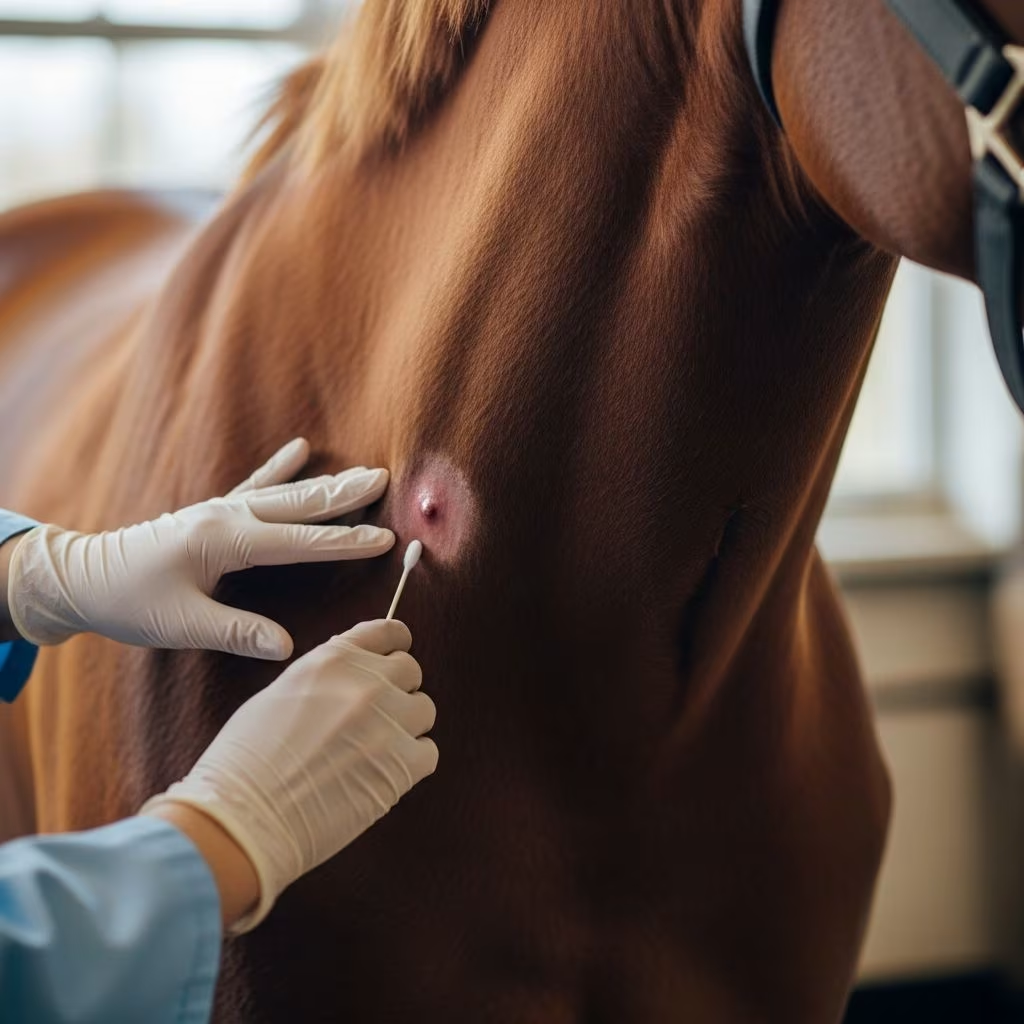
Anthrax, caused by the bacterium Bacillus anthracis, poses a severe threat to horses, leading to swift and often fatal outcomes if not addressed promptly. This spore-forming pathogen thrives in soil and can infect grazing animals, making awareness vital for horse owners in at-risk regions.
Understanding the Anthrax Bacterium and Its Lifecycle
The resilience of B. anthracis stems from its ability to form dormant spores that survive for decades in the environment. These spores activate in the host’s body, multiplying rapidly and releasing potent toxins that overwhelm the immune system. Horses, as herbivores, ingest spores while grazing on contaminated pastures, especially after events like flooding or drought that bring spores to the surface.
In nature, anthrax cycles primarily among livestock such as cattle, sheep, goats, and horses. The bacteria’s toxins—lethal factor, edema factor, and protective antigen—disrupt cellular functions, causing tissue damage, shock, and organ failure. This lifecycle underscores why prevention focuses on breaking the chain of environmental contamination and animal-to-animal spread.
Recognizing Early Warning Signs in Horses
Symptoms in horses emerge suddenly in otherwise healthy animals, often within days of exposure. Initial indicators include high fever and restlessness, progressing to shivering, intense abdominal pain (colic), and refusal to eat.
- Fever and agitation: Body temperature spikes above 104°F (40°C), with visible trembling.
- Respiratory distress: Labored breathing or intolerance to exercise signals toxin buildup.
- Neurological issues: Disorientation, weakness, staggering, or convulsions indicate systemic spread.
- Gastrointestinal problems: Bloody diarrhea and severe colic are common, leading to rapid dehydration.
- Edema and swelling: Massive fluid accumulation in the neck, chest, abdomen, or genitals can cause suffocation.
Localized infections may occur if spores enter cuts, manifesting as painful, black eschars on the skin. Without intervention, death typically follows within 48-72 hours, often with unclotted blood from orifices due to toxin-induced coagulopathy.
Transmission Routes and Risk Factors
Horses contract anthrax mainly through oral ingestion of spores from contaminated soil, feed, or water. Inhalation or skin penetration via wounds are less common in equines but possible in dusty environments or with injuries.
Key risk factors include:
- Endemic areas with alkaline soils, where spores persist longer.
- Environmental disturbances like floods, construction, or bone meal fertilizers.
- Recent outbreaks in nearby livestock, as carcasses release billions of spores.
- Seasonal peaks during warm, wet summers when bacterial growth accelerates.
Human activities, such as improper carcass disposal, exacerbate spread. Vultures or insects feeding on infected remains can mechanically transfer spores to new sites.
Diagnostic Approaches for Suspected Cases
Rapid diagnosis is crucial, as treatment windows are narrow. Veterinarians start with clinical signs and history of exposure in known areas. Post-mortem findings are characteristic: lack of rigor mortis, dark, non-clotting blood, and splenomegaly (enlarged spleen).
| Method | Description | Advantages |
|---|---|---|
| Peripheral blood smear | Examine for Gram-positive rods | Quick, on-site results |
| Culture from blood/skin | Grow bacteria on selective media | Confirms identity via capsule |
| PCR testing | Detects bacterial DNA | Highly specific, fast |
| Serology | Antibody detection | Useful for survivors or vaccinated |
Avoid autopsies without biosecurity, as they aerosolize spores. Anthrax is reportable; notify authorities immediately.
Emergency Treatment Protocols
Treatment success hinges on early intervention before toxemia peaks. High-dose antibiotics target the vegetative bacteria, but cannot neutralize circulating toxins.
- Penicillin G: First-line; 20,000-22,000 IU/kg IV every 6 hours. Procaine penicillin for long-acting IM doses.
- Alternatives: Ciprofloxacin, doxycycline, or oxytetracycline if penicillin-resistant strains suspected.
- Supportive care: IV fluids for shock, anti-inflammatories like flunixin meglumine for edema, and monitoring for cardiac/respiratory failure.
Even moribund horses may respond if treated aggressively, reducing carcass infectivity. Isolate treated animals and monitor the herd thrice daily for 14 days.
Vaccination Strategies for Protection
Vaccines are cornerstone prevention in endemic zones. The U.S.-licensed equine vaccine uses live Sterne strain spores, administered annually only in high-risk pastures.
- Timing: Spring vaccination before grazing contaminated fields; avoid if horses receive concurrent antibiotics, as they inactivate the live vaccine.
- Efficacy: Protection onset in 7-14 days; revaccinate yearly or post-outbreak.
- Limitations: Not for foals under 6 months; hypersensitive horses require desensitization.
In non-endemic areas, vaccinate only after confirmed cases nearby. Global protocols emphasize livestock immunization to curb wildlife spillover.
Outbreak Management and Containment
Upon suspicion, implement quarantine: restrict movement 21 days post-last death. Move healthy horses from contaminated sites, treating the herd prophylactically with long-acting penicillin.
- Burn or deep-bury carcasses (min. 6 ft deep, lime-covered) to prevent spore release.
- Decontaminate pastures with formaldehyde or bleach solutions.
- Monitor exposed equines for fever/edema; treat preemptively.
- Report to state veterinarians for coordinated response.
Avoid slaughter of suspects; euthanasia and incineration preferred in regulated areas.
Environmental Control and Long-Term Prevention
Soil decontamination is challenging due to spore longevity. Formalin (5%) or autoclaving kills spores, but large pastures require grazing rotation. Test soil pH; neutralize alkaline hotspots.
Owner best practices:
- Inspect pastures post-flood/drought.
- Use certified spore-free bone meal.
- Secure feed storage against contamination.
- Train staff on biosecurity gear near ill animals.
Zoonotic Risks and Human Precautions
Anthrax transmits to humans via handling infected hides, meat, or aerosols. Horse owners face cutaneous (skin ulcers) or inhalational forms. Use gloves, masks; vaccinate at-risk handlers (though not routine).
In the U.S., low human risk but reportable. Prompt antibiotics (ciprofloxacin) cure most cases.
Frequently Asked Questions (FAQs)
What should I do if I find a dead horse with dark blood?
Do not touch; call your vet and state authorities immediately for safe removal and testing.
Is anthrax vaccine safe for all horses?
Approved for healthy adults in endemic areas; consult vet for foals or immunocompromised equines.
How long do anthrax spores survive in soil?
Decades, activated by conditions favoring grazing.
Can treated horses return to pasture right away?
No; quarantine 21 days and monitor.
Are there antibiotics for prevention?
Yes, long-acting penicillin for exposed herds, but vaccination is preferred long-term.
References
- Treatment and prophylaxis – Anthrax in Humans and Animals — NCBI Bookshelf. 2008. https://www.ncbi.nlm.nih.gov/books/NBK310491/
- Anthrax in Horses – Horse Owners — Merck Veterinary Manual. Accessed 2026. https://www.merckvetmanual.com/horse-owners/infectious-diseases-of-horses/anthrax-in-horses
- Anthrax in Horses – Horse Owners — MSD Veterinary Manual. Accessed 2026. https://www.msdvetmanual.com/horse-owners/infectious-diseases-of-horses/anthrax-in-horses
- Diseases with horse to human transmission — UC Davis Center for Equine Health. Accessed 2026. https://ceh.vetmed.ucdavis.edu/diseases-horse-human-transmission
- Anthrax — Equine Disease Communication Center. Accessed 2026. https://www.equinediseasecc.org/anthrax
- Anthrax Fact Sheet — California Department of Food and Agriculture (.gov). Accessed 2026. https://www.cdfa.ca.gov/ahfss/animal_health/pdfs/Anthrax_Fact_Sheet.pdf
- Anthrax Factsheet — Texas Animal Health Commission (.gov). Accessed 2026. https://www.tahc.texas.gov/news/brochures/TAHCFactsheet_Anthrax.pdf



