

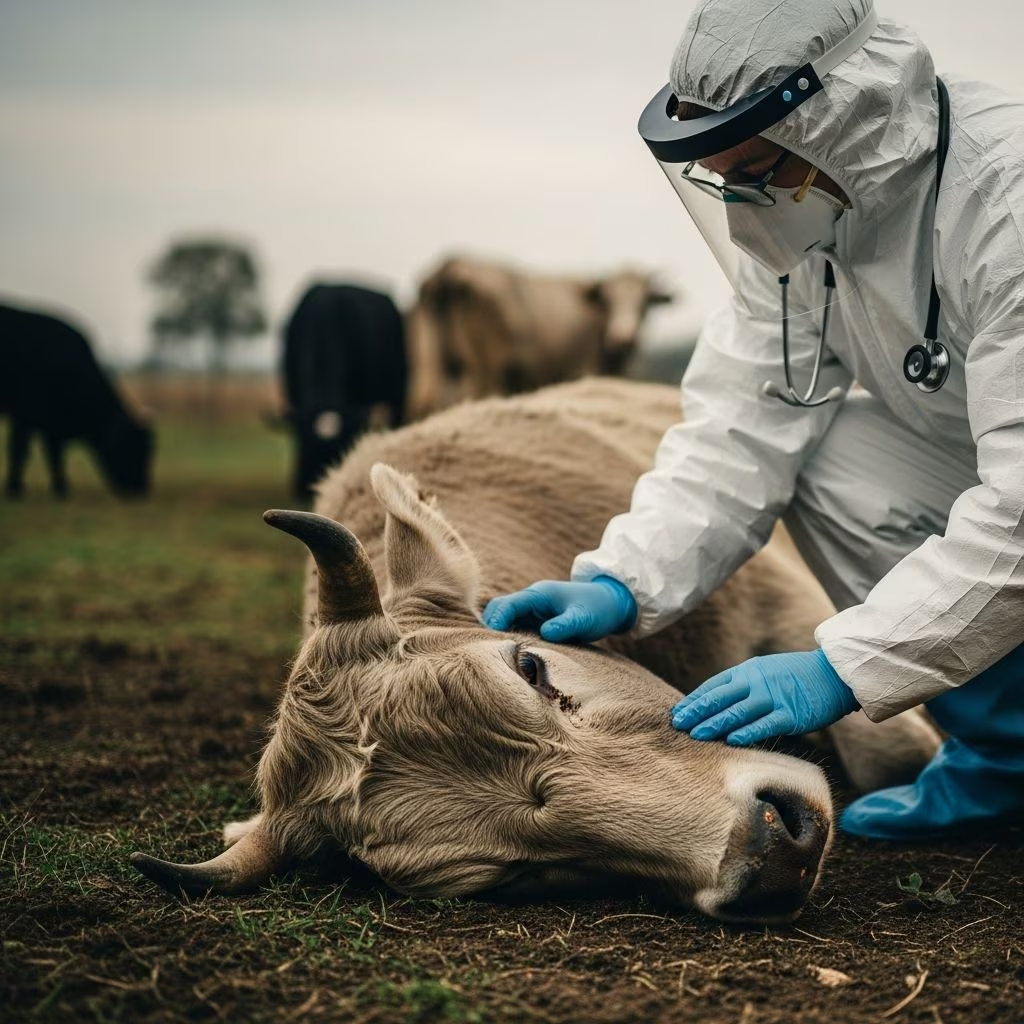
Anthrax, caused by the spore-forming bacterium Bacillus anthracis, poses a severe risk to livestock, wildlife, and potentially humans. This disease manifests rapidly, often resulting in sudden death without prior warning signs, making early detection challenging.
The Nature of the Anthrax Bacterium
Bacillus anthracis is unique due to its ability to form highly resilient spores that survive in soil for decades. These spores activate when ingested, inhaled, or entering through skin wounds in susceptible hosts. Herbivores like cattle, sheep, goats, and horses are primary victims, contracting the disease mainly by grazing on contaminated pastures.
Environmental factors such as flooding, drought, or soil disturbance can bring dormant spores to the surface, triggering outbreaks. In regions with historical cases, like parts of Texas or Australia, vigilance is crucial during these conditions.
Susceptibility Across Animal Species
Different animals exhibit varying levels of vulnerability to anthrax:
- Cattle, sheep, and goats: Highly susceptible; often die peracutely within hours.
- Horses: Show colic, swelling, and rapid collapse; vaccination recommended in endemic zones.
- Swine and dogs: More resistant, typically developing milder, localized infections from consuming tainted meat.
- Wildlife: Deer and other ungulates frequently affected, complicating containment.
Cattle and sheep top the susceptibility list, while certain breeds like Algerian sheep display relative resistance.
Clinical Manifestations and Disease Progression
Anthrax progresses in forms ranging from peracute to chronic, with peracute cases dominating in livestock. Key signs include:
- Sudden death, sometimes without observable symptoms.
- Fever, disorientation, labored breathing, and muscle tremors.
- Congested mucous membranes, spasms, and un-clotting blood oozing from orifices.
- In horses: colic, enteritis, neck and abdominal swelling.
Body temperatures can soar to 107°F, leading to convulsions and death within 1-3 days. Carcasses often bloat rapidly, releasing infectious fluids that sporulate upon exposure to air.
| Species | Common Signs | Progression Time |
|---|---|---|
| Cattle/Sheep | Fever, staggering, dyspnea | 48-72 hours |
| Horses | Colic, swelling | Hours to days |
| Goats/Deer | Tremors, collapse | Sudden |
This table summarizes typical presentations, highlighting the urgency for immediate action.
Diagnostic Approaches
Diagnosing anthrax relies on laboratory confirmation due to overlapping symptoms with conditions like colic or anemia. Procedures include:
- Aseptic blood collection from peripheral veins (e.g., jugular) of live suspects or dead animals.
- Avoiding carcass incision to prevent spore release.
- Microscopic exam, culture, or PCR for B. anthracis identification.
Veterinarians must use protective gear and double-sealed containers for samples. In suspect cases, contact local animal health authorities promptly.
Treatment Protocols for Infected Animals
Treatment success hinges on early intervention before terminal stages. Antibiotics are effective against vegetative bacteria but not spores:
- Penicillin G: 20,000 IU/kg IV every 12 hours initially; procaine penicillin 22,000 IU/kg IM.
- Alternatives: Doxycycline, enrofloxacin, or ciprofloxacin combinations for resistant cases.
- Supportive care: Fluids, anti-inflammatories.
In advanced infections, therapy reduces bacterial load and environmental contamination, even if death occurs. Some regions prohibit treatment, opting for slaughter and disposal.
For exposed but healthy animals, prophylactic antibiotics and vaccination are advised.
Vaccination and Prevention Strategies
Vaccination forms the cornerstone of anthrax control in endemic areas. The Sterne live-spore vaccine is widely used annually for livestock post-weaning.
- Administer in known contaminated zones; avoid during outbreaks.
- Combine with quarantine of affected properties.
- Free vaccination often provided during outbreaks by authorities.
Preventive measures include:
- Avoiding pastures with history of anthrax.
- Proper carcass disposal via deep burial or incineration.
- Biosecurity: Disinfectants, gloves, footbaths.
Carcass Management and Environmental Decontamination
Improper handling amplifies spread. Protocols mandate:
Do not: Move, skin, or necropsy suspect carcasses; this aerosolizes spores.
Do:
- Burn carcasses in situ with fuel for complete destruction.
- Deep bury under lime if burning impossible.
- Disinfect sites with 1% sodium hypochlorite.
Quarantine zones prevent animal movement until cleared.
Zoonotic Risks and Human Precautions
Anthrax transmits to humans via contact with infected animals or products, causing cutaneous, inhalational, or gastrointestinal forms. High-risk groups: Farmers, vets, slaughterhouse workers.
Protections:
- Gloves, masks, goggles, protective clothing.
- Report suspicions to health authorities.
- Vaccinate at-risk personnel in endemic areas.
Global Outbreak Management and Regulations
Authorities like WOAH outline standardized responses: Surveillance, rapid reporting, ring vaccination. In the US, yearly livestock vaccination in historical hotspots; Texas sees periodic cases.
AUSVETPLAN in Australia coordinates multi-agency efforts for large outbreaks.
FAQs
What should I do if I find a dead animal with dark blood from orifices?
Suspect anthrax: Do not touch or move it. Call a veterinarian immediately for testing.
Is anthrax vaccine safe for all livestock?
Yes, for most; administer only in recommended areas and per veterinary guidance.
Can anthrax be cured in sick animals?
Early antibiotic treatment works; late stages are often fatal despite therapy.
How long do anthrax spores survive?
Decades in soil, activated by environmental changes.
Are dogs and pigs at high risk?
Low; they resist better but can carry infection via meat consumption.
Emerging Challenges and Research Directions
Climate change may increase outbreaks by altering soil conditions. Ongoing research focuses on improved vaccines, rapid field diagnostics, and spore inactivation methods. Enhanced surveillance in wildlife reservoirs is vital for prediction.
Farmers should integrate anthrax into routine risk assessments, especially in transitional climates.
References
- Anthrax in Horses – Horse Owners — Merck Veterinary Manual. 2023. https://www.merckvetmanual.com/horse-owners/infectious-diseases-of-horses/anthrax-in-horses
- Anthrax Diagnosis, Treatment And Handling — Texas A&M AgriLife. 2021-08-27. https://stories.tamu.edu/news/2021/08/27/anthrax-diagnosis-treatment-and-handling/
- Anthrax in animals — Agriculture Victoria (government). 2023. https://agriculture.vic.gov.au/biosecurity/animal-diseases/important-animal-diseases/anthrax-in-animals
- Anthrax in Animals — Texas DSHS (government). 2022. https://www.dshs.texas.gov/sites/default/files/IDCU/disease/anthrax/information/anthpub.pdf
- Review of anthrax: A disease of farm animals — PMC/NIH (peer-reviewed). 2022-07-15. https://pmc.ncbi.nlm.nih.gov/articles/PMC9298093/
- Anthrax and Livestock — New Mexico State University. 2023. https://pubs.nmsu.edu/_b/B120/index.html
- Anthrax in Dogs — VCA Animal Hospitals. 2023. https://vcahospitals.com/know-your-pet/anthrax-in-dogs



