

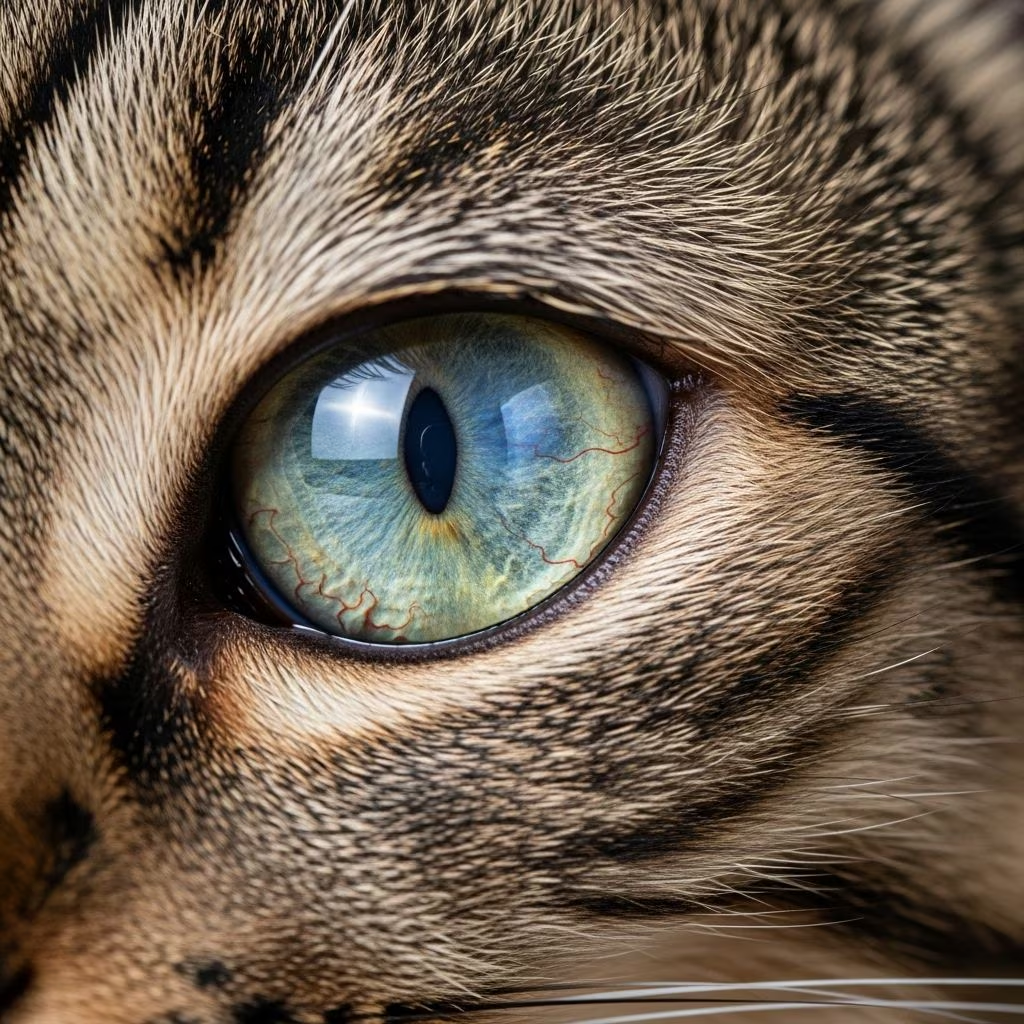
Anterior uveitis, an inflammation affecting the front portion of the eye including the iris and ciliary body, represents one of the most frequent ocular emergencies in small animals such as dogs and cats. This condition demands prompt veterinary intervention to alleviate pain, preserve vision, and avert complications like glaucoma or cataracts.
Understanding the Anatomy Involved
The anterior uvea comprises the iris, which controls light entry via pupil dilation and constriction, the ciliary body responsible for aqueous humor production and lens accommodation, and the iridocorneal angle that facilitates fluid drainage. Disruption in these structures leads to inflammatory responses characterized by vascular leakage and cellular infiltration.
Recognizing the Signs of Acute Inflammation
Pet owners often notice subtle yet critical symptoms in affected animals. Key indicators include:
- Blepharospasm: Persistent squinting due to ocular pain.
- Conjunctival hyperemia: Redness around the eye from dilated blood vessels.
- Corneal edema: Cloudiness in the cornea from fluid accumulation.
- Miosis: Constricted pupil unresponsive to light changes.
- Aqueous flare: Hazy appearance in the anterior chamber from leaked proteins and cells, confirming blood-aqueous barrier breakdown.
- Fibrin or hypopyon: Clots or pus-like material settling in the chamber.
These signs can mimic corneal or conjunctival issues, underscoring the need for fluorescein staining to rule out ulcers. Chronic cases may show synechiae (adhesions) or pigment changes on the lens.
Common Triggers Behind the Inflammation
Anterior uveitis arises from diverse origins, categorized as primary ocular or secondary to systemic issues. Ocular causes encompass trauma (blunt or penetrating), lens luxation, cataracts, and tumors. Systemic culprits are more prevalent in bilateral cases and include:
- Infectious agents: Bacteria like Bartonella spp. in cats, Ehrlichia canis in dogs, fungi such as Cryptococcus, and viruses including FIV.
- Immune-mediated disorders: Uveodermatologic syndrome in breeds like Akitas and Samoyeds, featuring skin and eye involvement.
- Neoplasia: Metastatic cancers affecting both eyes.
- Vaccine reactions: Rare post-CAV-2 immunization in young dogs.
Bilateral presentation heightens suspicion for infectious or immune processes, necessitating holistic evaluation.
Diagnostic Approaches for Accurate Identification
Veterinarians employ a multi-faceted strategy:
- Schirmer tear test and tonometry: Assess tear production and intraocular pressure (IOP), as uveitis often elevates IOP risking glaucoma.
- Fluorescein staining: Essential to exclude ulcers before anti-inflammatory therapy.
- Slit-lamp biomicroscopy: Reveals flare, cells, and fibrin definitively.
- Mydriatic response test: Topical tropicamide gauges pupil dilation; poor response signals inflammation.
- Systemic workup: CBC, serum chemistry, urinalysis, thoracic/abdominal imaging, and serology for pathogens like Bartonella or Ehrlichia.
Advanced imaging like ocular ultrasound evaluates posterior involvement or trauma extent. Cytology from aqueous taps is reserved for severe, non-responsive cases.
Treatment Protocols: Immediate and Long-Term Strategies
Management hinges on etiology but universally targets inflammation, pain, and secondary effects. Core therapies include:
| Medication Type | Examples | Dosage/Frequency | Notes |
|---|---|---|---|
| Corticosteroids (Topical) | Prednisolone acetate 1%, Dexamethasone 0.1% | Q4-6H initially, taper | High corneal penetration; avoid with ulcers. |
| NSAIDs (Topical) | Diclofenac, Flurbiprofen | Q6-8H | Alternative for ulcer cases. |
| Mydriatics/Cycloplegics | Atropine 1% (dogs), Tropicamide 1% | Q8-24H to effect | Prevent synechiae, reduce pain; cats prefer ointment to avoid salivation. |
| Systemic (Severe cases) | Prednisone, Azathioprine | 2mg/kg/day initial, then taper | For immune-mediated; monitor CBC. |
Treat underlying causes aggressively: antibiotics for infections (e.g., doxycycline for Bartonella), antifungals for Cryptococcus confirmed via agglutination tests. Monitor IOP and taper drugs gradually to prevent flares.
Complications and Prognosis Factors
Untreated or recurrent uveitis risks cataracts (from lens protein leakage), glaucoma (impaired drainage), phthisis bulbi (eye shrinkage), and retinal detachment. Breeds prone to uveodermatologic syndrome face guarded prognoses due to chronicity. Early intervention yields excellent outcomes in trauma or infection cases, with most resolving in weeks.
Preventive Measures for Pet Owners
Minimize risks by:
- Supervising play to avoid trauma.
- Maintaining vaccinations and parasite control.
- Monitoring breeds susceptible to immune diseases.
- Seeking immediate care for eye redness or squinting.
Regular veterinary ophthalmology exams aid early detection in at-risk pets.
FAQs on Anterior Uveitis in Dogs and Cats
Q: Is anterior uveitis contagious?
A: No, it’s typically not; most cases stem from non-infectious causes like immune issues or trauma.
Q: How long does treatment last?
A: Acute cases improve in 1-3 weeks with tapering; chronic forms require lifelong management.
Q: Can my pet go blind from this?
A: Possible if complications like glaucoma develop untreated, but prompt care preserves vision.
Q: What breeds are at higher risk?
A: Akitas, Samoyeds, Siberian Huskies for uveodermatologic syndrome; any breed for infections.
Q: When to use systemic vs. topical drugs?
A: Systemic for bilateral/severe cases or underlying disease; topical suffices for mild unilateral.
Case Studies: Real-World Insights
In one scenario, a young dog post-vaccination developed uveitis 10-14 days later, resolving with topical steroids and mydriatics over 3 weeks. A cat with Bartonella showed hypopyon, responding to doxycycline after serology confirmation. These highlight etiology-driven success.
Owners play a crucial role in observation, adhering to meds, and follow-ups. Collaboration with veterinary ophthalmologists optimizes outcomes.
References
- Anterior Uveitis in Small Animals – Emergency Medicine — MSD Veterinary Manual. 2023. https://www.msdvetmanual.com/emergency-medicine-and-critical-care/ophthalmic-emergencies-in-small-animals/anterior-uveitis-in-small-animals
- Canine and Feline Uveitis — PMC (PubMed Central), de WM Townsend. 2008-01-01. https://pmc.ncbi.nlm.nih.gov/articles/PMC7124245/
- The Anterior Uvea in Animals — Merck Veterinary Manual. 2023. https://www.merckvetmanual.com/eye-diseases-and-disorders/ophthalmology/the-anterior-uvea-in-animals
- Managing Uveitis in Dogs and Cats — Today’s Veterinary Practice. 2023. https://todaysveterinarypractice.com/ophthalmology/managing-uveitis-in-dogs-and-cats/
- Uveitis in Dogs & Cats — MedVet. 2023. https://www.medvet.com/uveitis-dogs-cats/



