

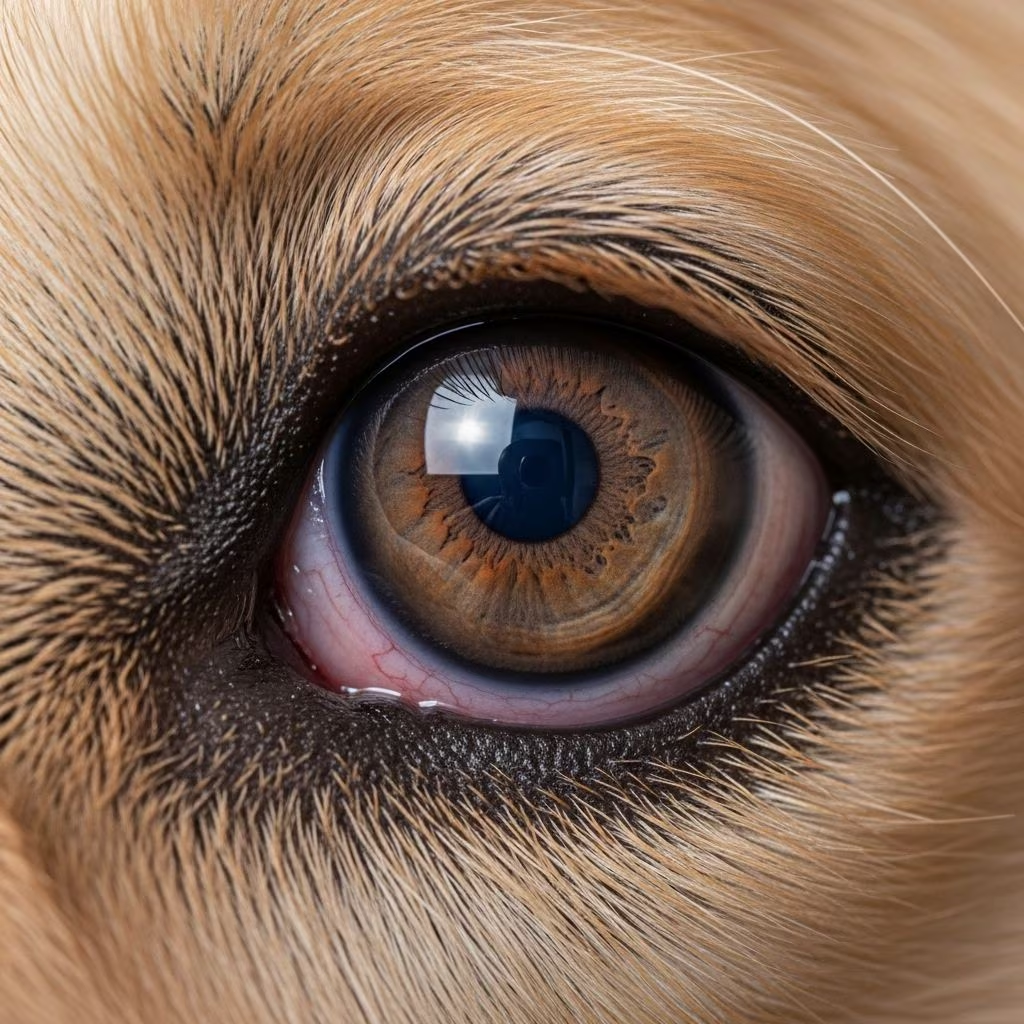
The anterior uvea, encompassing the iris and ciliary body, plays a crucial role in a dog’s vision by regulating light entry and producing aqueous humor. When inflammation strikes this area, known as anterior uveitis or iridocyclitis, it can lead to pain, vision impairment, and serious complications if untreated. Dog owners must recognize early signs to seek prompt veterinary care, as timely intervention often preserves ocular health.
Recognizing the Signs of Trouble
Dogs with anterior uvea inflammation typically exhibit noticeable ocular changes. Common indicators include a constricted pupil, even in dim light, due to spasms in the iris muscles. Owners often observe redness in the conjunctiva from dilated blood vessels, corneal cloudiness from protein leakage into the anterior chamber (aqueous flare), and increased tearing or discharge. Affected dogs may squint excessively, showing photophobia, or paw at the eye, signaling discomfort. Intraocular pressure often drops initially, contributing to a soft globe feel during exams.
- Pupil constriction: Fails to dilate properly, worsening light sensitivity.
- Conjunctival injection: Visible redness around the eye.
- Aqueous flare and cells: Hazy anterior chamber from leaked proteins and inflammatory cells.
- Iris swelling: Color changes or irregular texture.
- Blepharospasm: Frequent blinking or eye closure.
In severe cases, hypopyon—pus accumulation in the anterior chamber—or hyphema (blood pooling) may appear, demanding urgent attention to avert permanent damage. Bilateral involvement frequently points to systemic issues rather than localized trauma.
Common Triggers Behind the Inflammation
Anterior uveitis in dogs arises from diverse causes, broadly categorized as primary ocular or systemic. Trauma, such as corneal ulcers, lens-induced issues, or blunt injuries, commonly sparks unilateral inflammation. Intraocular parasites like worms or rare tumors can also initiate one-eyed episodes.
Systemic culprits dominate bilateral cases, including infectious agents like Leptospira, canine distemper virus, or fungal pathogens. Immune-mediated conditions, notably uveodermatologic syndrome (resembling Vogt-Koyanagi-Harada disease), provoke recurrent flares with skin and eye involvement. Neoplasia, hypertension, and breed predispositions (e.g., Samoyeds, Akitas) heighten risks.
| Cause Type | Examples | Typical Eye Involvement |
|---|---|---|
| Traumatic | Ulcers, surgery, injury | Unilateral |
| Infectious | Leptospirosis, fungi | Often bilateral |
| Immune-mediated | Uveodermatologic syndrome | Bilateral, recurrent |
| Neoplastic | Metastatic tumors | Unilateral or bilateral |
Identifying the root cause guides therapy; for instance, leptospirosis requires antibiotics like doxycycline alongside anti-inflammatories.
Diagnostic Approaches for Accurate Identification
Veterinarians employ a multi-step process to pinpoint anterior uvea disorders. Initial assessment involves a thorough history, noting recent trauma, travel, or systemic signs like fever or lethargy. Ophthalmic exams use focal illumination to detect flare, cells, and iris changes, often with fluorescein staining to rule out ulcers.
Tonometry measures intraocular pressure, typically low in acute uveitis. Gonioscopy evaluates drainage angles, while fluorescein angiography or ultrasound assesses deeper structures if cataracts obscure views. Bloodwork screens for infections (e.g., Leptospira titers), and serology tests for autoimmune markers. Aqueous humor tap, though risky, analyzes cellular content for etiology.
- Schirmer tear test for concurrent dry eye.
- Slit-lamp biomicroscopy for detailed anterior segment view.
- Fundoscopy post-mydriasis for posterior involvement.
- Systemic imaging or biopsies if neoplasia suspected.
Early, comprehensive diagnostics prevent sequelae like glaucoma or cataracts.
Treatment Strategies to Restore Comfort and Vision
Therapy targets inflammation control, pain relief, and complication prevention, starting immediately upon diagnosis. Topical corticosteroids like 1% prednisolone acetate or 0.1% dexamethasone, applied q2-6h initially, penetrate the cornea effectively to stabilize the blood-aqueous barrier. NSAIDs such as diclofenac offer alternatives for mild cases or steroid contraindications, applied 2-4 times daily.
Mydriatics like 1% atropine or tropicamide (q8-24h) dilate the pupil, reducing synechiae (adhesions) and spasms. Systemic options—prednisone (1-2 mg/kg) or NSAIDs like carprofen—address posterior uveitis or widespread disease. For infections, doxycycline clears carriers; immunosuppressants like azathioprine (2 mg/kg initially) manage refractory immune cases.
Treat for 2-4 weeks post-resolution, tapering gradually to avoid rebounds. Dark environments and e-collars minimize photophobia and self-trauma.
Potential Complications and Long-Term Outlook
Untreated or recurrent uveitis risks cataracts (from lens protein leakage), secondary glaucoma (via angle closure), phthisis bulbi (shrunken globe), and retinal detachment. Chronic cases, especially uveodermatologic syndrome, demand lifelong management.
Prognosis hinges on cause rapidity: trauma or infections yield good vision recovery with prompt care, while immune or neoplastic forms may recur, occasionally necessitating enucleation for blind, painful eyes. Regular monitoring prevents progression.
Preventive Measures for Optimal Eye Health
Minimize risks via vaccinations against distemper and leptospirosis, prompt trauma treatment, and hypertension control in seniors. Breeds prone to immune uveitis benefit from genetic screening and early dermatologic checks. Annual ophthalmic exams catch subclinical issues.
- Vaccinate comprehensively.
- Protect eyes during play or hikes.
- Monitor for systemic illness signs.
Frequently Asked Questions (FAQs)
What triggers anterior uvea inflammation in my dog?
Triggers range from eye injuries and infections to immune disorders and cancers; bilateral signs often indicate body-wide problems.
How quickly should I act on eye redness?
Seek vet care same-day for squinting, redness, or cloudiness to prevent vision loss.
Are eye drops alone sufficient?
No, severe or bilateral cases need systemic drugs; always follow vet protocols.
Can uveitis recur after treatment?
Yes, especially immune-mediated types; ongoing monitoring is key.
Is surgery ever required?
Possibly for glaucoma, cataracts, or end-stage painful eyes.
References
- Anterior Uveitis in Small Animals — Merck Veterinary Manual. 2023. https://www.merckvetmanual.com/emergency-medicine-and-critical-care/ophthalmic-emergencies-in-small-animals/anterior-uveitis-in-small-animals
- Uveítis en perros: diagnóstico y tratamiento — Vets and Clinics. 2022. https://www.vetsandclinics.com/pt/biblioteca/uveitis-en-perros-diagnostico-y-tratamiento
- Disorders of the Anterior Uvea in Dogs — MSD Veterinary Manual. 2024-02-01. https://www.msdvetmanual.com/dog-owners/eye-disorders-of-dogs/disorders-of-the-anterior-uvea-in-dogs
- Canine and Feline Uveitis — PMC (PubMed Central), de WM Townsend. 2008. https://pmc.ncbi.nlm.nih.gov/articles/PMC7124245/
- Uveitis in Dogs: Causes, Symptoms, & Treatment — Cumberland Animal Clinic. 2024-06-15. https://www.cumberlandanimalclinic.com/site/blog/2024/06/15/uveitis-dogs
- Managing Uveitis in Dogs and Cats — Today’s Veterinary Practice. 2023. https://todaysveterinarypractice.com/ophthalmology/managing-uveitis-in-dogs-and-cats/



