

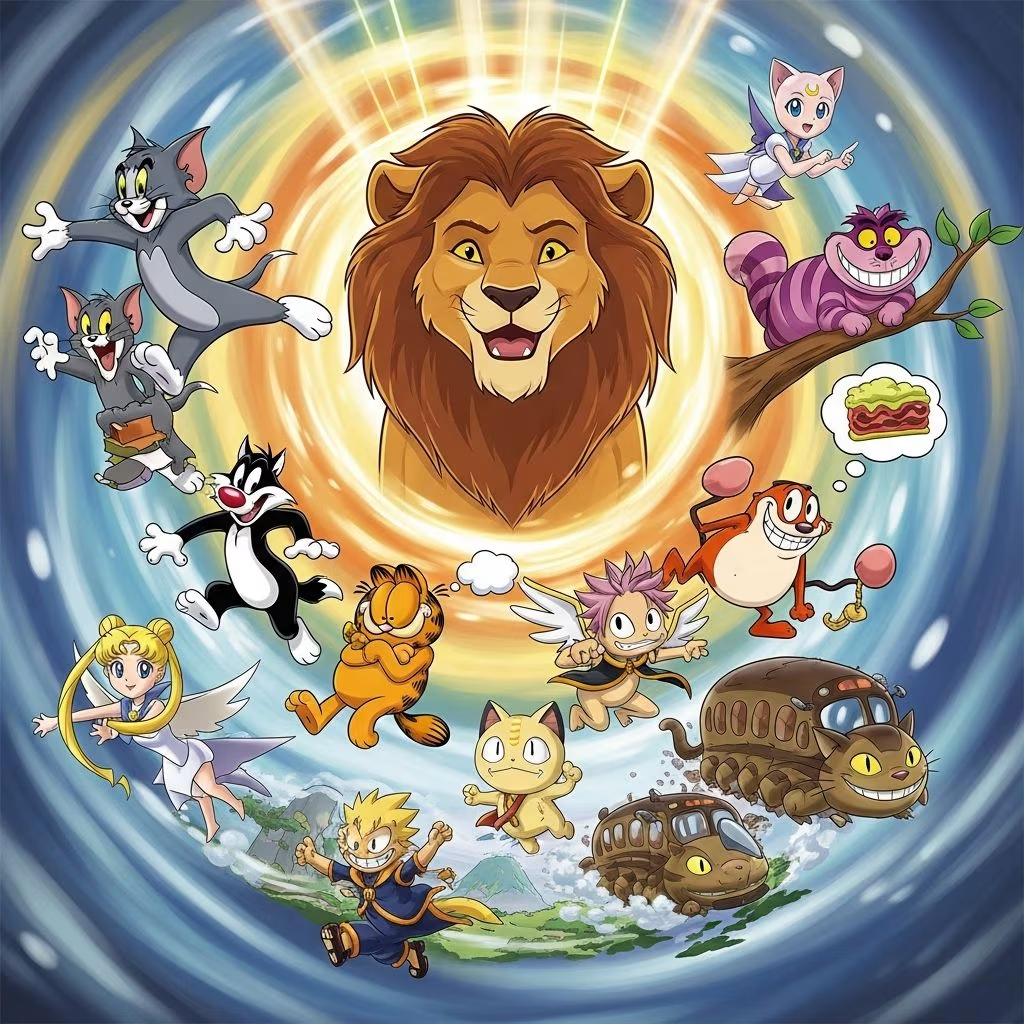
The world of animation has gifted us with unforgettable feline characters that have transcended their original formats to become cultural phenomena. These whiskered performers have entertained generations, appearing in comic strips, television shows, films, and manga series. From the silent era to contemporary streaming platforms, animated cats have demonstrated remarkable staying power in the entertainment landscape. Their popularity stems from a unique combination of relatable personality traits, distinctive visual designs, and compelling storytelling that resonates with audiences of all ages.
The Evolution of Cartoon Cats in Western Animation
Western animation’s relationship with feline characters began in the early twentieth century, establishing a foundation that would influence character design for decades to come. These pioneering cats demonstrated that animation could bring creatures to life in ways that captured human emotions and behaviors while maintaining distinct animal characteristics. The evolution from simple line drawings to complex character development reflected broader changes in animation technology and storytelling sophistication.
Silent Era Pioneers and Their Impact
The 1920s marked a transformative period for animated cats, introducing characters that would become enduring symbols of entertainment. Felix the Cat emerged in 1919 as a groundbreaking creation, flourishing during the silent film era when visual comedy reigned supreme. Felix’s popularity grew so substantially that he transitioned to American television in 1956, securing a legacy that extended far beyond his original theatrical appearances. His defining characteristic—a magical satchel brimming with transformative tricks—made him a master of resourcefulness and problem-solving. Felix represented a particular type of protagonist: clever, independent, and capable of outsmarting any obstacle through creative thinking and mysterious abilities.
What distinguished Felix was his ability to exist comfortably within an era of visual storytelling that required no dialogue. His expressive features and physical comedy communicated personality and narrative without relying on sound. This foundation proved crucial for animated cats that followed, establishing that feline characters could carry entire narratives through their mannerisms and actions.
The Comic Strip Revolution
Garfield represents a paradigm shift in how animated cats were conceived and distributed to audiences. Originating as a local comic strip in 1976, Garfield achieved nationwide recognition by 1978, demonstrating the potential for newspaper publications to launch characters into multimedia stardom. This orange tabby, defined by his disdain for Mondays and obsession with lasagna, created a relatable everyman figure that audiences across demographics could appreciate. The character’s journey from print to television and film illustrated how strong character development could sustain popularity across multiple platforms.
Garfield’s success stemmed from his imperfect nature—he was lazy, sarcastic, and unmotivated in ways that contrasted sharply with heroic protagonists. His relationships with Jon Arbuckle and Odie provided comedic dynamics that explored themes of companionship despite mutual annoyance. This formula proved remarkably durable, sustaining the character’s relevance across generations of viewers.
Iconic Characters and Their Defining Characteristics
The most memorable animated cats possess specific traits that distinguish them within crowded entertainment landscapes. Understanding these characteristics reveals why certain characters achieve cultural permanence while others fade from collective memory.
The Trickster and Problem-Solver Archetype
Tom from Tom & Jerry established a different prototype—the protagonist bound by circumstance and rivalry rather than choice. His endless pursuit of Jerry created a narrative structure that prioritized physical comedy and chase sequences over character development. Yet Tom transcended simple antagonism through moments of vulnerability and unexpected kindness, revealing depths beneath his aggressive exterior.
Sylvester from Looney Tunes similarly embodied the persistent pursuer, though his target—Tweety Bird—represented a different dynamic of hunter and prey. Sylvester’s distinctive lisp and exaggerated mannerisms created a character whose repeated failures generated humor through pathos and determination.
The Pink Panther debuted in 1963 and pursued an entirely different comedic approach. As a quiet prankster operating through clever tricks rather than aggressive confrontation, the Pink Panther accumulated an impressive filmography spanning 124 short films and 10 television shows. The character’s ascension to NBC’s Saturday morning cartoon lineup in 1969 solidified his status as a mainstream entertainment staple. His refined demeanor and sophisticated problem-solving distinguished him from more brash competitors.
Supporting Characters and Ensemble Roles
Not all animated cats commanded center stage. Some achieved legendary status through supporting roles that enriched larger narratives. Puss in Boots, voiced by Antonio Banderas, captivated audiences in 2004’s Shrek 2, transforming from antagonist to beloved hero through charm and unexpected competence. His distinctive visual presentation—including oversized black boots and sword—created immediate recognition despite limited screen time in the broader franchise.
Rajah
Snowball from The Simpsons provided comedic relief through its repeated replacement within the family unit, offering viewers a running joke that spanned multiple seasons. The cat’s lack of personality paradoxically became its defining characteristic—a blank slate onto which audiences projected their own experiences with family pets.
Eccentric and Unconventional Characters
Top Cat led an animated gang of alley cats through get-rich-quick schemes during his brief but influential 1961-1962 television run. Despite the show’s short lifespan, Top Cat’s character design and leadership dynamics influenced subsequent ensemble cartoons. The character was loosely based on Sergeant Bilko, a cunning military con artist, lending Top Cat a sophisticated criminal mindset unusual for animated animal characters.
Bill the Cat from the 1980s comic strip achieved fame through his deliberately disheveled appearance and chaotic behavior, subverting expectations about what made cats appealing as characters. His quirky visual presentation prioritized personality over aesthetic beauty, proving that unconventional character designs could achieve cult status.
Mr. Kitty from South Park embodies how animated cats could function within adult-oriented comedy, serving as Eric Cartman’s pet despite the show’s crude satirical approach. Introduced in season one, Mr. Kitty’s presence provided occasional grounding despite the show’s anarchic tendencies.
Asian Animation and the Anime Cat Legacy
Japanese animation introduced different aesthetic principles and narrative structures that produced distinct interpretations of feline characters. These cats often possess supernatural abilities, deeper emotional complexity, and integration into fantastical world-building that distinguished them from Western cartoon traditions.
Spiritual Guides and Mentor Figures
Luna and Artemis from Sailor Moon transcend typical pet characterization by serving as wise mentors to the Sailor Guardians. Luna, presented as a dark purple cat, functions as Princess Serenity’s devoted servant and advisor to Queen Serenity. Both Luna and Artemis sport distinctive crescent moon markings on their foreheads, signifying their celestial origins and magical significance. The romantic undertones implied between these characters added emotional dimension to their mentorship roles, suggesting that even magical feline characters experience companionship and affection.
Jiji from Kiki’s Delivery Service represents a different mentor archetype—the loyal magical companion supporting a human protagonist’s spiritual journey. This black cat remains Kiki’s unwavering companion as she trains to become a witch in the acclaimed 1989 anime film. Jiji’s role emphasizes unconditional loyalty and emotional support, grounding fantastical elements through relatable bonds between characters.
Supernatural Beings and Transformation
Nyanko-Sensei, also known as Madara, from Natsume’s Book of Friends exists as a powerful supernatural beast that assumes feline form. This character challenges categorical distinctions between cat and spirit, demonstrating how anime frequently blurs boundaries between physical and metaphysical realms. Nyanko-Sensei’s role as Natsume’s bodyguard and protector involves a contractual arrangement concerning the Book of Friends, introducing themes of obligation and mutual benefit into feline characterization.
Kirara from Inuyasha presents a two-tailed nekomata that combines mythological feline references with contemporary anime aesthetics. This fiery, badass character demonstrates how traditional Japanese folklore influences modern anime character design, creating creatures that honor cultural traditions while embracing contemporary visual styles.
Nekobasu from My Neighbor Totoro exemplifies the boundary-crossing nature of magical anime cats—literally a hybrid entity combining feline and vehicular characteristics. This Ghibli creation achieves iconic status through its imaginative design and memorable role within the film’s fantasy narrative.
Adventure and Battle-Ready Felines
Meowth from Pokémon represents a different category—a Pokémon species with distinct personality traits rather than a mystical mentor. This nocturnal creature, described as cunning and self-important, demonstrates how anime integrates cats into larger world-building systems with established rules and mechanics. Meowth’s sensitivity regarding self-esteem and status provides emotional hooks that transform combat-focused narratives into character-driven stories.
Chi from the manga series Chi’s Sweet Home explores domestic life through a kitten’s perspective. Chi’s accidental separation from her mother and discovery by the Yamada family creates an emotionally resonant narrative about adaptation and found family that appeals to audiences seeking gentler storytelling within anime’s broader landscape.
Kuroneko from Trigun functions as a recurring presence throughout the series, appearing in every episode with distinctive oversized eyes that communicate emotional expressiveness. This black female cat’s consistent appearance creates narrative continuity and visual trademark recognition.
Character Design and Visual Recognition
The most successful animated cats share common design principles that create immediate visual recognition while allowing stylistic variation that reflects their specific narrative contexts.
Color Coding and Visual Identity
| Character | Color/Visual Feature | Narrative Function |
|---|---|---|
| Garfield | Orange tabby with black stripes | Instantly recognizable domestic cat |
| Felix the Cat | Black with white gloves and eyes | Silent era performer aesthetic |
| Pink Panther | Distinctive pink coloration | Luxury and sophistication symbolism |
| Luna & Artemis | Black and white with crescent moons | Celestial connection and magic |
Color selection communicates character personality before narrative exposition begins. Orange tabby coloring associates with approachable domesticity, while black creates mysterious or sophisticated impressions. The Pink Panther’s unusual coloration signals that this character operates outside normal feline parameters, suggesting artistic or criminal sophistication.
Facial Features and Expression
Successful animated cats maintain expressive facial structures that convey emotion and intention. Large, visible eyes dominate character designs, facilitating non-verbal communication essential to animation. Whiskers, ears, and mouth positioning translate subtle emotional shifts into visual information that audiences process instantaneously. The contrast between maintaining recognizable feline features while conveying human-like emotional sophistication represents the central challenge and achievement of animated cat character design.
Cross-Media Expansion and Cultural Impact
The most enduring animated cats transcend their original formats, achieving multimedia presence that extends their cultural influence. Garfield’s trajectory from comic strip to television animation to theatrical films demonstrates how strong character conception permits multiple interpretive approaches across different mediums. Felix the Cat’s television renaissance during the 1990s illustrated how beloved characters could experience revival and renewed relevance across generations.
Merchandising extends character reach beyond entertainment properties themselves. Action figures, plush toys, apparel, and collectibles transform abstract characters into tangible objects that audiences possess and display. This commercial expansion generates revenue while deepening emotional connections between consumers and characters.
Frequently Asked Questions
Which animated cat is the most famous?
Garfield consistently ranks as the most recognizable cartoon cat globally, with his comic strip, television series, and theatrical films reaching audiences across multiple decades. His relatable personality and multi-platform presence exceed most competitors.
What makes a successful animated cat character?
Successful animated cats combine distinctive visual design, memorable personality traits, and emotional resonance with audiences. Characters like Felix demonstrated resourcefulness, while Garfield embodied relatable flaws. Consistency across platform appearances ensures sustained recognition.
How do anime cats differ from Western cartoon cats?
Anime cats frequently incorporate supernatural elements, serving as mentors or mystical beings rather than domestic companions. Western cartoon cats traditionally emphasize comedy and physical action, while anime explores deeper emotional and spiritual dimensions through feline characters.
Why do animated cats appeal across different cultures?
Feline characteristics—independence, grace, unpredictability—transcend cultural boundaries. Cats can be designed to communicate emotions without requiring complex dialogue, permitting international audiences to appreciate characters regardless of language barriers or cultural background.
The Enduring Appeal of Animated Felines
Animated cats achieve cultural permanence through combinations of visual appeal, personality distinctiveness, and emotional authenticity. Whether pursuing mice, solving problems through magical means, or serving as supernatural guides, these characters demonstrate that animation permits creative interpretations of familiar creatures. The continuous emergence of new animated cats alongside nostalgic appreciation for established classics suggests that feline characters will maintain entertainment relevance indefinitely, adapting to contemporary storytelling preferences while maintaining connection to their animated heritage.
References
- 44 Famous Cartoon & Anime Cats (With Pictures & Videos) — Catster. January 2025. https://www.catster.com/lifestyle/famous-cartoon-anime-cats/
- 14 Famous Cartoon Cats From Comics, TV & Film — Purina US. 2024. https://www.purina.com/articles/cat/behavior/understanding-cats/famous-cartoon-cats
- 10 Most Iconic Anime Cats (And Where to Get Their Merch!) — Nanakorobiar. 2024. https://www.nanakorobiar.com/post/10-most-iconic-anime-cats-and-where-to-get-their-merch
- List of fictional cats in animation — Wikipedia. January 2025. https://en.wikipedia.org/wiki/List_of_fictional_cats_in_animation
- Flow and Our Top 5 Cartoon Cats — HeadStuff. 2024. https://headstuff.org/entertainment/film/flow-cats-top-5/



