
Animal Vaccine Delivery: Practical Guide For Veterinarians
Master the art of vaccine administration in animals for optimal immunity and safety across species.
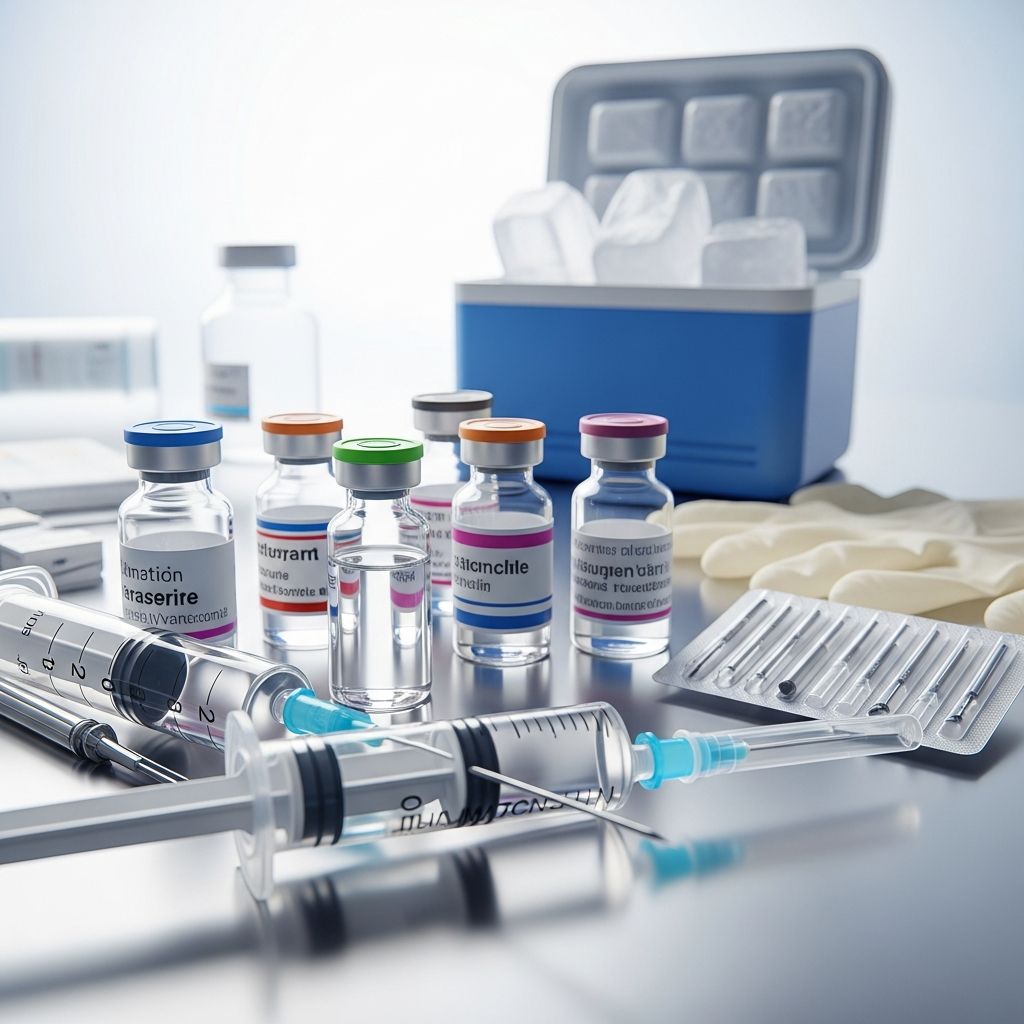
Administering vaccines correctly is fundamental to protecting animals from infectious diseases while safeguarding their overall health. This guide delves into the principles of vaccine delivery in veterinary practice, emphasizing proper techniques, timing, and precautions for diverse species.
Understanding Vaccine Categories
Vaccines are classified into core and non-core types based on disease prevalence and risk.
Core vaccines
target highly contagious, severe illnesses like distemper and parvovirus in dogs or panleukopenia in cats, recommended for all animals regardless of lifestyle. Non-core vaccines address region-specific or lifestyle-related threats, such as Bordetella or Lyme disease, administered only when risk warrants.This distinction guides veterinarians in tailoring protocols. For instance, shelters prioritize core vaccines upon entry to curb outbreaks.
Optimal Timing for Vaccinations
Vaccination schedules account for maternally derived antibodies (MDA) that can neutralize vaccines in young animals. Puppies and kittens starting at 6-7 weeks require doses every 3-4 weeks until 16 weeks or older, followed by a booster at 6-12 months. A single core vaccine dose at 16 weeks suffices in resource-limited settings.
- Primary series: 3-4 doses for modified-live vaccines, spaced 2-4 weeks apart.
- Boosters: Annually or every 3 years based on titer testing and guidelines.
- Adults: Titer checks confirm immunity, reducing unnecessary revaccinations.
Inactivated vaccines often need two initial doses 2-4 weeks apart for priming. Shelters administer core vaccines immediately upon intake, repeating as per protocols.
Selecting the Right Delivery Routes
Choice of route depends on the targeted immunity—systemic or mucosal.
Subcutaneous (SC)
andintramuscular (IM)
injections suit most core vaccines, ensuring precise dosing for small groups.| Route | Best For | Examples | Notes |
|---|---|---|---|
| Subcutaneous (SC) | Systemic immunity | Rabies, Distemper | Loose skin areas; easy for multiple animals |
| Intramuscular (IM) | Stronger response | Leptospirosis | Hindlimb or shoulder muscles |
| Intranasal (IN) | Mucosal protection | Bordetella, Herpesvirus | Respiratory pathogens; no systemic spread |
| Oral | Gut immunity | Parvovirus (limited) | Rare; species-specific |
Mucosal routes like intranasal excel for respiratory diseases invading via airways. Incorrect routes risk vaccine failure or harm, e.g., intranasal injection of SC vaccines inactivates them.
Proper Vaccine Preparation and Storage
Vaccine efficacy hinges on handling. Store at 2-8°C; avoid freezing except as labeled. Reconstitute freeze-dried vaccines just before use with provided diluent—discard after 30 minutes.
- Never mix vaccines unless specified.
- Use new syringes/needles per animal; no splitting doses.
- Omit alcohol swabbing for live vaccines to prevent inactivation.
Track lot numbers, expiry, and batch details meticulously.
Step-by-Step Administration Techniques
Prepare a calm environment to minimize stress. Restrain gently, especially for IM sites like the semimembranosus muscle in dogs.
- Verify vaccine details: type, expiry, route.
- Reconstitute if needed; shake gently.
- Select site: SC over shoulders/scruff; IM in thigh.
- Inject smoothly; massage SC sites.
- Observe for 15-30 minutes post-administration.
For intranasal, insert nozzle gently into nostril, avoiding trauma.
Recognizing and Managing Adverse Reactions
Reactions range from mild (swelling, lethargy) to severe (anaphylaxis). Monitor for facial swelling, vomiting, or collapse within minutes.
- Mild: Antihistamines like diphenhydramine.
- Severe: Epinephrine, fluids, oxygen.
- Report to manufacturer/authorities.
Prior reactions warrant premedication or titer alternatives. Small breeds face higher risks; split doses if needed.
Record-Keeping Best Practices
Document everything: date, product, lot, route, site, administrator. Use peel-off labels or digital stamps for efficiency. This aids liability, tracking, and revaccination planning.
Species-Specific Considerations
Dogs
Core: Distemper, adenovirus, parvovirus, rabies. Start at 6-8 weeks; boosters triennially.
Cats
Core: Panleukopenia, calicivirus, herpesvirus, rabies. Similar puppy protocols; FeLV non-core unless high-risk.
Livestock and Exotics
Cattle: SC/IM for clostridial diseases. Horses: IM in neck. Tailor to herd health plans.
Special Scenarios: Shelters and Outbreaks
In shelters, vaccinate on intake with cores; repeat every 2-4 weeks. During outbreaks, use serology for immunity gaps.
Future Trends in Vaccine Delivery
Recombinant and vectored vaccines (e.g., canarypox for rabies) reduce adjuvants, minimizing reactions. Titer-driven protocols promote “vaccinate less, protect more”.
Frequently Asked Questions (FAQs)
What if I miss a booster?
Restart series or titer test; consult vet.
Can vaccines overdose?
No; extra is harmless, but underdosing fails.
Alcohol swabs safe?
No for live vaccines; use dry or soap.
Pregnant animals?
Avoid live vaccines; use killed if essential.
Titers vs. vaccinating?
Titers for cores post-primary; cost-effective.
References
- Administration of Vaccines in Animals — Merck Veterinary Manual. 2023. https://www.merckvetmanual.com/pharmacology/vaccines-and-immunotherapy/administration-of-vaccines-in-animals
- WSAVA Guidelines for the vaccination of dogs and cats — PMC/ NIH. 2020-04-15. https://pmc.ncbi.nlm.nih.gov/articles/PMC7166872/
- Proper Use and Handling of Vaccines in Animal Shelters — Maddie’s Fund. 2023. https://www.maddiesfund.org/proper-use-and-handling-of-vaccines-in-animal-shelters.htm
- 2024 Guidelines for the Vaccination of Dogs and Cats — WSAVA. 2024-04. https://wsava.org/wp-content/uploads/2024/04/WSAVA-Vaccination-guidelines-2024.pdf
- 2022 AAHA Canine Vaccination Guidelines — AAHA. 2022. https://www.aaha.org/resources/2022-aaha-canine-vaccination-guidelines/
Similar Articles








Read full bio of Sneha Tete


