

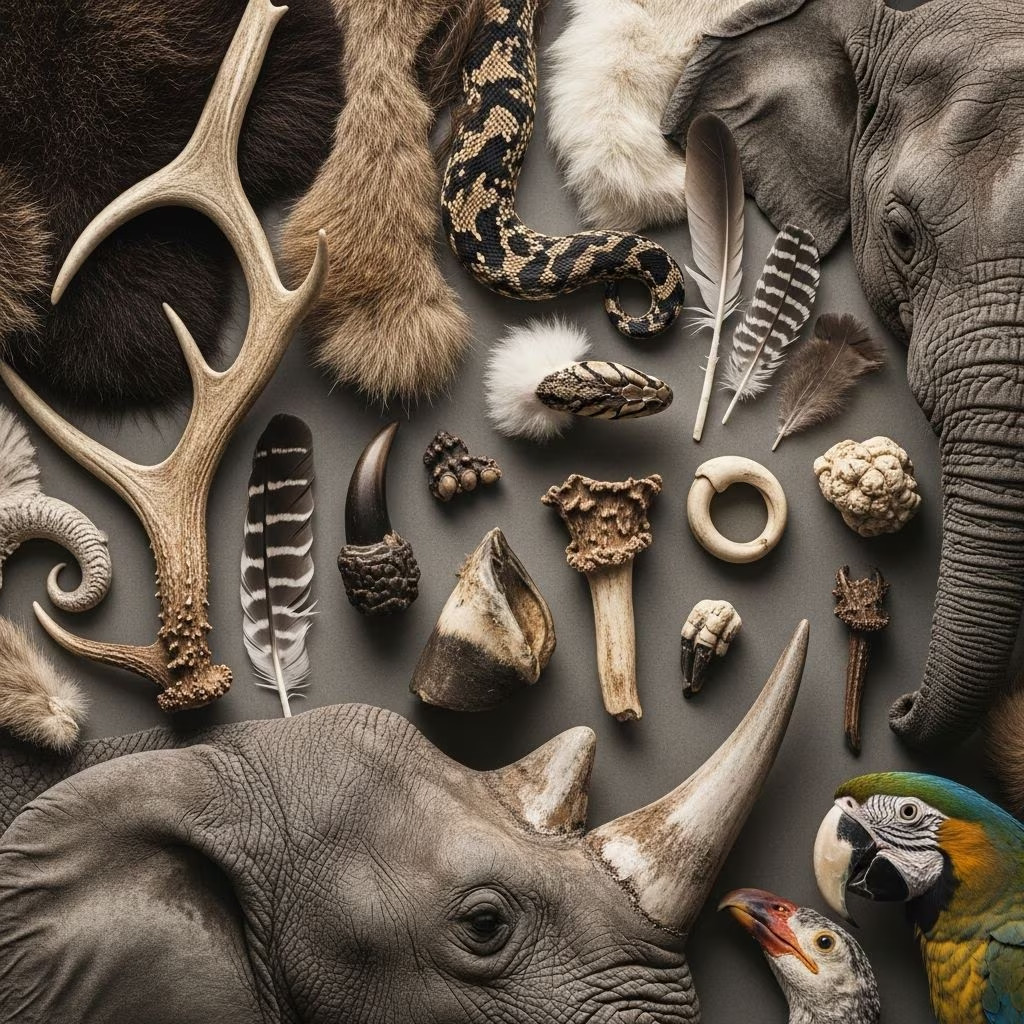
The integumentary system in animals forms the outermost covering, encompassing skin, hair, feathers, scales, claws, hooves, and glands. Representing up to 24% of body weight in some species, it serves critical roles in protection, temperature control, sensation, and vitamin synthesis. This system adapts uniquely across species, from the thick hides of elephants to the feathered coverings of birds, ensuring survival in varied habitats.
Core Functions of the Integumentary Barrier
Beyond mere coverage, the integumentary system acts as a dynamic interface with the environment. It prevents pathogen invasion, regulates water loss, and facilitates sensory input. Key functions include:
- Physical Protection: Shields against mechanical injury, UV radiation, chemicals, and microbes.
- Thermoregulation: Through sweating, vasodilation, or insulation via fur or fat.
- Sensory Reception: Detects touch, pressure, pain, and temperature via specialized receptors.
- Metabolic Roles: Produces vitamin D precursors and stores energy in subcutaneous fat.
- Communication and Camouflage: Pigments and patterns aid in mating, warning, or blending.
These roles underscore why integumentary disorders profoundly impact animal welfare.
Anatomy of the Epidermal Layer
The outermost epidermal layer consists of stratified keratinocytes, melanocytes for pigmentation, immune-active Langerhans cells, and tactile Merkel cells. Originating from basal cells anchored to a basement membrane, keratinocytes proliferate under influences like hormones, nutrition, and genetics.
As cells migrate outward, they flatten and fill with keratin protein, culminating in the stratum corneum—a tough, dead cell layer sloughed continuously. This process, keratinization, creates an impermeable seal against water loss and invaders, bolstered by intercellular lipids. Epidermis thickness varies: thinnest in small animals, robust in large herbivores for abrasion resistance.
| Species | Epidermal Thickness | Key Adaptation |
|---|---|---|
| Horses/Cattle | Thick | Resists soil abrasion |
| Dogs/Cats | Moderate | Flexible for movement |
| Birds | Thin, scaly | Lightweight for flight |
Vitamin D synthesis begins here, with 7-dehydrocholesterol converting to precursors upon UV exposure.
The Supportive Dermal Foundation
Beneath the epidermis lies the dermis, a robust connective tissue matrix of collagen, elastin, ground substance, and cells like fibroblasts, mast cells, and melanocytes. It nourishes the epidermis via blood vessels and houses sensory nerves, lymphatic vessels, and immune cells.
Dermal thickness and fiber orientation differ by body region and species. In loose-skinned animals like dogs, it allows mobility; in taut-skinned species like pigs, it anchors firmly. The dermis regulates epidermal growth and responds to injury by producing new matrix for healing.
- Fibroblasts synthesize collagen for strength.
- Mast cells release histamine for inflammation.
- Melanocytes provide protective pigment.
Critical Interface: Basement Membrane Zone
This thin zone anchors epidermis to dermis, comprising hemidesmosomes, anchoring filaments, and lamina layers. It maintains epidermal proliferation, tissue integrity, and nutrient flow while acting as a selective barrier.
Damage here, often from autoimmune diseases, leads to blisters or vesicles. Functions include:
- Epidermal-dermal adhesion.
- Wound repair facilitation.
- Barrier against epidermal detachment.
In veterinary pathology, basement zone integrity is vital for diagnosing blistering disorders.
Diverse Appendages and Glands
Originating from epidermal invaginations, appendages include hair follicles, sebaceous glands, sweat glands, and species-specific structures like claws or hooves.
Hair/Fur: Provides insulation, camouflage, and sensory whiskers. Simple follicles in ruminants yield one hair per pore; compound ones in cats produce multiple. Growth cycles (anagen, catagen, telogen) respond to season and health.
Glands: Sebaceous glands lubricate with oily sebum; apocrine sweat glands aid cooling in some species (limited in horses); eccrine glands are rare, mainly in porcine footpads.
Specialized appendages: hooves in ungulates for terrain traversal; feathers in birds for flight and insulation; scales in reptiles for waterproofing.
Subcutaneous Layers: Muscle and Adipose
The hypodermis includes panniculus carnosus (twitch muscle) for skin twitching against parasites, prominent in loose-skinned species. Panniculus adiposus stores energy, insulates, cushions impacts, and reserves fluids/electrolytes.
In pigs, thick hypodermal fat (up to 5cm) aids heat retention; in horses, thin layers contour to musculature.
Species-Specific Adaptations
Integumentary designs optimize survival:
- Ruminants: Thick, hairless hides with simple follicles resist thorns/parasites.
- Carnivores: Dense fur, vibrissae for navigation.
- Aquatic Mammals: Blubber for buoyancy/insulation, minimal hair.
- Reptiles/Amphibians: Scaly or mucous-covered for desiccation prevention.
- Birds: Keratinized scales on legs, feathers for aerodynamics.
These variations highlight evolutionary pressures.
Health Implications and Common Disorders
Integumentary issues signal systemic problems: allergies cause pruritus; infections exploit barrier breaches; endocrine diseases alter coat quality. Diagnostics involve biopsies revealing layer-specific pathologies—e.g., epidermal hyperplasia in allergies, dermal inflammation in autoimmunity.
Maintenance involves balanced nutrition for keratin production, parasite control, and breed-specific grooming.
FAQs
What is the largest organ in animals?
The skin, comprising 12-24% of body weight depending on species.
How does animal skin differ from human skin?
Animals often have thicker epidermis, species-unique glands/appendages, and panniculus carnosus absent in humans.
Why do some animals shed their skin?
Stratum corneum desquamation renews the barrier; full sheds occur in reptiles.
What role do glands play in thermoregulation?
Sweat glands evaporate water for cooling; sebaceous glands prevent drying.
How does nutrition affect the integumentary system?
Deficiencies impair keratinization and follicle health.
Conclusion
The integumentary system exemplifies nature’s engineering, integrating protection, sensation, and adaptation. Understanding its layers—from epidermis to subcutis—empowers veterinary care and appreciation of animal physiology.
References
- 3.6 Integumentary System – Introduction to Veterinary Medical Terminology — Open Educational Alberta. 2023. https://pressbooks.openeducationalberta.ca/veterinarymedicalterminology/chapter/integumentary-system/
- Animal organs. Integument. Atlas of plant and animal histology — University of Vigo. N/A. https://mmegias.webs.uvigo.es/02-english/2-organos-a/guiada_o_a_04tegumento.php
- The Integumentary System in Animals — MSD Veterinary Manual. 2023. https://www.msdvetmanual.com/integumentary-system/integumentary-system-introduction/the-integumentary-system-in-animals
- The Integumentary System in Animals — Merck Veterinary Manual. 2023. https://www.merckvetmanual.com/integumentary-system/integumentary-system-introduction/the-integumentary-system-in-animals
- Integumentary system — Veterian Key. 2023. https://veteriankey.com/integumentary-system-2/



