

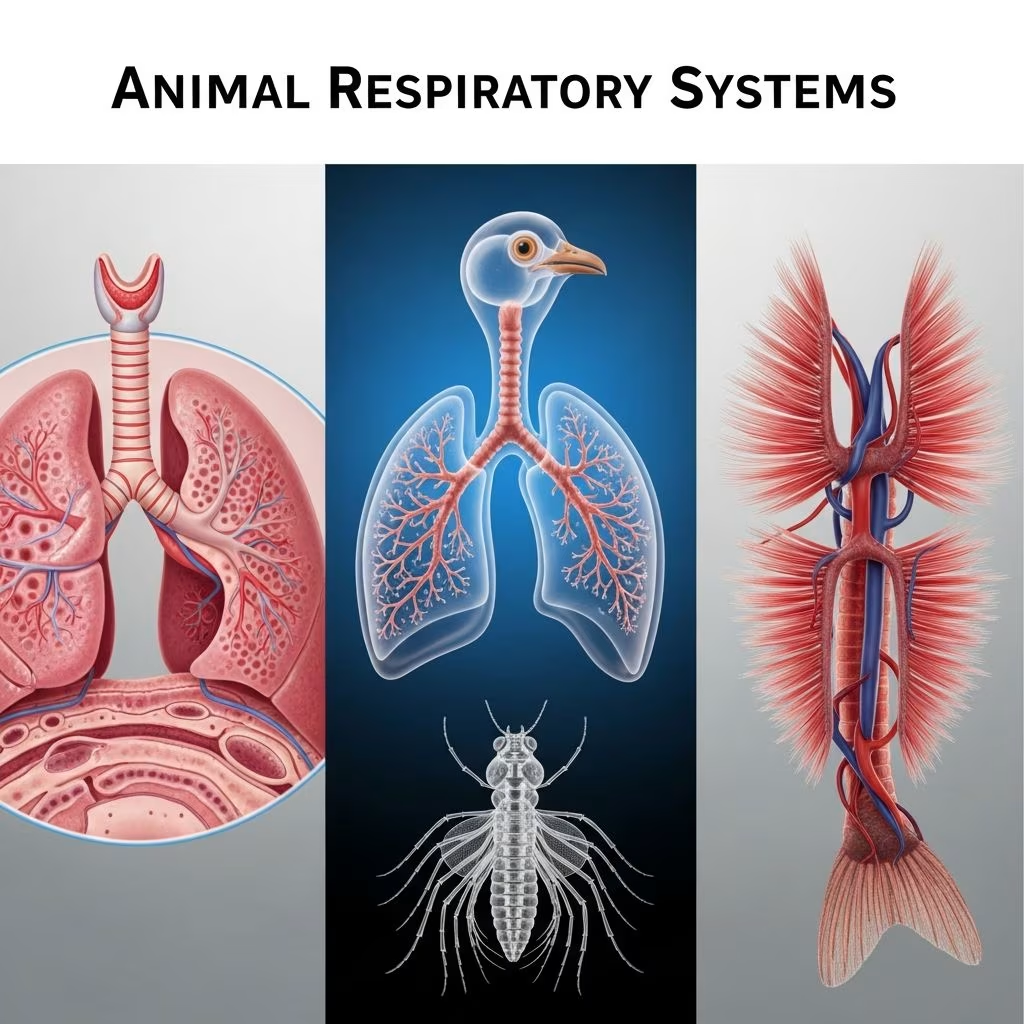
The respiratory system in animals is a sophisticated network designed primarily for **gas exchange**, delivering oxygen to tissues and expelling carbon dioxide waste. This vital process supports cellular metabolism across diverse species, with structures tailored to environmental demands and lifestyles. Beyond oxygenation, it aids in thermoregulation, vocalization, and defense against pathogens.
Core Functions of Animal Breathing Mechanisms
At its essence, the respiratory system facilitates the intake of oxygen-rich air and removal of carbon dioxide-laden air. Oxygen diffuses into the bloodstream for transport to cells, while carbon dioxide diffuses out for exhalation. In mammals, this occurs efficiently in the lungs’ alveoli, thin-walled sacs surrounded by capillaries.
- Oxygenation: Supplies O2 for aerobic respiration, powering energy production.
- Carbon Dioxide Elimination: Prevents toxic buildup from metabolic byproducts.
- Thermoregulation: Evaporative cooling via panting in dogs or nasal countercurrent heat exchange.
- Acid-Base Balance: Modulates blood pH through CO2 levels.
- Additional Roles: Filters emboli, metabolizes bioactive agents like prostaglandins, and serves as a blood reservoir.
Anatomy of the Upper Respiratory Tract
The upper respiratory tract processes incoming air through conditioning and filtration. It begins at external openings like nostrils or mouths, extending to the larynx.
Nasal Passages and Associated Structures
In mammals such as dogs and horses, nasal chambers feature intricate scrolls of bone called turbinates or conchae, lined with ciliated epithelium and goblet cells producing mucus. These warm inhaled air to body temperature, add moisture, and trap particulates via the mucociliary escalator, propelling debris to the pharynx for swallowing. The nasal planum in dogs displays unique epidermal patterns akin to fingerprints, aiding identification.
Paranasal sinuses, recesses in the skull, lighten head weight—especially in large-skulled species like horses—and contribute to heat exchange and mucus production. In hyperthermic animals, the nose facilitates cooling through vasodilation.
Pharynx and Larynx: Gateways to the Airways
The pharynx serves as a crossroads for air and food. The larynx, suspended by the hyoid apparatus, houses the glottis protected by the epiglottis during swallowing. Cartilaginous structures like the thyroid and cricoid maintain patency, while vocal folds enable sound production. In birds, the syrinx at the trachea’s base features vibrating tympanic membranes for song, controlled by intrinsic muscles.
Structure and Mechanics of the Lower Respiratory Tract
The lower tract conducts air to gas exchange sites, comprising trachea, bronchi, bronchioles, and alveoli.
Trachea and Bronchial Tree
The trachea, a flexible tube reinforced by C-shaped cartilage rings (complete in birds), is lined with pseudostratified ciliated epithelium and mucus-secreting cells. Cilia move trapped particles upward, preventing lung contamination. It bifurcates into primary bronchi, which branch into secondary and tertiary bronchi, then bronchioles lacking cartilage but featuring smooth muscle for diameter regulation.
| Structure | Key Features | Function |
|---|---|---|
| Trachea | C-shaped cartilage, ciliated mucosa | Air conduction, particle clearance |
| Primary Bronchi | Branch from trachea bifurcation | Direct air to lung lobes |
| Bronchioles | Smooth muscle, no cartilage | Fine airflow control, humidification |
Alveoli: The Gas Exchange Powerhouses
Terminal bronchioles lead to respiratory bronchioles, alveolar ducts, sacs, and alveoli—tiny sacs (~300 million per human lung, similar proportionally in animals) with a massive surface area for diffusion. Type I pneumocytes form thin barriers for gas transfer, type II produce surfactant to prevent collapse, and macrophages phagocytose debris. Capillaries envelop alveoli, enabling O2 to bind hemoglobin and CO2 to exit via partial pressure gradients.
Species-Specific Respiratory Adaptations
Respiratory anatomy varies profoundly across taxa, optimizing survival.
Mammalian Variations
Dogs possess lobed lungs with distinct upper (nasal/pharyngeal) and lower (tracheal/alveolar) divisions. Air enters via nostrils/mouth, warms in turbinates, and reaches lung lobes for oxygenation. Horses feature extensive sinuses for skull balance, aiding their grazing posture.
Avian Unidirectional Flow System
Birds boast a unique system with rigid lungs and nine air sacs (cervical, cranial thoracic, etc.) connecting to pneumatic bones for flight efficiency. Air flows unidirectionally: inhaled air bypasses lungs to caudal sacs, then lungs during exhalation, and out via cranial sacs. This sustains constant gas exchange during flight. The syrinx enables complex vocalizations.
Invertebrate and Other Innovations
Insects use spiracles—valved openings on thorax/abdomen—leading to tracheae delivering O2 directly to cells, bypassing blood. Body movements ventilate this network. Fish gills countercurrent exchange maximize O2 extraction from water.
Protective Mechanisms and Defense Strategies
Multiple barriers safeguard the system:
- Mucociliary Clearance: Mucus traps pathogens; cilia sweep them out.
- Surfactant: Reduces surface tension, averting atelectasis.
- Immune Cells: Alveolar macrophages engulf invaders.
- Reflexes: Coughing/sneezing expel irritants; bronchoconstriction fights infection.
In the nasal cavity, hairs and turbinate mucus filter dust, while olfactory epithelium detects threats.
Clinical Relevance in Veterinary Practice
Dysfunction causes distress: upper airway obstructions (brachycephalic syndrome in dogs), pneumonia (alveolar flooding), or failure (hypoxemia). Diagnostics include radiology for bronchial patterns, endoscopy for turbinates, and blood gases for exchange efficiency. Therapeutics target inflammation (bronchodilators), infections (antibiotics), or support (oxygen therapy).
Thermoregulation failures manifest as heatstroke in panting-dependent species. Understanding species anatomy guides interventions, e.g., avian air sac management.
FAQs on Animal Respiratory Systems
What is the main role of alveoli?
Alveoli are sites of gas exchange, where O2 enters blood and CO2 exits via thin membranes.
How do bird lungs differ from mammal lungs?
Birds use air sacs for unidirectional flow and rigid lungs, enhancing flight efficiency.
Why are turbinates important?
They condition air (warm, humidify, filter) protecting lower airways.
What causes respiratory distress in pets?
Obstructions, infections, or fluid buildup impair gas transfer.
Do insects have lungs?
No, they use tracheal systems via spiracles for direct O2 delivery.
Comparative Respiratory Efficiency Table
| Species Group | Surface Area Adaptation | Ventilation Method | Efficiency Note |
|---|---|---|---|
| Mammals | Alveoli (high SA) | Tidal breathing | Intermittent exchange |
| Birds | Parabronchi, air sacs | Unidirectional | Continuous, flight-optimized |
| Insects | Tracheae branching | Diffusion/pumping | Direct to tissues |
References
- Canine Respiratory System — Willamette Veterinary Hospital. Accessed 2026. https://wilvet.com/interactive-animal/canine/respiratory/
- Systems of Gas Exchange — University of Oregon Open Text. 2023. https://opentext.uoregon.edu/animalphysiology/chapter/5-1-systems-of-gas-exchange/
- The Respiratory System in Animals — MSD Veterinary Manual. 2024-02-15. https://www.msdvetmanual.com/respiratory-system/respiratory-system-introduction/the-respiratory-system-in-animals
- Respiratory System & Thermoregulation — Poultry Hub Australia. 2022. https://www.poultryhub.org/anatomy-and-physiology/body-systems/respiratory-system-thermoregulation
- Respiratory System — Veterian Key. 2021. https://veteriankey.com/respiratory-system/
- Respiratory Systems in Animals — EBSCO Research Starters. 2023. https://www.ebsco.com/research-starters/anatomy-and-physiology/respiratory-systems-animals
- Chapter 10: Respiratory System — Ohio State University Veterinary Histology. 2024. https://ohiostate.pressbooks.pub/vethisto/chapter/10-respiratory-system-intro/



