

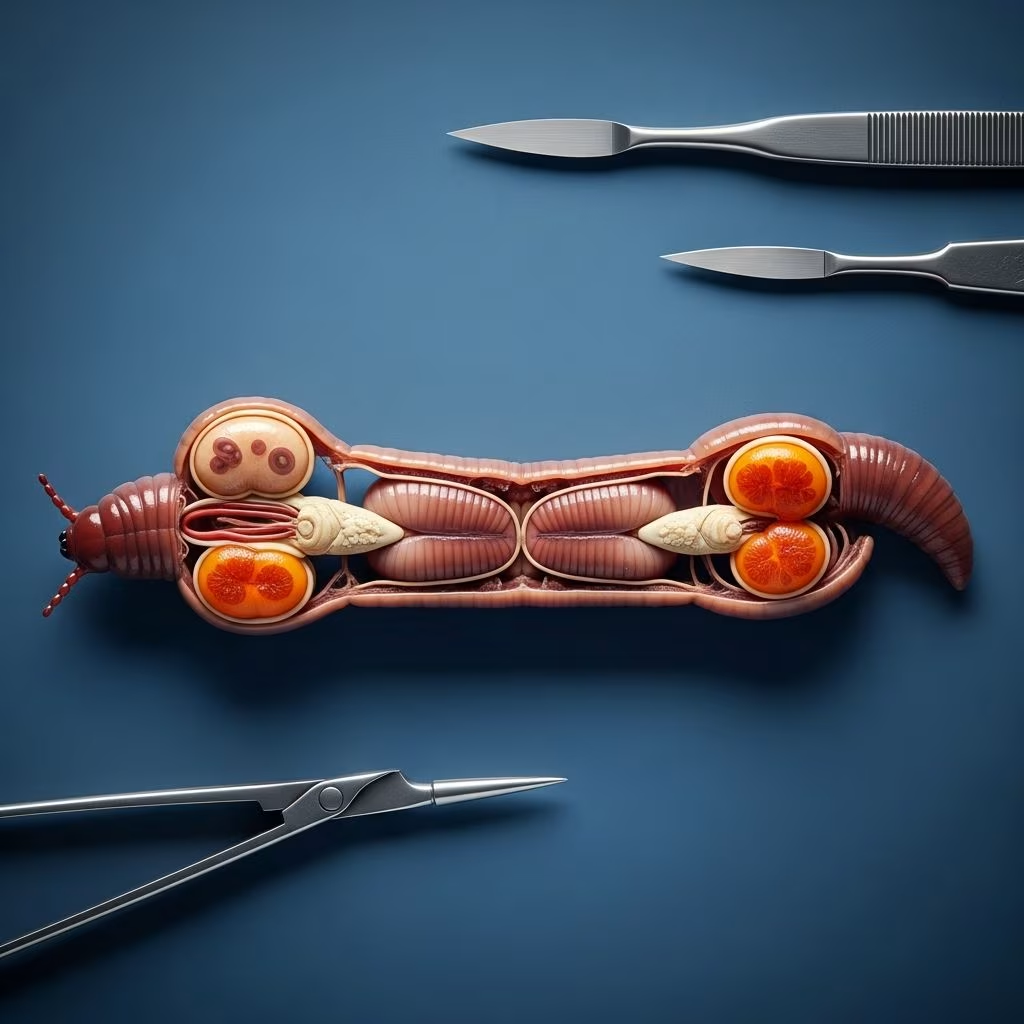
The reproductive system in animals ensures species continuation through gamete production, fertilization, and offspring development. This system varies across species but shares core principles of producing sperm and eggs, facilitating their union, and supporting embryonic growth.
Core Functions and Evolutionary Adaptations
At its essence, the reproductive apparatus in animals drives genetic recombination and propagation. In vertebrates and many invertebrates, gonads serve as the primary organs for gamete formation—sperm in males and ova in females. Associated ducts, glands, and accessory structures aid in gamete transport, nourishment, and protection.
Evolutionary pressures have led to diverse strategies. Dioecious species maintain separate sexes, while some hermaphroditic invertebrates enable self-fertilization or sex reversal for population flexibility. In mammals like cattle, specialized structures optimize fertilization efficiency.
Female Reproductive Anatomy Across Species
Female systems typically include paired ovaries, oviducts, uterus, cervix, vagina, and external genitalia. Ovaries produce ova and hormones such as estrogen and progesterone, regulating cycles.
Mammalian Female Tract
In cattle, ovaries host follicles and corpora lutea. Oviducts (fallopian tubes) feature regions like the isthmus, acting as sperm reservoirs, and the utero-tubal junction, filtering sperm. Uterine horns provide space for multiple embryos, with the body connecting to the cervix—a muscular barrier traversed during insemination or birth.
The vagina serves as semen deposit site and birth canal, while the vulva regulates urine passage, mating, and parturition. Swelling and moistening signal estrus readiness.
Avian Female System
Birds like geese have asymmetrical tracts on the left side. Ovaries release ova picked up by the infundibulum for fertilization. The magnum secretes albumen, isthmus forms shell membranes, and shell gland adds calcium. The vagina expels the egg via cloaca.
| Structure | Mammals (e.g., Cattle) | Birds (e.g., Geese) |
|---|---|---|
| Ovaries | Paired, produce ova/hormones | Left ovary functional |
| Oviducts | Fallopian tubes for fertilization | Multi-segment for egg components |
| Uterus | Horns for embryos | Shell gland for calcification |
Male Reproductive Anatomy and Sperm Delivery
Male organs focus on spermatogenesis and semen delivery. Testes produce sperm and testosterone.
Mammalian Male Structures
Testes descend via gubernaculum through inguinal rings into the scrotum for thermoregulation. Epididymis matures sperm; vas deferens transports them. Accessory glands add seminal fluid with nutrients.
In ruminants, the penis may feature a sigmoid flexure; birds like geese have a spiral phallus with a spermatic furrow.
- Testes: Produce ~billions of sperm daily in mature males.
- Epididymis: Storage and maturation site.
- Prostate/Bulbourethral glands: Semen components for viability.
Hormonal Control of Reproductive Cycles
Gonadotropins (FSH, LH) from the pituitary drive gonadal activity. Females cycle through proestrus (follicle growth), estrus (ovulation), metestrus, and diestrus.
Cattle exhibit 21-day cycles; puberty varies by species (e.g., earlier in pigs than cattle). Males maintain continuous production post-puberty.
Species-Specific Variations
- Cattle: Bicornuate uterus for twins; estrus signs include vulvar swelling.
- Birds: Seasonal breeding tied to light; left-side asymmetry.
- Invertebrates: Hermaphroditism common; yolk glands nourish eggs.
Reproductive Health Considerations
Understanding anatomy aids in breeding management. Issues like dystocia or infertility stem from tract anomalies. Artificial insemination targets cervical landmarks.
FAQs
What is the main role of ovaries in female animals?
Ovaries produce eggs and hormones regulating cycles.
How do bird reproductive systems differ from mammals?
Birds have unilateral tracts forming complete eggs; mammals focus on live birth or placental support.
What signals estrus in cattle?
Vulvar swelling, redness, and mucus.
Why do testes descend in mammals?
To maintain optimal temperature for spermatogenesis.
How long is a cow’s estrous cycle?
Approximately 21 days.
References
- Reproductive Anatomy and Physiology of Cattle — Select Sires. 2020-11-05. https://www.selectsires.com/article/ss-blog/2020/11/05/reproductive-anatomy-and-physiology-of-cattle
- Animal reproductive system | Physiology, Functions, & Facts — Britannica. N/A. https://www.britannica.com/science/animal-reproductive-system
- Chapter 5. MALE AND FEMALE REPRODUCTIVE SYSTEMS — FAO. N/A. https://www.fao.org/4/y4359e/y4359e07.htm
- Animal Reproductive Systems (VETERINARY TECHNICIAN) — YouTube (Video Transcript). N/A. https://www.youtube.com/watch?v=83AabzOGAZ4
- Animal Reproduction – Missouri Center for Career Education — Missouri Center for Career Education. N/A. https://www.missouricareereducation.org/doc/animalrepro/StudentResource.pdf
- The Reproductive System in Animals — Merck Veterinary Manual. N/A. https://www.merckvetmanual.com/reproductive-system/reproductive-system-introduction/the-reproductive-system-in-animals



