

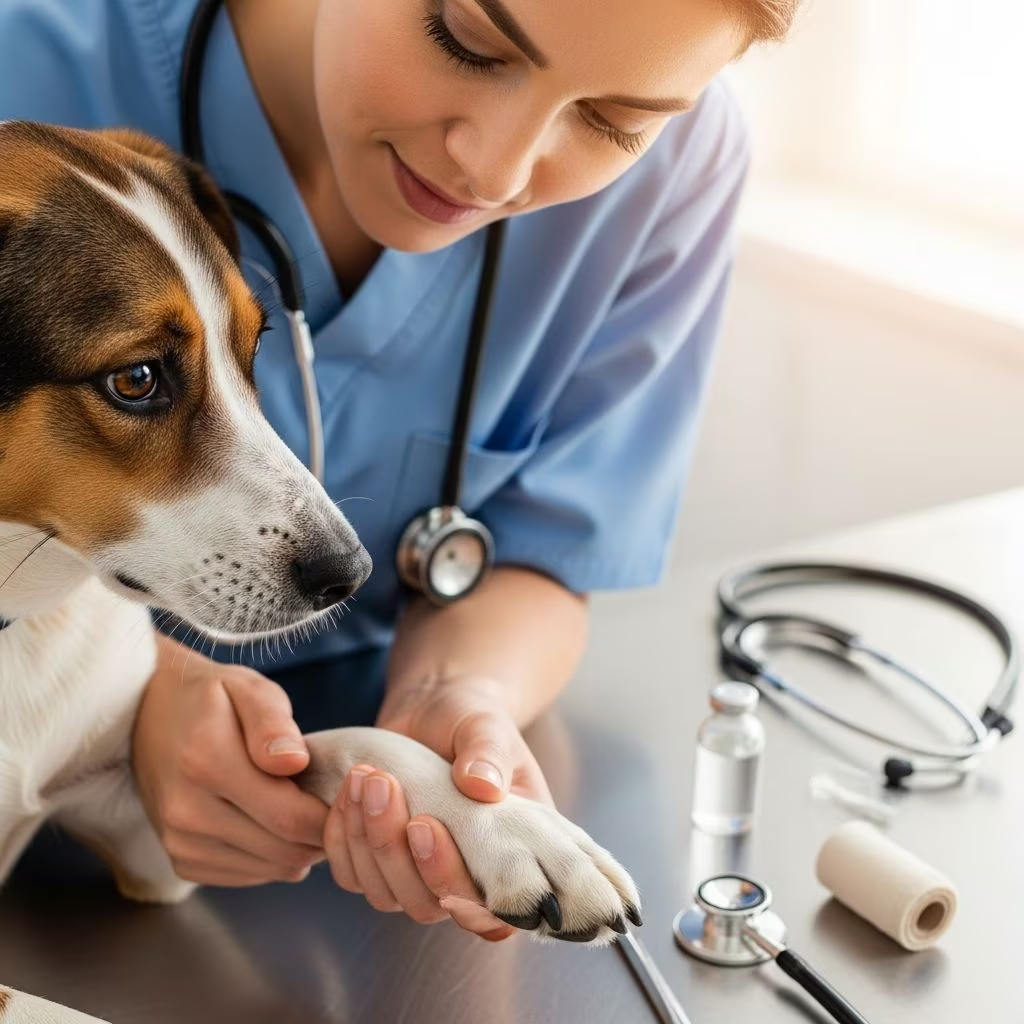
Effective pain management in animals enhances welfare, speeds recovery, and improves quality of life across species from companion pets to farm livestock. Veterinary professionals employ a blend of pharmacological interventions, cutting-edge technologies, and supportive therapies to address acute surgical pain, chronic conditions like arthritis, and procedural discomfort.
Understanding Pain in Veterinary Patients
Pain manifests differently in animals due to their inability to verbalize distress, requiring vets to rely on behavioral cues, physiological signs, and contextual factors for accurate assessment. Common indicators include vocalization, limping, guarding injured areas, reduced appetite, and altered posture. Tools like pain scales tailored for dogs, cats, and horses help quantify severity, guiding tailored treatment plans. Regular reassessment ensures therapies adapt to changing needs, preventing under- or over-treatment.
Pharmacological Foundations of Pain Control
Drugs form the cornerstone of animal analgesia, targeting pain pathways through various mechanisms. Non-steroidal anti-inflammatory drugs (NSAIDs) like meloxicam reduce inflammation and provide prolonged relief, often lasting up to 48 hours post-administration in procedures such as disbudding. Opioids, including buprenorphine and fentanyl patches, offer potent relief for moderate to severe pain, with sustained-release formulations minimizing frequent dosing.
Local anesthetics such as bupivacaine or lidocaine block nerve signals directly at injury sites, used in intra-articular injections or nerve blocks to preempt postoperative discomfort. Alpha-2 agonists like medetomidine enhance analgesia while providing sedation, reversible for flexible management. Corticosteroids serve as adjuncts for inflammation-driven pain but require caution to avoid interactions with NSAIDs.
Multimodal Analgesia: Layered Defense Against Pain
Combining agents from different classes—NSAIDs, opioids, locals, and adjuncts like gabapentin—optimizes relief while lowering individual drug doses to curb side effects. This approach suits diverse cases, from orthopedic surgeries in dogs to chronic osteoarthritis in horses. Individual factors like age, species, and organ function dictate combinations, ensuring safety and efficacy.
Precision Techniques for Targeted Relief
Technological advances enable pinpoint delivery of analgesics. Ultrasound-guided nerve blocks visualize nerves for accurate injections, boosting success rates and safety in surgeries. Epidural morphine in the lumbosacral space alleviates hindlimb pain post-procedure, reducing overall anesthetic needs. Liposomal bupivacaine suspensions extend local analgesia duration, ideal for intraoperative infiltration.
Neurostimulation, using electrical impulses to interrupt pain signals, emerges for neuropathic and chronic cases, though still developing in vet applications. Transdermal fentanyl patches provide steady opioid delivery over days, convenient for at-home care.
Regenerative and Innovative Therapies
Regenerative options like mesenchymal stem cells (MSCs) and platelet-rich plasma (PRP) promote healing in joints and tendons, curbing inflammation and pain long-term. MSCs regenerate tissue in osteoarthritis models, while PRP’s growth factors accelerate recovery. Though promising, standardized protocols are evolving through ongoing research.
Non-Drug Approaches to Enhance Comfort
Holistic methods complement drugs, addressing pain without chemicals. Physical rehabilitation, including controlled exercises and hydrotherapy, restores mobility in lame animals. Acupuncture modulates pain signals via nerve stimulation, effective for chronic musculoskeletal issues.
- Environmental Adjustments: Quiet spaces, soft bedding, and companion access reduce stress-aggravated pain.
- Thermotherapies: Cryotherapy cools acute injuries; thermotherapy warms chronic stiff areas.
- Laser and Ultrasound Therapy: Low-level lasers reduce inflammation; therapeutic ultrasound penetrates tissues for deep relief.
- Massage and Chiropractic: Manipulative techniques ease muscle tension and improve alignment.
Nutritional strategies with anti-inflammatory omega-3s support joint health in aging pets. These interventions integrate into multimodal plans for comprehensive care.
Technology’s Role in Monitoring and Delivery
Wearables track gait, activity, and behavior, yielding objective pain data for remote vet adjustments. Telemedicine facilitates follow-ups, optimizing protocols without clinic visits. Constant-rate infusions deliver steady analgesics, vital for critical cases.
Species-Specific Considerations
| Species | Common Pain Scenarios | Preferred Strategies |
|---|---|---|
| Dogs & Cats | Surgery, arthritis | NSAIDs, opioids, rehab, acupuncture |
| Horses | Lameness, colic | Nerve blocks, alpha-2 agonists, distraction techniques |
| Farm Animals | Disbudding, castration | Local anesthetics, meloxicam, NSAIDs |
Tailoring reflects metabolic differences; cats metabolize drugs slowly, demanding precise dosing.
Challenges and Best Practices
Barriers include species variability in drug responses and limited research on exotics. Best practices emphasize preemptive analgesia before procedures, ongoing assessment, and client education for home monitoring. Multimodal plans prevent tolerance and side effects like GI upset from NSAIDs.
FAQs on Animal Pain Management
What are signs my pet is in pain?
Look for lethargy, whining, reluctance to move, or appetite loss. Use vet-recommended scales for accuracy.
Are NSAIDs safe for all animals?
No; monitor kidneys and avoid in dehydrated or renal-impaired patients. Pair with gastroprotectants if needed.
How does acupuncture help animals?
It stimulates endorphin release and blocks pain pathways, aiding chronic conditions.
Can I use human pain meds on my pet?
Never; dosages and toxicities differ dangerously.
What’s the future of vet pain relief?
Expect more wearables, gene therapies, and AI-driven assessments.
References
- Innovations in Veterinary Pain Management: Recent Advances — Myosvet. 2023. https://myosvet.com/blogs/news/innovations-in-veterinary-pain-management-recent-advances
- Pain Management in Small Animals with Lameness — Merck Veterinary Manual. 2023-10-17. https://www.merckvetmanual.com/musculoskeletal-system/lameness-in-small-animals/pain-management-in-small-animals-with-lameness
- Pain Management in Animals — Canadian Veterinary Medical Association. 2022. https://www.canadianveterinarians.net/policy-and-outreach/position-statements/statements/pain-management-in-animals-previously-pain-control-in-animals/
- Effective Pain Management – NCBI — National Center for Biotechnology Information. 2009. https://www.ncbi.nlm.nih.gov/books/NBK32661/
- Pain Management in Veterinary Practice — Wiley. 2013-09-23. https://www.wiley.com/en-us/Pain+Management+in+Veterinary+Practice-p-9780813812243
- Disbudding and Pain Management for FARM — Cornell University. 2023. https://www.vet.cornell.edu/animal-health-diagnostic-center/programs/nyschap/modules-documents/disbudding-and-pain-management-farm-v40
- 2022 AAHA Pain Management Guidelines for Dogs and Cats — American Animal Hospital Association. 2022. https://www.aaha.org/resources/2022-aaha-pain-management-guidelines-for-dogs-and-cats/



