

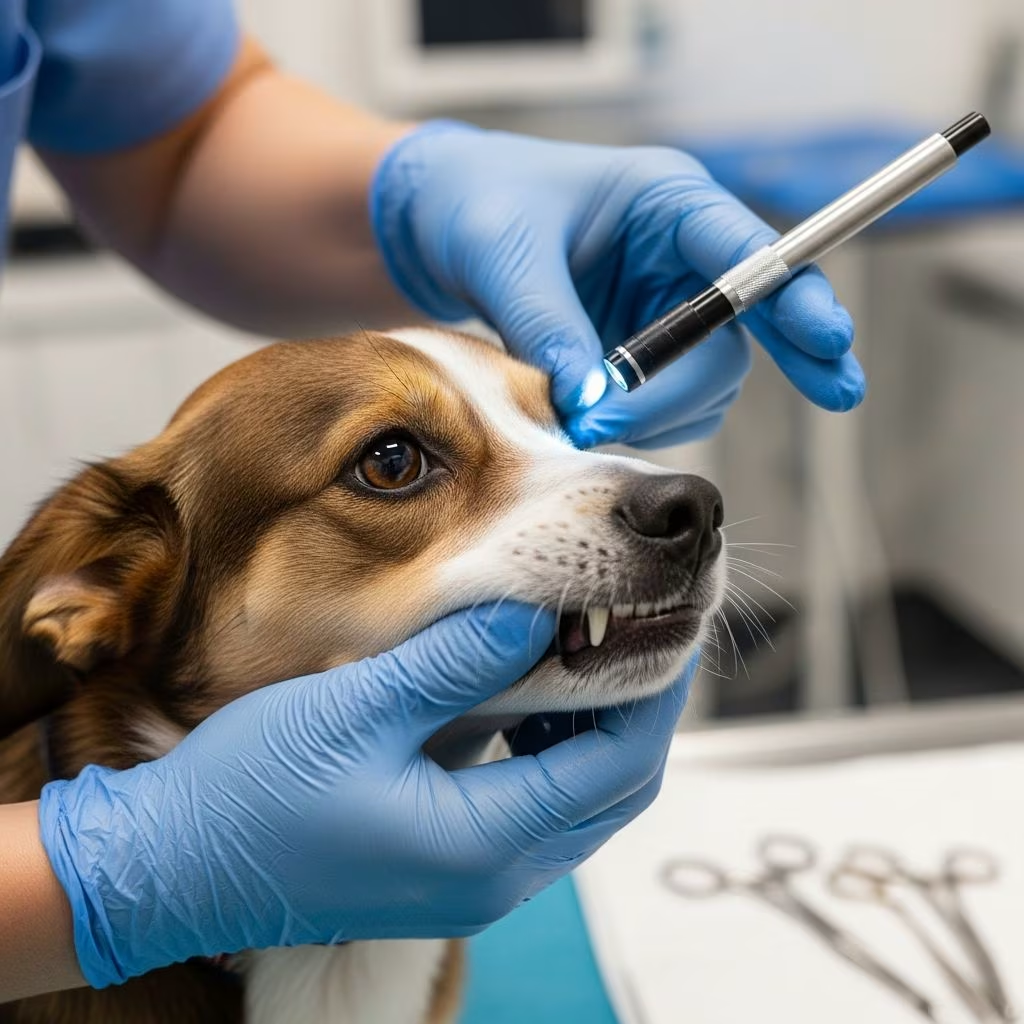
The neurologic examination serves as a cornerstone in veterinary medicine, enabling practitioners to pinpoint dysfunctions within an animal’s nervous system. By systematically assessing various components, veterinarians can determine whether issues stem from the brain, spinal cord, or peripheral nerves, guiding further diagnostics and treatment plans. This guide outlines a structured approach, drawing from established protocols to ensure reliability and accuracy.
Importance of Routine Neurologic Assessments
Conducting a neurologic exam is vital for any animal showing signs like weakness, seizures, disorientation, or coordination problems. Early detection can differentiate neurologic conditions from metabolic or orthopedic issues, preventing misdiagnosis. In clinical settings, these exams provide baseline data for monitoring disease progression or treatment efficacy. For instance, subtle changes in reflexes or posture can signal emerging problems before they become severe.
Preparing for the Examination
Before starting, ensure a calm environment with good lighting and a non-slip surface. Observe the animal from a distance initially to note natural behaviors. Have tools ready: reflex hammer, cotton balls, penlight, hemostats, and a towel for restraint if needed. Patient cooperation is key; sedated or painful animals may yield inaccurate results, so adjust techniques accordingly. Always prioritize safety for both the animal and examiner.
Step 1: Evaluating Mental Status and Awareness
Mentation assessment begins the exam, focusing on the animal’s level of consciousness, alertness, and orientation. Categories include alert, depressed, disoriented, stuporous, or comatose. An alert animal responds promptly to stimuli, while depression might indicate forebrain or metabolic issues. Observe in a quiet room: note head position, response to sounds, and interaction with surroundings. Abnormalities here often point to cerebral or systemic involvement.
- Alert: Normal awareness and responsiveness.
- Depressed: Reduced activity, slow reactions.
- Disoriented: Circling, head pressing, or unawareness of limbs.
- Stuporous/Comatose: Minimal to no response, requiring stimulation.
This step sets the tone, as altered mentation influences interpretation of subsequent tests.
Step 2: Observing Posture, Gait, and Balance
Next, scrutinize the animal’s stance and movement. A normal posture shows weight evenly distributed, head level, and no tremors. Gait evaluation involves walking on flat and turning surfaces, noting speed, path (straight or circling), and limb use. Ataxia—uncoordinated movement—suggests cerebellar or vestibular dysfunction, while paresis indicates weakness from motor pathway issues.
| Abnormality | Description | Possible Localization |
|---|---|---|
| Head tilt | Head cocked to one side | Vestibular system |
| Circling | Consistent turning direction | Forebrain or brainstem |
| Hypermetria | Exaggerated limb movements | Cerebellum |
| Paresis | Weakness in limbs | Spinal cord or nerves |
Record findings precisely, as gait patterns localize lesions effectively.
Step 3: Cranial Nerve Function Testing
Cranial nerves (CN I-XII) control head and neck functions. Test each systematically:
- CN II (Optic): Vision via menace response (hand wave threat), cotton ball tracking, obstacle course.
- CN III, IV, VI (Oculomotor, Trochlear, Abducens): Eye symmetry, pupil size, oculocephalic reflex (head turn elicits eye deviation).
- CN V (Trigeminal): Jaw tone, corneal reflex, nasal stimulation.
- CN VII (Facial): Palpebral reflex (eyelid blink to whisker touch), facial symmetry.
- CN VIII (Vestibulocochlear): Physiologic nystagmus, head tilt response.
- CN IX, X (Glossopharyngeal, Vagus): Gag reflex via pharyngeal stimulation.
- CN XI (Spinal Accessory): Neck resistance.
- CN XII (Hypoglossal): Tongue symmetry and strength.
Deficits, like anisocoria (unequal pupils), pinpoint specific nerve or brainstem problems. Use bright light for pupillary light reflex (PLR): direct (stimulated eye constricts) and indirect (opposite eye constricts).
Step 4: Testing Postural Reactions
These assess proprioception and motor function, revealing subtle deficits. Key tests include:
- Paw Replacement: Lift paw; normal animal replaces it immediately upon table contact (visual or blindfolded).
- Hopping: Support body, move away; animal hops on tested limb.
- Hemiwalking: Support opposite limbs; animal walks laterally on tested side.
- Wheelbarrowing: Lift pelvic limbs; thoracic limbs propel forward.
- Extensor Thrust: Lift and lower; limbs extend to support.
Delayed or absent reactions indicate sensory or motor pathway disruptions. Technique matters—slow movements prevent vestibular compensation.
Step 5: Spinal Reflex Arc Evaluation
Spinal reflexes test lower motor neuron integrity. Perform in lateral recumbency with slight limb tension. Use a reflex hammer:
- Thoracic Limbs: Biceps (C6-C8), triceps (C7-T2), withdraw.
- Pelvic Limbs: Patellar (L4-L6), cranial tibial (L4-L6), withdraw.
- General: Cutaneous trunci (thoracolumbar junction).
Grade reflexes: 0 (absent), 1+ (hypoactive), 2+ (normal), 3+ (hyperactive), 4+ (clonus). Hyporeflexia suggests LMN lesion; hyperreflexia indicates UMN.
Step 6: Spinal Palpation and Pain Assessment
Palpate the spine from nose to tail, noting pain, muscle tone, or atrophy. Apply firm pressure to spinous processes and transverse processes in cervical area. Test neck and tail range of motion gently. Pain elicits vocalization, aggression, or avoidance.
Nociception (pain perception): Pinch toe web (superficial) or periosteum (deep) with hemostats. Responses include withdrawal, vocalizing, or autonomic changes (pupil dilation, tachycardia). Absent deep pain signals poor prognosis in spinal cord injuries.
Interpreting Findings and Localizing Lesions
Combine results to localize: forebrain (normal posture, mentation changes), brainstem (cranial nerve deficits), cerebellum (hypermetria), spinal cord segments (specific paresis/reflexes), or peripheral (flaccid paresis). Repeat exams track progression. Advanced imaging or CSF analysis follows if needed.
Common Pitfalls and Tips for Accuracy
- Avoid testing painful or aggressive animals without sedation.
- Account for age, breed (e.g., brachycephalics have exaggerated menace), or drugs affecting reflexes.
- Practice consistency; equivocal results warrant retesting.
- Document with videos for consultations.
Species-Specific Considerations
While protocols suit dogs and cats, adapt for others. Small animals tolerate hopping poorly if weak; large animals need space. In exotics, righting reflex or buoyancy tests aid evaluation.
FAQs
What if an animal refuses postural tests?
Use alternatives like hemiwalking or observe natural movement; sedation may be needed for accuracy.
How do I differentiate orthopedic from neurologic lameness?
Neurologic shows proprioceptive deficits; orthopedic spares proprioception but causes pain on manipulation.
Is the exam safe for puppies or seniors?
Yes, with gentle technique; avoid aggressive hopping in unstable patients.
What tools are essential?
Reflex hammer, penlight, cotton, hemostats—most are standard clinic items.
When to refer to a neurologist?
Complex multifocal lesions, progression despite treatment, or need for MRI/CSF.
References
- A Guide to the Neurologic Examination — Today’s Veterinary Nurse. 2023. https://todaysveterinarynurse.com/neurology/guide-to-veterinary-neurologic-examination/
- How to Perform a Neurologic Examination in Companion Animals — Today’s Veterinary Practice. 2023. https://todaysveterinarypractice.com/neurology/the-neurologic-examination-in-companion-animals-part-1-performing-the-examination/
- How to Perform a Neurological Exam on a Dog — Southeast Veterinary Neurology (YouTube). 2021-02-19. https://www.youtube.com/watch?v=AowoiFFDuls
- Neurolocalization in Dogs and Cats — VetGirl on the Run. 2023. https://vetgirlontherun.com/neurolocalization-in-dogs-and-cats-by-dr-missy-carpentier-dacvim-neurology-vetgirl-veterinary-continuing-education-blog/
- Skills Laboratory, Part 1: Performing a neurologic examination — dvm360. 2023. https://www.dvm360.com/view/skills-laboratory-part-1-performing-neurologic-examination
- Neurologic Exam PDF — Auburn University College of Veterinary Medicine (.edu). 2018-09. https://www.vetmed.auburn.edu/wp-content/uploads/2018/09/Neurologic-Exam.pdf



