

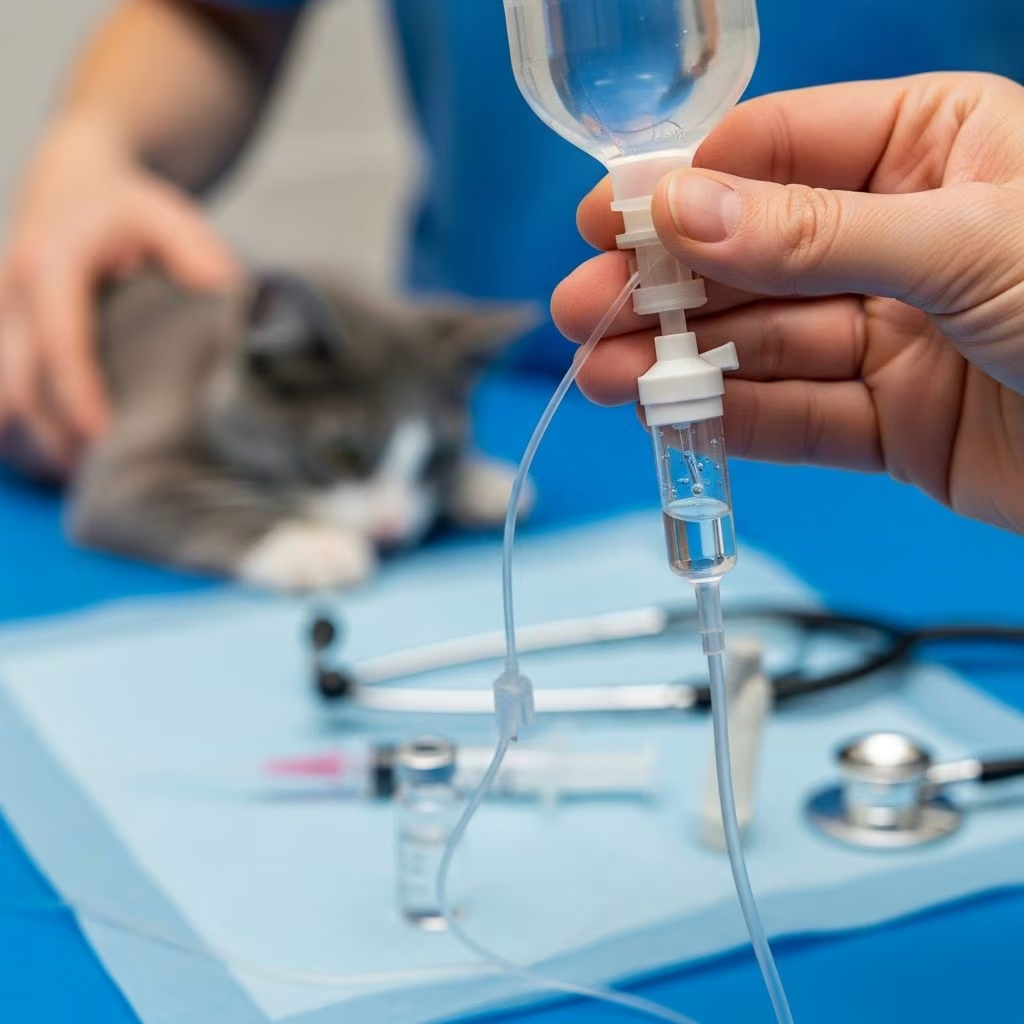
Maintenance fluid therapy plays a pivotal role in veterinary care by supplying the daily water and electrolyte needs of animals unable to meet them through normal intake. This approach prevents imbalances while supporting recovery from illness or surgery. Unlike aggressive resuscitation, it focuses on steady replenishment to mimic natural losses from urine, respiration, and feces.
Core Principles of Fluid Balance in Animals
Animals maintain fluid homeostasis through a delicate equilibrium across intravascular, interstitial, and intracellular compartments. Daily losses average 40-60 mL/kg in dogs and cats, primarily via urine, which accounts for the bulk of output in healthy patients. Disruptions from anorexia, vomiting, or diarrhea necessitate intervention to avoid dehydration or hypovolemia.
Hypovolemia demands rapid bolus therapy, typically 15-20 mL/kg for dogs and 5-10 mL/kg for cats over 15-30 minutes, repeated as needed until perfusion improves. Dehydration, conversely, requires gradual correction over 12-24 hours based on estimated percent deficit, calculated as body weight loss percentage multiplied by current weight.
Calculating Daily Maintenance Requirements
Precise computation ensures neither under- nor over-administration. Common formulas include:
- 2 mL/kg/hour or 50 mL/kg/24 hours for adults, scaling down for smaller patients.
- 70 mL/kg/day divided by 24 for hourly rates, adjusted for species and size.
- Energy-based: 40 mL/kcal of resting energy requirement, more accurate for varying body conditions.
For a 35 kg dog, maintenance equals 70 mL/hour using the 2 mL/kg/hr rule. Pediatric or obese animals require tailored adjustments to avoid excess sodium loads from prolonged isotonic use.
| Animal Type | Formula | Example (10 kg patient) |
|---|---|---|
| Adult Dog/Cat | 50 mL/kg/day | 500 mL/day |
| Small Dog | 60-70 mL/kg/day | 600-700 mL/day |
| Neonate | 80-100 mL/kg/day | 800-1000 mL/day |
Integrate all fluid sources: IV meds, oral intake, and nutrition to refine totals.
Selecting Appropriate Fluid Types
Maintenance favors hypotonic crystalloids to match lower sodium needs, preventing hypernatremia or hypokalemia from isotonic solutions like lactated Ringer’s (LRS) used long-term. Options include:
- 0.45% NaCl with 13-20 mEq/L KCl for balanced electrolytes.
- Mixtures of LRS and 5% dextrose with potassium supplementation.
- Commercial maintenance fluids mimicking plasma tonicity.
Isotonic fluids suit initial rehydration but risk imbalances in extended therapy. Avoid 0.9% NaCl subcutaneously due to pain from low pH.
Routes of Administration
Choose based on patient status:
- Intravenous (IV): Gold standard for precision, hypovolemia, or severe cases; use pumps for accuracy.
- Intraosseous (IO): For neonates or vascular access challenges.
- Subcutaneous (SC): Ideal for mild dehydration; 20-30 mL/kg daily, split sites max 10-20 mL/kg/site with isotonic like Plasma-Lyte.
- Oral: Preferred for stable patients via water or electrolyte solutions.
SC suits outpatient care but avoid in cardiac or hypoproteinemic patients.
Comprehensive Fluid Therapy Framework
Structure plans in phases:
- Resuscitation: Boluses for shock until lactate clears and CVP normalizes.
- Rehydration: Deficit over 24 hours, e.g., 8% dehydration in 10 kg cat = 800 mL total, 33 mL/hr plus maintenance.
- Maintenance: Ongoing needs amid losses.
- Loss Replacement: 2 mL/kg per diarrheal episode or vomit.
Total rate = (deficit/24) + maintenance + losses. Taper by 25-50% daily as oral intake resumes.
Monitoring and Adjustment Protocols
Continuous assessment prevents overload or persistence:
- Vital signs: Heart rate, mucous membranes, urine output (>1 mL/kg/hr).
- CVP: Normalizes from low in dehydration; excess signals slowdown.
- Ultrasound: Caudal vena cava collapsibility for responsiveness.
- Labs: Electrolytes q24h, especially potassium in anorexics.
- Body weight: Daily to track net gain/loss.
Endpoints: Normalized perfusion, hydration, no ongoing losses. Unmonitored overnight? Higher rates daytime, SC night.
Special Considerations by Species and Condition
Dogs tolerate higher volumes; cats need caution against overload. Neonates demand 80-120 mL/kg/day.
- Renal Disease: Restrict, monitor azotemia; hypotonic preferred.
- Cardiac: Limit to avoid pulmonary edema; frequent reassess.
- Diabetes: Account for glucosuria losses.
- Anorexia: Add potassium routinely.
Prolonged isotonic use risks hyperchloremia.
Common Pitfalls and Prevention
Avoid empiric 40-60 mL/kg/day universally; use formulas for accuracy. Overlook no sources like med diluents. Pump checks prevent free-flow errors. In hypovolemia-dehydration combos, prioritize boluses first.
FAQs on Animal Maintenance Fluid Plans
Q: How often should electrolytes be checked?
A: Daily in maintenance with replacement fluids; more in renal cases.
Q: Can SC fluids replace IV?
A: For mild needs yes, but not hypovolemia; max volumes per site.
Q: What’s the risk of isotonic for maintenance?
A: Hypernatremia, hypokalemia; switch to hypotonic.
Q: How to taper fluids?
A: Reduce 25-50% daily as eating resumes.
Q: Ideal maintenance rate for 5 kg cat?
A: ~250 mL/day or 10 mL/hr using 50 mL/kg.
Case Example: 15 kg Dog Post-Surgery
Anorexic with 5% dehydration: Deficit = 750 mL (31 mL/hr over 24h). Maintenance = 750 mL/day (31 mL/hr). Total initial: 62 mL/hr LRS, add 20 mEq KCl/L. Monitor weight, urine; taper day 3.
References
- Principles of fluid therapy (Proceedings) — DVM360. 2023. https://www.dvm360.com/view/principles-fluid-therapy-proceedings-0
- Section 3: Fluids for Replacement and Maintenance — AAHA. 2024-10-01. https://www.aaha.org/resources/2024-aaha-fluid-therapy-guidelines-for-dogs-and-cats/section-3-fluids-for-replacement-and-maintenance/
- 2013 AAHA/AAFP Fluid Therapy Guidelines for Dogs and Cats — Antech Diagnostics. 2013-10-01. https://www.antechdiagnostics.com/wp-content/uploads/2025/01/Fluid_Therapy_GuidelinesAAFP-AAHA.pdf
- Building a Fluid Therapy Plan — PubMed. 2024. https://pubmed.ncbi.nlm.nih.gov/40992981/
- Considerations for Creating a Fluid Therapy Plan — University of Illinois Vet Med. 2022-12-04. https://vetmed.illinois.edu/2022/12/04/considerations-for-creating-a-fluid-therapy-plan/
- IV Fluid Therapy Calculations — University of Bristol Vet Science. N/A. https://www.bristol.ac.uk/media-library/sites/vetscience/documents/clinical-skills/IV%20Fluid%20Therapy%20Calculations.pdf



