

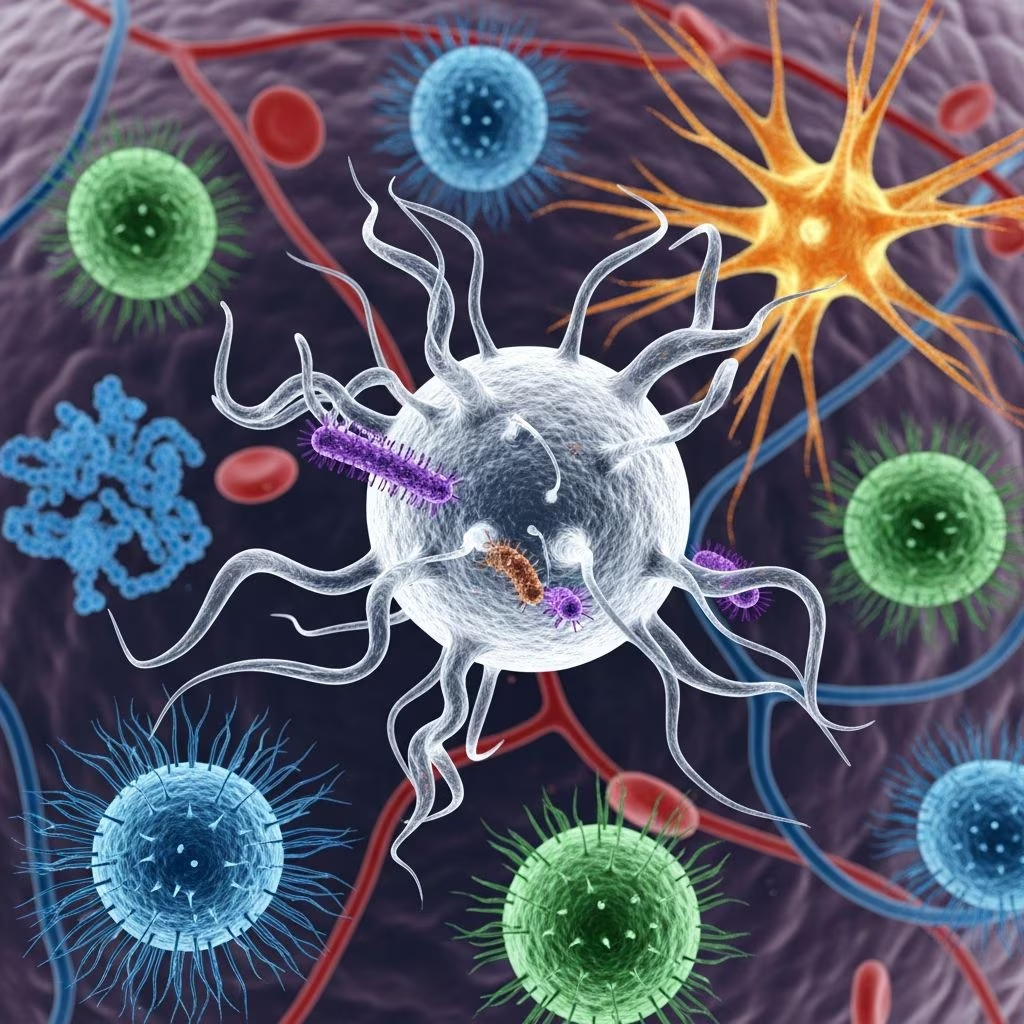
The immune system in animals forms a multifaceted network designed to detect, neutralize, and remember threats from pathogens like bacteria, viruses, and parasites. This defense operates through immediate physical and chemical barriers, rapid innate cellular responses, and a sophisticated adaptive system that builds long-term protection. Understanding these layers reveals why animals thrive despite constant microbial challenges.
Primary Barriers: The Body’s First Shield
Animals face relentless assaults from microbes entering via skin, respiratory passages, and digestive tracts. The outermost defense consists of anatomical and physiological hurdles that prevent invasion without specialized immune activation.
- Skin as a Fortress: The epidermis acts as an impenetrable layer, reinforced by its resident microbial community that outcompetes harmful invaders. Dryness further inhibits pathogen growth by desiccating potential colonizers.
- Mucosal Linings in Action: In the gut, a vast microbiome occupies space, denying niches to transients. Respiratory mucociliary escalators propel particles upward via cilia and sticky mucus, expelling them through coughs or swallows.
- Secretions with Antimicrobial Power: Saliva, tears, and gastric acids contain enzymes and low pH that dismantle microbial structures before deeper penetration.
These passive mechanisms handle most encounters, conserving energy for true breaches.
Innate Immunity: Rapid and Universal Response
When barriers fail, innate immunity engages instantly, recognizing broad danger signals rather than specific pathogens. This “hard-wired” system triggers inflammation and recruits killer cells within hours.
| Component | Function | Key Example |
|---|---|---|
| Pattern Recognition Receptors (PRRs) | Detect microbial motifs like lipopolysaccharides | Toll-like receptors (TLRs) on cell surfaces |
| Phagocytes | Engulf and digest invaders | Neutrophils and macrophages |
| Complement System | Tags pathogens for destruction, lyses cells | C3 protein activation cascade |
| Cytokines | Signal alarm, amplify response | Interleukin-1 induces fever |
Inflammation hallmarks this phase: redness from vessel dilation, swelling from fluid influx, heat from increased blood flow, and pain from nerve stimulation. Fever elevates body temperature to slow pathogen replication while boosting immune enzyme efficiency. In vertebrates, TLRs and C-type lectin receptors (CLRs) on membranes sense pathogen-associated molecular patterns (PAMPs), launching signaling cascades via NF-κB pathways that promote antimicrobial production.
Cells Driving Innate Defenses
Diverse leukocytes orchestrate innate action. Neutrophils swarm infection sites first, releasing nets of DNA to trap bacteria. Macrophages, derived from blood monocytes, patrol tissues, phagocytosing debris and presenting antigens to alert adaptive forces. Eosinophils target parasites, while basophils unleash histamine for localized inflammation. Natural killer (NK) cells detect virus-infected or tumor cells, perforating membranes with perforin and granzymes.
Gamma interferon from activated cells enhances macrophage killing and B-cell antibody output, creating a feedback loop that sustains defense until resolution.
Adaptive Immunity: Precision and Memory
Unlike innate responses, adaptive immunity tailors attacks to specific antigens, improving with each exposure via memory cells. Lymphocytes—B and T cells—drive this specificity.
- B Cells and Antibodies: Mature in bone marrow, they secrete immunoglobulins (IgM, IgG, IgA, IgE, IgD) that bind pathogens, neutralizing them or marking for phagocytosis. Class switching refines response types for mucosal or systemic threats.
- T Cells in Coordination: Thymus-educated, helper T cells (CD4+) direct orchestra via cytokines; cytotoxic T cells (CD8+) slay infected cells; regulatory T cells prevent overreaction.
- Lymphoid Organs: Spleen filters blood, lymph nodes screen fluids, mucosa-associated lymphoid tissue guards entry points.
Antigen presentation via MHC molecules bridges innate and adaptive phases. Dendritic cells process pathogens, displaying peptides on MHC class II to activate CD4+ T cells, which then stimulate B cells and CD8+ effectors. Memory cells persist post-infection, enabling swift recalls—vaccination mimics this for herd protection.
Interplay Between Innate and Adaptive Systems
Innate responses prime adaptive ones. Complement fragments and cytokines recruit lymphocytes to sites, while inflammasomes—NLR protein complexes—trigger pyroptosis, a lytic cell death releasing alerts (DAMPs) that amplify immunity. In mammals, NOD-like receptors detect intracellular threats, forming platforms for caspase-1 activation and IL-1β release.
This synergy ensures broad coverage: innate handles novelty, adaptive refines for recurrence. Without adaptive components, animals succumb rapidly to diverse pathogens.
Evolutionary Perspectives on Animal Immunity
Immune systems evolved amid symbioses and conflicts. Gut microbiomes, tolerated yet policed, enhance barrier function by fermenting fibers into short-chain fatty acids that bolster epithelial integrity. Cross-kingdom parallels, like plant NLRs and animal counterparts, suggest ancient ATP-driven oligomerization for rapid activation.
Vertebrate innovations include adaptive limbs, absent in invertebrates relying solely on innate tools. Yet, all share PRR conservation, underscoring universal strategies against conserved microbial tricks.
Disruptions and Disease Implications
Immune failures manifest as immunodeficiencies, hypersensitivities, or autoimmunity. Primary defects, like SCID, cripple lymphocyte development; secondary ones arise from malnutrition or stress. Allergies reflect misfired adaptive responses to harmless antigens, while chronic inflammation fuels diseases like arthritis.
Veterinary contexts highlight breed predispositions, e.g., certain dogs prone to immune-mediated hemolytic anemia. Therapeutics target checkpoints: immunosuppressants for autoimmunity, immunomodulators for infections.
FAQs
What distinguishes innate from adaptive immunity in animals?
Innate is fast, non-specific, and germline-encoded; adaptive is slower, antigen-specific, with memory.
How do vaccines leverage animal immune biology?
They introduce harmless antigens to generate memory B and T cells for future pathogen encounters.
Why is the gut microbiome crucial for immunity?
It competitively excludes pathogens and trains immune tolerance via metabolite signaling.
Can animals survive without adaptive immunity?
Rarely; invertebrates do via enhanced innate systems, but vertebrates require it for complex threats.
What role do cytokines play?
They coordinate cell communication, inflammation, and effector functions like fever induction.
Key Takeaways
- Layered defenses—barriers, innate, adaptive—provide robust protection.
- Cellular players like phagocytes and lymphocytes execute targeted kills.
- Memory ensures accelerated responses to repeat invaders.
- Evolution balances aggression with tolerance for symbionts.
References
- Biology of the Immune System in Animals — MSD Veterinary Manual. 2023. https://www.msdvetmanual.com/immune-system/the-biology-of-the-immune-system/biology-of-the-immune-system-in-animals
- Biology of the Immune System in Animals — Merck Veterinary Manual. 2023. https://www.merckvetmanual.com/immune-system/the-biology-of-the-immune-system/biology-of-the-immune-system-in-animals
- Cross Kingdom Immunity: The Role of Immune Receptors — Frontiers in Immunology. 2020-12-18. https://www.frontiersin.org/journals/immunology/articles/10.3389/fimmu.2020.612452/full
- Overview of the Immune System — Texas A&M University College of Veterinary Medicine. 2023. https://vetmed.tamu.edu/files/histology-resources/2%20VIBS%20443%20and%20602%20Histology%20Lectures/PDF/16%20Overview%20of%20the%20Immune%20System.pdf
- Innate immunity in vertebrates: an overview — PMC (Wiley). 2016-05-25. https://pmc.ncbi.nlm.nih.gov/articles/PMC4863567/
- Evolution of animal immunity in the light of beneficial symbioses — Royal Society Publishing. 2020-09-28. https://royalsocietypublishing.org/rstb/article/375/1808/20190601/23894/Evolution-of-animal-immunity-in-the-light-of



