

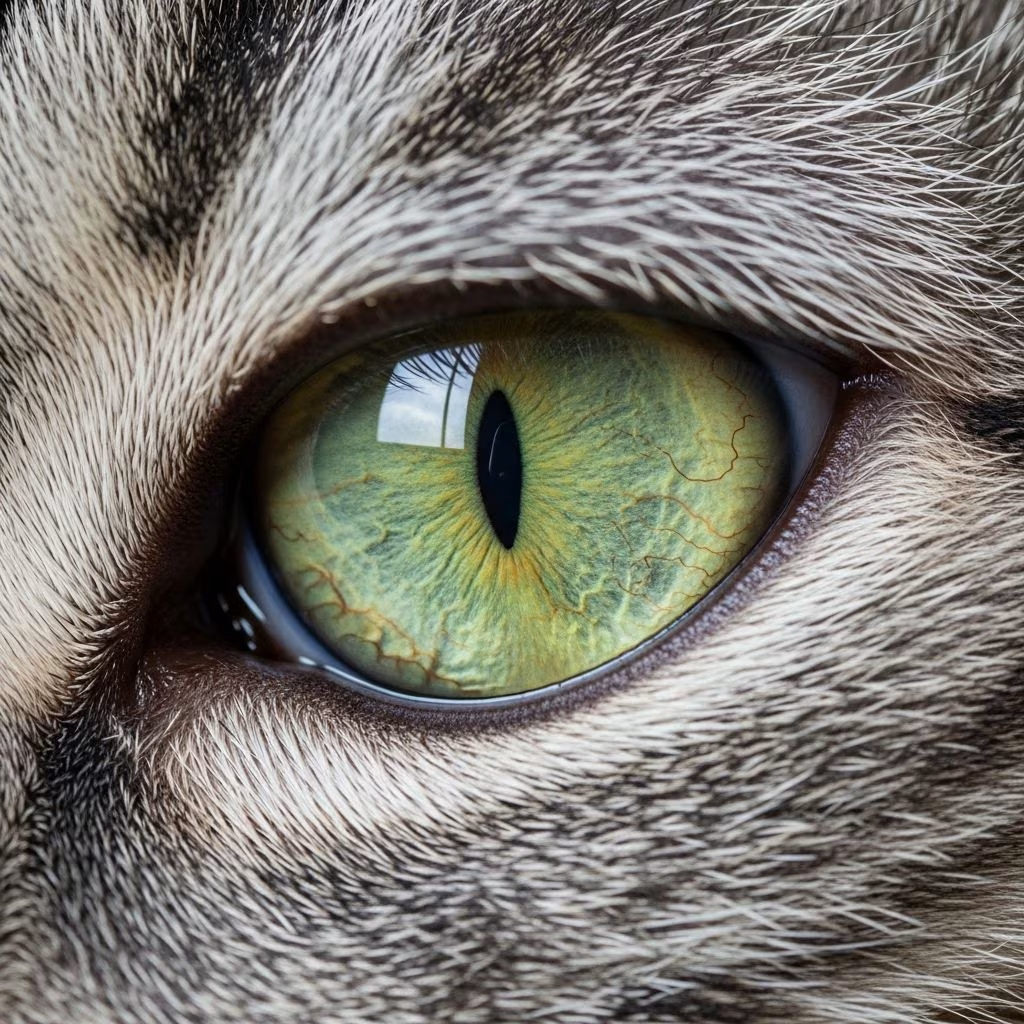
The eye represents one of the most sophisticated sensory organs in the animal kingdom, and its health depends critically on several interconnected structures working in harmony. Among these structures, the conjunctiva plays an indispensable role that extends far beyond simple protection. This thin yet remarkably complex membrane serves as both a physical barrier and an active immune defender, making it essential for veterinary professionals and pet owners to understand its composition, function, and potential vulnerabilities.
Defining the Conjunctiva: More Than Just a Protective Layer
The conjunctiva is a specialized mucous membrane that represents one of the most exposed mucosal surfaces in the animal body. Unlike the tough, opaque sclera that gives the eye its structural integrity, the conjunctiva is a delicate, highly vascularized tissue that lines critical ocular surfaces. This membrane functions simultaneously as a protective barrier, an immune surveillance system, and a contributor to tear film production—three roles that make it virtually irreplaceable in maintaining ocular health.
Its classification as a mucous membrane places it in a category of tissues specialized for secretion and absorption. The conjunctiva’s position makes it uniquely vulnerable to environmental insults, infections, and inflammatory conditions, yet simultaneously allows it to perform protective functions that would be impossible for less exposed tissues to achieve.
Anatomical Divisions: Understanding Regional Specialization
The conjunctiva is not a uniform structure; rather, it comprises three distinct anatomical regions, each with specialized characteristics suited to its location and function:
- Palpebral Conjunctiva (Tarsal Conjunctiva): This region lines the inner surfaces of both upper and lower eyelids. It begins at the eyelid margin, where it meets skin at the mucocutaneous junction marked by the Meibomian gland openings. The palpebral conjunctiva remains firmly adherent to the underlying tarsus, limiting its mobility—a feature that provides stability during eyelid movement. This region is subdivided into marginal, tarsal, and orbital portions, each with slightly different characteristics.
- Bulbar Conjunctiva (Ocular Conjunctiva): Covering the anterior sclera of the eyeball, the bulbar conjunctiva extends from the limbus (where it meets the cornea) posteriorly to the conjunctival fornix. Unlike its palpebral counterpart, the bulbar conjunctiva is loosely attached to underlying structures through Tenon’s capsule, allowing significant mobility that facilitates normal eye movement and rotation. This loose attachment is clinically important, as it permits swelling and provides a preferred location for local anesthetic administration.
- Conjunctival Fornices: These transitional zones mark the junctions where the palpebral and bulbar conjunctivas meet and reflect onto one another. The fornices are divided into superior, inferior, lateral, and medial regions and create a potential space that can accumulate tears, medications, and debris. This area contains the greatest concentration of goblet cells, making it crucial for tear film production.
Cellular Composition: Layers of Specialized Tissue
Examining the conjunctiva under microscopy reveals a sophisticated layered architecture optimized for multiple simultaneous functions:
Epithelial Layer: The outermost layer consists of non-keratinized, stratified squamous epithelium—similar in type to oral mucosa but fundamentally different from the keratinized skin covering the eyelids. This epithelium contains specialized goblet cells distributed unevenly across the conjunctival surface. The concentration of goblet cells is highest in the fornicial regions and near the medial canthus, and decreases progressively away from these areas. These unicellular mucous glands produce the mucoid component of the tear film, essential for ocular lubrication and corneal protection.
Substantia Propria (Submucosa): Beneath the epithelium lies a layer unique to the conjunctiva among ocular tissues—the substantia propria. This specialized connective tissue layer contains an extensive population of lymphoid elements, including lymphocytes, plasma cells, mast cells, and neutrophils. This tissue layer represents a crucial component of the conjunctiva-associated lymphoid tissue (CALT), an immune system structure comparable in organization to an everted lymph node. The substantia propria’s lymphoid content is particularly concentrated in patches and follicles, with T-lymphocytes (especially suppressor T-cells) and B-lymphocytes forming organized immune structures.
Fibrous Layer: The deepest layer provides structural support through connective tissue while housing the vascular and neural elements that supply the conjunctiva. This layer contains the nerve branches providing sensory innervation and the arteries and veins supplying blood. Additionally, the glands of Krause—lacrimal tissue associated with tear production—are located within this deep layer.
Vascular and Neurological Supply: The Network of Life
The conjunctiva represents one of the most highly vascularized mucosal surfaces, featuring bright red branching blood vessels that are particularly visible in the bulbar region. This extensive vascular supply originates from multiple sources: the anterior ciliary arteries (derived from the ophthalmic artery) supply the bulbar conjunctiva, while posterior conjunctival arteries approach from deeper tissues. The watershed area between these vascular systems, located approximately 3-4 millimeters from the limbus, represents a potential zone of relative ischemia during inflammatory states.
Sensory innervation originates from multiple branches of the trigeminal nerve (cranial nerve V), with different regions receiving input from specialized nerves. The superior conjunctiva is supplied by the supraorbital, supratrochlear, and infratrochlear nerves, while the infraorbital nerve supplies inferior regions. The lacrimal nerve serves lateral areas, and the long ciliary nerves supply the circumcorneal conjunctiva. This distributed innervation pattern allows rapid detection of foreign objects, chemical irritants, and other environmental hazards.
Critical Functions: Why the Conjunctiva Matters
The conjunctiva performs multiple essential functions that, if compromised, rapidly lead to ocular disease:
- Corneal Protection and Lubrication: By preventing corneal desiccation through tear film contribution and production of mucoid secretions, the conjunctiva maintains the moisture necessary for corneal health and transparency.
- Barrier Function: The conjunctival epithelium and its tight junctions create a physical barrier against pathogenic microorganisms and foreign material, reducing infection risk and preventing contamination of deeper ocular structures.
- Tear Film Contribution: Goblet cell secretions provide the mucin layer of the tear film, which reduces friction during eye movement and creates an environment hostile to many pathogens.
- Immune Surveillance: The extensive lymphoid tissue within the substantia propria continuously monitors for pathogens and abnormal antigens, launching appropriate immune responses to protect ocular health.
- Support for Corneal Healing: The conjunctiva contributes growth factors, cytokines, and other molecules necessary for efficient corneal epithelial regeneration following injury.
- Facilitation of Eyelid Mobility: The loose attachment of bulbar conjunctiva and the distribution of fornicial tissue allow smooth, uninhibited eyelid movement without tissue trauma.
Clinical Assessment: Recognizing Conjunctival Disease
Understanding normal conjunctival anatomy enables veterinarians to recognize pathology with confidence. Typical clinical signs of conjunctival disease include:
| Clinical Sign | Appearance/Characteristics | Potential Significance |
|---|---|---|
| Hyperemia | Redness of the conjunctiva | Vasodilation from inflammation, infection, or allergy |
| Chemosis | Swelling of conjunctival tissue | Edema from immune response, trauma, or systemic disease |
| Ocular Discharge | Watery, mucoid, or purulent secretions | Tear film alterations reflecting underlying pathology |
| Follicle Formation | Small raised lesions on palpebral conjunctiva | Lymphoid hyperplasia from chronic antigenic stimulation |
| Giant Cell Infiltration | Multi-nucleate giant cells in epithelium | Chronic inflammation or foreign body reaction |
In normal animals, only small amounts of conjunctiva are typically exposed, making visualization challenging in cats and requiring lid manipulation to assess fully. The bright red vasculature visible in normal animals should not be confused with pathological hyperemia; rather, assessment requires consideration of vessel appearance, tissue swelling, discharge presence, and any alterations in the conjunctival surface texture.
Special Considerations: The Third Eyelid and Nictitans
The nictitans, or third eyelid, represents a specialized conjunctival structure often overlooked in ocular assessments. The conjunctiva covers both surfaces of this protective membrane, with a T-shaped cartilage preventing buckling during retraction. A specialized lacrimal gland located on the bulbar surface of the nictitans contributes significantly to tear production. Assessment of nictitans health, including conjunctival coverage, is essential for complete ocular evaluation, as third eyelid pathology often reflects systemic or ocular disease.
The Conjunctiva-Tear Film Relationship: A Critical Partnership
The conjunctiva’s relationship with the precorneal tear film cannot be overstated. The conjunctiva supplies critical components of this three-layered system while simultaneously being protected by it. Tear film disruption rapidly leads to conjunctival inflammation, xerosis (drying), and secondary conjunctivitis. Conversely, conjunctival disease impairs tear production and film stability, creating a cyclical pattern of deterioration. This interdependence means that any therapeutic approach to conjunctival disease must simultaneously address tear film integrity.
Diagnostic and Therapeutic Accessibility
From a clinical standpoint, the conjunctiva’s superficial location and vascularity create both advantages and challenges. The tissue is remarkably amenable to biopsy when neoplasia or chronic inflammatory conditions require histopathological assessment. The procedure requires minimal instrumentation, causes minimal hemorrhage (which typically ceases within minutes), and heals rapidly through second-intention mechanisms without requiring sutures. This accessibility makes the conjunctiva an ideal tissue for diagnostic sampling when systemic or primary ocular disease requires tissue confirmation.
Frequently Asked Questions About Conjunctival Health
What makes the conjunctiva particularly vulnerable to disease?
The conjunctiva’s exposure to the environment, combined with its role in immune surveillance, makes it a common target for pathogens, allergens, and irritants. Its extensive lymphoid tissue, while protective, can become oversensitive in allergic conditions. Additionally, its location on the ocular surface means that any tear film deficiency or eyelid dysfunction directly impacts conjunctival health.
Can conjunctival disease indicate systemic illness?
Absolutely. Chronic conjunctivitis can reflect systemic immune disorders, infectious diseases (including feline herpesvirus and calicivirus in cats), or autoimmune conditions. Careful conjunctival assessment often provides early detection of systemic disease manifestations.
Why is goblet cell distribution clinically important?
Goblet cell concentration in specific regions means that fornicial conjunctivitis more severely impacts tear film production than conjunctivitis affecting other areas. This explains why inferior and medial conjunctival disease often causes more pronounced symptoms than disease affecting the bulbar conjunctiva.
How does the conjunctiva contribute to immunity?
The CALT continuously produces antibodies (particularly IgA), coordinates cellular immune responses through T and B lymphocytes, and monitors for pathogens. This creates a specialized immune environment optimized for protecting the ocular surface while minimizing inflammatory damage to sensitive tissues.
References
- Conjunctiva – Introduction — Veterian Key. Accessed February 2026. https://veteriankey.com/conjunctiva-introduction/
- Anatomy, Head and Neck, Eye Conjunctiva — StatPearls, National Center for Biotechnology Information (NCBI), National Institutes of Health (NIH). 2024. https://www.ncbi.nlm.nih.gov/books/NBK519502/
- Assessing Canine Conjunctivitis — Vet Times. 2024. https://www.vettimes.com/news/vets/small-animal-vets/assessing-canine-conjunctivitis
- Understanding the Anatomy of the Eye (Cats and Dogs) — Dechra UK Companion Animal Ophthalmology. 2024. https://www.dechra.co.uk/companion-animal/ophthalmology/anatomy-of-the-eye
- Conjunctiva & Nictitans — VetOphtho.Org. Accessed February 2026. https://vetophtho.org/conjunctiva/conjunctiva.html



