
Animal Eye Fundus Examination: Practical Guide For Vets
Comprehensive guide to examining and understanding the ocular fundus in various animal species for better veterinary diagnosis.
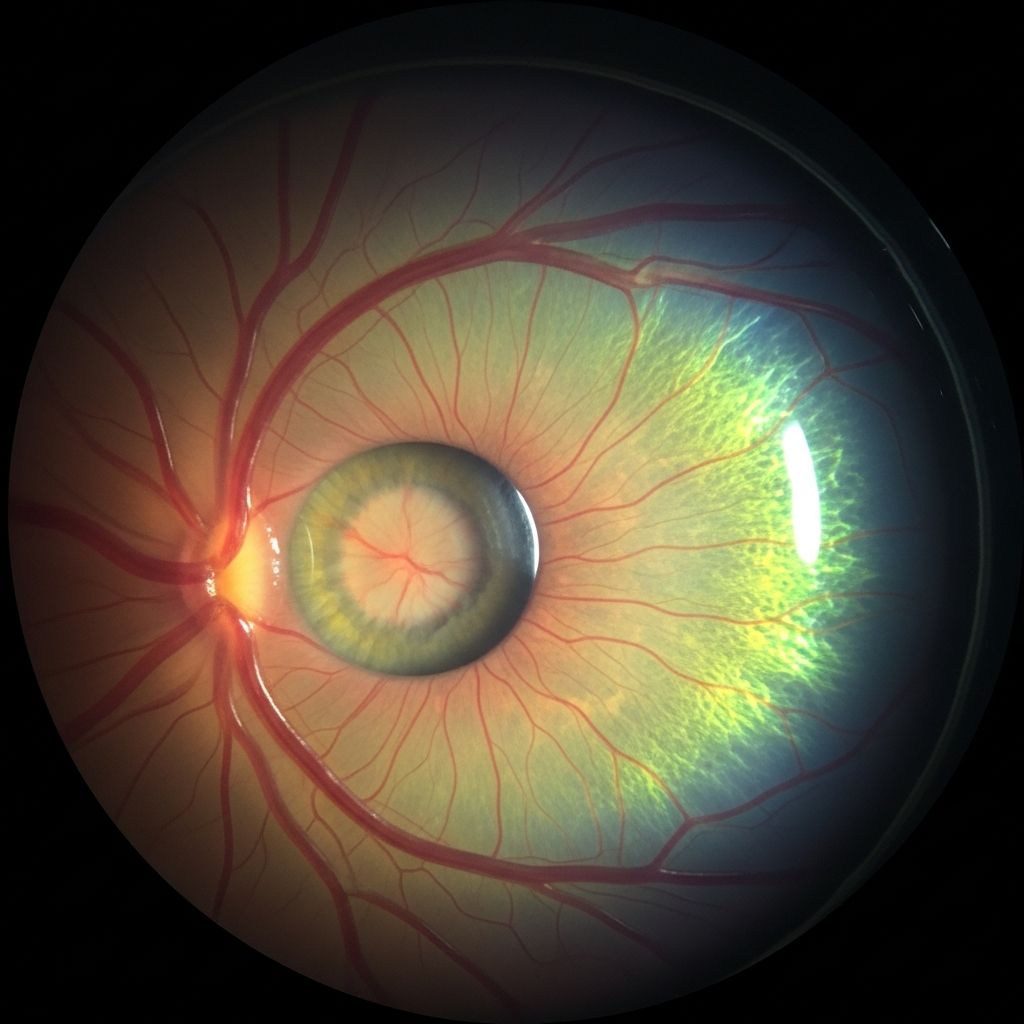
The ocular fundus represents the innermost layer of the eye, encompassing the retina, optic disc, blood vessels, and choroid. In veterinary medicine, fundus examination is crucial for detecting systemic and localized eye conditions in animals. This structure varies significantly across species, influencing both normal appearance and disease susceptibility.
Fundamentals of Ocular Fundus Anatomy
The fundus includes the retina, a light-sensitive neural tissue, the optic disc where the optic nerve exits, and supporting vascular and pigmented layers. In animals, pigmentation levels and reflective structures like the tapetum lucidum alter visibility during exams. These differences arise from evolutionary adaptations for vision in diverse environments.
- Retina: Composed of photoreceptors (rods and cones), bipolar cells, and ganglion cells that transmit signals to the brain.
- Optic Disc: Pale, circular area lacking photoreceptors, serving as the blind spot.
- Choroid: Vascular layer nourishing the retina, often pigmented or reflective.
- Tapetum: Reflective layer enhancing night vision in many mammals.
Species-specific traits, such as the holangiotic retinal vasculature in dogs and rats—where vessels branch across the entire retina—facilitate detailed ophthalmoscopic views.
Species-Specific Fundus Characteristics
Understanding interspecies variations is essential for accurate interpretation. Albino animals offer clearer views due to absent pigmentation, while pigmented breeds present challenges.
Dogs: Tapetal and Nontapetal Regions
Dogs feature a distinctive fundus divided into tapetum lucidum (dorsal, reflective) and nontapetal (ventral, pigmented) areas. The tapetum, triangular and multicolored (green, yellow, blue), reflects light to improve low-light vision. Microscopically, it lies between choroidal vessels and choriocapillaris. Approximately 20 cilioretinal arterioles radiate from the optic disc, draining via 3-4 major veins. The Y-shaped lens sutures, visible ophthalmoscopically, are common cataract initiation sites, though hard to confirm histologically.
Cats: Visual Streak and Tapetal Fluorescence
Cats possess a cellular tapetum that fluoresces, shifting short-wavelength light to match rhodopsin sensitivity, aiding nocturnal hunting. Their visual field includes a large binocular overlap (140 degrees) but a posterior blind spot. The retina features an oval visual streak superior to the optic disc, with high photoreceptor density for enhanced acuity. Ganglion cell-to-cone ratios peak centrally (1:4), dropping peripherally.
Rodents: Advantages of Albinism
Albino rats lack melanin in the retinal pigment epithelium (RPE), iris, ciliary body, and choroid, allowing unobstructed fundus views. This transparency reveals retinal and choroidal vessels clearly, improving lesion detection in toxicity studies. Pigmented rats show darker fundi due to RPE melanin.
Non-Human Primates: Macular Similarities to Humans
Monkeys exhibit a macula temporal to the optic disc, with a foveal pit optimized for acuity. Lutein and zeaxanthin pigments characterize it. Aging rhesus monkeys develop drusenoid maculopathy, with white drusen accumulating around the fovea (61% incidence).
Other Species: Horses and Ruminants
Horses and ruminants have collagenous tapeta, differing from carnivores’ cellular types. The dorsal tapetal position aids ground viewing, while ventral pigmentation minimizes sky scatter.
| Species | Tapetum Type | Retinal Vasculature | Key Adaptation |
|---|---|---|---|
| Dog | Cellular, multicolored | Holangiotic | Y-suture lens |
| Cat | Cellular, fluorescent | Holangiotic | Visual streak |
| Albino Rat | Absent | Holangiotic | Pigment-free clarity |
| Monkey | Pigmented | Holangiotic | Fovea/macula |
| Horse | Collagenous | Merangiotic | Horizon scanning |
Clinical Examination Techniques
Funduscopy uses direct or indirect ophthalmoscopes after pupil dilation with tropicamide. Proper restraint and dim lighting are vital. In large eyes like dogs, detailed anterior and posterior views are feasible. Histological prep requires precise orientation for lesion confirmation.
- Direct ophthalmoscopy: High magnification for central fundus.
- Indirect: Wider field, ideal for periphery.
- Fluorescein angiography: Assesses vascular integrity.
Visual fields vary: dogs have 60-degree binocular overlap; cats prioritize frontal vision.
Common Pathological Findings
Fundus changes signal diseases like hypertension (retinal hemorrhages), infections (chorioretinitis), or toxicities (retinal folds).
- Hemorrhages/Edema: Indicate vascular issues; dot-blot in deep retina, flame-shaped superficially.
- Degenerations: Retinal atrophy in PRA (progressive retinal atrophy).
- Drusen: Precursor to maculopathy in primates.
- Optic Neuritis: Disc swelling, vessel sheathing.
In toxicity studies, albino rodents excel for early lesion detection.
Developmental and Physiological Insights
The eye derives from neuroectoderm (retina), surface ectoderm (lens), mesoderm (sclera), and neural crest (cornea stroma). Accommodation differs: primates use ciliary muscle contraction; most mammals rely less on it. Pecten oculi in birds nourishes the avian retina.
Diagnostic Challenges and Advances
Pigmentation obscures views in some breeds; optical coherence tomography (OCT) and fundus photography enhance precision. Aging increases maculopathy risk in long-lived species.
FAQs
What is the tapetum lucidum?
A reflective choroidal layer boosting night vision, varying by species (cellular in carnivores, collagenous in herbivores).
Why are albino rats preferred in eye studies?
Absent pigments allow clear fundus visualization, aiding toxicity assessments.
How does dog fundus differ from human?
Dogs have tapetum and no fovea; humans feature a central fovea for acuity.
What causes common fundus lesions?
Hypertension, infections, genetics, or toxins lead to hemorrhages, detachments, or degenerations.
Is fundus exam painful for animals?
No, with topical anesthetics and dilators; sedation for uncooperative patients.
Practical Tips for Veterinarians
- Dilate pupils 20-30 minutes pre-exam.
- Examine in dim light to reduce pupil constriction.
- Document with photos for progression tracking.
- Correlate with systemic health (e.g., hypertension).
References
- Characteristics of structures and lesions of the eye in laboratory animals — PMC/NCBI. 2015-09-22. https://pmc.ncbi.nlm.nih.gov/articles/PMC4604127/
- Structure and Function of the Eye — Veterian Key. 2016-01-01. https://veteriankey.com/structure-and-function-of-the-eye/
- Understanding the anatomy of the eye (cats and dogs) — Dechra UK. 2023-03-01. https://www.dechra.co.uk/companion-animal/ophthalmology/anatomy-of-the-eye
Similar Articles








Read full bio of medha deb


