
Animal Digestive Systems: A Comprehensive Overview
Explore the remarkable diversity of digestive mechanisms across animal species.
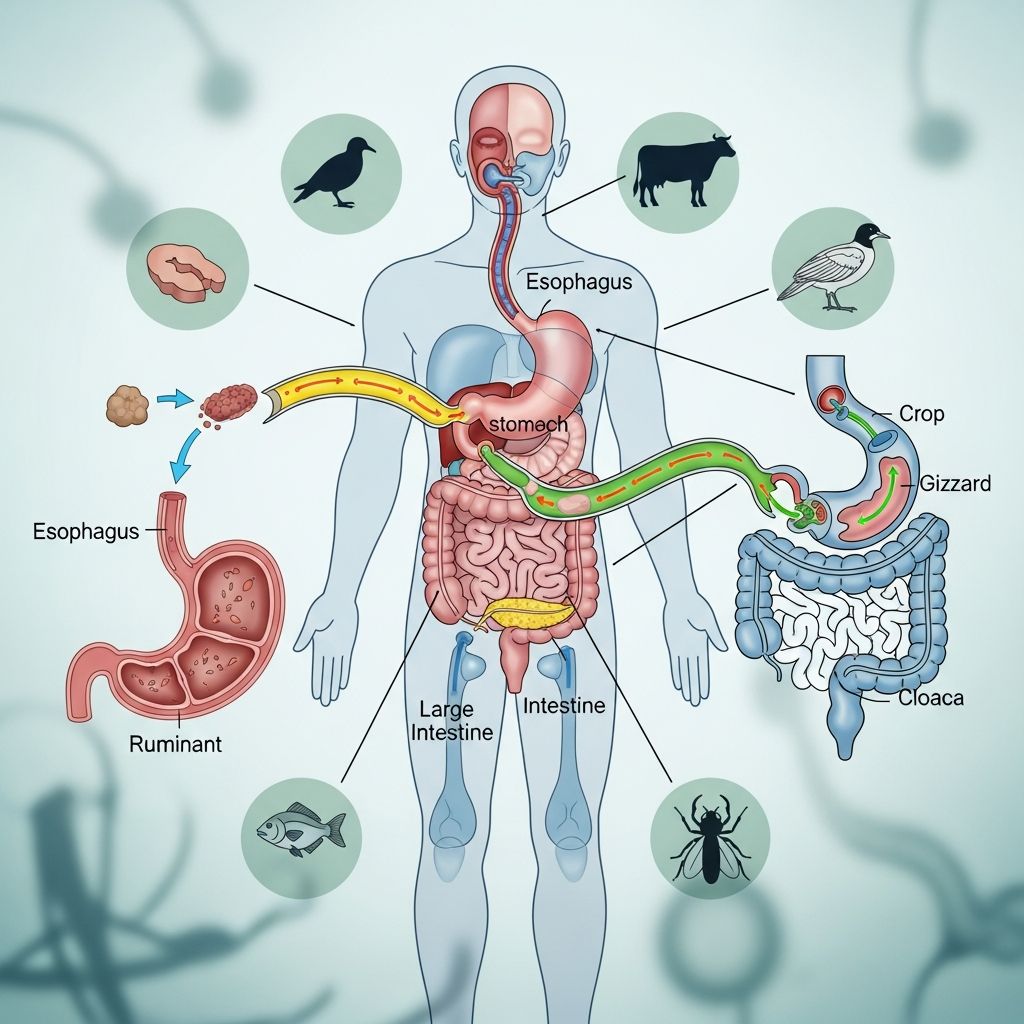
The digestive system represents one of nature’s most essential biological networks, enabling animals to convert consumed food into usable energy and vital nutrients. Across the animal kingdom, digestive mechanisms have evolved into remarkably diverse forms, each precisely adapted to the dietary requirements and ecological niches of different species. Understanding these variations provides insight into how herbivores, carnivores, and omnivores thrive within their unique environmental contexts.
The Universal Journey: From Ingestion to Elimination
Despite their diversity, all animal digestive systems follow a fundamental pathway that begins with food intake and concludes with waste elimination. The digestive tract serves as a specialized channel where mechanical and chemical processes collaborate to break food into absorbable molecules. This journey encompasses multiple stages, each contributing essential functions that transform solid matter into components the body can utilize for growth, maintenance, and energy production.
The efficiency of this process depends on the structural organization of digestive organs and the biochemical agents they produce. Saliva initiates chemical breakdown through enzymatic action, while muscular contractions propel food through successive chambers where hydrochloric acid, bile, and pancreatic secretions continue the decomposition process. The small intestine emerges as the primary site where nutrient absorption occurs, with specialized structures maximizing contact between food material and the intestinal wall.
Monogastric Systems: The Simplified Approach
Carnivorous and omnivorous animals typically possess monogastric (single-chambered) stomachs that facilitate rapid protein digestion through concentrated acid secretion. This streamlined design reflects their dietary adaptations, allowing them to consume and process large protein-rich meals efficiently. The stomach’s remarkable elasticity enables it to expand to approximately twenty times its resting volume, accommodating substantial food quantities when prey or meals become available.
In monogastric species, the stomach functions as the primary digestive powerhouse where gastric juices—particularly pepsin and hydrochloric acid—begin protein breakdown. The acidic environment, maintained between pH 1.5 and 2.5, creates optimal conditions for enzymatic activity while simultaneously protecting against harmful pathogens. Once initial digestion commences in the stomach, partially processed food moves into the small intestine where the remaining breakdown occurs and nutrient absorption becomes the focal point.
The duodenum, the first small intestine segment, receives secretions from both the pancreas and gallbladder. These substances neutralize stomach acid and introduce bile salts essential for fat emulsification and absorption. Following its passage through the jejunum—lined with finger-like projections called villi that dramatically increase absorption surface area—digested nutrients cross the intestinal wall into the bloodstream. The ileum completes this process, absorbing final nutrient molecules before residual material enters the large intestine.
Ruminant Systems: The Multi-chambered Marvel
Herbivorous animals such as cattle, sheep, and goats possess polygastric (multi-chambered) stomachs representing one of evolution’s most sophisticated adaptations to plant-based diets. The ruminant stomach comprises four interconnected compartments—the rumen, reticulum, omasum, and abomasum—each performing specialized functions that collectively enable efficient processing of fibrous vegetation.
The Rumen: Fermentation Chamber
The rumen functions as a vast fermentation vat where partially chewed plant material encounters an enormous population of microorganisms. These microbes, numbering in the billions per milliliter of ruminal fluid, possess enzymatic capabilities that allow them to break down cellulose and other complex carbohydrates that monogastric animals cannot digest independently. This microbial fermentation process represents the critical advantage enabling ruminants to extract substantial nutrition from low-quality forages.
During fermentation, microbes produce volatile fatty acids (acetate, propionate, and butyrate)—compounds that serve as the cow’s primary energy source—along with methane, carbon dioxide, and hydrogen sulfide gases. Simultaneously, these microorganisms synthesize B vitamins and vitamin K that would otherwise be unavailable from plant material alone. The rumen also produces amino acids and proteins from ammonia and carbohydrate sources, providing essential building blocks for the animal’s own protein synthesis.
The Reticulum: Particle Sorting
The reticulum, though smaller than the rumen, performs a crucial mechanical function by acting as a particle separator. Its honeycomb-like lining traps larger, incompletely digested particles, returning them through bidirectional esophageal contractions for additional grinding and mastication. Smaller particles meeting size requirements progress into the omasum, creating an efficient filtering mechanism that optimizes digestion timing and completeness.
The Omasum: Water Absorption
The omasum presents a unique globe-shaped structure containing leaf-like tissue layers resembling pages within a book. These specialized structures provide tremendous surface area for absorbing water and minerals from digestive contents, concentrating the material progressing toward the abomasum. By removing excess moisture, the omasum prepares digesta for final acid digestion while salvaging precious water resources essential for animal survival.
The Abomasum: The True Stomach
The abomasum earned its designation as the “true stomach” because its function most closely resembles the monogastric stomach of non-ruminant species. This chamber contains glands secreting hydrochloric acid and digestive enzymes essential for breaking down remaining plant proteins and rendering additional nutrients accessible for absorption. In mature cattle, the abomasum comprises only 21 percent of total stomach capacity, reflecting the dominance of fermentation-based digestion in ruminant physiology.
Structural Features Supporting Nutrient Absorption
The small intestine represents the convergence point where anatomical specialization maximizes nutrient transfer into the bloodstream. Villi—minute finger-like projections covering the small intestine’s inner lining—exponentially increase surface area available for absorption. Each villus contains an extensive network of blood capillaries positioned to capture nutrients immediately upon their absorption across the epithelial barrier.
Muscular contractions termed peristalsis propel digesta through successive intestinal segments while simultaneously mixing contents with digestive juices and enhancing nutrient contact with the absorptive surface. This coordinated mechanical activity prevents food stagnation while optimizing the time available for chemical digestion and molecular transport across the intestinal wall.
The Large Intestine: Final Processing and Waste Management
The large intestine receives undigested residues from the small intestine and performs essential functions of water reabsorption and final nutrient recovery. The intestinal flora inhabiting the colon continue fermentation processes initiated in the rumen or cecum, producing additional vitamins and compounds supporting animal health. Herbivorous mammals possess longer colons compared to carnivorous species, reflecting their need for extended fermentation and water recovery from fibrous materials.
In the colon’s ascending, transverse, descending, and sigmoid regions, water and mineral salts are extracted from fecal material, concentrating waste for eventual elimination. This water recovery mechanism proves particularly vital for animals inhabiting arid environments where moisture conservation directly impacts survival. The colon also serves as a temporary storage organ, allowing controlled bowel movements rather than continuous waste elimination.
Accessory Organs: The Supporting Cast
Beyond the primary digestive tract, specialized accessory organs contribute essential secretions enabling efficient nutrient breakdown. The pancreas produces enzymes targeting carbohydrates, proteins, and fats, while simultaneously secreting bicarbonate to neutralize stomach acid in the small intestine. The liver synthesizes bile, a complex mixture of bile salts, cholesterol, and phospholipids essential for fat emulsification and absorption.
The gallbladder stores and concentrates bile, releasing it strategically into the duodenum during meals to optimize fat digestion. The salivary glands initiate carbohydrate digestion through amylase secretion while simultaneously providing buffering agents that protect tooth enamel and facilitate swallowing. These coordinated accessory organ functions demonstrate the integrated nature of digestive physiology, where no single component functions independently.
Developmental Adaptations in Young Animals
Newborn ruminants exhibit distinctive digestive adaptations supporting their dependence on milk nutrition. The esophageal groove, a specialized muscular structure, directs milk directly into the abomasum, bypassing the rumen and reticulum where bacterial fermentation would damage valuable milk proteins. As young animals transition to forage consumption, rumen development accelerates dramatically, with the reticulorumen expanding from minimal capacity to encompassing 62 percent of total stomach volume in mature animals.
During this developmental period, rumen papillae—specialized absorptive projections lining the rumen wall—lengthen and increase in number, expanding the surface area available for volatile fatty acid absorption. Microbial populations within the rumen gradually shift as dietary composition changes, demonstrating the dynamic nature of the ruminant digestive ecosystem. This developmental flexibility allows young ruminants to transition seamlessly from liquid milk nutrition to fiber-based adult diets.
Comparative Anatomy: Species-Specific Variations
Beyond the ruminant-monogastric dichotomy, digestive systems exhibit remarkable specialization across avian, reptilian, and other vertebrate classes. Poultry possess functional systems including specialized glandular structures producing digestive juices and enzymes, with hydrochloric acid-producing glands embedded in epithelial layers. These systems achieve efficient nutrient extraction from grain-based diets despite lacking teeth for mechanical food processing.
The diversity of digestive adaptations reflects millions of years of evolutionary refinement, with each species developing solutions precisely matched to its ecological dietary niche. Carnivorous mammals maintain relatively short large intestines unsuitable for extensive fermentation, while herbivorous species possess longer colons supporting microbial fermentation of plant fibers. These anatomical distinctions serve as visible evidence of how thoroughly digestive system design integrates with overall species ecology and survival strategy.
Frequently Asked Questions
- What is the primary difference between ruminant and monogastric digestion?
- Ruminants possess four-chambered stomachs enabling microbial fermentation of plant fiber, while monogastric animals utilize a single stomach chamber with concentrated acid digestion optimized for protein breakdown.
- Why can ruminants digest plant material that monogastric animals cannot?
- Ruminant stomachs harbor billions of microorganisms producing enzymes capable of breaking down cellulose. Monogastric animals lack these microbial populations and the enzymatic capacity to digest complex plant cell walls.
- How long does food typically remain in a ruminant’s digestive system?
- Forage typically remains in the ruminant digestive system for 24-48 hours, allowing extensive fermentation and nutrient extraction. The extended residence time reflects the lower energy density of plant-based feedstuffs.
- What role does the gallbladder play in digestion?
- The gallbladder stores and concentrates bile, releasing it into the duodenum during meals to emulsify dietary fats, making them accessible for enzymatic breakdown and absorption.
- How do animals absorb nutrients across the intestinal wall?
- Villi covering the small intestine’s inner surface provide enormous absorptive area where specialized epithelial cells transport nutrients across the intestinal barrier into blood capillaries for distribution throughout the body.
The Integrated Digestive System
Animal digestive systems exemplify the remarkable sophistication of biological engineering, where multiple organs, chemical processes, and mechanical systems orchestrate the transformation of raw foodstuffs into absorbable nutrients. Whether through the fermentation-based approach of ruminant herbivores or the acid-dependent digestion of carnivores, these systems reflect millions of years of evolutionary optimization. Understanding these diverse mechanisms illuminates not only how animals thrive within their ecological contexts but also demonstrates the profound adaptability of biological systems in response to environmental pressures and dietary opportunities.
References
- Understanding The Ruminant Digestive System — Horizon Veterinary Brighton. 2022. https://www.horizonvetbrighton.com/site/blog/2022/06/15/understanding-the-ruminant-digestive-system
- Understanding the Ruminant Animal Digestive System — Mississippi State University Extension. https://extension.msstate.edu/publications/understanding-the-ruminant-animal-digestive-system
- The Ruminant Digestive System — University of Minnesota Extension. 2021. https://extension.umn.edu/dairy-nutrition/ruminant-digestive-system
- 12.1 Digestive Systems – Animal Physiology — University of Oregon OpenText. https://opentext.uoregon.edu/animalphysiology/chapter/12-1-digestive-systems/
- Comparative Digestive Physiology — National Center for Biotechnology Information. https://pmc.ncbi.nlm.nih.gov/articles/PMC4458075/
- Animal Digestive Systems — Bad Gut Canada. https://badgut.org/information-centre/a-z-digestive-topics/animal-digestive-systems/
Similar Articles








Read full bio of Sneha Tete


