

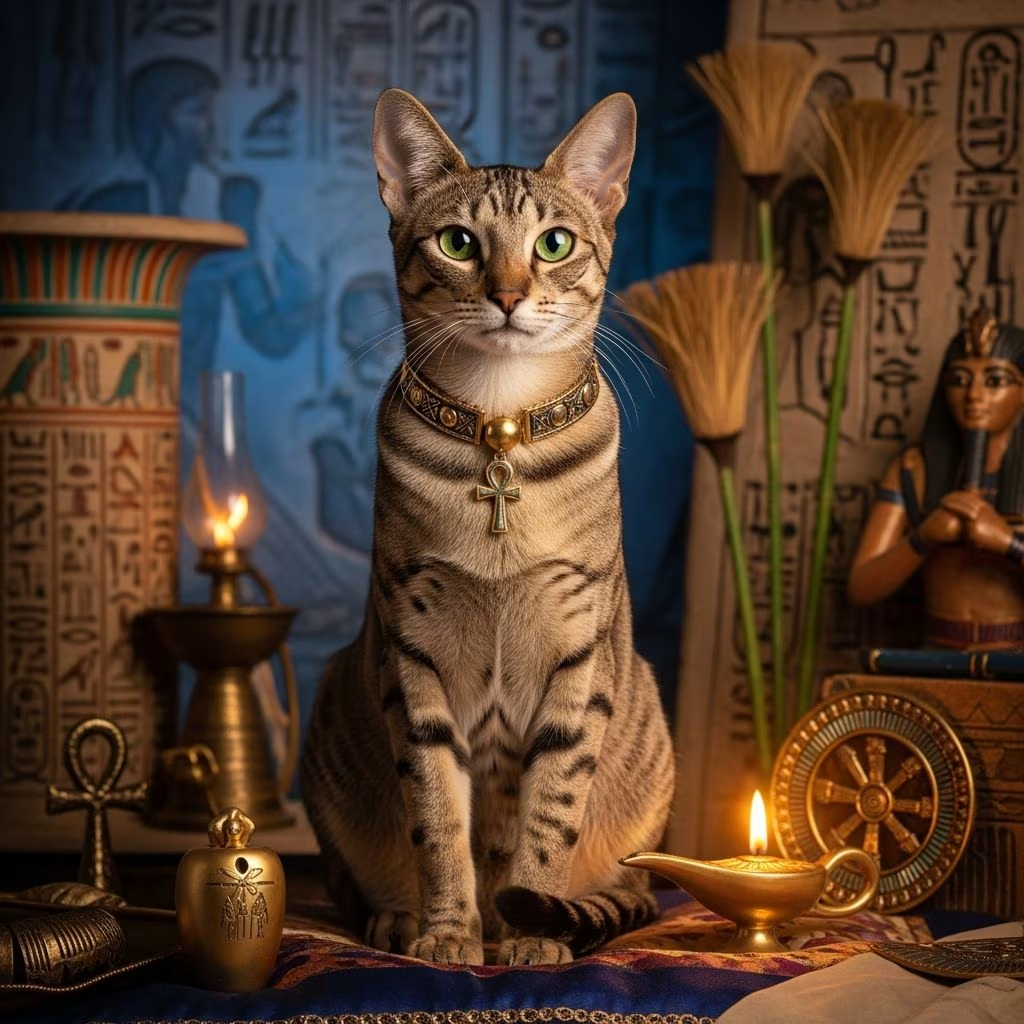
Cats held a unique and exalted position in ancient Egyptian society, transitioning from practical companions to divine symbols over millennia. This reverence stemmed from their indispensable roles in daily life and their embodiment of powerful deities, influencing art, religion, and burial practices across dynasties.
The Practical Foundations of Feline Admiration
Ancient Egyptians’ bond with cats began around 4000 BCE, driven by agriculture’s demands. As farming communities stored grain in granaries, rodents proliferated, threatening food supplies. Wild cats, particularly African wildcats, naturally hunted these pests, leading humans to encourage their presence.
Evidence from predynastic sites shows cat bones dating back nearly 5,000 years, indicating early coexistence. By 2000 BCE, cats integrated into households, valued for protecting homes and fields. Their prowess extended to eliminating venomous snakes, a constant peril in the Nile Valley, safeguarding families and enhancing their image as protectors.
- Rodent control: Preserved granary stocks essential for survival.
- Snake hunting: Reduced poisoning risks in homes.
- Crop protection: Prevented birds and pests from damaging harvests.
This utility fostered kindness toward cats, with tomb paintings from the New Kingdom depicting them under chairs or hunting alongside humans, signaling domestication’s advance.
From Utility to Divinity: Cats in Mythology
Cats’ graceful movements, nocturnal vision, and sun-basking habits inspired divine associations. Initially linked to solar deity Ra due to their daytime lounging, they evolved into manifestations of fierce lionesses like Sekhmet and nurturing felines like Bastet.
Bastet, originating as a lion goddess, transformed by the Late Period into a domestic cat figure symbolizing fertility, birth, protection, and joy. Her duality—fierce against evil, gentle in homes—mirrored cats’ traits. Mafdet, an earlier cat-like deity, embodied justice and execution, possibly as a cheetah or serval.
Deities like Mut also appeared with cats, reinforcing felines as intermediaries between humans and gods. This progression reflects cats’ gradual sacralization around 2000–1000 BCE.
| Deity | Attributes | Cat Association |
|---|---|---|
| Bastet | Protection, fertility, music | Domestic cat; temple guardian |
| Sekhmet | War, healing, vengeance | Lioness form |
| Mafdet | Justice, snakes execution | Early cat-like runner |
| Ra | Sun, creation | Cats’ sun-napping |
Temples and Pilgrimages: Centers of Cat Veneration
The cult of Bastet peaked in Bubastis (modern Zagazig), where her temple drew hundreds of thousands annually by the 5th century BCE. Greek historian Herodotus described raucous festivals with music, wine, and offerings, the largest in Egypt.
Temples housed cats as living incarnations of Bastet, fed and revered. Pilgrims offered cat statues, amulets for household protection, and mummified cats as votives. Osorkon II’s 9th-century BCE expansions included festival halls for cat statuettes in bronze, alabaster, and faience.
Cat amulets warded off evil, while live cats symbolized divine favor. This widespread devotion persisted into the Ptolemaic era, linking Bastet with Isis.
Mass Mummification: Sacred Sacrifice and Industry
From 1000 BCE, vast cemeteries like those at Bubastis held tens of thousands of mummified cats, elaborately wrapped and decorated. The first known cat sarcophagus, from 1350 BCE, belonged to Prince Thutmose.
Millions were mummified, either pets buried with owners or mass-produced for pilgrims. Temples bred kittens, snapped their necks, and mummified them as offerings— a grim industry sustaining finances via pharaonic decree.
Romans noted Egyptians’ grief over dead cats, traveling afar for proper burials; killing one was punishable by death. Yet, this reveals a complex reverence: sacred yet sacrificially expendable as divine gifts.
- Pet mummies: Accompanied owners in tombs.
- Votive mummies: Sold to devotees for Bastet.
- Scale: Hundreds of thousands at key sites.
Cats in Art, Daily Life, and Warfare
Tombs from the 12th Dynasty included cat remains among goods. New Kingdom murals show cats dining on fish, hunting with geese or monkeys, or as women’s companions—symbols of fertility and home.
In the Book of the Dead, a cat represents Ra’s solar benefits. Legends credit cats with pharaonic protection. Famously, Persian king Cambyses II won Pelusium in 525 BCE by deploying cats before troops; Egyptians refrained from attacking sacred animals.
Cats’ single name, miu (mewing sound), underscores cultural unity despite wild varieties.
The Decline and Lasting Legacy
Bastet’s cult endured 1,500 years post-cat cemeteries, fading with Christianity and Islam. Yet, cats’ prestige lingered; mummified examples persist in museums like UCL’s Petrie.
Modern fascination traces to this era, blending utility, mythology, and ritual into enduring mystique.
Frequently Asked Questions
Why did ancient Egyptians mummify so many cats?
Millions served as votive offerings to Bastet, bred and sacrificed by temples for pilgrims, alongside cherished pets.
Was Bastet always a cat goddess?
No, she began as a lioness, evolving into a domestic cat by the Late Period, reflecting societal shifts.
Did Egyptians keep cats as pets?
Yes, tomb art shows them as companions, though many were temple-raised for ritual purposes.
How did cats influence Egyptian warfare?
Persians exploited reverence at Pelusium, using cats as shields to demoralize troops.
When did cat domestication begin in Egypt?
Around 4000–2000 BCE, spurred by pest control in farming communities.
References
- Why Ancient Egyptians Loved Cats So Much — JSTOR Daily. 2016-10-31. https://daily.jstor.org/why-ancient-egyptians-loved-cats-so-much/
- Did the ancient Egyptians really love cats? The dark truth might… — History Extra. N/A. https://www.historyextra.com/period/ancient-egypt/did-they-really-worship-love-cats-dark-truth/
- Cats in ancient Egypt — Wikipedia. 2026-01-28. https://en.wikipedia.org/wiki/Cats_in_ancient_Egypt
- Why did Ancient Egyptians Love Cats? — UCL Blogs. 2018-04-17. https://blogs.ucl.ac.uk/researchers-in-museums/2018/04/17/why-did-ancient-egyptians-love-cats/
- Cats: The Archeological Site! — Carnegie Museum of Natural History. N/A. https://carnegiemnh.org/cats-the-archeological-site/



