

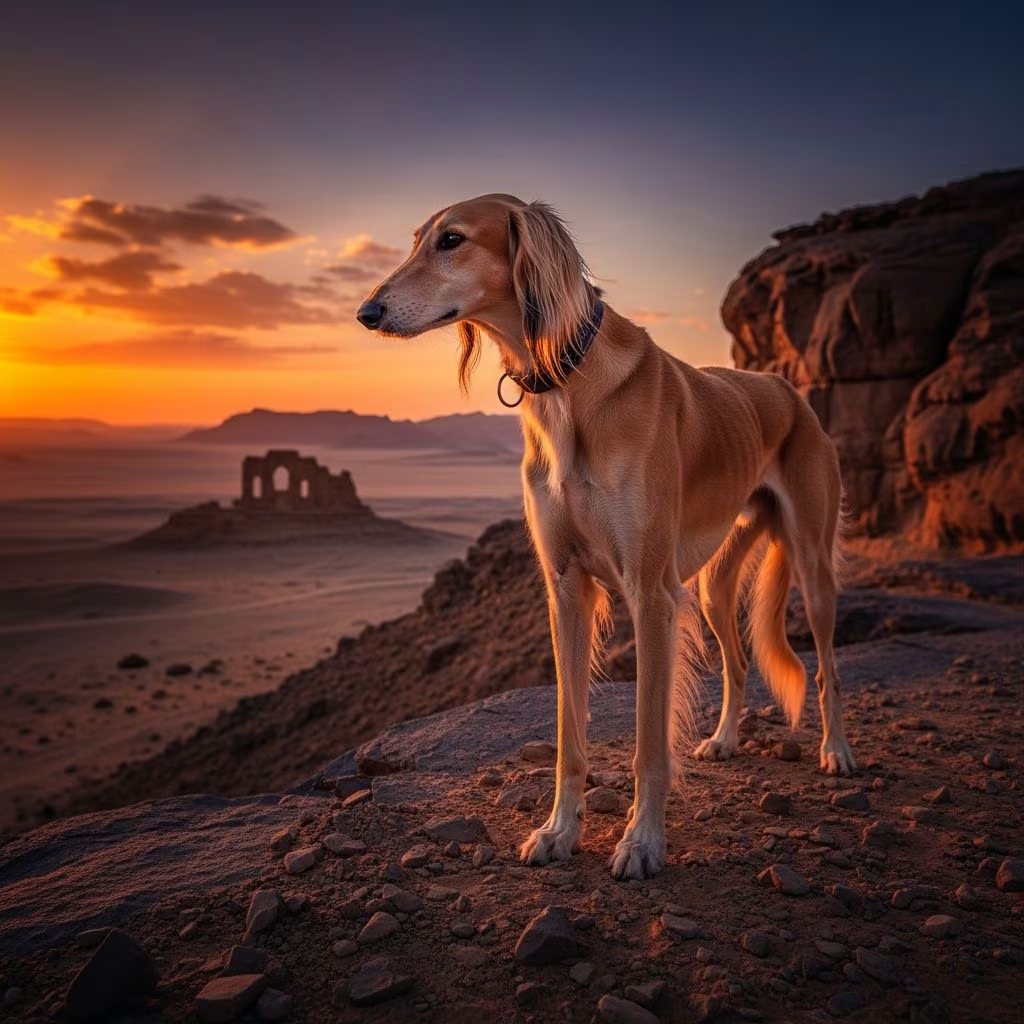
The journey of dogs from wild wolves to loyal companions spans tens of thousands of years, with certain breeds preserving the most direct links to those early domesticated ancestors. These ancient dog breeds stand out due to their genetic purity, archaeological footprints, and physical traits that echo prehistoric origins. Unlike modern breeds shaped by recent selective breeding, these lineages evolved through natural selection and human partnership in isolated regions.
Genetic Foundations of the Oldest Breeds
Modern science pinpoints ancient breeds through DNA analysis, revealing markers like minimal mutations from wolf ancestry, unique genetic clusters, and retained primitive alleles. These dogs form distinct branches on phylogenetic trees, showing divergence from wolves as early as 14,000 to 20,000 years ago. Eastern Eurasian lines, including breeds from Asia and Africa, separated from Western Eurasian ones around this period, creating diverse yet stable gene pools.
- Proximity to wolves: Fewer genetic changes preserve wild-like sequences.
- High diversity: Less inbreeding maintains robust health and adaptability.
- Primitive traits: Alleles lost in modern dogs persist here, aiding survival skills.
Archaeological finds bolster this: a 14,200-year-old dog at Bonn-Oberkassel, Germany, and a 36,000-year-old at Goyet Cave, Belgium, display domestication signs like smaller skulls emerging around 11,000 years ago in regions like Russia.
Physical and Temperamental Echoes from Prehistory
Ancient breeds often sport wedge-shaped heads, erect ears, curled tails, and athletic builds reminiscent of wolves. Their temperaments lean independent, with less people-pleasing drive, reflecting roles as autonomous hunters or workers rather than lap dogs. Many exhibit seasonal heat cycles once yearly, mirroring wolves, and boast heightened instincts for hunting, endurance, or guarding.
| Ancient Trait | Modern Breed Example | Survival Advantage |
|---|---|---|
| Curled tail | Chow Chow | Balance in rugged terrain |
| Erect ears | Basenji | Enhanced sound detection |
| Double coat | Alaskan Malamute | Extreme cold protection |
| Independent streak | Saluki | Solo hunting capability |
Regional isolation amplified these traits: Arctic breeds adapted to ice, island dogs to jungles, preserving purity against crossbreeding.
Basenji: The Barkless Guardian of Africa
Originating in Central Africa but iconized in ancient Egyptian art from 4000 BCE, the Basenji’s yodel-like vocalization—rather than barking—marks its uniqueness. Genetic studies confirm its basal position among breeds, with cave paintings and mummifications underscoring 6,000-year-old ties. Bred for hunting in dense forests, their agility, speed, and self-cleaning coat made them ideal. Today, their cat-like grooming and aloof demeanor challenge owners but reward with loyalty.
Saluki: Desert Sighthound Royalty
With records from 685 BCE in the Middle East and a 3,300 BCE golden pendant, Salukis hold Guinness recognition as one of the oldest breeds, though recent genetics debate this. Sacred to Bedouins, they hunted gazelle across deserts, prized for speed up to 45 mph and endurance. Feathered coats and keen vision persist, demanding vast spaces; their gentle nobility shines in calm homes.
Chow Chow: China’s Versatile Ancient
Han Dynasty artifacts (206 BCE–220 CE) depict Chow Chows, whose blue-black tongues and lion mane suggest 2,000–3,000-year origins. Multi-role workers—hunters, sledders, guards, even food—they embody resilience. Independent and protective, they suit experienced owners valuing dignity over exuberance.
Alaskan Malamute: Bering Strait Pioneer
Crossing with humans via Beringia 3,000+ years ago, Malamutes hauled freight for Inuit, enduring Arctic extremes with powerful builds and snowshoe paws. Distinct from huskies genetically, their stamina and pack loyalty endure, thriving in cold climates with active families.
Akita Inu: Japan’s Stoic Sentinel
Dating potentially 10,000 years, Akita Inus guarded Japanese nobility, their muscular frames and curled tails signaling ancient roots. Famous for loyalty—like Hachiko—they excel as guardians, needing firm training to channel protectiveness.
Greyhound and Afghan Hound: Sighthound Legacy
Both trace to 8,000-year-old Egyptian and Turkish depictions. Greyhounds, once near-extinct in medieval Europe, were revived by nobility for hunting and coursing. Afghans, from Afghan nomads, tackled leopards with spine-severing bites. Silky coats and explosive speed define them; post-exercise, they lounge gracefully.
Other Remarkable Ancients: Xoloitzcuintli and Beyond
Mexico’s Xoloitzcuintli, hairless guardians from Aztec times, and Tibetan Mastiffs (potentially 58,000-year wolf divergence) guarded monasteries. Greenland Sled Dogs (9,500 years) and Finnish Spitz highlight polar and Nordic lines. These breeds showcase global domestication waves.
Caring for Ancient Breeds Today
These dogs demand tailored care: high-protein diets for metabolism, mental stimulation for independence, and breed-specific health checks (e.g., Basenji fanconi syndrome, Chow entropion). Exercise mimics ancestral roles—running for sighthounds, pulling for Malamutes. Early socialization tempers wariness.
- Nutrition: Raw or ancestral diets support primitive digestion.
- Exercise: 1–2 hours daily, job-oriented.
- Health: Genetic testing for preserved diversity risks.
Why Ancient Breeds Captivate Modern Owners
Owning an ancient breed connects to humanity’s oldest partnership. Their resilience, intelligence, and unaltered spirits offer profound bonds, though they test with stubbornness. Genetic diversity promises longevity, with many outliving trendy breeds.
Frequently Asked Questions
What defines an ancient dog breed?
Genetic closeness to wolves, archaeological evidence over 2,000 years, and primitive traits distinguish them from breeds developed post-1800s.
Which is truly the oldest?
Debated; Saluki holds records, but genetics favor Basenji or Greenland dogs at 9,000–10,000 years.
Are ancient breeds harder to train?
Yes, their independence requires positive reinforcement and consistency over punishment.
Do they make good family pets?
Many do, with supervision; match energy levels and provide outlets for instincts.
How has genetics changed our understanding?
Studies reveal multiple domestication events 15,000–40,000 years ago, with ancient breeds as living fossils.
References
- Oldest Dog Breeds: 7 Ancient Lines That Still Thrive — Devil Dog Pet Co. 2023. https://devildogpetco.com/blogs/the-devil-dog-blog/oldest-dog-breeds
- The 12 Oldest Dog Breeds — SpiritDog Training. 2023. https://spiritdogtraining.com/breeds/oldest-dog-breeds/
- Top 20 Oldest Dog Breeds: A Deep Dive into Ancient Canine Origins — Bubbles Dog Grooming. 2023. https://www.bubblesdoggrooming.co.uk/post/top-20-oldest-dog-breeds-a-deep-dive-into-ancient-canine-origins
- Infographic: 10 of the World’s Oldest Dog Breeds — Nylabone. 2023. https://www.nylabone.com/dog101/10-of-the-worlds-oldest-dog-breeds
- 15 Oldest Dog Breeds That Ruled Beside Ancient Civilizations — YouTube (Video). 2023. https://www.youtube.com/watch?v=461w4zX6Sr4
- What an 11,000-Year-Old Dog Skull Tells Us About Dogs Today — A-Z Animals. 2023. https://a-z-animals.com/articles/what-an-11000-year-old-dog-skull-tells-us-about-dogs-today/



