

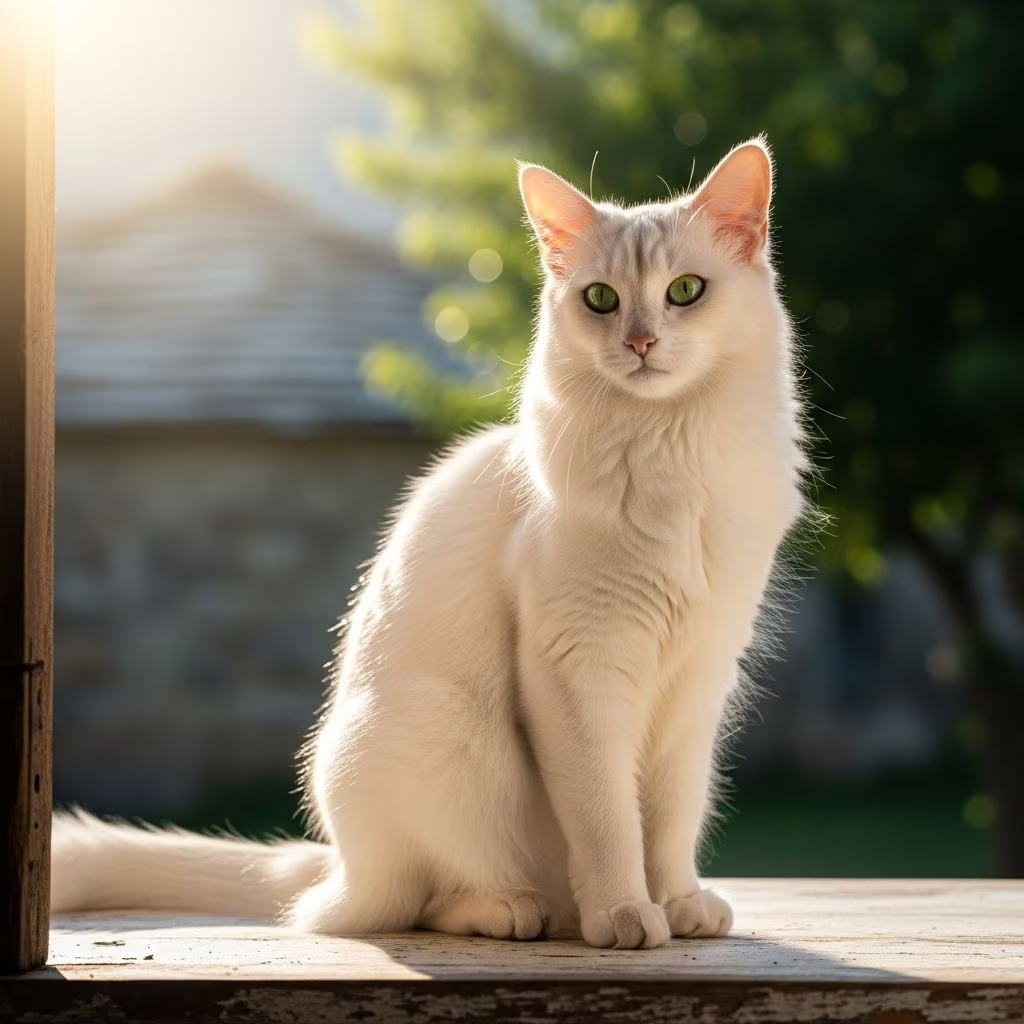
The Anatolian cat stands as one of the most fascinating feline breeds to emerge from Turkey, representing thousands of years of natural development in the Anatolia region. Unlike many domestic cat breeds that have been selectively bred by humans to achieve specific traits, the Anatolian emerged spontaneously through evolutionary processes, making it a truly natural breed. These medium to large-sized cats possess distinctive physical characteristics and behavioral patterns that set them apart from other domestic felines, earning them recognition from major cat associations worldwide.
Historical Development and Geographic Origins
The Anatolian cat’s lineage traces back to ancient wild cats that inhabited the Anatolia region of Turkey, particularly the areas surrounding the Van Lake. For centuries, these felines lived independently in their native environment, developing their distinctive traits through natural selection rather than human intervention. This long period of isolated evolution in the mountainous terrain of Eastern Anatolia shaped the breed’s hardy constitution and adaptive behaviors.
Historical records suggest that Anatolian cats have inhabited Eastern Anatolia since ancient times, with their presence documented across surrounding territories including modern-day Iran, Iraq, the Caucasus region, Armenia, and southern Russia. In these varied climates and landscapes, they alternated between domestication and feral existence, continuously adapting to their environmental demands. This extended period of natural development without human guidance distinguishes them fundamentally from selectively bred cat breeds.
The formal recognition of the Anatolian cat breed came relatively recently in the modern cat fancy. The breed first appeared at a significant cat show in Germany in 1995, marking its introduction to the international cat-breeding community. Subsequently, the World Cat Federation officially recognized the Anatolian as a distinct breed in 2001, establishing breed standards and guidelines for breeders. In their native Turkey, these cats are known as Anadolu Kedisi, and efforts continue within the country to establish comprehensive national breeding programs focused on promoting, protecting, and preserving the breed for future generations.
Physical Characteristics and Appearance
Anatolian cats exhibit a striking and powerful appearance that immediately captures attention. They are medium to large-sized felines with well-proportioned, muscular bodies that reflect their heritage as capable hunters and survivors. The breed displays notable sexual dimorphism, with male cats being significantly larger, weighing more, and displaying greater muscularity compared to females.
Key Physical Features:
- Head Structure: Anatolian cats possess balanced, proportionate heads without the exaggerated flat-faced characteristics seen in some other breeds. Their facial structure remains natural and unsculpted, maintaining the wild-type appearance that defines the breed.
- Ears: The ears are medium to large, positioned naturally on the head, providing excellent hearing capabilities essential for their hunting heritage.
- Eyes: Eyes are typically almond-shaped and come in various colors, giving these cats exceptional sight for tracking prey and navigation.
- Body Build: The torso is muscular with medium-heavy bone structure, providing strength and agility. The neck is massive and strong, connecting to a powerful chest.
- Limbs and Tail: Legs are medium in length, supporting the cat’s sturdy frame, while paws are round and well-padded. The tail is medium-length, exceptionally flexible, and well-furnished with hair not exceeding five centimeters in length.
Regarding coat characteristics, Anatolian cats can be either shorthaired or longhaired, with the shorthaired variety being more common and more closely resembling the Turkish Van breed. This similarity occasionally causes confusion between the two breeds. The coat comes in all standard color varieties found in domestic cats, including tabby patterns such as orange tabby, solid colors like black and white, diluted shades of grey and cream, silver, and in female cats, calico and tortoiseshell patterns. Males can display all the colors mentioned above in combination with white markings.
Behavioral Traits and Personality Dynamics
Perhaps one of the most distinctive aspects of the Anatolian cat breed is their unique behavioral profile, which combines wild instincts with adaptability to human environments. These cats are naturally active, playful, and genuinely curious about their surroundings, characteristics that make them engaging companions for attentive households.
Temperament Highlights:
- Affectionate bonds with human companions, enjoying lap time and close physical contact
- Energetic and playful nature requiring regular interactive engagement
- Social disposition extending to children and other household pets, demonstrating patience despite their imposing size
- Intelligent and responsive to training and environmental changes
- Curious explorers constantly investigating their territory
A remarkable and charming characteristic of Anatolian cats is their vocalization style. Rather than employing traditional meowing like many domestic cat breeds, Anatolians communicate through distinctive chirping sounds and separate vowel utterances that resemble bird song. Enthusiasts often refer to them as “tweeting cats” due to these unique vocal patterns. Some Anatolian cats demonstrate remarkable mimicry abilities, seemingly calling out “ma-ma” sounds and even nodding at objects that interest or bother them, suggesting a level of intentional communication beyond typical feline behavior.
These cats demonstrate an affinity for water that surpasses many other domestic cat breeds, readily engaging in water play rather than exhibiting the water aversion common to cats. They show equal enthusiasm for traditional toys and simple playthings like paper balls, maintaining an active lifestyle well into adulthood. Observers frequently comment on the wide range of facial expressions these cats display, from eye squinting to brow movements, suggesting complex emotional communication with their human families.
Natural Breed Status and Genetic Considerations
Understanding what distinguishes a natural breed like the Anatolian from selectively bred varieties provides important context for appreciation and responsible ownership. The term “natural breed” indicates that the breed developed through random evolutionary processes without deliberate human manipulation of genetic traits. This origin means that the unique characteristics observed in Anatolian cats arose from founder effects—situations where small populations of cats migrated to new locations and interbred, gradually developing distinct genetic profiles separate from their original populations.
The genetic composition of Anatolian cats reflects their wild ancestry more directly than many domestic breeds. They do not display traits like brachycephaly, commonly seen in Persian breeds, or the extreme long-head structure characteristic of Siamese breeds. Instead, they maintain natural facial proportions and body structures that supported survival in their native Turkish environment. All color variations, morphological features, and even inherited traits present in modern Anatolian cats originated from individual natural cats that became founders of the breed, rather than being artificially developed by selective breeding programs.
Health Considerations and Genetic Health
As a natural breed, Anatolian cats generally benefit from broader genetic diversity compared to heavily inbred selective breeds, potentially resulting in fewer inherited health problems. However, potential owners should remain aware of several health considerations specific to this breed.
Notable Health Considerations:
- Strong overall constitution inherited from their wild ancestry
- Absence of breed-specific disorders associated with artificial selection for extreme traits
- Generally fewer respiratory or facial structure complications common in flat-faced breeds
- Robust immune systems developed through extended natural selection
- Relatively low incidence of hereditary cardiac conditions compared to some other breeds
Regular veterinary check-ups, appropriate vaccination protocols, and preventive care remain essential for maintaining optimal health throughout an Anatolian cat’s lifespan. The breed’s natural origin provides significant health advantages, though individual cats may still experience common feline health conditions requiring professional attention and management.
Care Requirements and Environmental Needs
Caring for an Anatolian cat requires understanding their active nature, their territorial instincts, and their need for environmental enrichment. These cats express typical carnivorous predator behavior and benefit from opportunities to engage their hunting instincts through interactive play and appropriate toys.
Essential Care Components:
- Physical Exercise: Daily interactive play sessions satisfy their energetic temperament and prevent behavioral problems stemming from under-stimulation. Vertical spaces for climbing and jumping accommodate their natural behaviors.
- Mental Stimulation: Puzzle feeders, enrichment activities, and environmental variety maintain their intelligent minds engaged and satisfied.
- Coat Maintenance: For longhaired varieties, regular grooming prevents matting and keeps the coat healthy. Shorthaired Anatolians require less intensive grooming but still benefit from regular brushing.
- Nutrition: High-quality cat food supporting their carnivorous dietary requirements ensures optimal health and maintains ideal body weight.
- Social Interaction: Regular engagement with human family members strengthens bonds and supports their affectionate nature.
Suitability for Different Households
Anatolian cats make excellent companions for households capable of providing appropriate environmental stimulation and social interaction. Their patience with children, compatibility with other pets, and affectionate nature make them particularly suitable for active family environments. However, potential owners should ensure they can dedicate time to interactive play and provide enriched environments that satisfy these naturally curious and energetic felines.
The breed’s rarity outside of Turkey means that finding Anatolian kittens or cats from responsible breeders requires research and potentially international connections. Those interested in this breed should seek out established breeders operating within Turkey’s developing breeding programs who prioritize the breed’s preservation and health.
Frequently Asked Questions
How do Anatolian cats differ from Turkish Van cats?
While Anatolian cats share some similarities with Turkish Vans, including their Turkish origins and natural breed status, they represent distinct breeds. Anatolian cats are often shorthaired and represent a separate evolutionary lineage from the Van Lake region’s cats. The confusion arises because both breeds emerged naturally from Turkish territories, but they developed in different geographic areas with distinct genetic foundations.
Are Anatolian cats suitable for apartment living?
Anatolian cats’ active and playful nature makes them better suited to homes with space for climbing, jumping, and exploration. While apartment living is possible with dedicated enrichment and play sessions, houses with multiple levels and outdoor access provide more natural environments for this energetic breed.
Do Anatolian cats require special grooming?
Shorthaired Anatolians require minimal grooming compared to longhaired varieties. Regular brushing helps maintain coat health and reduces shedding. Longhaired Anatolians benefit from more frequent grooming sessions to prevent matting and maintain coat condition.
What makes the Anatolian cat breed special?
The Anatolian’s natural origin without human selective breeding distinguishes it from most modern domestic cat breeds. Their unique chirping vocalizations, water-loving tendencies, and strong affectionate bonds create a distinctive breed personality that appeals to cat enthusiasts seeking something different from conventional breeds.
References
- Anatolian Cat Breed, Photo — TopCat. Accessed January 2026. https://en.top-cat.org/breeds-articles/94
- All About Anatoli Cat Breed — Animalia. https://animalia.bio/pets/anatoli-cat
- Everything You Need to Know About Anatolian Cat — Anadolu Kedisi. https://www.anadolukedisi.com/en/anatolian-cat/
- Anatolian Cat: Info, Pictures, Traits & Facts — Catster. https://www.catster.com/cat-breeds/anatolian/



