

Anaplasmosis represents one of the most significant tick-borne diseases affecting ruminants across tropical and subtropical regions of the world. This disease, caused by intracellular bacterial organisms, poses substantial economic challenges to livestock producers and veterinarians who manage affected herds. The disease primarily targets the erythrocytes of cattle, sheep, goats, buffalo, and certain wild ruminant species, leading to progressive deterioration of blood cell populations and systemic health complications. Understanding the nuances of this condition is essential for effective herd management and disease prevention strategies.
The Pathogenic Organism and Global Distribution
Anaplasmosis is caused by obligate intraerythrocytic bacteria belonging to the order Rickettsiales, family Anaplasmataceae, genus Anaplasma. The most clinically significant species in cattle is Anaplasma marginale, though other species can also affect ruminant populations. This pathogen has established itself across a broad geographic range spanning from approximately 40°N to 32°S latitude, encompassing tropical and subtropical regions worldwide. The disease is particularly prevalent in South and Central America, the southern United States, southern Europe, Africa, Asia, and Australia, making it a truly global concern for livestock operations.
The widespread distribution of anaplasmosis reflects the environmental conditions favorable for tick vector survival and the movement of infected animals across international borders. Endemic transmission occurs in areas where environmental temperatures and humidity support persistent tick populations capable of transmitting the organism between susceptible hosts.
Transmission Mechanisms and Epidemiological Patterns
The primary transmission route for anaplasmosis occurs through tick vectors that acquire and transmit the organism during blood feeding. However, transmission can also occur through biting insects and, in clinical or laboratory settings, through contaminated needles or instruments. This multi-route transmission capability underscores the importance of comprehensive disease control strategies extending beyond simple vector management.
The disease exhibits seasonal outbreak patterns, with transmission intensity varying based on tick population dynamics and environmental conditions. In endemic areas where cattle are exposed to infected ticks early in life, animals typically develop protective immunity following infection and recovery. Conversely, serious economic losses occur when mature, unexposed cattle are introduced into endemic regions or when transmission rates are insufficient to ensure herd exposure during the more disease-resistant juvenile period.
Disease Development and Infection Timeline
Following exposure to infected ticks, the prepatent period—the interval between infection and appearance of detectable parasites in blood—varies considerably based on the infective dose received. This period typically ranges from 15 to 36 days, though in some cases it may extend to 100 days. During this prepatent phase, infected animals may appear clinically normal while the organism proliferates within erythrocytes.
Once parasitemia becomes detectable, rickettsemia levels approximately double every 24 hours during the exponential growth phase. Maximum rickettsemia levels can exceed 50% of circulating erythrocytes in severe infections. The parasitemia typically continues to increase for approximately 10 days before beginning to decline, though severe anemia may persist for weeks even after parasites become undetectable on microscopic examination.
Clinical Manifestations: Age-Related Severity Patterns
One of the distinctive characteristics of anaplasmosis is the marked age-dependence of clinical disease severity. Animals younger than one year typically experience subclinical infections with minimal or no observable clinical signs. However, disease severity increases substantially with age. Yearling and two-year-old animals experience moderately severe disease manifestations, while animals older than two years frequently develop severe clinical disease that often proves fatal if left untreated.
The fundamental pathophysiologic process underlying anaplasmosis involves progressive anemia resulting from the extravascular destruction of both infected and uninfected erythrocytes. This destruction of red blood cells triggers the cascade of clinical signs characteristic of the disease.
Peracute Presentation
In rare cases, peracute anaplasmosis can develop, representing the most severe clinical form of the disease. Animals experiencing peracute infection typically succumb to the disease within hours of the initial appearance of clinical signs. These cases represent medical emergencies requiring immediate intervention, though the rapid progression often limits treatment opportunities.
Acute Clinical Signs
Acutely infected animals rapidly lose body condition and weight despite continuing to consume feed or foraging material. Milk production declines sharply in lactating females, representing a significant economic loss. Additional clinical manifestations include:
- Inappetence and reduced feed intake
- Loss of coordination and neurologic dysfunction
- Breathlessness upon exertion or movement
- Rapid, bounding pulse indicating cardiovascular compensation for anemia
- Brown-colored urine reflecting hemolysis
Notably, despite severe hemolysis, anaplasmosis does not produce hemoglobinuria, which distinguishes it from babesiosis, another important tick-borne disease affecting ruminants.
Chronic Phase and Carrier Status
Following recovery from acute infection, cattle establish a chronic carrier state during which they maintain low-level parasitemia but generally remain clinically normal. These chronically infected animals are typically immune to severe reinfection with the homologous strain. However, chronically infected carriers may relapse to clinical anaplasmosis under immunosuppressive conditions, including corticosteroid administration, concurrent infections with other pathogens, or following splenectomy. These carriers serve as crucial reservoirs for continued transmission to susceptible animals.
Diagnostic Approaches and Laboratory Findings
Accurate diagnosis of anaplasmosis requires integration of clinical suspicion, laboratory findings, and epidemiologic context. Multiple diagnostic modalities are available to confirm infection, each with specific advantages and limitations.
Microscopic Examination
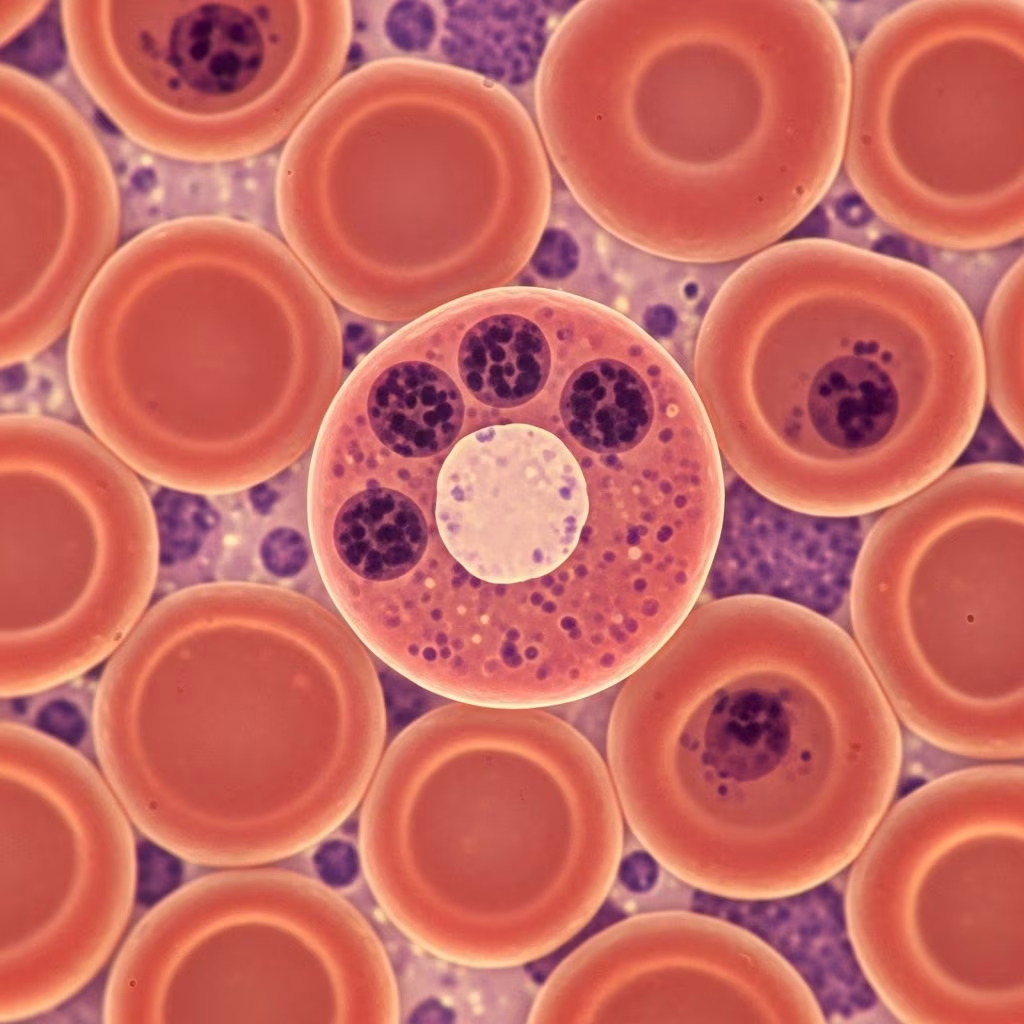
Microscopic examination of Giemsa-stained thin and thick blood films remains the gold standard initial diagnostic approach. Microscopically, characteristic inclusion bodies become visible 2 to 6 weeks after transmission occurs. These inclusion bodies contain 1 to 8 initial bodies measuring 0.3 to 0.4 micrometers in diameter, representing individual rickettsiae within the erythrocytes. During the course of infection, rickettsemia levels can double daily for up to 10 days before declining.
Microscopic examination is critical not only for confirming anaplasmosis but also for distinguishing it from other conditions causing similar clinical presentations. Babesiosis, caused by hemoprotozoa Babesia bovis and B. bigemina, shares similar geographic distributions and causes similar tick fever syndrome in cattle. Anaplasmosis must also be differentiated from leptospirosis and theileriosis, other conditions presenting with anemia and jaundice.
Serologic Testing
Serologic tests play an important role in identifying chronically infected carrier animals that may have low or undetectable parasitemia levels on blood smears. Available serologic methods include msp5 ELISA, complement fixation testing, and card agglutination assays. These tests detect antibodies produced in response to infection, allowing identification of carriers even when parasites are not microscopically visible.
Molecular Detection Methods
Nucleic acid-based detection methods using polymerase chain reaction technology can identify Anaplasma DNA in infected animals. However, these molecular tests have limitations in detecting carrier-level infections where parasitemia levels are very low, reducing their utility for comprehensive herd screening.
Treatment Options and Therapeutic Outcomes
Fortunately, anaplasmosis responds well to specific antimicrobial therapy when implemented appropriately. The primary medications used in treatment include tetracycline antibiotics and imidocarb dipropionate. Both drug classes demonstrate effectiveness in clearing Anaplasma infections from treated animals.
Importantly, infections that are completely cleared through antimicrobial therapy result in animals that remain immune to severe anaplasmosis for at least 8 months following treatment. This extended immunity window makes early detection and treatment particularly valuable, as it allows animals to transition from infected status to immune status without experiencing severe clinical disease.
Treatment success is highest when antimicrobial therapy is initiated early in the disease course, before severe anemia develops and secondary complications emerge. Animals treated during the acute phase demonstrate more rapid clinical improvement and return to productivity compared to those treated after prolonged illness has weakened overall body condition.
Prevention and Control Strategies
Vaccination Approaches
Long-lasting immunity against Anaplasma marginale can be achieved through immunization with live, less pathogenic rickettsiae combined with chemotherapy to control severe reactions during the immunization process. Some countries utilize the less pathogenic Anaplasma centrale as a live vaccine; however, this vaccine has not been approved or used in North American veterinary practice.
Subunit vaccines targeting specific Anaplasma antigens are currently under investigation and may provide future vaccination options without the risks associated with live organism vaccines. These emerging vaccine technologies represent the frontier of anaplasmosis prevention, potentially offering safer alternatives to traditional vaccination strategies.
Vector Management and Disease Control
In certain geographic regions, sustained stringent control or complete elimination of arthropod tick vectors represents a viable control strategy. This approach requires commitment to regular tick surveillance, implementation of integrated pest management strategies, and potentially the use of acaricide treatments to reduce vector populations. However, in areas where vector control proves impractical or economically unfeasible, immunization of susceptible animals becomes the preferred control strategy.
Herd Management Considerations
Strategic herd management practices support anaplasmosis prevention and control. Limiting the movement of unexposed adult cattle into endemic areas helps prevent the introduction of susceptible animals into high-transmission environments. In endemic areas, allowing young cattle to be exposed to infected ticks under controlled conditions facilitates development of immunity before animals reach the more disease-susceptible adult age. This endemically stable situation ensures that most herd members develop protective immunity early in life.
Comparative Disease Considerations
Multiple tick-borne pathogens affect ruminants in overlapping geographic regions, and anaplasmosis frequently occurs concurrently with other blood parasitic diseases. Understanding these disease relationships is essential for comprehensive herd health management. Babesiosis, caused by Babesia bovis and B. bigemina, commonly occurs alongside anaplasmosis in most endemic areas, with the notable exception of the United States where anaplasmosis occurs in the absence of babesiosis. Both conditions contribute to the clinical syndrome known as tick fever in cattle, characterized by fever, anemia, and icterus.
The distinction between anaplasmosis and babesiosis becomes critical for treatment selection and prognosis assessment. Unlike babesiosis, anaplasmosis does not produce hemoglobinuria, allowing differentiation based on urine appearance. Microscopic examination of properly prepared and stained blood films provides definitive differentiation, as the morphologic appearance and cellular location of the organisms differ substantially between diseases.
Economic Impact and Production Losses
Anaplasmosis imposes substantial economic burdens on affected livestock operations through multiple mechanisms. Acute clinical disease results in rapid weight loss, reduced feed efficiency, and decreased milk production in lactating animals. Deaths in untreated animals represent total economic loss. Even surviving animals experience prolonged recovery periods with reduced productivity, representing delayed return to normal production parameters.
Outbreaks of bovine anaplasmosis typically follow seasonal patterns corresponding to tick population fluctuations and transmission intensity. Herds experiencing increased incidence require enhanced management attention and potentially increased expenditures for diagnostic testing and antimicrobial treatment. The cumulative economic impact of anaplasmosis extends beyond direct treatment costs to include opportunity costs associated with reduced productivity and management complications.
Future Directions and Emerging Considerations
Ongoing research continues to advance understanding of Anaplasma marginale biology, host-pathogen interactions, and control strategies. Development of improved vaccines and diagnostic methods represents a priority for veterinary researchers. Additionally, investigation of novel antimicrobial compounds and treatment protocols may enhance therapeutic options beyond current tetracycline and imidocarb regimens.
As global trade in livestock continues and climate patterns shift tick distribution patterns, the geographic range and prevalence of anaplasmosis may change. Continued surveillance and adaptive management strategies will be essential to address these evolving challenges in ruminant health.
Practical Summary for Livestock Managers
Anaplasmosis represents a significant but manageable threat to ruminant health in endemic areas. Key priorities include maintaining awareness of tick populations and disease transmission risks, implementing appropriate vaccination or vector control strategies based on local epidemiology, promptly diagnosing suspect cases through microscopic and serologic testing, and initiating early antimicrobial treatment of affected animals. Strategic management decisions regarding animal movement, exposure timing, and herd immunity status substantially influence disease outcomes and production efficiency.
References
- Merck Veterinary Manual – Anaplasmosis in Ruminants — Merck & Co., Inc. Accessed February 2026. https://www.merckvetmanual.com/circulatory-system/blood-parasites/anaplasmosis-in-ruminants
- MSD Veterinary Manual – Anaplasmosis in Ruminants — Merck Sharp & Dohme Corp. Accessed February 2026. https://www.msdvetmanual.com/circulatory-system/blood-parasites/anaplasmosis-in-ruminants
- Anaplasmosis in Cattle — UT Beef and Forage Center, University of Tennessee. https://utbeef.tennessee.edu/wp-content/uploads/sites/127/2020/11/AnaplasmosisInCattle-ASB288-FMH-WWG.pdf
- Bovine Anaplasmosis Information Sheet — USDA APHIS. https://www.aphis.usda.gov/sites/default/files/bovine-anaplasmosis-infosheet.pdf
- Bovine Anaplasmosis – WOAH — World Organisation for Animal Health. Accessed February 2026. https://www.woah.org/en/disease/bovine-anaplasmosis/
- A review of bovine anaplasmosis (Anaplasma marginale) — PMC/NIH. 2024. https://pmc.ncbi.nlm.nih.gov/articles/PMC11955989/
- VDL Anaplasmosis – College of Veterinary Medicine — Iowa State University. Accessed February 2026. https://vetmed.iastate.edu/story/vdl-anaplasmosis/



