Amphibian Housing Guide: Essential Setup Tips & Checklist
Expert tips for creating thriving homes for pet amphibians with proper temperature, humidity, and habitat design.
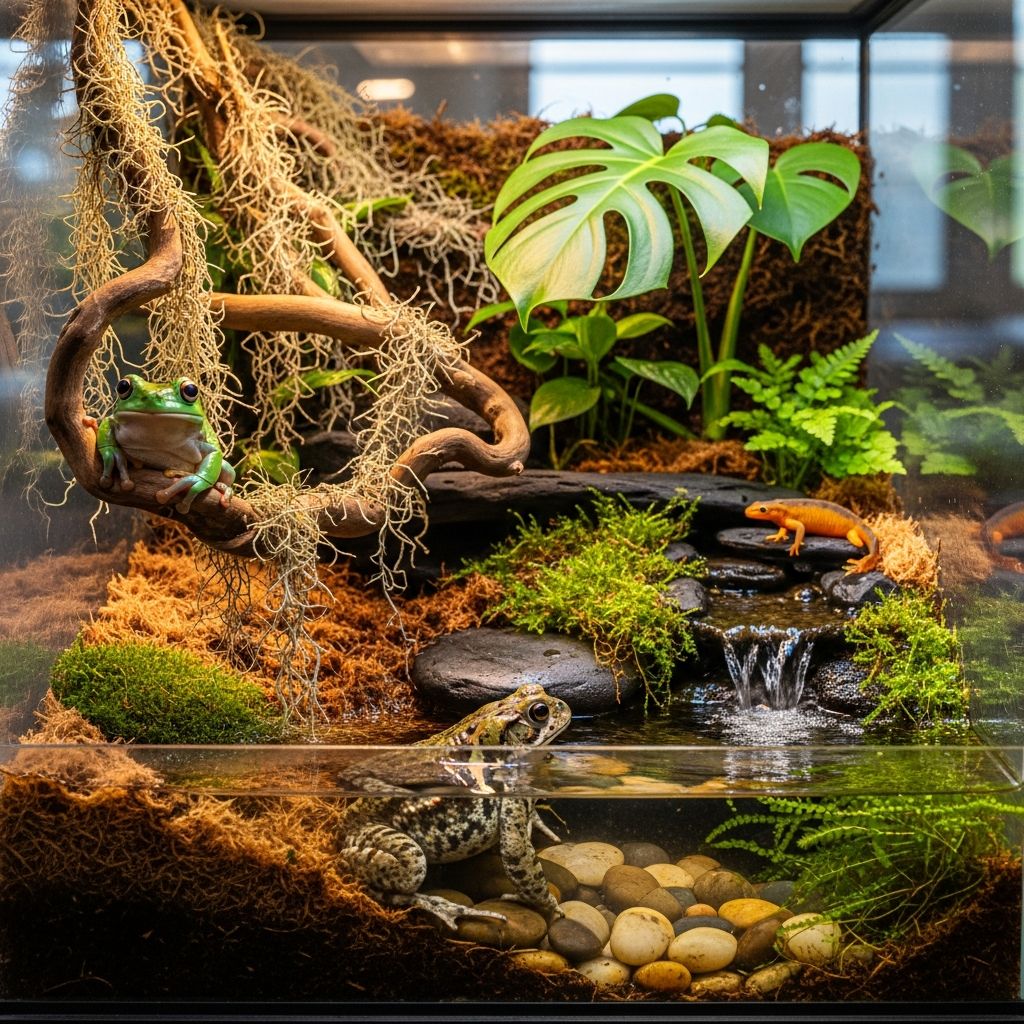
Pet amphibians like frogs, toads, and salamanders need precisely designed enclosures to mimic their natural environments and support their health as ectothermic animals that rely on external conditions for body temperature regulation.
Essential Environmental Parameters for Amphibian Health
Amphibians are highly sensitive to their surroundings, particularly temperature and humidity, which directly impact their metabolism, skin condition, and disease resistance. Most species flourish in moderate temperatures between 60°F and 70°F (16°C to 21°C), with humidity levels maintained at 75% to 80%. Tropical varieties, such as certain tree frogs, demand warmer spots up to 75°F to 80°F (24°C to 27°C) and higher humidity of 85% to 90%.
These cold-blooded creatures adjust their body heat by moving between warmer and cooler areas within their habitat, making thermal gradients crucial. Inadequate temperatures can lead to infections or nutritional deficiencies, especially in tropical amphibians. Always consult a veterinarian experienced with amphibians for species-specific advice.
- Temperature Gradients: Provide a basking zone and a cooler retreat to allow natural thermoregulation.
- Humidity Control: Essential for preventing dehydration, as amphibian skin absorbs moisture directly from the air.
Selecting the Right Enclosure Type
Choosing an appropriate vivarium is foundational for amphibian welfare. Glass terrariums offer excellent visibility and straightforward cleaning, suiting smaller setups, while wooden or plastic options excel in insulation for larger, stable environments. Size matters: arboreal species require tall enclosures with climbing opportunities, whereas terrestrial ones need ample floor space.
Ventilation is non-negotiable, aiming for 1 to 2 air changes per hour to stave off mold and respiratory issues. Secure, screened lids prevent escapes and maintain airflow. For aquatic or semi-aquatic amphibians, aquariums with gentle filtration systems are ideal, ensuring water flow doesn’t harm delicate skin.
| Enclosure Type | Best For | Key Features |
|---|---|---|
| Glass Terrarium | Small/medium amphibians | Visibility, easy clean, good for observation |
| Wooden Vivarium | Large terrestrial species | Superior insulation, natural aesthetic |
| Aquarium Setup | Aquatic salamanders/frogs | Water depth control, filtration compatibility |
Substrate and Ground Cover Options
The flooring material, or substrate, replicates natural terrain while supporting hygiene and behavior. Safe choices include gravel (sized to avoid ingestion risks), chemical-free soil, sphagnum moss, or untreated hardwood mulch. Steer clear of cedar or pine due to toxic oils, and ensure gravel is either too large to swallow or fine enough to pass harmlessly.
Coconut fiber or moss holds moisture well for humid-loving species, fostering burrowing and a naturalistic feel. These materials also host beneficial microbes that aid in waste breakdown. Layer substrates for variety: a moisture-retaining base with leaf litter on top encourages foraging.
- Humid Species: Sphagnum moss or coconut coir for water retention.
- Terrestrial: Soil mixes or mulch for digging.
- Avoid: Small loose particles that cause impaction in herbivores or small pets.
Humidity and Hydration Management Techniques
Maintaining consistent moisture prevents desiccation, vital since amphibians breathe and hydrate through their skin. Daily misting with dechlorinated water, shallow dishes, or automated foggers achieve this. For enclosures, integrate drip systems, small waterfalls, or ultrasonic humidifiers to sustain levels without over-saturation.
Aquatic setups demand pristine water quality; test parameters regularly and perform 10% weekly changes. Filters should provide gentle circulation to avoid stressing swimmers. Terrestrial amphibians still need constant access to fresh water bowls.
Temperature Regulation Methods
Heating must create a gradient: use under-tank heaters, ceramic emitters, or low-wattage bulbs for the warm end, avoiding direct contact to prevent burns. Digital thermometers with probes in multiple zones ensure accuracy. Nighttime drops mimic natural cycles, dipping 5-10°F lower.
Avoid hot rocks, as they can cause thermal injuries. For precise control, thermostat-regulated systems are recommended.
Lighting and UVB Considerations
While not all amphibians require intense lighting, diurnal species benefit from full-spectrum bulbs simulating daylight (10-12 hours daily). UVB lighting supports calcium absorption in some, like certain salamanders; replace bulbs every 6-12 months despite visible glow.
Live plants filter light, boost humidity, and offer cover, enhancing air quality and perches. Position lights to avoid overheating substrate.
Incorporating Plants and Enrichment
Live vegetation like pothos, ferns, or bromeliads purifies air, absorbs wastes, and provides humidity microclimates. They create hiding spots, climbing structures, and hunting grounds, reducing stress and promoting activity.
Enrichment extends to branches, cork bark, rocks, and leaf litter for natural behaviors like basking or burrowing. Secure elements to prevent collapses. Water features, such as ponds or streams, suit semi-aquatics.
Cleaning and Maintenance Routines
Daily tasks include spot-cleaning waste, uneaten food, and refreshing water to curb bacterial growth. Weekly deep cleans involve substrate sifts or partial changes. In aquatic systems, maintain filters and test for ammonia, nitrite, and pH.
Moss and mulches naturally host cleanup microbes. Use reptile-safe disinfectants; rinse thoroughly.
- Remove feces and food remnants daily.
- Change water dishes fully each day.
- Perform 10-25% water changes weekly in aquatics.
- Monthly full substrate refresh if soiled.
Species-Specific Housing Adaptations
Tailor setups to lifestyles: arboreal frogs need vertical space with vines; burrowing toads require deep substrates; aquatic axolotls demand spacious tanks with hideouts. Research wild habitats for cues—rainforest dwellers get dense foliage, desert species drier setups.
Monitor for signs of stress: lethargy or refusal to eat signals poor conditions.
Common Mistakes and Troubleshooting
Frequent errors include over-tight sealing (trapping humidity), incorrect gradients, or toxic substrates. Sudden changes cause shock; adjust gradually. If humidity crashes, add foggers; for low temps, upgrade heaters.
- Too Dry: Increase misting frequency.
- Mold Growth: Boost ventilation.
- Escapes: Check lid security.
FAQs
What temperature do most pet amphibians need?
Typically 60°F to 70°F, with tropical species up to 80°F.
How often should I mist the enclosure?
1-3 times daily, depending on species and hygrometer readings.
Can I use tap water for misting?
No, dechlorinate first to avoid skin irritation.
Do amphibians need UVB light?
Not all, but beneficial for some; consult vet for your species.
How large should the enclosure be?
Minimum 10-20 gallons for small frogs; scale up for larger or groups.
Advanced Tips for Long-Term Success
Integrate automation like timers for lights/heat and smart hygrometers for alerts. Quarantine new arrivals to prevent disease introduction. Annual vet checkups catch issues early. Track parameters in a log for patterns.
For outdoor enthusiasts, backyard ponds with native plants can supplement captive care, but avoid non-natives. This holistic approach ensures vibrant, long-lived pets.
References
- Reptile and Amphibian Care: Creating the Perfect Habitat — Saltwater Animal Hospital. 2023. https://saltwateranimalhospital.com/blog/reptile-and-amphibian-care-creating-the-perfect-habitat/
- Housing for Amphibians — Merck Veterinary Manual. 2024-02-01. https://www.merckvetmanual.com/all-other-pets/amphibians/housing-for-amphibians
- What You Can Do – Amphibians & Reptiles — U.S. National Park Service (nps.gov). 2023. https://www.nps.gov/subjects/amphibiansandreptiles/what-you-can-do.htm
Similar Articles








Read full bio of medha deb