Amphibian Care Essentials: Complete Guide For Owners, Vets
Master the art of creating thriving habitats for amphibians with expert guidelines on enclosures, water, feeding, and health maintenance.
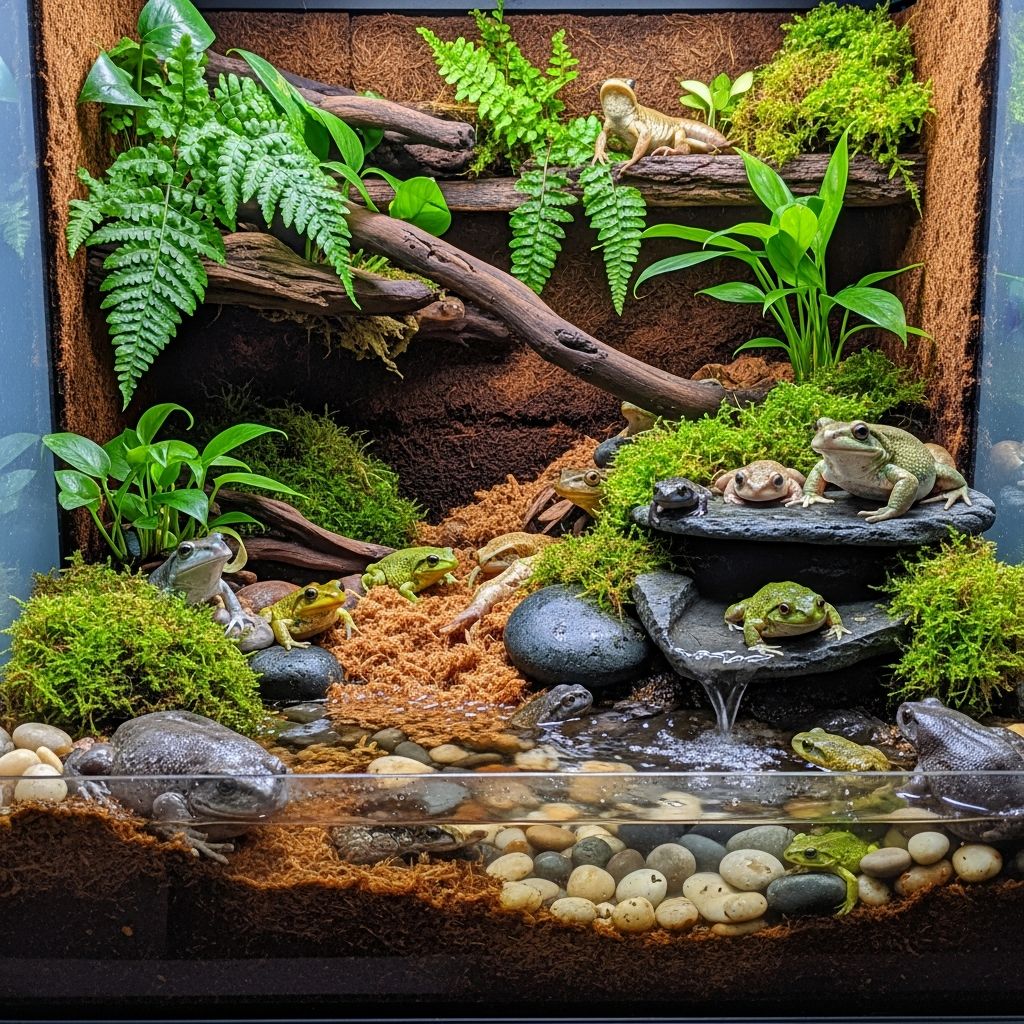
Amphibians require precise environmental conditions to thrive in captivity, whether as pets, research subjects, or in veterinary settings. Success hinges on replicating their natural habitats through thoughtful enclosure design, water management, and hygiene practices. This guide draws from established veterinary protocols to outline best practices for healthy amphibian maintenance.
Designing Optimal Enclosures
Enclosures, or vivaria, form the foundation of amphibian welfare. Naturalistic setups mimic wild conditions, promoting natural behaviors like foraging and hiding, while simpler designs suit quarantine or monitoring needs. Key is providing a
humidity gradient
—areas of varying moisture levels—so animals can self-regulate.- Aquatic species need deep water zones with swimming space and gentle filtration.
- Terrestrial types benefit from shallow water dishes alongside moist substrates.
- Arboreal frogs require vertical space with branches and climbing surfaces.
Ventilation balances air exchange (1-2 changes per hour) with humidity retention around 70%. Use adjustable vents, fans, or humidifiers to fine-tune. Avoid stagnant air to prevent mold and respiratory issues.
Substrate Choices and Maintenance
Substrates influence humidity, hygiene, and behavior. Opt for materials that hold moisture without fostering bacteria.
| Substrate Type | Suitable For | Pros | Cons | Change Frequency |
|---|---|---|---|---|
| Moist paper towels | Quarantine, terrestrial | Easy clean, low cost | No natural feel, frequent changes | Daily/weekly |
| Sphagnum moss | High humidity species | Retains moisture well | Can mold if over-wet | Every 3 months |
| Gravel or fine sand | Aquatic | Good drainage | Risk of ingestion | Monthly |
| Coconut fiber/mulch | Burrowing species | Natural, burrowing friendly | Avoid cedar (toxic) | Every 3-6 months |
Ensure gravel is either too large to swallow or fine enough to pass. Heat soils to 93°C for 30 minutes to eliminate parasites. Maintain a moisture gradient: one end dry, the other damp. Spot-clean daily and fully replace every 3-6 months to curb bacterial growth.
Water Quality and Filtration Systems
Clean, dechlorinated water is non-negotiable. Tap water often contains chlorine or chloramines harmful to permeable amphibian skin. Age water 24+ hours with carbon filtration or use dechlorinators like sodium thiosulfate.
- Parameters: pH 6.5-8.0, zero ammonia/nitrite, low nitrates.
- Filtration: Under-gravel or canister filters for aquatics; sponge filters for gentle flow.
- Changes: 20-50% weekly, or automated systems for stability.
Amphibians tolerate minor fluctuations better than fish but poor quality compromises skin barriers, inviting infections.
Temperature and Lighting Protocols
Temperatures vary by species: tropical (24-30°C), temperate (18-24°C). Use laser probes for daily checks and gradients (warm/cool zones).
Photoperiods mimic seasons: 12-14 hours light for most. UVB lighting aids vitamin D synthesis in some species, but avoid excess to prevent desiccation. Natural or full-spectrum bulbs work best; position to prevent burns.
Furnishings and Hide Spots
Safe, stable elements encourage activity. Rules: no sharp edges, non-toxic, secure.
- Cork bark, PVC pipes for hides.
- Hardwood branches (disinfected) for climbers.
- Live plants in pots for oxygenation and cover—avoid spines.
Multiple hides across gradients reduce stress. Plants filter waste and boost humidity.
Nutrition and Feeding Strategies
Most are carnivorous: gut-loaded insects (crickets, worms), larvae. Juveniles need frequent small meals; adults every 2-3 days.
- Dust prey with calcium/D3 vitamins weekly.
- Avoid overfeeding to prevent substrate fouling.
- Provide variety: roaches, earthworms, fish for aquatics.
Tadpoles: algae, spirulina, boiled lettuce until metamorphosis.
Reproduction and Larval Rearing
Breeding requires seasonal cues: cooler/wetter periods. Eggs in shallow, oxygenated water (15-20mm depth, 200-300/L initially).
Tadpoles: thin densities to 4-6/L by metamorphosis; aerate if needed. Transition post-metamorphs to wet/dry setups with flowing water.
Cleaning and Biosecurity Measures
Daily spots, weekly deep cleans with bleach/ammonia solutions (1:10 dilution, rinse thoroughly). Separate tools for quarantine.
Dispose waste via sanitary drains or incineration to protect wild populations. Disinfect humidifiers weekly.
Quarantine and Health Monitoring
New arrivals: 30-90 days isolation in simple setups (paper towels, PVC hides). Minimize handling; observe for lethargy, skin issues.
Common risks: chytrid fungus, ranavirus—prevent via hygiene.
Frequently Asked Questions (FAQs)
What humidity level suits most amphibians?
Around 70% with gradients; mist daily and monitor with hygrometers.
Can I use tap water directly?
No—dechlorinate first to avoid toxicity.
How often to change aquatic substrates?
Weekly partials; full clean monthly.
Are live plants safe?
Yes, potted non-toxic varieties enhance biofiltration.
What if my amphibian burrows excessively?
Provide deep, moist substrates like coconut fiber.
Advanced Tips for Long-Term Success
For collections, dedicate rooms with central humidification. Track parameters digitally. Breed in controlled cycles for sustainability. Consult vets for species-specific tweaks—e.g., dart frogs need higher humidity than toads.
Amphibian husbandry evolves with research; prioritize evidence-based care for longevity and welfare.
References
- Amphibian Management and Laboratory Care — NCBI Bookshelf, NIH. 1999-01-01. https://www.ncbi.nlm.nih.gov/books/NBK217594/
- Amphibian Husbandry for the Veterinary Clinician (Proceedings) — dvm360. 2011-01-01. https://www.dvm360.com/view/amphibian-husbandry-veterinary-clinician-proceedings
- Environment and Husbandry for Amphibians — Merck Veterinary Manual. 2023-01-01. https://www.merckvetmanual.com/exotic-and-laboratory-animals/amphibians/environment-and-husbandry-for-amphibians
- A Guide to the Biosecurity and Husbandry Standards for Amphibians — Amphibian Ark. 2008-01-01. https://www.amphibianark.org/fileadmin/uploads/aark/Husbandry_Library/2008_CBSG_WAZA_A-guide-to-husbandry-and-biosecurity-standards-for-amphibians.pdf
- Habitat Management Guidelines for Amphibians and Reptiles — USDA Forest Service. 2008-12-01. https://www.fs.usda.gov/r6/issssp/downloads/xvertebrates/cpt-ha-hr-nwparc-habitat-management-guidelines-200812.pdf
Similar Articles








Read full bio of medha deb