

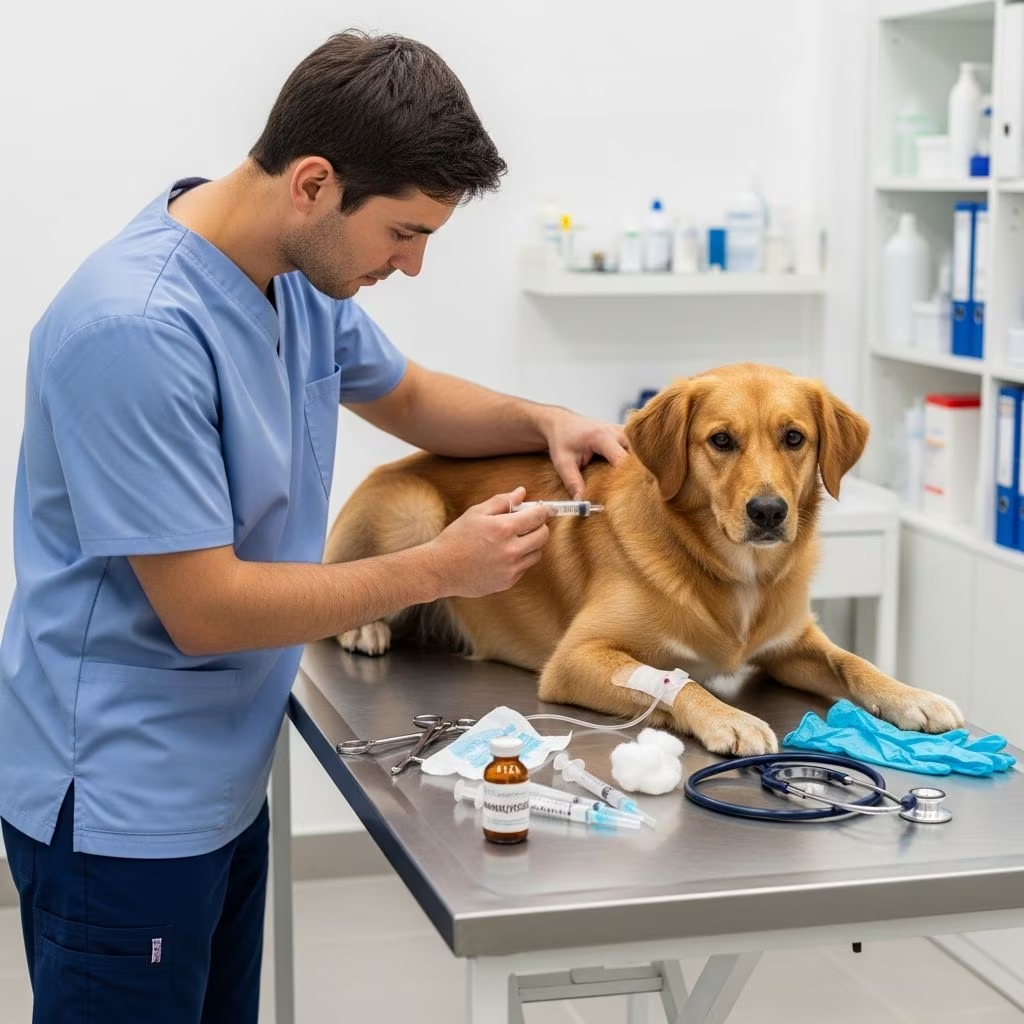
Aminoglycosides represent a cornerstone class of antibiotics in veterinary medicine, prized for their potent bactericidal effects against aerobic gram-negative bacteria. These drugs, derived from bacterial sources like Streptomyces and Micromonospora species, disrupt bacterial protein synthesis by binding to the 30S ribosomal subunit, leading to irreversible inhibition and cell death. Their concentration-dependent killing action makes them ideal for severe infections, though risks like nephrotoxicity and ototoxicity necessitate careful use.
Historical Development and Pharmacological Foundations
The journey of aminoglycosides began with the discovery of streptomycin in the 1940s, paving the way for compounds like gentamicin, amikacin, tobramycin, neomycin, and kanamycin. In veterinary settings, amikacin and gentamicin dominate due to their broad efficacy against pathogens such as Escherichia coli, Proteus, Pseudomonas aeruginosa, Salmonella, Shigella, Serratia, and Enterobacter. While primarily targeting gram-negatives, some activity extends to certain staphylococci, often enhanced by combination with beta-lactams for gram-positive coverage.
These agents exhibit poor activity against anaerobes due to their reliance on oxygen-dependent transport into bacterial cells. Absorption is limited orally, favoring parenteral, topical, or local administration routes. Elimination occurs primarily via glomerular filtration in the kidneys, heightening toxicity risks in dehydrated or renally impaired animals.
Mechanisms of Action and Spectrum of Activity
Aminoglycosides penetrate bacterial cells via an oxygen-dependent process, binding the 30S ribosome to cause misreading of mRNA and inhibit translocation, resulting in bactericidal effects. Post-antibiotic effects persist even after concentrations drop below the minimum inhibitory concentration (MIC), supporting once-daily dosing regimens that optimize efficacy while minimizing toxicity.
| Key Aminoglycoside | Primary Targets | Common Veterinary Uses |
|---|---|---|
| Amikacin | Gram-negative aerobes (Pseudomonas, E. coli) | Severe systemic infections, ocular/topical |
| Gentamicin | Gram-negative aerobes, some staphylococci | Sepsis, respiratory infections |
| Neomycin | Enterobacteriaceae | Topical/oral for enteric infections |
| Apramycin | E. coli, Proteus, Mycoplasma | Enteric infections in piglets |
This table summarizes core members, highlighting their tailored applications.
Applications Across Animal Species
Companion Animals: Dogs and Cats
In dogs and cats, systemic aminoglycosides like amikacin treat serious gram-negative infections, often once daily due to concentration-dependent pharmacokinetics. Combinations with penicillins broaden coverage. Topical use in otic preparations combats Pseudomonas aeruginosa otitis, requiring ear cleaning to remove debris that impedes penetration. Ophthalmic formulations address corneal ulcers, with frequent dosing key to success.
Dogs with urinary tract infections or sepsis benefit, but monitoring for renal function is essential, as half-life prolongs in azotemic patients.
Equine Medicine
Horses, particularly foals, rely on amikacin for gram-negative sepsis, endometritis, and joint infections. Preferred over gentamicin in neonates for lower toxicity, it’s paired with penicillins. Regional limb perfusion, intra-articular injections, and ophthalmic uses extend its utility. Dosing intervals extend in foals with immature kidneys, and hydration status guides selection.
Food-Producing Animals
In cattle, pigs, poultry, sheep, and goats, aminoglycosides manage respiratory, digestive, urinary, and septicemic infections. Apramycin targets piglet colibacillosis, showing minimal cross-resistance. EU sales data indicate 3.5% of antimicrobials sold for food animals are aminoglycosides, ranking sixth after tetracyclines and penicillins. They’re classified as critically important by OIE and WHO, urging judicious use.
- Cattle: Respiratory and uterine infections.
- Pigs: Enteric diseases via apramycin.
- Poultry/Sheep: Septicaemia control.
Dosing Strategies and Administration Routes
Traditional multi-daily dosing has shifted to high-dose, once-daily protocols, reducing nephrotoxicity and adaptive resistance. Veterinary studies confirm survival benefits in infection models with extended intervals. Dosages adjust for neonates, dehydration, or renal impairment; therapeutic monitoring via peak/trough levels optimizes outcomes.
- Parenteral (IV/IM): Systemic therapy for sepsis.
- Topical: Otic, ophthalmic, uterine infusions.
- Oral: Limited to poorly absorbed agents like neomycin for gut infections.
- Local: Joint lavage, perfusion in horses.
Combinations with beta-lactams yield synergy, vital for polymicrobial infections.
Safety Profile: Toxicity and Risk Mitigation
Nephrotoxicity arises from proximal tubular accumulation, manifesting as azotemia; ototoxicity damages vestibular/cochlear hair cells. Risk factors include dose, duration, dehydration, concurrent nephrotoxins (e.g., NSAIDs), and pre-existing renal disease. Amikacin is less nephrotoxic than gentamicin.
Prevention strategies:
- Ensure hydration.
- Monitor serum creatinine, urine specific gravity.
- Use once-daily dosing.
- Avoid in cats (high ototoxicity risk).
Residue concerns in food animals demand strict withdrawal times; improper use risks human exposure.
Resistance Challenges and Stewardship
Aminoglycoside resistance involves enzymatic inactivation, efflux pumps, and ribosomal alterations. Classified as highest-priority critically important antimicrobials, overuse in livestock fuels concerns. Veterinary stewardship promotes culture-guided therapy, combinations, and alternatives to curb spread.
Special Considerations: Aminocyclitols and Emerging Uses
Apramycin, an aminocyclitol, treats porcine enteric infections with rapid IM absorption and activity against Brachyspira and mycoplasmas. Limited cross-resistance enhances its value. Aerosolized forms treat cystic fibrosis-like conditions in select species, though veterinary approval lags.
Frequently Asked Questions (FAQs)
What animals commonly receive aminoglycosides?
Dogs, cats, horses, cattle, pigs, and poultry for gram-negative infections.
Are aminoglycosides safe for pregnant animals?
Use cautiously; potential fetal ototoxicity reported in some species.
How do you monitor for toxicity?
Track renal parameters (BUN, creatinine), hydration, and drug levels.
Can aminoglycosides treat anaerobic infections?
No, they require aerobic conditions for uptake.
What alternatives exist for resistant cases?
Fluoroquinolones, carbapenems, or polymyxins, per sensitivity testing.
Future Directions in Veterinary Aminoglycoside Therapy
Ongoing research refines PK/PD indices for species-specific dosing, reducing toxicity while combating resistance. Validated monitoring and novel combinations promise sustained utility. High-dose regimens and topical innovations will shape prudent use amid antimicrobial stewardship mandates.
References
- Amikacin for Veterinary Use — Wedgewood Pharmacy. Accessed 2026. https://www.wedgewood.com/professional-monographs/amikacin-for-veterinary-use/
- Use of aminoglycosides in animals within the EU — Journal of Antimicrobial Chemotherapy, Oxford Academic. 2019-07-01. https://academic.oup.com/jac/article/74/9/2480/5475277
- Antibiotics in Veterinary Medicine — Antimicrobial Resistance Learning Site, University of Minnesota. Accessed 2026. https://amrls.umn.edu/antibiotics-veterinary-medicine
- Analysis of Aminoglycoside Antibiotics: A Challenge in Animal Husbandry — PMC (NCBI). 2023. https://pmc.ncbi.nlm.nih.gov/articles/PMC10301657/
- Aminoglycosides Use in Animals — Merck Veterinary Manual. Accessed 2026. https://www.merckvetmanual.com/pharmacology/antibacterial-agents/aminoglycosides-use-in-animals



