

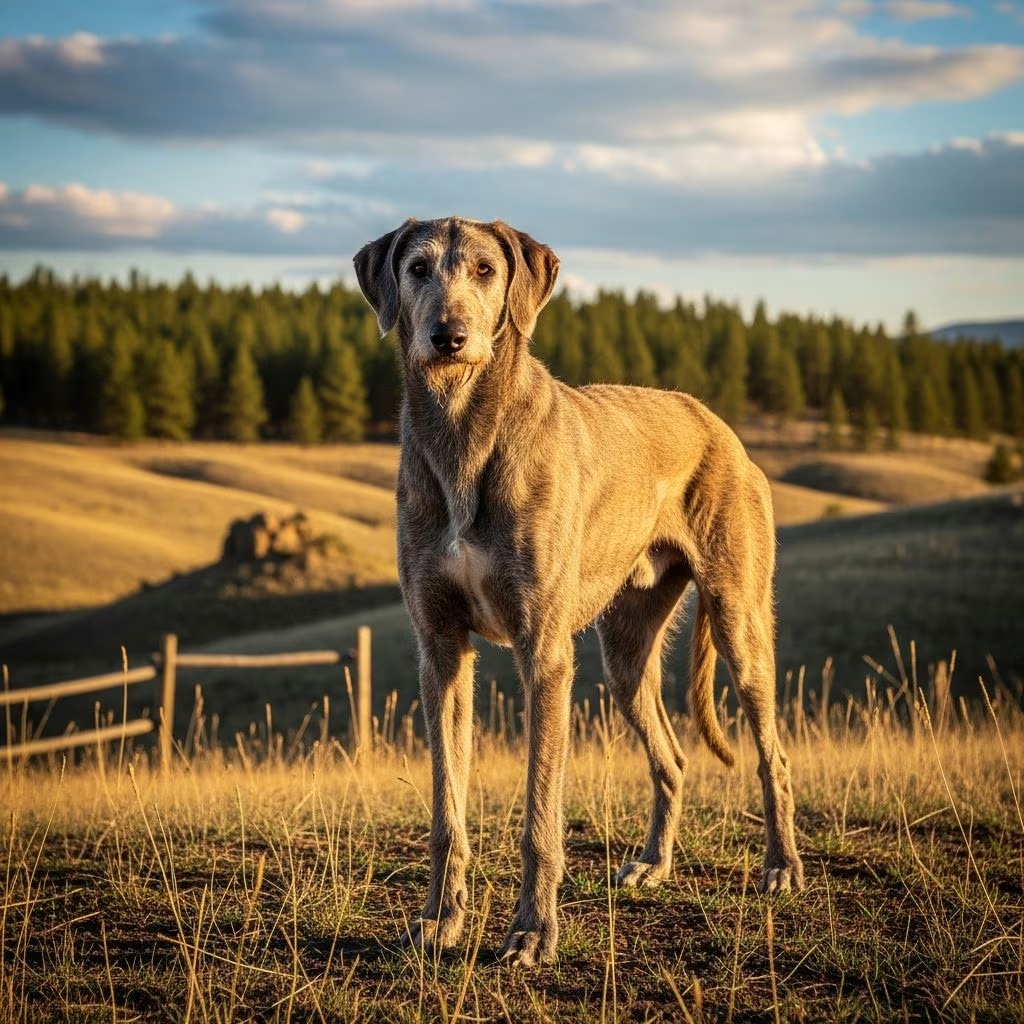
The American Staghound represents a distinctive canine lineage born from the demands of North American settlement and the practical needs of frontier life. Unlike many dog breeds recognized by major kennel clubs, this versatile hunter evolved through purposeful crossbreeding driven by necessity rather than aesthetic standards. Today, these remarkable dogs continue to serve as both working animals and devoted family members for those who appreciate their unique capabilities and spirited nature.
Origins and Historical Development
The American Staghound’s story begins with European settlers moving westward during the 19th century, who brought their preferred sighthound breeds to the American frontier. These settlers faced constant threats from wolves and coyotes that preyed on their livestock, making predator control essential for survival. Rather than relying on a single breed, early ranchers discovered that crossbreeding various sighthound types produced superior hunting dogs tailored to local conditions and specific quarry.
The primary foundation breeds for American Staghounds were the British Greyhound, Scottish Deerhound, Irish Wolfhound, and Russian Borzoi. Different regions of the country developed their own variations based on the particular challenges they faced and the prey they pursued. This localized breeding approach meant that American Staghounds developed distinct characteristics depending on whether they were being utilized for wolf hunting in certain regions or coyote control in others.
During the 1870s through 1890s, when wolves represented the primary threat to ranching operations, breeders favored larger and more aggressive staghounds derived primarily from Scottish Deerhounds, Irish Wolfhounds, and Russian Wolfhounds. These dogs possessed the size, strength, and stamina necessary to chase, fight, and bay aggressive wolves. However, as wolf populations declined rapidly by the early 1900s, ranchers adapted their breeding strategies by introducing more Greyhound genetics to emphasize speed and agility needed for pursuing the smaller but faster coyote.
Physical Characteristics and Appearance
American Staghounds display the characteristic physique of their sighthound heritage, featuring distinctly athletic and elongated body structures. These dogs possess notably long legs that provide exceptional reach and stride length during pursuit activities. Their deep chests accommodate large lungs necessary for endurance hunting across varied terrain, while powerful musculature throughout their frame enables explosive acceleration and sustained speed.
Most American Staghounds tend toward smooth coats and resemble large Greyhounds, though individuals may display rough coats inherited from Scottish Deerhound ancestry. Size varies considerably depending on specific lineage, but these dogs typically fall into the large category, with many exceeding 60 pounds. Coloration and markings reflect the diverse genetic contributions of their founding breeds, resulting in considerable variation within the population.
One distinctive feature inherited from their sighthound ancestors is exceptional visual acuity, allowing American Staghounds to detect movement across considerable distances. Some bloodlines have been selectively developed to incorporate scenting ability alongside their visual prowess, creating dogs capable of pursuing quarry through varying environmental conditions.
Temperament and Behavioral Traits
American Staghounds possess a temperament fundamentally shaped by generations of breeding for hunting performance rather than lap dog companionability. In working contexts, these dogs display remarkable courage, tenacity, and determination when pursuing their assigned quarry. They approach prey with focused intensity and rarely abandon a chase once initiated.
The coursing instinct in American Staghounds is exceptionally strong, meaning virtually anything that moves may trigger their prey drive. This characteristic makes them unsuitable for households with small pets, particularly cats, which many staghounds view as legitimate quarry. However, these dogs often coexist peacefully with other staghounds they have been raised with, demonstrating social flexibility within their own breed.
Despite their aggressive hunting behavior, American Staghounds typically display docile and affectionate temperaments within their home environment. They can form strong bonds with their human families and respond well to appropriate training and socialization. Many modern ranch families continue to value staghounds as dual-purpose animals that contribute to property management while providing loyal companionship.
Working Abilities and Hunting Performance
The American Staghound’s primary purpose remains predator control and small game hunting, roles they have filled for over a century with remarkable consistency. Ranchers traditionally released staghounds when predators were spotted, resulting in pursuits described as resembling a racehorse catching a pony in terms of speed and efficiency. The breed’s versatility allows pursuit of quarry ranging from rabbits to deer, though individual dogs typically specialize based on their particular lineage.
Notable historical figures recognized staghound excellence for hunting purposes. General George A. Custer incorporated staghounds into his dog pack for coursing various North American animals, while renowned coyote hunters like Ben Ammon and his descendants became recognized experts in staghound management and hunting techniques. Multi-generational ranching families, such as the Burmeister clan in Minnesota, have maintained staghound breeding programs since the 1870s, with each generation passing along coursing expertise.
One critical factor in staghound breeding has been bloodline irrelevance—early ranchers prioritized hunting capability above pedigree considerations. This practical approach ensured that only dogs demonstrating superior field performance reproduced, resulting in generations of refined hunting ability. The American Staghound ultimately represents the culmination of century-plus selective breeding specifically for performance in hunting scenarios.
Breed Recognition and Classification
A significant aspect of the American Staghound’s identity involves its lack of official recognition by major kennel clubs. Despite being a well-established breed with considerable history and consistent characteristics, American Staghounds remain outside formal breed registry systems. This distinction reflects the breed’s origins outside the show-dog establishment and its continued focus on working ability rather than conformation standards.
The breed is known by several alternative names reflecting its regional development and historical context. Terms such as “Longdog of the Prairie,” “American Lurcher,” and “Cold-Blooded Greyhound” appear in various historical and contemporary sources. These names often describe specific variations or highlight particular dominant breed characteristics within individual bloodlines.
Interestingly, a distinct historical breed called the Staghound existed in England and France, though these were large pack-hunting dogs pursuing deer by scent rather than sight. The American version developed independently as a sight-hunting specialist adapted to western conditions, representing a distinct evolution from its European namesake.
Breeding Practices and Genetic Composition
Modern American Staghounds predominantly result from staghound-to-staghound breeding dating back to the 1800s, creating successive generations of established staghound ancestry. However, contemporary breeders occasionally introduce fresh crosses between Greyhounds and Scottish Deerhounds to maintain genetic vigor and introduce beneficial traits.
Genetic composition remains variable across the staghound population because breeders prioritize performance characteristics over specific breed percentages. Primary foundation genetics derive from Scottish Deerhounds and Greyhounds in unknown proportions, with Russian Borzoi and Irish Wolfhound influences in many bloodlines. This genetic flexibility has allowed American Staghounds to adapt successfully to varying regional conditions and prey species.
The Scottish Deerhound particularly contributed rough coat varieties and enhanced scenting abilities to certain bloodlines. Selective culling throughout the breed’s development specifically favored characteristics supporting coyote coursing, eventually producing what many consider the optimal coyote-hunting sighthound through hundreds of generations of deliberate selection.
Care Requirements and Living Situations
American Staghounds thrive in environments where they can exercise their natural hunting instincts and maintain their athletic conditioning. These dogs require substantial daily physical activity and mental stimulation to prevent behavioral issues. Securely fenced properties are essential, as their prey drive may compel them to pursue small animals or escape boundaries in pursuit of interesting stimuli.
These working dogs adapt best to rural or semi-rural settings where they can contribute meaningfully to their household’s functions. Active families engaged in hunting, coursing, or ranch work find staghounds exceptional partners. Urban apartment living is generally unsuitable for the breed, given their size, exercise requirements, and strong prey drive.
Nutritional needs reflect their athletic nature, requiring high-quality diets supporting muscle maintenance and providing adequate calories for their activity levels. Healthcare considerations should include regular exercise monitoring, appropriate wound care given their hunting exposure, and preventive veterinary attention. Life expectancy varies but typically ranges within parameters common to other large sighthound breeds.
Suitability as Family Companions
While developed primarily as working hunters, American Staghounds demonstrate genuine capacity for family companionship and household integration. Individuals socialized from puppyhood to household environments often display affectionate and reliable temperaments with their people. These dogs can form deep attachments to family members and demonstrate protective instincts regarding their human pack.
Families considering American Staghounds must honestly assess compatibility with the breed’s characteristics. Homes with small children may experience challenges, as the dog’s strong physical presence and prey drive require experienced handlers. Compatibility with small pets remains problematic in most cases, though individual variation exists. Active families with older children, rural property access, and appreciation for working dog characteristics represent ideal matches.
The breed’s continued existence depends on maintaining its ability to pursue quarry through coursing activities. Modern ownership thus involves either engaging in traditional hunting and coursing or supporting the breed through documented appreciation of these activities. Conservation of American Staghound bloodlines remains tied directly to their functional utility in working contexts.
Historical Significance in American Development
American Staghounds played a practical but underappreciated role in enabling western settlement and ranching operations. Their effectiveness at predator control made profitable livestock husbandry possible across regions where wild predators represented constant economic threats. This functional contribution to American frontier expansion and agricultural development represents an important but largely overlooked aspect of western history.
The breed embodies distinctly American innovation in dog breeding—adaptation of imported sighthound genetics to create animals perfectly suited for specific regional environmental challenges. Unlike many dog breeds imported wholesale from Europe or developed for aesthetic purposes, American Staghounds evolved through pragmatic experimentation driven by survival necessity and economic incentive.
Future Considerations for the Breed
The American Staghound faces an uncertain future as ranching practices continue evolving and legal restrictions on coursing activities increase across various jurisdictions. Breed preservation depends on maintaining populations among working huntsmen and ranchers who value their traditional functions. Formalization of breed standards through kennel club recognition remains unlikely given the breed’s working-dog orientation and variable characteristics across regional populations.
Contemporary staghound owners continue practicing traditional coursing activities in regions where legal frameworks permit such pursuits. Multi-generational family breeding programs ensure genetic continuity while maintaining the performance standards that define the breed. Interest in heritage dog breeds and traditional hunting methods creates modest enthusiasm for American Staghounds among certain owner demographics.
Frequently Asked Questions
- Are American Staghounds recognized by major kennel clubs? No, the American Staghound lacks official recognition from organizations like the AKC, though the breed possesses well-documented history and established characteristics among working dog communities.
- Can American Staghounds live as house pets? While capable of forming household attachments, they are best suited to active families with rural property rather than typical household environments due to their exercise requirements and prey drive.
- What is the typical lifespan of an American Staghound? Life expectancy varies by individual, but generally follows patterns common to large sighthound breeds, typically spanning 10-15 years with appropriate care.
- Do American Staghounds get along with other pets? They typically coexist well with other staghounds and some dogs, but small pets like cats present significant challenges due to their strong coursing instinct.
- What is the primary purpose of American Staghounds today? While historically used for predator control and hunting, modern staghounds serve primarily in working ranch contexts and among dedicated coursing enthusiasts.
Conclusion
The American Staghound represents a unique chapter in canine breeding history, embodying practical innovation and adaptive selection spanning over a century. From frontier necessity to contemporary sporting pursuits, these remarkable dogs have demonstrated consistent excellence in their designated roles. Their lack of formal breed recognition paradoxically preserves their authenticity as working animals rather than conforming to arbitrary show-ring standards. For those who understand their nature and can provide appropriate outlets for their considerable abilities, American Staghounds offer unparalleled hunting capability and genuine companionship rooted in productive partnership.
References
- American Staghound — Wikipedia. Accessed January 2026. https://en.wikipedia.org/wiki/American_Staghound
- American Staghound Dog Breed: Info, Pictures, Care Guide & More — Dogster. https://www.dogster.com/dog-breeds/american-staghound
- The Hounds That Tamed the West — HistoryNet. https://www.historynet.com/hounds-tamed-west/
- Staghound Dog Breed Information and Pictures — DogBreedInfo. https://www.dogbreedinfo.com/staghound.htm
- Staghounds — Bo Dogs. https://www.boardogs.com/Staghounds.htm



