

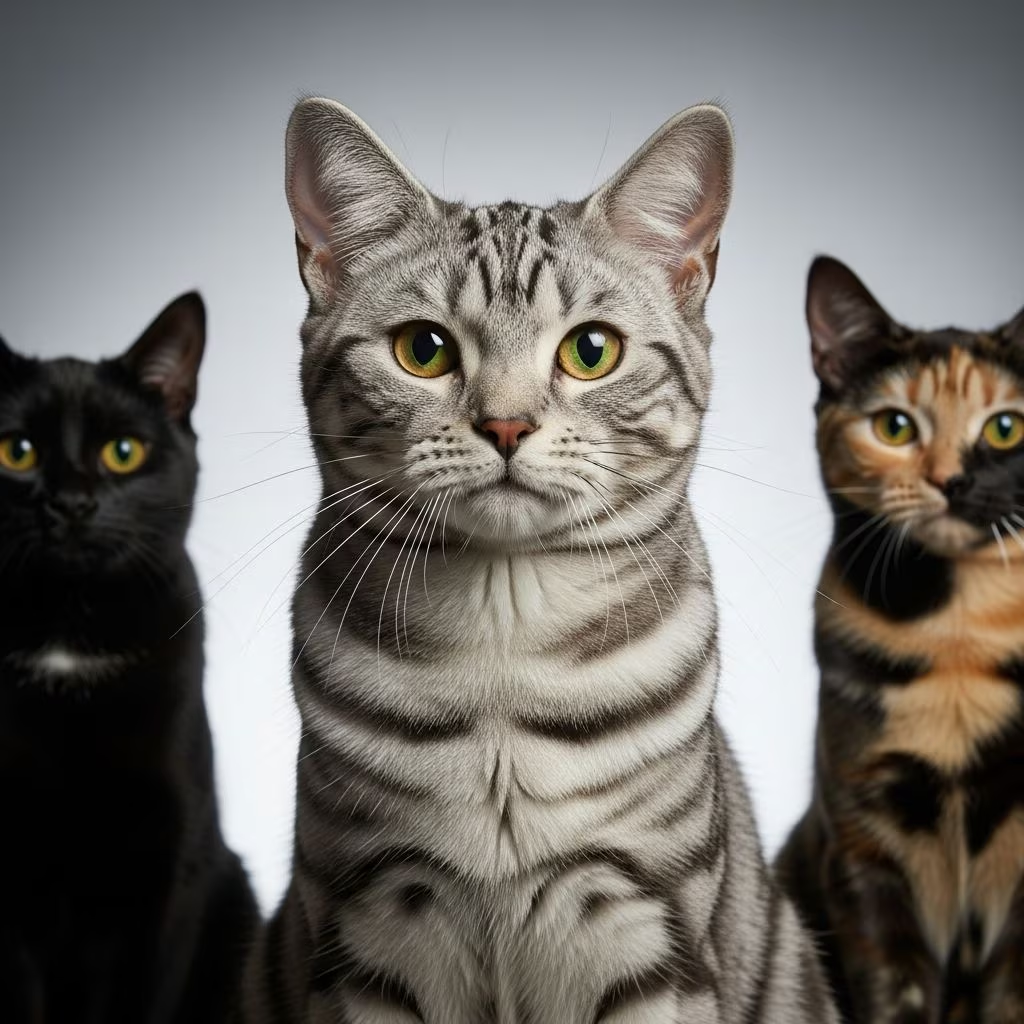
The American Shorthair stands out as one of the most versatile cat breeds in terms of coat variations, offering more than 80 distinct colors and patterns recognized by major feline associations. This muscular, adaptable breed traces its roots to early European working cats brought to America, where natural selection favored hardy traits including a wide array of fur hues suited to diverse environments.
Historical Evolution of Coat Diversity
Originally valued for their pest-control prowess on farms and ships, American Shorthairs developed coats that provided camouflage and protection. Over centuries, selective breeding refined these natural variations into standardized patterns, with organizations like The Cat Fanciers’ Association (CFA) cataloging an extensive palette from solid shades to complex tabby designs. This diversity not only enhances their aesthetic appeal but also reflects the breed’s robust genetics, allowing for healthy expression across generations.
Unlike breeds with limited color genes, the American Shorthair’s short, dense double coat—thicker in winter—serves as a canvas for vivid expressions. Males typically weigh 11-15 pounds, females 8-12 pounds, with conformations emphasizing power and balance that complement any colorway.
Core Color Categories Explained
American Shorthair colors fall into several main groups: solids, parti-colors, tabbies, shaded/silver, smoke, and bicolor patterns. Each category adheres to strict standards for purity, shading, and markings to maintain breed integrity.
Solid Colors: Purity and Depth
Solid colors represent the simplest yet most striking variations, requiring uniform hue from root to tip without banding or tipping. Key examples include:
- White: Pure glistening white with pink nose leather and paw pads; eyes deep blue or gold, including odd-eyed variants.
- Black: Dense coal black, rust-free, with black nose leather and pads; gold or green eyes.
- Blue: Deep blue-gray dilute of black, even throughout.
- Red: Deep orange-red, brick-red nose.
- Cream: Soft pastel dilute of red.
These solids showcase the breed’s ability to produce rich, even tones, ideal for those seeking a clean, elegant look.
Parti-Colors: Harmonious Blends
Parti-colors combine solids in balanced patches, adding visual interest. Notable types:
- Calico: White base with black and red patches; tabby markings allowed in colored areas.
- Tortoiseshell: Intermingled black and red without white predominance.
These patterns often display unique asymmetry, making each cat a one-of-a-kind masterpiece.
Tabby Patterns: The Breed’s Signature
Tabby is arguably the most iconic American Shorthair pattern, with silver tabby being especially popular for its sparkling effect. Tabbies feature bold markings aligned in three subtypes: classic, mackerel, and spotted.
| Tabby Type | Key Markings | Common Colors |
|---|---|---|
| Classic | Butterfly on shoulders, bullseye on flanks, oyster marbling | Brown, silver, blue, red |
| Mackerel | Narrow stripes, bars on legs/tail, necklace across chest | Brown, silver, blue |
| Spotted | Round spots instead of stripes, rosettes possible | Brown, silver |
All tabbies require agouti banding for a ticked appearance and vivid chin straps, allowing dark lines around eyes and lips. Brown tabby, with black markings on agouti brown ground color, embodies the working cat heritage.
Shaded and Silver Variations: Subtle Elegance
Shaded patterns introduce tipping—where fur ends are lightly colored over a white or silver undercoat—creating a glowing halo effect.
- Silver Tabby: White undercoat with dense black tipping on back, flanks, and tail; pure white underchin, chest. Brick-red nose, black outlines.
- Blue Silver Tabby: Blue tipping variant with old rose nose.
- Chinchilla Silver: Extreme tipping, 1/8 black only on extremities.
These are prized in shows for their shimmering quality, especially under light.
Smoke Patterns: Hidden Contrast
Smoke colors feature a white undercoat revealed in motion, tipped deeply with color at rest.
- Black Smoke: Black tips over white base, black points.
- Blue Smoke: Dilute version with blue tipping.
This dynamic shift from solid to ghostly white underscores the breed’s coat versatility.
Bicolor and Rare Patterns
Bicolors combine white with any color, often 50/50 distribution. Patched tabbies allow white underparts with colored tops. Rare hues like cameo (red-tipped silver) or golden (hot cream undercoat with tipping) add exclusivity. Eye colors typically gold or green, enhancing pattern harmony.
Understanding Breed Standards
The CFA and TICA emphasize balance: no exaggeration fostering weakness, with head oblong, cheeks full, eyes wide-set. Disqualifiers include locket spots, Siamese markings, or long fur. Over 80 varieties ensure accessibility for breeders and owners.
Care Tips for Vibrant Coats
Maintain color vibrancy with weekly brushing to distribute oils; minimal grooming suits their short coat. Feed high-quality diet supporting skin health. Annual vet checks prevent issues diluting coat quality.
Why Color Matters in American Shorthairs
Beyond beauty, patterns influence personality perceptions—tabbies seen as playful hunters, solids as stoic companions. All share affectionate, independent temperaments, adapting to families, kids, and dogs. Lifespan 15-20 years with proper care.
Frequently Asked Questions
What is the most common American Shorthair color?
Silver tabby tops popularity, followed by brown tabby.
Can American Shorthairs have blue eyes?
Primarily gold/green, but white solids may have blue or odd eyes.
Are all patterns show-eligible?
Yes, over 80 CFA-recognized, judged on standard adherence.
Do colors affect health?
No direct link; focus on reputable breeding.
How to identify a purebred by pattern?
Look for balanced conformation, vivid markings without hybridization signs.
References
- American Shorthair Personality and Care — Vet American. 2023. https://www.vetamerikan.org/our-best-friends/cat-types/american-shorthair
- American Shorthair Cat Breed Information — Purina US. 2024-01-15. https://www.purina.com/cats/cat-breeds/american-shorthair
- American Shorthair Standard — The Cat Fanciers’ Association. 2025-06-01. https://cfa.org/breed/american-shorthair/
- American Shorthair — VCA Animal Hospitals. 2024. https://vcahospitals.com/know-your-pet/cat-breeds/american-shorthair
- American Shorthair — Wikipedia (informed by primary sources). 2025. https://en.wikipedia.org/wiki/American_Shorthair
- American Shorthair Cat Breed — Hill’s Pet Nutrition. 2024. https://www.hillspet.com/cat-care/cat-breeds/american-shorthair
- American Shorthair — TICA. 2025-03-20. https://tica.org/breed/american-shorthair/



